

Stalled Giants, Sub-$10B Deals: Does J.P. Morgan Healthcare Conference Signal a Downturn?
In 2022, the J.P. Morgan Healthcare Conference (hereinafter referred to as “JPM”) kicked off in a virtual format. Despite having been held for over 40 editions, the JPM Conference remains the most closely watched life sciences conference globally.
The J.P. Morgan Healthcare Conference brings together thousands of healthcare companies and investors from around the world. From startups to corporations with market capitalizations exceeding $300 billion, hundreds of pharmaceutical firms, medical device companies, and healthcare providers worldwide participate in this premier event.
The trends emerging from the JPM Healthcare Conference influence the direction of global life sciences. Within the medical investment community, there is a tacit understanding to identify the subtle trends that will persist throughout the year by analyzing the major developments unveiled at the JPM conference at the start of the year.
Because the most significant healthcare deals of the year often occur at this time. For instance, on the first day of JPM 2019, Eli Lilly announced its $8 billion acquisition of Loxo Oncology, followed by Bristol-Myers Squibb’s announcement of its $74 billion century-defining merger with Celgene, instantly igniting enthusiasm for investment and strategic positioning in highly specific cancer therapies.
JPM 2022: Multinational pharmaceutical companies continue to vote with their capital for solutions in medical innovation. However, a major trend we observed in 2022 was that industry giants became more conservative, with the total transaction value failing to surpass $10 billion.
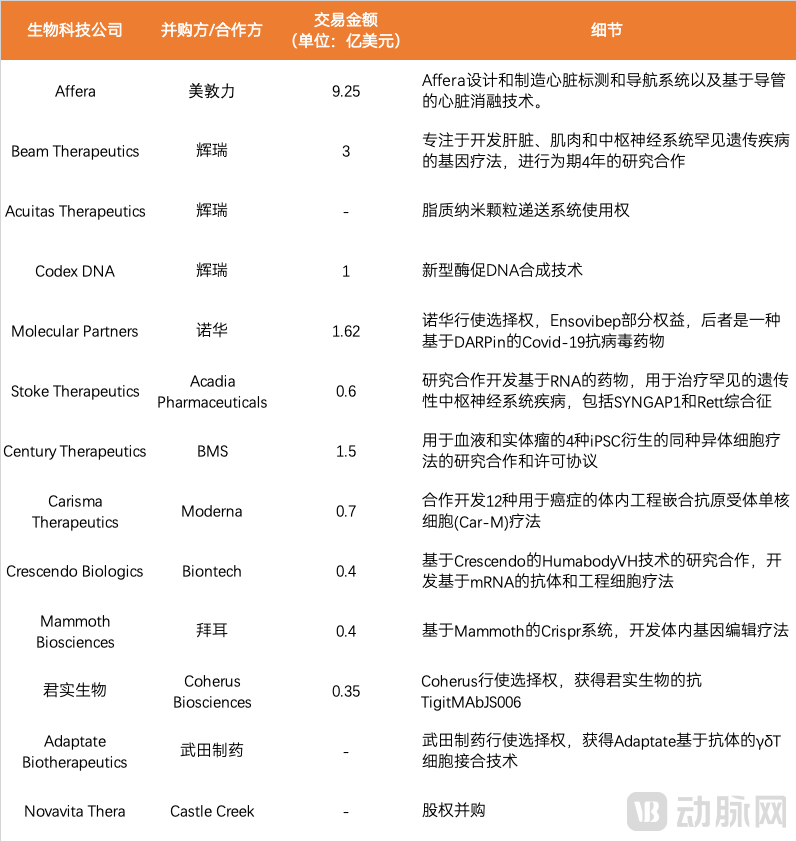
Selected Transactions Announced at JPM 2022 (Data Source: Compiled by VCBeat based on public information)
Facing 2022: Global CEOs Provide Answers at the Morgan Stanley Conference. In 2022, where is the global life sciences industry heading? Which key sectors have been disproven? Which key products serve as direct selling points for global life sciences companies? VCBeat (WeChat ID: vcbeat) has reviewed the strategic layouts of multinational giants and summarized core trends.
At the JPM 2022 conference, CGM (Continuous Glucose Monitoring), a traditional product category, once again became a hot topic.
Dexcom Unveils Data for Its Next-Generation CGM Product, G7, Hailing It as the Best in Industry History. Dexcom CEO Kevin Sayer told investors during his conference presentation that G7’s clinical data exceeded all expectations.
The G7’s highlight is that its sensor is 60% smaller than the previous generation, with a startup time of just half an hour. In contrast, the Abbott FreeStyle Libre Pro Flash currently on the market requires one hour for startup, while the Dexcom G6 and Medtronic Guardian both require two hours.
Furthermore, the G7 has reduced its MARD (Mean Absolute Relative Difference, which is the average of the absolute errors between the values detected by the continuous glucose monitoring system and the reference values; a lower value indicates higher accuracy) to 8.2%. Previously, the product with the lowest MARD was Dexcom’s G6, with a MARD of 9.0%. Currently, the G7 is awaiting FDA approval.
Dexcom generated over $2.4 billion in revenue in 2021, driven by its CGM technology, maintaining rapid growth with a 27% increase from 2020. For 2022, Dexcom projected revenue between $2.82 billion and $2.94 billion, representing a 15%-20% growth.
Furthermore, global medical device giant Medtronic has also announced diabetes management as a key focus of its mid-term growth, although its products have not yet been approved. For mid-term growth, Medtronic is focusing on three major products: renal denervation (RDN), diabetes management, and the Hugo surgical robot, even though all three pipelines have encountered speed bumps.
Medtronic considers diabetes management devices to be one of the fastest-growing markets globally. In this market, Medtronic offers products such as continuous glucose monitoring (CGM) systems, insulin pumps, and intelligent management software. Although its product portfolio is comprehensive, Medtronic lags behind Abbott and Dexcom in the CGM sector. Abbott holds more than 50% of the global CGM market share, and Dexcom holds more than 30%, whereas Medtronic’s global CGM market share is less than 10%. Medtronic’s area of strength lies in insulin pumps, where it ranks first in the global market.
Medtronic Expresses Confidence in Turning the Tide in the Diabetes Market at Morgan Stanley ConferenceHow to Capture Market Share? Medtronic is Developing the Next-Generation MiniMed 780G Insulin Pump and Guardian 4 CGM SystemMedtronic is developing its next-generation MiniMed 780G insulin pump and Guardian 4 continuous glucose monitoring (CGM) system. The MiniMed 780G insulin pump system integrates the Guardian 4 sensor for continuous glucose monitoring (CGM). However, regarding the approval timeline, Medtronic CEO Geoff Martha stated that it remains uncertain. Meanwhile, Medtronic is also advancing its new CGM product, Simplera CGM, which is characterized by its smaller size. Nevertheless, in 2021, Medtronic’s diabetes division received an FDA warning letter and issued a Class I recall for its insulin pumps, which negatively impacted Medtronic’s diabetes business.
Abbott, Dexcom, and Medtronic, the three major players, have each developed next-generation products in their bid to capture market share. It is foreseeable that the global diabetes management market landscape will undergo changes in 2022.
Surgical robots are also a key focus for global multinational giants. At the JPM Conference, companies such as Medtronic, Johnson & Johnson, and Zimmer Biomet highlighted their surgical robots as major growth drivers.
Medtronic Bets on Hugo Surgical Robot for Mid-Term Growth, but FDA Approval Lags Behind Expectations. Hugo Directly Competes with the da Vinci Surgical System; It Received CE Marking in October 2021 and Is Expected to Perform Its First Surgeries in the United States Soon. Medtronic Has High Hopes for Hugo. Although the da Vinci system already dominates the laparoscopic surgical robot market, Medtronic believes that despite surgical robots having been on the market for over 20 years, the global penetration rate remains at only 3%, indicating substantial untapped market potential for laparoscopic surgical robots worldwide.
What advantages does the Hugo laparoscopic surgical robot have over the da Vinci Surgical System, which has dominated the market for two decades? The da Vinci system entails high costs, including not only substantial acquisition expenses but also significant per-use operational costs. A key highlight of the Hugo system is its design, which reduces the cost per procedure. However, due to manufacturing and supply chain challenges, the U.S. market launch of the Hugo surgical robot has lagged behind expectations.
Johnson & Johnson Makes Major Investment in Surgical Digitalization, Reaches Comprehensive Partnership with MicrosoftJohnson & Johnson announced a strategic partnership with Microsoft at the conference, designating Microsoft as the preferred cloud provider for Johnson & Johnson’s digital surgery solutions to help build its digital surgery platform. All of Johnson & Johnson’s devices will be integrated into a unified platform using Microsoft’s services. This particularly applies to Johnson & Johnson’s portfolio of surgical robots, including the Velis Digital Joint Reconstruction System, Auris Health’s Monarch endoscopic robot, and the Ottava laparoscopic surgical robot. Additionally, Johnson & Johnson will leverage Microsoft Azure services, including artificial intelligence and machine learning, to enhance its products.
It is worth noting that Johnson & Johnson also announced at the conference that it would place greater emphasis on external investments and mergers and acquisitions (M&A). Joaquin Duato, CEO of Johnson & Johnson, pointed out that “external innovation” is a key driver of future growth in the pharmaceutical and medical technology sectors. Over the past five years, Johnson & Johnson has invested approximately $10 billion in M&A activities.
Another company firmly committed to digitalization and surgical robotics is Zimmer Biomet, leveraging intelligent technologies to enhance competitiveness in the joint care sector. Orthopedic leader Zimmer Biomet has significantly shifted its R&D spending focus over the past four years, concentrating on robotics and data, and establishing new partnerships with Apple, Microsoft, and data services company Canary Medical.
In the future, Zimmer Biomet will focus on the knee joint market, leveraging intelligent and digital technologies to enhance its competitiveness in the joint sector.
Zimmer Biomet has strengthened its knee product portfolio with its Persona IQ “smart knee” implant for total knee arthroplasty. Persona IQ is the world’s first and only FDA-cleared smart implant, developed in collaboration with Canary Medical. It leverages Canary Medical’s sensor-based technology to provide care teams and patients with real-world postoperative patient data, such as step count, walking speed, and other gait metrics.
From a trend perspective, data collection and interpretation are key to competition in orthopedics during the era of intelligence. This requires not only continuous data collection but also the provision of meaningful interpretations.
In 2021, Zimmer Biomet’s surgical robots performed well. The company’s orthopedic surgical robot products currently cover hip and knee joint replacements, as well as neurosurgical and spinal surgeries. In 2021, 600 systems were installed.
In the past, Zimmer Biomet went through a low period, and its transformation may have been a painful but necessary reckoning. Bryan Hanson, CEO of Zimmer Biomet, stated, “In 2018, we were arguably the worst performer in the orthopedics sector, with multiple product recalls. Today, we are the best, having reduced our recall rate by tenfold.”
High-value consumables in the cardiovascular field are the core business of global medical device giants.In this vast market, pulsed field ablation (PFA) products in cardiac electrophysiology have become a key strategic focus.
Medtronic Acquires Affera for $925 Million to Bolster Its Ablation PortfolioMedtronic announced at the Morgan Stanley Healthcare Conference that it would acquire cardiac electrophysiology company Affera for $925 million. Affera’s Prism-1 cardiac mapping and navigation platform fills a “significant gap” in Medtronic’s current electrophysiology product portfolio.
Medtronic’s acquisition and introduction of an electrophysiology mapping system can enhance its cardiac ablation portfolio, particularly its latest pulsed field ablation (PFA) products. Medtronic’s PFA product, the PulseSelect PFA System, is currently undergoing clinical trials.
Pulsed Field Ablation (PFA) has become the most prominent technology in the cardiac electrophysiology sector due to its tissue specificity during ablation. Companies such as Boston Scientific, Medtronic, and Abbott all have related products.
Boston Scientific’s FARAPULSE pulsed field ablation system has received CE approval and FDA Breakthrough Device designation, and has also been accepted into the NMPA’s Innovative Medical Device pathway.
In this highly competitive sector, Medtronic’s acquisition of a mapping company suggests that mapping capabilities may become a key competitive advantage for PFA products in the future.
Historically, Johnson & Johnson and Abbott have been the global leaders in the cardiac electrophysiology sector. In the Chinese market, for example, Johnson & Johnson holds over 60% of the market share, Abbott accounts for more than 20%, and Medtronic ranks third. The future landscape of the cardiac electrophysiology market will also be reshaped by pulsed field ablation (PFA) technology.
In the field of ablation, Medtronic’s highly anticipated renal denervation product, Symplicity Spyral, has encountered obstacles, resulting in a delayed market launch. In the absence of positive outcomes required for early termination of registration, clinical studies of its Symplicity Spyral Renal Denervation (RDN) System for hypertension will continue into next year.
Innovative pathways and highly accessible, clinically feasible biotechnologies have long been the focus of intense pursuit by pharmaceutical companies at the JPM Conference. Following the successful launch of multiple cell therapy drugs based on the now-mature CAR-T technology, both pharmaceutical giants and biotech firms are striving to identify superior vectors and functional cells.In 2022, their focus shifted toward more innovative cell therapies, with Pfizer, Bayer, BMS, Takeda Pharmaceutical, and even Moderna all tacitly turning their attention to the next generation of cell therapy advancements.
On the one hand, they are exploring and identifying delivery methods that are more efficient and safer than existing CAR technologies.For instance, Pfizer has joined forces with gene therapy giant Beam Therapeutics to launch a four-year research collaboration, marking the largest deal by total value at JPM 2022 to date. At JPM 2022, Pfizer stated that the two parties would sequentially collaborate on developing cell therapies for genetic diseases affecting the liver, muscles, and central nervous system. Previously, Beam Therapeutics had developed a series of gene therapies based on its proprietary gene-editing technology. Studies have shown that the gene-editing technology employed by Beam Therapeutics offers higher precision compared to traditional CRISPR/Cas9 methods. Meanwhile, another pharmaceutical giant, Bayer, has chosen to partner with Mammoth Biosciences to develop cell therapies, leveraging the latter’s “ultra-compact” CRISPR system technology.
For another example, Takeda Pharmaceutical previously acquired the UK-based company Gammadelta to establish its presence in cell therapy. On the first day of JPM 2022, the Japanese pharmaceutical giant further expanded its portfolio by acquiring Adaptate, a company that had earlier spun off from Gammadelta. Reportedly, Adaptate specializes in developing antibodies that primarily bind to γδ T cells, rather than pursuing CAR-based cell therapies. In late 2021, a clinical study by Adicet Bio validated the efficacy of γδ T cell therapy, instantly propelling this emerging field into the spotlight.
On the other hand, after repeated attempts, therapeutic cell types were officially unveiled at JPM 2022, entering the radar of pharmaceutical giants.At JPM 2022, Moderna announced a collaboration with Carisma to develop CAR-M therapies. In 2021, Moderna rapidly transformed from an obscure biotechnology company into a household name, as its self-developed COVID-19 mRNA vaccine, Spikevax, generated approximately $18.5 billion in remarkable sales. A total of 807 million doses were administered worldwide, with 25% allocated to low- and middle-income countries.
Carisma, spun out of the University of Pennsylvania, has long been dedicated to research on CAR-based monocyte therapies (CAR-macrophages). By combining Moderna’s proprietary mRNA and lipid nanoparticle (LNP) technologies, this potential CAR-M therapy may overcome the bottlenecks associated with in vivo editing. Monocytes are a type of myeloid white blood cell distinct from B cells and T cells, and they can further differentiate into macrophages. Macrophages patrol throughout the body, phagocytosing cellular debris, foreign organisms, and other potentially threatening substances.
In patients with malignant tumors, tumor cells suppress the functional expression of macrophages, thereby supporting their own rapid division and growth. Carisma’s research indicates that by leveraging CAR technology to transport pre-differentiation monocytes to specific cell-binding sites and exert effects within the immunosuppressive microenvironment surrounding tumors, new therapeutic approaches will overcome the limitations of CAR-T therapy in solid tumor indications.
If the vaccine demand in the fight against the global COVID-19 pandemic gave rise to the rising star Moderna, then the business of providing antiviral treatments for the continuously surging number of COVID-19 patients has also become the primary source of cash flow for many pharmaceutical giants over the past two years.Unlike the COVID-19 vaccine market, which has been steadily dominated by Moderna and BioNTech, the leadership among top suppliers of antiviral treatments for COVID-19 has shifted multiple times with the emergence of various SARS-CoV-2 variants. At JPM 2022, Novartis also entered the fray.
In fact, in recent years, the Swiss pharmaceutical giant Novartis has adopted a more conservative approach to building its new pipeline.Not long ago, they sold their long-term equity stake in competitor Roche for $20.7 billion, causing a stir in the biopharmaceutical industry. Subsequently, Novartis announced that it was conducting a strategic review of its generics division, Sandoz. Nevertheless, Novartis made a high-profile appearance at JPM 2022 with a CHF 150 million ($163 million) deal.
In a newly released clinical study, Ensovibep, an anti-COVID-19 antiviral drug developed by Molecular Partners, was shown to reduce the risk of hospitalization by 78% in individuals with early-stage infection. The study reportedly randomized 407 outpatients with COVID-19 to receive either placebo or a single infusion comprising three doses of Ensovibep. Unlike the initial trials of oral antivirals from Merck and Pfizer, this study enrolled patients who had been vaccinated against COVID-19. Data indicated that Ensovibep reduced viral load more effectively than placebo by day 8 and lowered the risks of hospitalization and death.
At present, Novartis and Molecular Partners are seeking to advance Ensovibep to market via the FDA’s Fast Track designation. Owing to its DARPin protein scaffold, which is significantly smaller than monoclonal antibodies, Ensovibep features a molecule that binds to three sites on the viral receptor-binding domain, making it less susceptible to viral mutations. However, as Ensovibep is administered via a single intravenous infusion, it is less convenient than the oral antiviral drugs developed by Pfizer and Merck.
With the emergence and rapid spread of the Omicron variant, the market landscape for COVID-19 antiviral drugs is quietly undergoing change.At the end of 2021, the U.S. FDA suspended the use of Eli Lilly and Regeneron’s anti-SARS-CoV-2 antibodies due to concerns about their efficacy against the Omicron variant. Although this ban was lifted a few days later, GlaxoSmithKline’s sotrovimab and Pfizer’s oral antiviral Paxlovid remain the only available options in the U.S. market with expected activity against Omicron, yet supply still falls short of demand. This implies that once Ensovibep gains market approval, it could further reshape the competitive landscape of COVID-19 therapeutics.
In fact, Merck and Pfizer had already clashed in multiple rounds over COVID-19 antiviral drugs before Novartis entered the fray.
In November 2021, interim data from a clinical trial indicated that Merck’s oral COVID-19 antiviral drug, molnupiravir, reduced the risk of hospitalization and death by 30%, rather than the previously reported 50%. In contrast, Paxlovid demonstrated an efficacy rate of 89%, momentarily overshadowing molnupiravir. However, on the first day of JPM 2022, Merck announced that molnupiravir had proven highly effective against the Omicron variant of SARS-CoV-2. “This is a mechanism that reduces mortality by 90%,” noted the head of Merck Research Laboratories. “This mechanism and molecule are effective against Omicron, as well as against most variants I can anticipate emerging in the future.”
Regarding production capacity, Merck stated that molnupiravir output reached 10 million treatment courses in 2021 and is planned to double in 2022, with expected revenues of $5–7 billion. Meanwhile, Merck emphasized that it continues to deliver molnupiravir. In December 2021, Merck supplied approximately 950,000 treatment courses to the U.S. government; by the end of January 2022, an additional 3.1 million treatment courses will be provided to the United States. However, Pfizer announced at JPM 2022 that its production capacity has reached 120 million treatment courses, higher than the previously planned 50 million.
Furthermore, Pfizer has further strengthened its strategic positioning in mRNA technology. On the first day of trading at JPM 2022, Pfizer secured licensing rights to Acuitas Therapeutics’ lipid nanoparticle (LNP) delivery system for use in mRNA vaccines and therapeutics. Lipid nanoparticles are critical for protecting mRNA, which provides cells with a series of instructions—such as those needed to combat viruses—and facilitates the targeted delivery of mRNA to specific regions within the body. Previously, Acuitas’ proprietary delivery system technology had been utilized in two authorized mRNA COVID-19 vaccines, including the Pfizer-BioNTech vaccine.
In another transaction, Pfizer will make payments exceeding $100 million to Codex DNA to acquire the company’s novel enzymatic DNA synthesis (EDS) technology, which will also be utilized in the development of new mRNA vaccines and therapeutics. Reportedly, Codex has independently developed its Short Oligonucleotide Ligation Assembly (SOLA) EDS technology platform, capable of constructing synthetic DNA, RNA, and proteins, and it has already been employed in the development of new mRNA-based drugs and vaccines.
The 2022 JPM conference, devoid of crowded lobbying groups and seats with rents inflated to $100, and lacking blockbuster deals worth tens of billions of dollars, was so quiet as to be somewhat disappointing.
In fact, as an industry bellwether, JPM reflects the trends in global healthcare market capital flows. This tepid response signals that the rapid investment growth seen in the life sciences sector in 2022 is now facing a significant slowdown.According to a new analysis by Silicon Valley Bank, venture capital investment in the United States and Europe reached a record high of $86 billion in 2021, representing a 30% increase over the previous record set in 2020 and more than a 150% rise compared to 2019. However, following quarters that hit historical highs in the first half of the year, underperforming biopharmaceutical IPOs have deterred cross-sector investors,Industry Investment Began to Decline in the Second Half of the Year. The slowed investment pace at JPM 2022 sent a signal,In 2022, the slowdown in industry investment is likely to persist.