

NIPT Sector Gains Policy Tailwinds as Prenatal Screening Rate Rises 15% in Five Years

BGI
Scientific and Technological Service Provider and Precision Medical Service Operator
According to data from the China Disabled Persons’ Federation, approximately 2 million new cases of disability occur annually in China, making disability prevention an urgent priority. On January 5, 2022, the General Office of the State Council issued the National Action Plan for Disability Prevention (2021–2025), providing guidance for disability prevention efforts. The plan explicitly sets the goal that by 2025, China’s key disability prevention indicators should rank among the leading upper-middle-income countries.
In addition to specifying targeted publicity and education for key populations—including children, adolescents, newlywed couples, pregnant and postpartum women, parents of infants and young children, the elderly, and practitioners in high-risk occupations—this action plan places particular emphasis on advancing premarital healthcare and strengthening screening for genetic disorders, designated infectious diseases, and severe mental disorders. It calls for providing essential maternal and child health services throughout the entire reproductive process, extensively promoting prenatal screening, and enhancing prenatal screening and diagnosis for major birth defects such as common fetal chromosomal abnormalities, severe fetal structural malformations, and monogenic genetic diseases. The plan also advances classified management and services for key groups such as advanced maternal age pregnant women, implements systems for pregnancy risk screening and assessment as well as case-specific management for high-risk pregnant women, and strengthens the three-tier maternal and child health service network at the county, township, and village levels, thereby improving grassroots service capacity and referral networks.
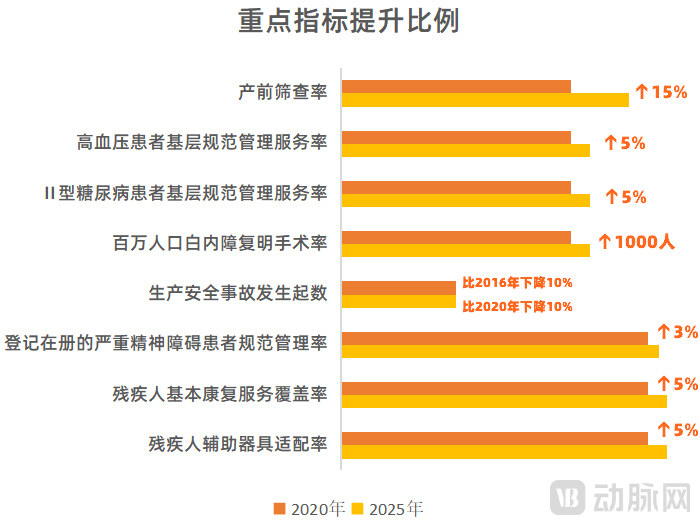
Prenatal screening is emphasized because it is the indicator with the largest increase in this action plan, reaching 15%.
The Action Plan issued this time proposes specific indicators for 25 tasks, among which 14 are newly added, with 8 indicators having the highest requirements for improvement. These 25 tasks, excluding the basic work of popularizing disability knowledge among key populations, can be roughly divided into four major areas: actions for the prevention and control of disabilities caused by birth defects and developmental disorders, actions for the prevention and control of disabilities caused by diseases, actions for the prevention and control of disabilities caused by injuries, and actions to promote rehabilitation services. The structure of "three preventions and one service" highlights the national emphasis on early prevention and control of disabilities.
In 2016, when China’s previous Five-Year Action Plan for Disability Prevention was launched, the country recorded 17.86 million newborns. Among them, 5.6% (compared to 4.72% in developed countries) were born with varying degrees of birth defects, approximately 25% of which were caused by genetic factors. Among genetic disorders, aneuploidy-related conditions—namely Down syndrome, Edwards syndrome, and Patau syndrome—have particularly severe consequences. Their incidence rates are approximately 1 in 700, 1 in 4,000, and 1 in 5,000, respectively, corresponding to roughly 33,500 affected newborns annually. These conditions are incurable. Affected children face a high risk of early childhood mortality; those who survive often suffer from intellectual disabilities and mobility impairments, remaining unable to care for themselves throughout their lives, thereby imposing a substantial burden on their families. Timely participation in preconception, prenatal, and neonatal screening is essential to detect defects early, enabling early intervention and treatment.
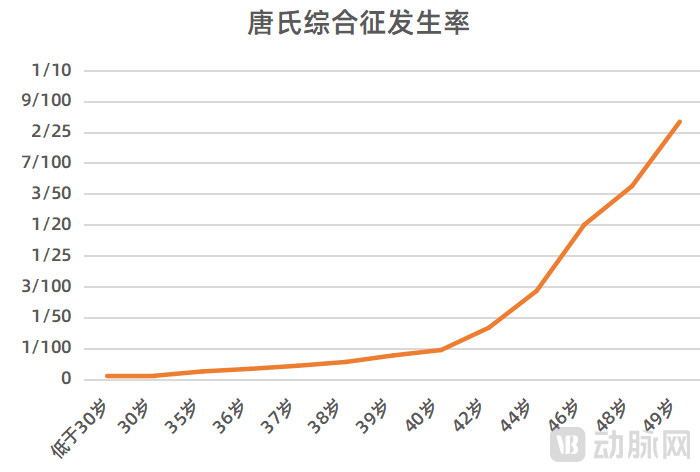
Therefore, the initiative for the prevention and control of disabilities caused by birth defects and developmental disorders has become a key focus of this action plan, accounting for seven indicators. In addition to strengthening premarital and preconception healthcare, the plan sets targets including a premarital medical examination rate exceeding 70%, coverage of the target population for preconception eugenic health examinations exceeding 80%, a prenatal screening rate exceeding 75%, and a systematic management rate for pregnant and postpartum women exceeding 90%. Furthermore, it specifies that the screening rate for neonatal genetic metabolic diseases shall be no less than 98%, the neonatal hearing screening rate no less than 90%, and the systematic management rate for children under three years of age no less than 85%.
Among these key indicators, the target for prenatal screening rate saw the largest increase, rising from 60% in 2020 to 75% in 2025. This 15-percentage-point increase is bound to trigger a response in the Chinese market.
Currently, the main prenatal screening items in clinical practice can be divided into imaging NT examination, serological examination, and non-invasive prenatal testing (NIPT). The first two are traditional examination items with extremely high penetration rates and no obvious room for growth, while the overall coverage rate of non-invasive prenatal testing (NIPT) is relatively low. In the future, the 15% increase in space will mainly come from NIPT.
Non-Invasive Prenatal Testing (NIPT) is a novel, safe, accurate, and rapid technique for fetal chromosomal analysis. This method requires only a maternal venous blood sample. By combining high-throughput gene sequencing technology with bioinformatics approaches to analyze fetal genetic material, it can detect fetal chromosomal aneuploidies, such as Down syndrome, Edwards syndrome, and Patau syndrome, thereby supporting eugenics and healthy childbirth. The recently released action plan also demonstrates the Chinese government’s high priority on the comprehensive prevention and control of birth defects. This will inevitably accelerate the adoption of next-generation technologies for birth defect prevention and control, represented by NIPT, creating significant growth opportunities for the genetic testing industry.
NIPT technology originated in 1997, when Professor Dennis Lo serendipitously discovered cell-free fetal DNA in maternal peripheral blood. After extraction, sequencing can effectively assess the risk of fetal chromosomal abnormalities. NIPT was also the first commercially available product in the field of gene sequencing. Compared with traditional prenatal screening and diagnostic techniques, NIPT offers multiple advantages, including being non-invasive, having a short turnaround time, ease of operation, high safety, and high accuracy. Currently, the detection rate for Trisomy 21 and Trisomy 18 can reach 100%, with a specificity of 97.9–99.7%.
As a key component of prenatal screening, the development of Non-Invasive Prenatal Testing (NIPT) hinges on two major factors: the birth rate and market penetration. According to data from the Seventh National Population Census, China recorded 12 million births in 2020, with women of advanced maternal age accounting for approximately 15% of this figure. The primary users of NIPT are women of childbearing age, particularly those of advanced maternal age. The penetration rate of NIPT is approximately 65% among women of advanced maternal age and about 35% among those not of advanced maternal age, resulting in an overall average penetration rate of around 40%. Based on publicly available information, the average price of NIPT in China is approximately RMB 1,400. Consequently, the market size for NIPT in China was estimated at RMB 7 billion in 2020, representing a 250% increase from the RMB 2.8 billion market size in 2016.
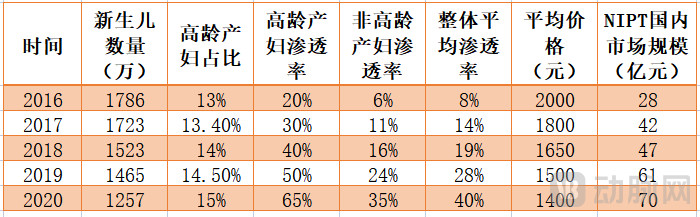
Given demographic trends, the future trajectory of fertility rates is not optimistic. According to reports from research institutions, the population size of women of childbearing age has peaked and is now declining. By 2030, the number of women aged 20–35, who represent the primary childbearing cohort, is projected to decrease by 29% compared with 2018 levels, with a 41% decline among women aged 25–30, the peak childbearing age group. Consequently, the current expansion of the NIPT market is primarily driven by increased penetration rates.
From a policy perspective, provinces and cities including Beijing, Tianjin, Chongqing, Hebei, Shandong, Hubei, Zhejiang, Fujian, and Shenzhen in Guangdong have successively introduced policies to reduce the price of non-invasive prenatal testing (NIPT) services, include them in medical insurance coverage, or implement fee reduction initiatives for pregnant women undergoing NIPT screening, thereby promoting the widespread adoption of NIPT.
From the perspective of the industry chain, the upstream, midstream, and downstream segments of the NIPT industry consist of equipment and consumable suppliers, sequencing service and bioinformatics analysis providers, and end users, respectively. The upstream sector comprises suppliers of sequencers, sequencing reagents, and consumables, with representative companies including BGI, Illumina, and Thermo Fisher. The midstream sector primarily includes sequencing service providers and bioinformatics analysis institutions, represented by companies such as BGI, Berry Genomics, Daan Gene, Dian Diagnostics, and Illumina. The downstream sector consists of users of sequencing services, mainly individuals, hospitals, pharmaceutical companies, government research institutions, and university research institutes.
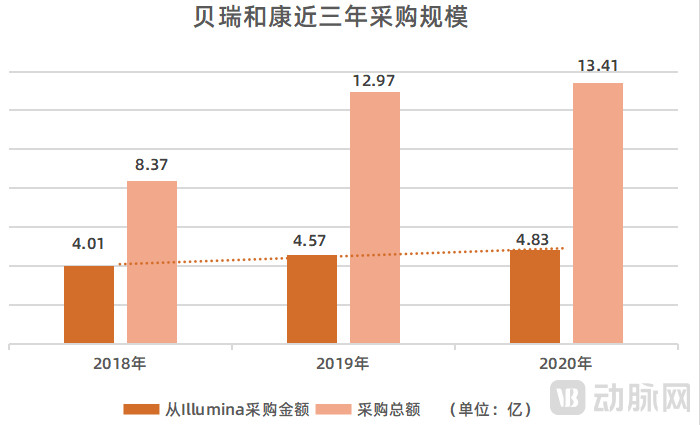
In March 2013, BGI raised $117.6 million to acquire Complete Genomics, an upstream supplier of testing instruments, successfully expanding its operations upstream and gradually reducing its reliance on the leading supplier, Illumina. In contrast, other genetic testing service providers, led by Berry Genomics, still import their sequencers from Illumina and Thermo Fisher Scientific, a fact reflected in Berry Genomics’ semi-annual financial report for 2021.
The domestic NIPT industry is dominated by two giants: BGI and Berry Genomics. In recent years, the competitive landscape of the NIPT market has remained stable, with each of the two companies holding a 30%-40% market share. According to BGI’s semi-annual report for 2021, its comprehensive solutions for precision medicine monitoring were the primary source of revenue, generating RMB 1.9 billion in the first half of 2021, accounting for 52.1% of total revenue, with a gross profit margin of 69.1%. Reproductive health services ranked third, contributing 17.16% of revenue. Berry Genomics reported revenue of RMB 730 million during the same period. The NIPT technologies employed by various domestic companies are relatively homogeneous, all offering screening for aneuploidies of chromosomes 21, 18, and 13. Although some smaller companies have entered the competition after several years of development, the leading companies maintain significant first-mover advantages and dominate mainstream hospitals in first- and second-tier cities.
As previously mentioned, the NIPT market size was approximately RMB 7 billion in 2020. If the 15-percentage-point increase target proposed in the action plan is achieved, the total market size will reach RMB 8.05 billion. Does this imply that the growth rate of this sector is moderate? The answer depends on how the NIPT market is defined. Currently, NIPT testing targets trisomy 21, trisomy 18, and trisomy 13. If its scope expands to other chromosomal aneuploidies, specific chromosomal deletion/duplication syndromes, and even monogenic genetic disorders, the methodology for calculating market size will change entirely.
Currently, the two market giants have both made strategic moves in this direction. For instance, BGI is exploring the clinical application of non-invasive testing for monogenic diseases, launching various non-invasive prenatal tests (NIPT) for single-gene disorders. It has taken the lead in China in achieving clinical translation for multiple monogenic diseases and continues to develop scalable NIPT technologies better suited for prenatal screening. Berry Genomics’ NIPT-Plus includes three basic tests and covers screening for 17 types of fetal chromosomal aneuploidies, 76 microdeletion/microduplication syndromes involving fetal chromosomal large fragments greater than 10 Mb, and 7 relatively high-incidence microdeletion diseases located at specific syndrome-associated chromosomal regions.
After years of promotion, non-invasive prenatal testing (NIPT) has gained widespread application and recognition. In 2020, the American College of Obstetricians and Gynecologists (ACOG) expanded the eligible population for NIPT from high-risk pregnant women to all pregnant women. The penetration rate of NIPT in China is estimated to be approaching 40%. However, as NIPT only screens for chromosomal abnormalities and does not address monogenic disorders, non-invasive prenatal screening for monogenic diseases is regarded as a promising direction for development within the industry.
Once the technical challenges of non-invasive prenatal screening (NIPS) for recessive single-gene disorders are overcome, enabling the integration of single-gene disorder screening panels without requiring samples from the proband or the father, simultaneous screening for both dominant and recessive genetic diseases can be achieved. Furthermore, by leveraging NIPS technology to concurrently detect chromosomal aneuploidies, chromosomal microdeletions/microduplications, and single-gene disorders, a single draw of maternal peripheral blood can accomplish simultaneous detection of all common variants, thereby truly realizing comprehensive non-invasive prenatal screening for pregnant women.
With advancements in sequencing technology and the decline in sequencing costs, it is possible that whole-genome sequencing (WGS) or whole-exome sequencing (WES) will be directly performed using cell-free fetal DNA from maternal peripheral blood in the future. Such a single test could cover nearly 90% of monogenic disease loci caused by mutations, meeting the requirements for the vast majority of cases.
Under the overarching framework of "Healthy China 2030," the state has continuously issued multiple policy guidelines to regulate birth defect prevention and control, as well as prenatal screening and diagnosis. Multi-omics testing technologies, represented by genetic testing, are rapidly gaining widespread application in the prevention and control of birth defects. With growing public awareness of healthy living, an increasing number of families expect to screen for a broader range of hereditary and developmental disorders during the prenatal stage. From the perspectives of socio-economic benefits and time costs, conducting expanded carrier screening for recessive single-gene disorders during the preconception period or early pregnancy holds significant importance for the prevention and control of birth defects.