The Past, Present, and Future of Neurointervention: Insights from Professor Zhang Hongqi, Director of Neurosurgery at Xuanwu Hospital
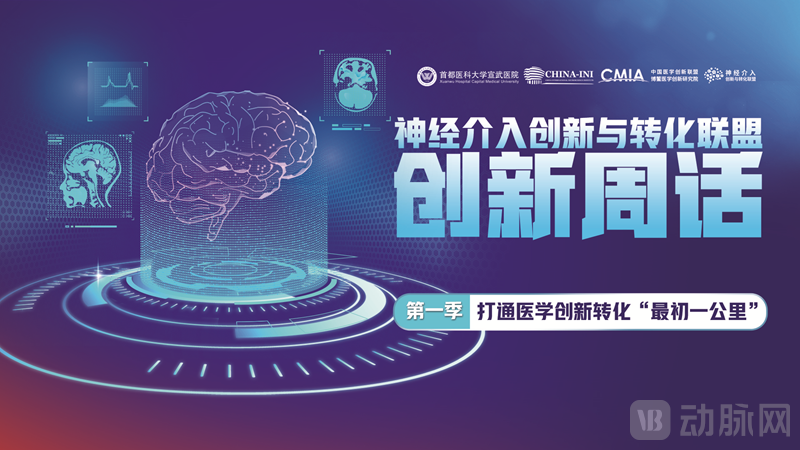
On January 12, 2022, the Chinese Neurointerventional Innovation and Translation Alliance (CNIT) held “CNIT Innovation Week Talks Season 1: Bridging the First Mile of Medical Innovation Translation,” with Professor Zhang Hongqi, Chairman of CNIT and Director of the Department of Neurosurgery at Xuanwu Hospital, Capital Medical University, delivering the inaugural lecture.
According to the introduction, Season 1 of “CNIT Innovation Week Talk” will focus on the translation of early-stage medical innovations into practical applications. Every Wednesday at 7:00 PM, renowned clinical experts from the industry, engineering specialists from universities and research institutes, R&D leaders from medical device manufacturers, and investors will share and discuss the pathway for translating medical innovations “from 0 to 1.”
In this session, Director Zhang Hongqi primarily shared his insights on the origins and evolution of neurointervention, advancements in imaging technology, the application of artificial intelligence in the field of neurointervention, the development prospects of robotics in neurointervention, the integration of neurointervention with brain science, and future visions for neurointervention.
This article is compiled based on Director Zhang Hongqi’s speech and the latest developments in the neurointerventional industry.
In 1953,Radiologist Sven Seldinger invented the percutaneous arterial catheterization technique, enabling physicians to safely insert and withdraw minimally invasive therapeutic devices into and out of blood vessels.Benefiting from the technique of percutaneous arterial catheterization, vascular interventional techniques such as neurointervention, peripheral intervention, and cardiac intervention have emerged. It can be said that percutaneous arterial catheterization is the origin of all vascular interventional techniques.。
Leveraging percutaneous arterial catheterization techniques, Lussenhop introduced spherical methyl methacrylate emboli with diameters ranging from 2.5 mm to 4.2 mm into the surgically exposed bifurcation of the left carotid artery in 1960, successfully embolizing cerebral arteriovenous malformations; in 1975, Gerard Debrun employed detachable inflatable balloons to treat traumatic carotid-cavernous fistulas and intracranial aneurysms.
These exploratory procedures, considered highly risky by today’s standards, nevertheless paved new pathways for the treatment of cerebrovascular diseases through the pioneering research conducted by these interventional neuroradiology pioneers.
On the other hand, while procedures such as carotid endarterectomy have become well-established, many clinical experts continue to explore, attempt, and innovate other superior techniques. Consequently, the neurointerventional techniques commonly used today actually began to emerge in the 1970s and 1980s. For instance, Charles Kerber performed the first percutaneous transluminal balloon angioplasty for the treatment of carotid artery stenosis in 1980; Amir Motarjeme first reported percutaneous transluminal angioplasty for the treatment of vertebral artery stenosis in 1981.
In the development of neurointerventional techniques, the invention of coils represents a significant milestone. Prior to the advent of coils, balloon angioplasty was commonly used in clinical practice for the treatment of intracranial aneurysms. However, balloons have a regular geometric shape, whereas intracranial aneurysms are often irregularly shaped, making it difficult to achieve adequate conformity between the two. Furthermore, intracranial aneurysms are highly fragile; during balloon deployment, there is a risk of rupturing the aneurysm, which can lead to severe complications.
To address this challenge, Professor Guglielmi, inspired by prior experiments involving detachable coils and electrolysis-promoted thrombosis, developed the electrolytically detachable coil. In 1991, Professor Guglielmi’s team enrolled the first patient in a clinical trial, where it took approximately half an hour to detach the coil. Nevertheless, this achievement was highly encouraging at the time. Subsequently, the detachment time for coils has continued to decrease, with immediate detachment now achievable. Since Professor Guglielmi’s invention of the electrolytically detachable coil, it has ushered in an era of endovascular aneurysm treatment dominated by coil embolization.
From the invention process of these innovative technologies and products, it is evident that innovators may face indifference or even ridicule on their path to innovation. However, through perseverance and long-term exploration, they ultimately realize the full value of their efforts. Their innovative technologies or products have not only pioneered new therapeutic approaches but also fostered the growth of numerous niche industries.。
Constrained by the limitations of human vision, the development of vascular interventional technology is equally dependent on support from imaging technologies.
Initially, neurointerventional procedures were performed under the guidance of X-ray fluoroscopy and contrast agents; however, this discontinuous fluoroscopic imaging placed significant demands on the technical skills of clinicians.
With the advancement of technologies such as computing, Charles Mistretta invented Digital Subtraction Angiography (DSA) in 1979, laying a solid foundation for the development of neurointervention.
DSA refers to the digital processing of angiographic images to remove unnecessary tissue structures, retaining only the vascular imagery. Characterized by high clarity and resolution, it provides authentic three-dimensional images for observing vascular lesions, localizing and measuring vascular stenosis, diagnosis, and interventional therapy, thereby establishing essential conditions for various interventional procedures.
In the 1980s and 1990s, as computer technology became increasingly mature, 3D angiography based on computational techniques began to emerge. Previously, clinicians had to mentally reconstruct three-dimensional vascular images from DSA scans to ensure accurate localization of lesions. 3D angiography assists physicians in performing this step, significantly reducing the difficulty of neurointerventional procedures.
Subsequently, a variety of image processing techniques have emerged, further facilitating the simplification of neurointerventional procedures. Clinicians have since raised higher expectations, seeking to visualize the relationship between brain tissue and vasculature, as well as cerebral perfusion status. This necessitates additional technological innovations, such as the integration of CT and magnetic resonance imaging (MRI) technologies.
Nowadays, technologies such as OCT and FFR have emerged in the field of coronary intervention, enabling physicians to visualize vascular lesions and perfusion status. However, cerebral vessels are more fragile than coronary arteries; therefore, intravascular imaging techniques require further development to ensure their safety in cerebrovascular applications.
In 2019, the number of neurointerventional procedures in China reached 120,000; despite the impact of the pandemic in 2020, the volume still grew to 160,000. Supported by a large patient base, neurointerventional procedures are now experiencing rapid growth in volume.
In terms of treatment modalities and products, innovative devices such as flow diverter stents and intracranial thrombus aspiration systems have been successively approved, with their therapeutic efficacy consistently recognized in clinical practice. Coil embolization products, once wildly popular worldwide, continue to undergo iterative improvements; they now feature capabilities such as immediate detachment, earning strong preference among clinicians.
In 2021, Hemu Bio’s first domestically developed intracranial thrombus aspiration catheter system received approval from the National Medical Products Administration (NMPA); SinoMedical’s globally first intracranial drug-eluting stent system was approved for market launch; and Vobi Medical’s independently developed mechanically detachable coils obtained NMPA registration certification.
In addition, neurointerventional companies such as JetMed, Likai Technology, Xinkainuo, Taijie Weiye, Jiushi Shenkang, and Meinuo Microinvasive have also had multiple products approved by the National Medical Products Administration (NMPA). According to incomplete statistics from VCBeat, as of December 2, at least 22 neurointerventional products were approved in China in 2021.
It can be said that,The neurointerventional sector has transitioned from an era focused on product and technological prowess to the second half, where commercialization and monetization capabilities are being put to the test.。
A review of the 2021 approvals for domestically produced neurointerventional products reveals that a variety of such devices are now on the market, including coils, microcatheters, microwires, intermediate catheters, and distal access catheters.
The launch of various domestically produced neurointerventional products signifies that Chinese manufacturers are now capable of meeting the clinical needs of the majority of relevant patients, while also addressing the diverse requirements of different patient populations.
However, it is important to note that domestically produced neurointerventional products not only face the issue of homogenization but also suffer from the pain point that certain products remain monopolized by overseas companies. For instance, among domestic enterprises, only Hemu Biology has obtained approval for intracranial thrombus aspiration catheters, while other companies’ products are still in clinical trials or other developmental stages.
From the current perspective, neurointerventional procedures have gradually evolved from highly complex operations into relatively simple ones. As these procedures become sufficiently streamlined, physicians seek to liberate human labor. This trend is driven not only by the need to avoid radiation exposure and to facilitate the widespread adoption of neurointerventional techniques, but also by human nature: the inclination to delegate simple tasks to others, and ultimately, to robots.
For example, automobiles have evolved from manual transmission to automatic transmission, and now to the emerging autonomous driving technologies, all of which aim to reduce human operation and increase machine assistance.
Research on surgical robots began in the 1980s, and today a wide variety of such systems have emerged, including laparoscopic surgical robots, orthopedic arthroscopic surgical robots, pan-vascular interventional surgical robots, oral and maxillofacial surgical robots, and neurosurgical robots.
Currently, major international companies such as Prosurgics, Medtech, and Renishaw are developing robotic systems for neurosurgery. In China, innovative enterprises including Baihui Weikang, Huake Jingzhun, Huazhi Minimally Invasive, and Vmai Medical have also developed related surgical robotic products. We believe that with advancements in materials and technology, surgical robots hold considerable potential for development in the field of neurointervention.
In addition to surgical robots, artificial intelligence (AI) is also a significant development trend in the field of neurointervention. AI technology not only assists imaging techniques in detecting cerebrovascular diseases but also predicts treatment prognosis and disease risks. Furthermore, AI technology has been applied to the treatment phase in neurointervention. For instance, U-Brain has developed an intracranial aneurysm surgical planning software to address challenges in microcatheter shaping and consumable selection during neurointerventional procedures, enabling computer-aided microcatheter shaping.
Therefore, we believe that artificial intelligence technology has significant potential for growth in the field of neurointervention, and its advancement will alleviate physicians' workloads, enabling them to devote more time to other beneficial activities.
In the past two years, neuroscience has witnessed a surge of activity, and neurointerventional technology has contributed to this field. Currently, most companies acquire brain signals through invasive brain-computer interfaces (BCIs). However, because these interfaces are positioned at a distance from the brain and electroencephalographic (EEG) signals are weak, the acquired signals lack sufficient clarity and stability.
Neurointerventional techniques enable the implantation of brain-computer interfaces into venous sinuses, where brain signals can be received more clearly and stably. Additionally, these devices can deliver signals to stimulate brain tissue, thereby inducing motor responses in the body.
For neurointerventionalists, implanting a mesh electrode into the venous sinus is a simple and safe procedure, yet it holds extraordinary implications for the research and development of brain science.
Therefore, neurointerventional techniques may not only be used for the treatment of cerebrovascular diseases in the future, but also for other research applications.
Initiated by Professor Zhang Hongqi, Director of the Department of Neurosurgery at Xuanwu Hospital of Capital Medical University, the China Alliance of Neurointerventional Innovation and Transformation (CNIT) is a coalition established jointly by various medical innovation entities. With the core missions of “building an innovation exchange platform in the field of neurointervention,” “conducting in-depth innovative research in neurointervention,” and “promoting the translation and implementation of achievements in neurointervention,” CNIT is committed to establishing a non-profit professional academic and industry-academia-research-application platform. This platform comprises high-level medical innovation talents in neurointervention, research-oriented medical institutions, universities and colleges, research institutes, professional academic societies, medical technology enterprises, and other innovation entities and partners. By fully stimulating the vitality of all medical innovation elements in the field of neurointervention, CNIT aims to drive the industrialization of innovative technologies in the discipline, establish clinical and industrial hubs for neurointerventional innovation, and lead the innovative development of the neurointervention industry.