Former Baxter CEO Returns to Lead Privatized MedTech Giant Hologic

Hologic
Developer of Medical Imaging Systems and Diagnostic and Surgical Products

Covidien Healthcare
Medical Product Manufacturer

Medtronic
Medical Device Manufacturer

Source: Medical Device Business Review
On April 7, 2026, Hologic, the leader in women's health that had just completed a $18.3 billion privatization delisting, swiftly welcomed its new leader — José Almeida, former Chairman, President, and CEO of Baxter. This veteran of the medical device industry, with decades of experience, has once again stepped into the spotlight.
On April 7, 2026, Hologic officially announced two significant developments. First, the company has been successfully acquired by funds managed by Blackstone and TPG Capital, formally completing its privatization.
At the same time, former CEO Steve MacMillan announced his retirement after the acquisition was completed. He was succeeded by José Almeida, whose appointment took effect immediately.
Almeida said in the statement: "Hologic is an outstanding company with unparalleled leadership in women's health. With the support of Blackstone and TPG, we will invest in innovation with a new sense of mission and resources to make people around the world healthier."
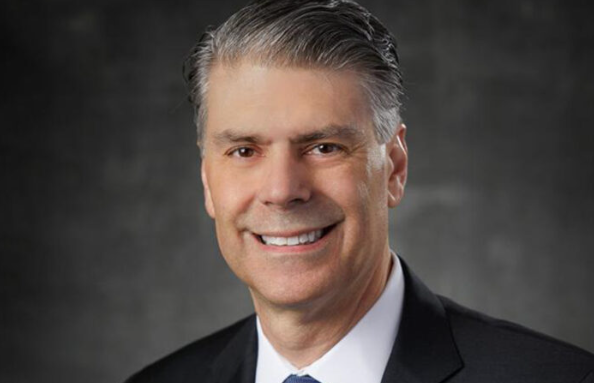
Almeida, the new CEO of Hologic
A review of Almeida's career trajectory, especially his nearly ten-year tenure at Baxter, reveals a striking duality.
On the one hand, during his tenure as Chairman, President, and CEO of Covidien Healthcare, he successfully facilitated the company's acquisition by Medtronic for nearly 50 billion US dollars in 2015, marking one of the most representative mergers and acquisitions in the history of medical technology. On the other hand, his experience at Baxter was far more complex.
Almeida took the helm at Baxter in January 2016, and initially delivered impressive results — under his leadership, Baxter's stock price more than doubled, climbing from around $30 to a high of $90. However, an acquisition regarded as his biggest strategic misstep in office completely reversed the situation.
In 2021, Almeida led Baxter to acquire medical device company Hillrom for a hefty $12.5 billion. This deal was widely considered "seriously overvalued" by outsiders.,Baxter took on massive debt financing for this. As interest rates soared, supply chain shortages persisted, and the macroeconomic environment deteriorated, Baxter had to recognize a $3.1 billion impairment charge for goodwill and intangible assets related to this acquisition in the third quarter of 2022, resulting in a net loss of $2.42 billion for the year. By the end of 2022, Baxter's market value had fallen below $20 billion.
More ironically, one of the key targets of this acquisition—Hillrom's star product, the Life2000 ventilator—experienced three consecutive recalls in the following years. Eventually, due to severe design flaws and cybersecurity vulnerabilities, it was permanently withdrawn from the market by the FDA.
Facing a sharp drop in stock price and market skepticism, some foreign media outlets have directly pointed out that Almeida’s “wrong decisions” might have turned Baxter into a potential acquisition target. In 2023, Baxter was forced to initiate a large-scale restructuring, announcing layoffs of 3,000 employees (approximately 5% of its global workforce), closing multiple factories, and eventually selling its renal care business for $3.8 billion to pay off debts.
Of course, blaming all of Baxter's problems entirely on Almeida might be unfair. During his tenure, he did push forward several strategic adjustments, including the divestiture of the biopharmaceutical business and the implementation of a new operating model, which to some extent optimized the company's asset structure. Some analysts also pointed out that the timing of the Hillrom acquisition coincided with the global pandemic and post-pandemic supply chain disruptions, and these external factors amplified the difficulty of integration.
Now, Almeida's stage has shifted to Hologic. The company has delisted from NASDAQ, meaning it has temporarily shaken off the short-sighted constraints of quarterly report pressures. With the backing of capital, Almeida is highly likely to kickstart another round of mergers and acquisitions. For women's health companies in China and even globally, a more flexible and aggressive Hologic is making a comeback. However, where this "double-edged sword" will strike remains to be seen over time.
Almeida's "comeback" is also a bold bet by a top global private equity firm on the medical technology sector. His track record over the past two decades proves that he is someone capable of changing a company’s fate. This controversial yet accomplished "veteran of medical devices," on the golden track of women's health, will tell what kind of story? We will continue to follow.
Do you have confidence in this medical device veteran who is as controversial as he is accomplished? What direction will Hologic take after privatization? Feel free to leave your comments and join the discussion.
The content of this article is for reference only and does not constitute investment advice. Readers are expected to effectively distinguish.If any platform reprints this article, it must take responsibility for the content of the article itself. Medical Device Business Review is not responsible for any impact caused by secondary dissemination after reprinting.

If you find the content rewarding, welcomeStar Mark、Like、Forward!
Your support is our greatest motivation.