

From Lab to Market: Professor Zhang Xiaochu of USTC on Navigating the Dual Roles of Scientist and Entrepreneur
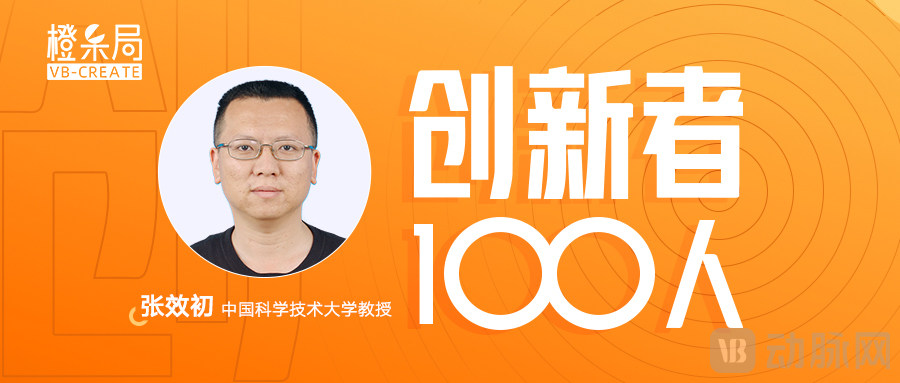
Personal Profile:Currently a Professor and Doctoral Supervisor at the University of Science and Technology of China (USTC), and a Young Scholar under the Chang Jiang Scholars Program. Since 2010, he has served as Principal Investigator (PI) at the Laboratory of Cognitive Neuropsychology, School of Life Sciences, USTC. He concurrently holds the position of Deputy Director of the Department of Psychology (preparatory) within the School of Humanities and Social Sciences. He also serves as an Editorial Board Member for Frontiers in Psychiatry (IF=2.8) and Frontiers in Human Neuroscience (IF=2.8, GAE), and acts as a reviewer for multiple top-tier international journals.
Currently serves as Vice Chair of the Committee on Psychotherapy for Drug Addiction, Asian Society for Research on Substance Abuse; Vice Chair of the Addiction Imaging Branch, China Association for Prevention and Treatment of Drug Abuse; Vice President of the Neuro-Management and Neuroengineering Research Association, Chinese Society of Management Science and Engineering; Vice President of the Anhui Association for Addiction Rehabilitation Research; Vice President of the Anhui Association for Drug Rehabilitation Work; Vice President of the Anhui Social Psychology Society; and Executive Vice President of the Anhui Mental Health Education Research Association.
Research Directions:(1) Neural mechanisms of cognitive impairment and mental disorders, such as drug dependence and internet gaming addiction; (2) Neural mechanisms underlying the impact of modern technological advancements on higher-order human cognitive functions, such as emotion, decision-making, and love; (3) Exploration of the application and neural mechanisms of non-pharmacological techniques in the treatment of addiction and other psychiatric or neurological disorders, such as real-time neurofeedback, transcranial electrical stimulation (tES), and cognitive psychotherapy.
Research Findings:Published in top-tier international journals such as Nature Human Behaviour, Biological Psychiatry, Brain, Advanced Science, and NeuroImage.
It is evident that scientists are becoming an innovative force in the wave of the biotechnology revolution.
They are not the well-known business tycoons we once knew, nor are they internet entrepreneurs riding the crest of the latest trends. Instead, they are artisans stationed in quiet corners, devoted to their own scientific research. Without spotlights shining on them, they generate their own light. In the contemporary era, technological innovation has made all this possible.
The state has also promulgated the Law of the People’s Republic of China on Promoting the Transformation of Scientific and Technological Achievements, supporting scientists in facilitating the transition of research outcomes from “research” to “production.” The 14th Five-Year Plan also repeatedly emphasizes the need to “strengthen intellectual property protection and significantly enhance the effectiveness of the transfer and commercialization of scientific and technological achievements.”
Macro-level policies ultimately impact specific regions and individuals, with numerous scientists and clinical experts actively exploring innovative models for translational research.
Professor Zhang Xiaochu is one of them. A professor and doctoral supervisor at the University of Science and Technology of China (USTC), Professor Zhang has been dedicated to researching drug addiction disorders and intervention mechanisms since returning to USTC in 2010. In his view, academic publications are endless; only by translating research achievements into practical applications in real-world settings can their social value be fully realized.
In 2018, at the urging of others, Professor Zhang Xiaochu assembled a team and established Xiaolong Technology, launching the NeuroSee brain-computer interface device based on his more than ten years of research findings. Currently, this product has been successfully applied in the treatment of nicotine, drug, and alcohol addiction at judicial drug rehabilitation bureaus and higher-level research institutions in Anhui Province and other regions.
VCBeat’s “Chengguo Ju” Talks with Professor Zhang Xiaochu: Exploring His Entrepreneurial Journey, Examining How He Navigates the Dual Roles of Scientist and Entrepreneur, and Overcoming Challenges in Translating Research into Practice—Offering Insights for Industry Peers Engaged in Commercializing Scientific Achievements.
The following is a verbatim transcript of the dialogue between VBInsight and Professor Zhang Xiaochu. To facilitate smooth reading, VBInsight has made editorial adjustments to the text without altering its original meaning.
VCBeat: What led you to choose drug addiction intervention as your research focus? What is the current progress of the project?
Zhang Xiaochu:I initiated basic research on drug addiction disorders during my doctoral studies. After earning my Ph.D. in 2005, I visited the National Institute on Drug Abuse (NIDA) at the U.S. National Institutes of Health (NIH) for academic exchange, where I commenced applied research on the mechanisms of intervention for drug addiction.
NeuroSee Brain-Computer Interface is our project product, featuring two functional modules: neurofeedback and electrical stimulation.Clinical trials have demonstrated that our neurofeedback technology yields significant therapeutic effects in patients with nicotine and methamphetamine addiction, with efficacy sustained for at least three months post-treatment; it also shows clear benefits in treating anxiety disorders and attention-deficit/hyperactivity disorder (ADHD). Furthermore, electrical stimulation technology exhibits substantial efficacy in addiction treatment and has broad applications in conditions such as depression and stroke rehabilitation.
VBInsight: Under what circumstances did you decide to start a business focused on translating research into commercial applications? What preparations did you make for your transition from scientist to entrepreneur?
Zhang Xiaochu:In fact, I have always harbored entrepreneurial aspirations, hoping to translate scientific research achievements into tangible productive forces. However, the actual decision to embark on this venture was spurred by external encouragement. A few years ago, someone approached me with an offer to facilitate the commercialization of my research. We subsequently assembled a team and sought investment... The entrepreneurial journey proved arduous and protracted; we encountered various setbacks that nearly led to the project’s demise. It was at this juncture that I realized one thing: in the early stages of a project,Scientists must take the lead and serve as key decision-makers within their companies. Moreover, they should not focus solely on technological innovation but also keep abreast of real-time developments in their companies and across the entire industry.Only in this way can the commercialization of scientific and technological achievements be successfully realized.
To better facilitate the transition from “R&D” to “production,” I brought on Lv Wei, a co-founder who is well-versed in both technology and the market.
CEO Lü Wei, my classmate from the School of Life Sciences at the University of Science and Technology of China, entered the field of marketing upon graduation. Over the past two decades, he has served as Marketing Director at listed companies such as Amoy Top Biotechnology and Motic, possessing expertise in marketing strategy and communication management.
The technical component of the team is primarily led by Dr. Ma Ru, who holds a Ph.D. in Biophysics from the University of Science and Technology of China. She oversees other full-time and part-time students in addressing technical challenges. Additionally, I supervise more than 40 master’s and doctoral candidates. I provide academic guidance tailored to their individual characteristics and aspirations. For graduate students interested in pursuing technology transfer and commercialization, I invite them to join the team and delve deeper into this research topic.
After nearly five years of refinement, our team’s “division of labor and collaboration” model has matured, and our internal collaborative capabilities have become relatively stable. Furthermore,Leveraging our affiliation with the University of Science and Technology of China, we are able to aggregate superior resources in both research hardware and software.
VBInsight Orange Fruit Bureau: As a professor at the University of Science and Technology of China, what advantages do you have in entrepreneurship, and what obstacles will you face?
Zhang Xiaochu:First, we have a strong environment for basic research.The Cognitive Neuropsychology Laboratory at the University of Science and Technology of China was established in the late 1990s by Professor Zhang Daren. After Professor Zhang retired in 2010, I assumed the role of Principal Investigator (PI) of the laboratory, conducting research on the neural mechanisms of drug and behavioral addictions.
Secondly, university faculty members have access to greater talent and financial resources.For instance, in China, plagiarism is rampant and persists despite repeated bans. It can be said that any promising technology or product inevitably faces counterfeiting. So, how can we avoid being copied? The only way is to continuously iterate our technologies and build high technical barriers. In this regard, the human and material support from government departments and related institutions such as the University of Science and Technology of China has enabled us to complete our early-stage technological accumulation.
Furthermore, we possess a robust platform for translating research findings into practical applications.To better incubate more innovative forces, the University of Science and Technology of China (USTC) established the Institute of Advanced Technology. Relying on upstream scientific and technological resources from USTC, the Chinese Academy of Sciences, and provincial universities and colleges, this platform focuses on building innovation platforms and prioritizes the secondary development and pilot-scale translation of technological achievements. For instance, in terms of intellectual property rights allocation, USTC adopts a model where inventors receive 75% and the Institute of Advanced Technology receives 25%, thereby stimulating the innovative vitality of professors.
The Advanced Institute of Industrial Technology at the University of Science and Technology of China has also established a mature system for the commercialization of scientific research.Take investment as an example. Once a clear investor is identified, the research team can submit an application for the commercialization of scientific and technological achievements. The Institute of Advanced Technology will complete processes such as due diligence and commissioned asset valuation to determine a preliminary plan for the commercialization project. Based on the results of the due diligence and valuation, a detailed commercialization plan will be formulated. After obtaining consent from all relevant parties involved in the commercialization, the plan will be publicly disclosed for 15 calendar days. Upon the conclusion of the public disclosure period, the process is essentially complete. The entire approval procedure is designed to be as efficient and transparent as possible.
The Advanced Research Institute is also continuously improving and streamlining its approval processes.This process originally took several months, or even half a year. However, by securing suitable investors and clarifying asset valuations during the initial launch phase, it can be completed within 2–3 months. In fact, universities are also concerned that overly cumbersome procedures may cause investment firms to lose patience, ultimately resulting in patents going unclaimed.
There have indeed been obstacles, though I personally feel they have been relatively few. On one hand, the University of Science and Technology of China encourages faculty members to commercialize their research achievements; on the other hand, as I hold no administrative position, I have had relatively ample time. At times, I have felt that embarking on entrepreneurship might have been a few years premature, as some of my scientific research remained incomplete. Straddling both academic research and the market has imposed considerable pressure. Nevertheless, having committed to this path, there is no room for regret. Moreover, the company has already secured orders, so I believe its survival is essentially assured.
VBInsight: For scientific research achievements to be commercialized, there must be market demand. What market research did you conduct at the time that led you to conclude this product had a market?
Zhang Xiaochu:Before deciding to proceed with the conversion, we did conduct relevant research.and finally confirmed the business directions for the B-end and G-end.
Due to the unique nature of drug addiction, China currently prioritizes compulsory detoxification. Taking the Anhui Binhu Compulsory Isolation Detoxification Center, with which we collaborate, as an example, the facility admits an average of 300 patients with substance use disorders annually, with a per capita cost of at least RMB 10,000. Even after compulsory detoxification, the post-treatment relapse rate remains exceedingly high, approaching 100%. According to surveys, there are currently more than 1,000 similar compulsory isolation detoxification institutions under the administration of public security and judicial authorities across China, indicating substantial market potential.
On the B2B side, we primarily serve psychiatric specialty hospitals and psychiatry departments within general hospitals in the healthcare system, with application scenarios spanning ADHD, anxiety disorders, depression, and stroke rehabilitation.
To be honest, the sheer number of medical application scenarios we have identified far exceeds our initial expectations. Initially, we conducted a research study based on a drug addiction treatment model. Subsequently, research institutions at several universities and Grade 3A hospitals expressed strong interest in our work.
I also understand that popularity does not necessarily translate into sales; not all “popular” products result in orders. Therefore, we are continuously optimizing the product’s performance and application scenarios. Recently, we have initiated the application process for medical device registration certificates.
VCBeat: Entrepreneurship and scientific research are two distinct fields. How do you perceive the differences between scientists and entrepreneurs? Did you encounter any confusion during this transition in identity?
Zhang Xiaochu:Scientists have a relentless pursuit of perfection in technology.In my view, technological exploration is a process of pursuing higher, faster, and stronger capabilities. Only through the accumulation of capital, resources, and talent can technological standards be elevated. Moreover, technological research is never a one-time effort.
For example,Our product, the NeuroSee Brain-Computer Interface, can non-invasively intervene at the level of the deep gray matter nuclei of the brain, whereas other electrical stimulation methods can only reach the cortical surface.This represents our current technological advantage. Although we hold a lead, other teams could develop equally outstanding products given the same amount of time. This necessitates that we maintain a spirit of exploration in our technological endeavors.
And the responsibility of entrepreneurs is to ensure that their companies not only survive but also thrive.Entrepreneurs need to consider that products must meet market demand, achieve strong conversion rates, and offer promising commercial prospects.His task is to find a suitable buyer for the product, even if it is not optimal and its technology is not at the cutting edge.
Furthermore, as a researcher, I prefer to evaluate my work objectively, highlighting its strengths while also acknowledging current limitations.We don’t want to keep claiming our product is “the best in the world”; we simply believe it performs well and is continuously improving.However, during due diligence, investment firms may prefer to hear positive narratives: “If you yourself lack confidence in your product, how can I trust you?” This stance is somewhat at odds with my perspective in scientific research.
For investors, we aim to build a relationship of friendship.First, he must understand our technology and products, recognizing that R&D is not an overnight endeavor. Second, he needs to trust me and my team. Since we have chosen to pursue this venture, we have certainly made psychological preparations and conducted market research in the early stages. Therefore, I am also striving to enhance my understanding of various aspects such as marketing and sales, and learning how to communicate effectively with investors.
VCBeat Orange Bureau: As a researcher who has already entered the market, could you offer some advice to those following in your footsteps?
Zhang Xiaochu:From my perspective, many researchers are reluctant to take the lead because it can be quite demanding. If there are individuals with both the capability and the willingness to serve as pioneers, I am willing to delegate authority to them. However, such talent is relatively scarce. Moreover,For a scientific achievement to transition from technology to a business model, it must navigate numerous hurdles. If the leader does not truly understand the technology, it will lead to cognitive biases in charting the company’s subsequent development path.
In the process of entrepreneurship, I have also witnessed many instances where scientists, though detached from corporate operations, sought to exert control over decision-making, ultimately leading to strategic missteps. This is precisely why I chose to take the lead in driving the company’s development—leading by example and engaging in active communication and dialogue with government bodies, investors, and the market to better integrate into the marketplace.
Another critical point is that the team needs a core leader. My understanding is that equity should be relatively concentrated in the early stages, and if the team lacks a central decision-making authority, it will lead to significant complications later on.
Overall, the challenges of entrepreneurship are no fewer than those of scientific research. Personally, once I commit to a cause, I will persevere no matter how difficult it becomes. The same applies to the entrepreneurial journey: if one path reaches a dead end, simply find another. As long as we seek solutions, we can always move forward.