

Small Molecule Degraders: The Rising Star in Drug Discovery with Over RMB 1 Billion Raised by 13 Companies in a Year and Active Engagement from Listed Pharma Firms
Harnessing the body’s own “power” to eliminate disease is a common R&D strategy in new drug development. For example, by leveraging the mechanisms of immune cells, researchers can “educate/enhance” these cells to specifically target and attack diseased cells, giving rise to unique cell therapies. Today, we introduce an approach that leverages the body’s “Ubiquitin-Proteasome System (UPS)"A major class of innovative drugs formed by this mechanism of action—small-molecule degraders."
Small-molecule degraders have gained increasing momentum in new drug development in recent years, as their unique catalytic mechanism enables targeting of traditionally “undruggable” targets and addresses critical challenges such as drug resistance.In 2021 alone, incomplete statistics show that there were 13 financing rounds directed toward this niche sector in China, with total funds raised exceeding RMB 1 billion.
Furthermore, multiple listed pharmaceutical companies in China have actively entered the field of small-molecule degraders, with notable examples including Haisco Pharmaceutical’s HSK29116 pipeline and Kintor Pharmaceutical’s GT20029. Internationally, U.S.-based Arvinas and C4 Therapeutics are leading the development of small-molecule degrader drugs, with their respective pipelines having advanced to Phase II clinical trials.
Although no small-molecule degrader drugs have yet been commercially launched on the market, clinical pipelines currently under development demonstrate that small-molecule degraders exhibit excellent safety and efficacy profiles, holding broad therapeutic potential across multiple indications, including oncology and autoimmune diseases.
From “Molecular Glues” to “PROTACs”: Leveraging the Cell’s “Waste Disposal System” for Targeted Degradation of Proteins
The ubiquitin-proteasome system (UPS) was first discovered by scientists in the late 1970s and serves as the primary pathway for intracellular protein degradation, accounting for more than 80% of protein breakdown. The UPS consists of ubiquitin, ubiquitin-activating enzyme (E1), ubiquitin-conjugating enzyme (E2), ubiquitin ligase (E3), the proteasome, and its substrates (proteins). Among these components, ubiquitin and E3 (ubiquitin ligase) are critical for maintaining the balance between protein synthesis and degradation, initiating the destruction of proteins with dysregulated functions, misfolding, or synthesis errors.
In the ubiquitin-proteasome system (UPS), cells tag proteins destined for degradation by attaching ubiquitin molecules. These tagged proteins are then delivered to the cell’s “waste disposal center” (the proteasome), where they are broken down into short peptides and amino acids for reuse in the synthesis of other proteins.
Small-molecule degraders leverage the ubiquitin-proteasome system (UPS) to achieve targeted degradation of specific proteins, and thus are also referred to as targeted protein degradation therapy.
Small-molecule degraders mediate the recognition between ubiquitin ligases and target proteins, leading to the degradation of the target proteins. Based on differences in their degradation mechanisms, they can be further classified into “PROTAC Technology (Proteolysis-Targeting Chimera)" and "Molecular Glue Degraders” two categories. Among them, PROTAC technology specifically removes target proteins through protein ubiquitination and proteasomal degradation, belonging to bifunctional small-molecule compounds; molecular glue degraders modify the surface of E3 ubiquitin ligases to recognize and degrade novel substrates, belonging to monofunctional small-molecule compounds.
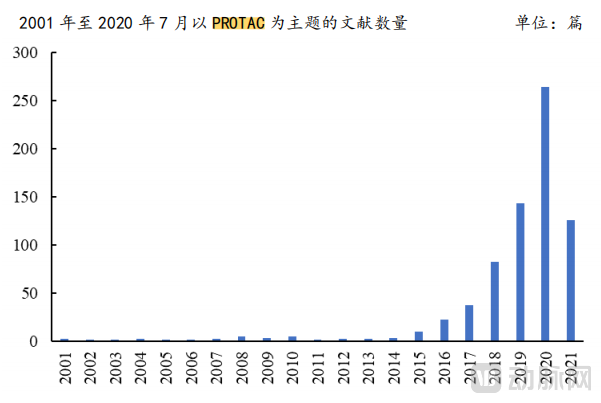
In 2001, Professor Raymond J. Deshaies of the California Institute of Technology and Professor Craig M. Crews of Yale University first proposed the concept of PROTACs. Early PROTAC compounds utilized peptide-based E3 ligase ligands, which struggled to penetrate cells and achieve effective degradation of target proteins; consequently, research by Crews and others failed to yield breakthrough progress. It was not until 2015 that research groups led by James E. Bradner, Crews, and others reported the first PROTAC molecules capable of effectively degrading target proteins in vivo. This advancement garnered widespread attention from both the pharmaceutical industry and academia, sparking a surge of research interest in PROTAC technology.
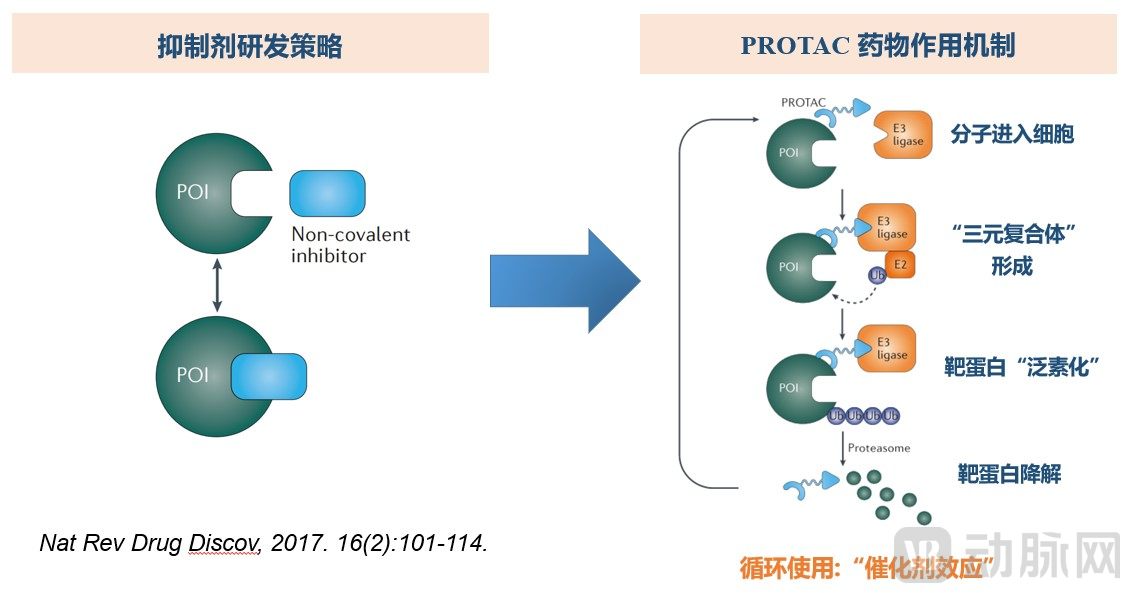
Schematic Diagram of PROTAC Molecule Mechanism
As bifunctional small molecules, PROTACs primarily consist of three components: a binder that targets the protein of interest, a binder that recruits the protein degradation machinery, and a linker connecting them. Upon entering the cell, the PROTAC molecule binds to the target protein and an E3 ubiquitin ligase at its respective ends, forming a “ternary complex.” Once this complex is formed, the E3 ubiquitin ligase recruited by one end of the PROTAC mediates the ubiquitination of the target protein by an E2 ubiquitin-conjugating enzyme. The polyubiquitinated target protein is then recognized and degraded by the proteasome, ultimately achieving the destruction of disease-causing proteins.
PROTAC molecules can function both as PROTAC degraders to bind and degrade target proteins, and as “molecular glues” to degrade novel substrates.
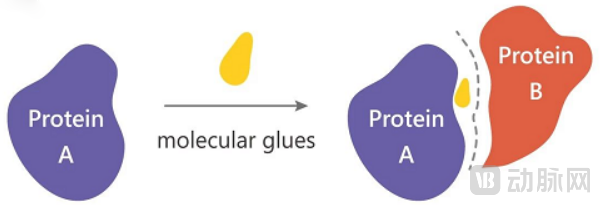
Schematic Diagram of Molecular Glue Action
Molecular glue degraders function more like adhesives, specifically directing the interaction between E3 ubiquitin ligase substrate receptors and target proteins, thereby leading to the degradation of the target proteins. Since molecular glue degraders reduce the reliance on activity-related pockets on target proteins, they hold significant potential to expand the repertoire of druggable protein targets.

The two types of small-molecule degraders each have their own strengths in clinical applications, complementing each other’s weaknesses. Molecular glues offer the advantages of low molecular weight, ease of synthesis, low cost, and high bioavailability; however, their drawback lies in the difficulty of rationally designing them for targeted protein degradation. This results in limited applicability and poor selectivity, causing clinical progress with molecular glue degraders to lag behind that of PROTAC molecules.
Compared with molecular glue degraders, the greatest advantage of PROTAC molecules lies in their rational designability and a broad range of selectable targets. Theoretically, scientific literature has disclosed that more than 1,300 proteins can be degraded by PROTAC technology, while over 200 protein targets have been experimentally validated as degradable in clinical research. Although PROTAC molecules offer higher application value, they also suffer from drawbacks such as large molecular weight, low bioavailability, complex synthesis, and high production costs, which constitute the high barriers to entry for this technology.
Unique "Biocatalysts": High Efficiency at Low Doses, Overcoming Antibody Affinity Limitations
Clinically, a vast number of diseases are caused by protein dysfunction, such as sickle cell anemia, Alzheimer’s disease, Huntington’s disease, and Creutzfeldt-Jakob disease. Targeted protein degradation therapy holds promise for treating these conditions driven by abnormal protein function.
For diseases caused by abnormal proteins, traditional targeted therapies typically employ small-molecule inhibitors; however, their limitations include the inability to completely block protein function, as well as the potential to cause off-target effects and side effects. In contrast, small-molecule degraders leverage the action of biological catalysts within the ubiquitin-proteasome system (UPS), offering high selectivity, low dosage requirements, and a significantly reduced risk of off-target effects.
Since the mechanism of action of small-molecule degraders is based on biocatalysis, the target protein ligand does not need to occupy the binding site for an extended period and can be recycled multiple times within the cell. It is precisely this unique mechanism of action that enables small-molecule degraders to address many of the pain points associated with existing targeted therapies:
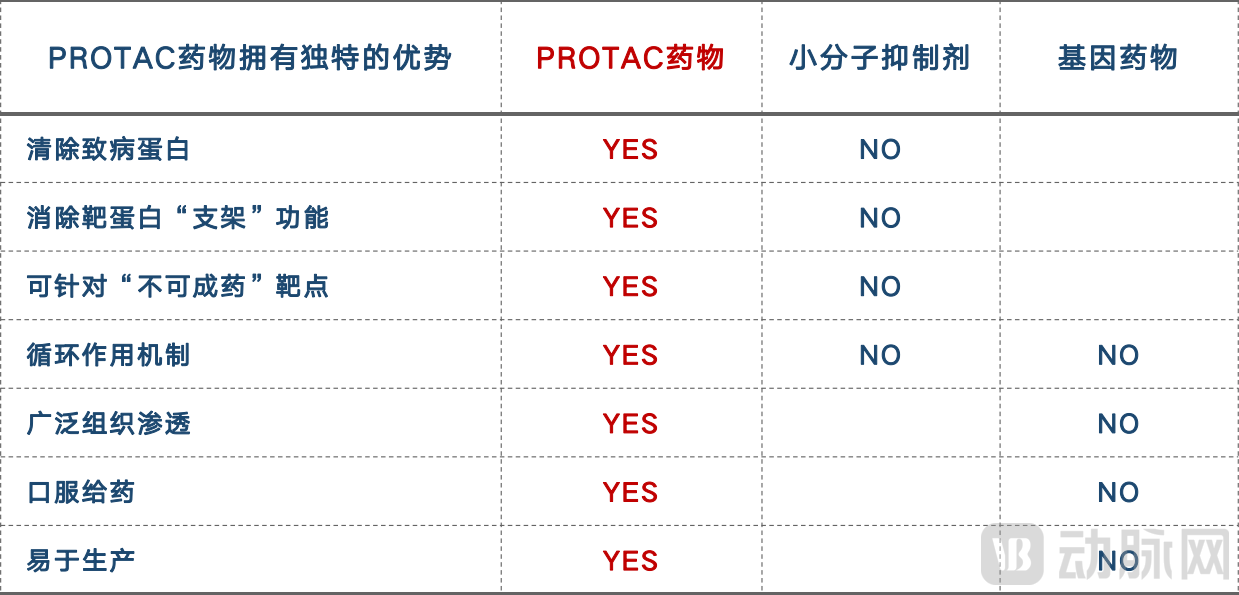
I.Small-Molecule Degraders Show PromiseConquering the Challenge of "Undruggable" Targets: Currently, approximately 80% of therapeutic targets remain “undruggable” or “difficult to drug.” Small-molecule degraders bypass the need for high-affinity binding as a bridge, directly engaging target proteins and, in theory, binding to any site on the protein to drive its degradation. This approach holds promise for addressing the challenges in drug development against undruggable and difficult-to-drug targets.
II.Small-molecule degraders canLow Dose, High LevelCompletion of Protein Degradation: Since small-molecule degraders exert their inhibitory effects through catalytic reactions, they can be released after degrading one protein and continue to target other proteins, thereby enabling a rapid reduction in target protein levels even at lower doses.
III.Small-molecule degraders canTreatment of Diseases Caused by Abnormal Structural Proteins: Because the functions of structural proteins usually do not involve enzymatic activity, they are difficult to target with small-molecule inhibitors. In contrast, small-molecule degraders can disrupt their structural functions by degrading the target proteins, thereby achieving therapeutic effects.
IV.Small-molecule degraders can overcome challenges posed by antibody affinityPain Points of Drug Resistance: The primary cause of drug resistance is mutations in the target protein, which reduce the affinity between traditional inhibitors and the target, thereby failing to effectively inhibit its function and leading to drug tolerance in patients. In contrast, small-molecule degraders leverage catalytic properties to degrade proteins; they can efficiently degrade target proteins without requiring high binding affinity, offering a promising solution to the drug resistance associated with small-molecule inhibitors.
Over 20 Small-Molecule Degraders Enter Clinical Trials, with AR and BTK Emerging as Hot Targets
Although no small-molecule degrader drugs have been approved for market launch globally to date, targeted protein degradation therapies are advancing rapidly in clinical research. According to incomplete statistics, there are currently 21 small-molecule degrader candidates in clinical development, most of which are PROTACs, with five being molecular glue degraders. Moreover, more than 100 small-molecule degrader projects are in preclinical research.
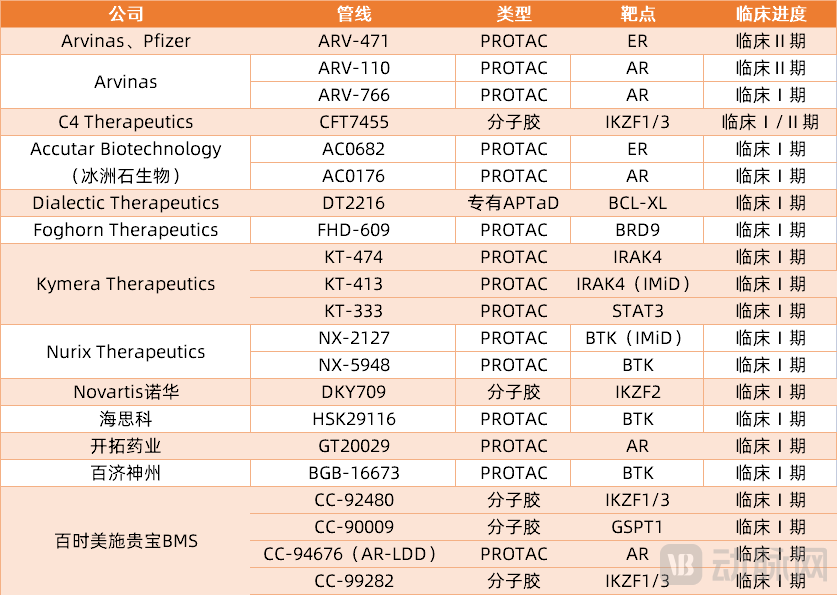
Global Pipeline of Small-Molecule Degraders in Clinical Development
According to publicly available data, the majority of small-molecule degrader pipelines currently in clinical development are still located overseas, among whichArvinasrepresented by, under its bannerARV-471 and ARV-110 PipelinesFastest global progress, already reaching the Phase II clinical trial stage.
Among them,ARV-471ArvinasTargeted Estrogen Receptor (ER) Protein Degraders Developed for Breast Cancer Patients, the company is advancing a Phase II dose-expansion clinical trial of this pipeline in patients with ER-positive/HER2-negative advanced or metastatic breast cancer. According to interim analysis data from the prior Phase I clinical study of ARV-471, ARV-471 significantly reduced ER expression levels in patients’ tumor tissues, achieving an average reduction of 62% and up to nearly 90%.
On July 22, 2021, Arvinas and Pfizer entered into an agreement to jointly develop and commercialize the ER degrader ARV-471. Under the terms of the agreement, Pfizer will pay Arvinas a $650 million upfront payment and make a $350 million equity investment, acquiring a 7% stake in the company.
Arvinas’ other pipeline with the fastest global progress isARV-110, this is a needleAndrogen Receptor (AR) Protein Degraders for Prostate Cancer, based on the company's Phase 1/2 clinical trial data in patients with metastatic castration-resistant prostate cancer, ARV-110 reduced prostate-specific antigen levels by more than 50% in 40% of patients harboring specific genetic mutations.
Meanwhile, Arvinas has another pipeline candidate, ARV-766, which targets the androgen receptor (AR) for protein degradation and has advanced to Phase I clinical trials. Distinct from ARV-110, ARV-766 is an investigational, orally bioavailable PROTAC protein degrader designed to selectively target and degrade AR, thereby addressing all resistance-driving point mutations in AR.
Besides Arvinas, another company that has reached the international forefront in the field of small-molecule degraders isC4 TherapeuticsThe company’s core pipeline asset, CFT7455, is a molecular glue degrader targeting IKZF1/3, primarily indicated for the treatment of multiple myeloma. In the Phase I clinical trial conducted by the company, CFT7455 reduced IKZF1 protein levels by 89% in patients with anaplastic large cell lymphoma (ALCL) six hours after administration. The company has currently initiated a Phase 1/2 clinical trial of CFT7455 to evaluate its safety, tolerability, and antitumor activity in patients with multiple myeloma.
Over 20 Chinese Pharmaceutical Companies Engage in Small-Molecule Degrader R&D: Half Are Publicly Listed, and Half Have Secured Tens of Millions in Financing
Back in China, there are currently few small-molecule degraders that have entered clinical trials. The focus is mainly on a few fast-progressing listed pharmaceutical companies, such as BeiGene, Kintor Pharmaceutical, and Haisco Pharmaceutical, whose small-molecule degrader pipelines have all advanced to Phase I clinical trials, placing them in the first tier.
Meanwhile, in 2021, 13 Chinese small-molecule degrader pharmaceutical companies completed financing rounds ranging from tens of millions to hundreds of millions of yuan. These companies are Meizhi Medicine, Ruiyue Biotechnology, Duoyu Biotechnology, Lingke Pharmaceutical, Yinming Biotechnology, Youbo Biotechnology, Lintai Biotechnology, Biaoxin Biotechnology, Kangpu Biotechnology, Xingkangyuan Biotechnology, Bingzhoushi Biotechnology, Rannuo Biotechnology, and Jijing Pharmaceutical.
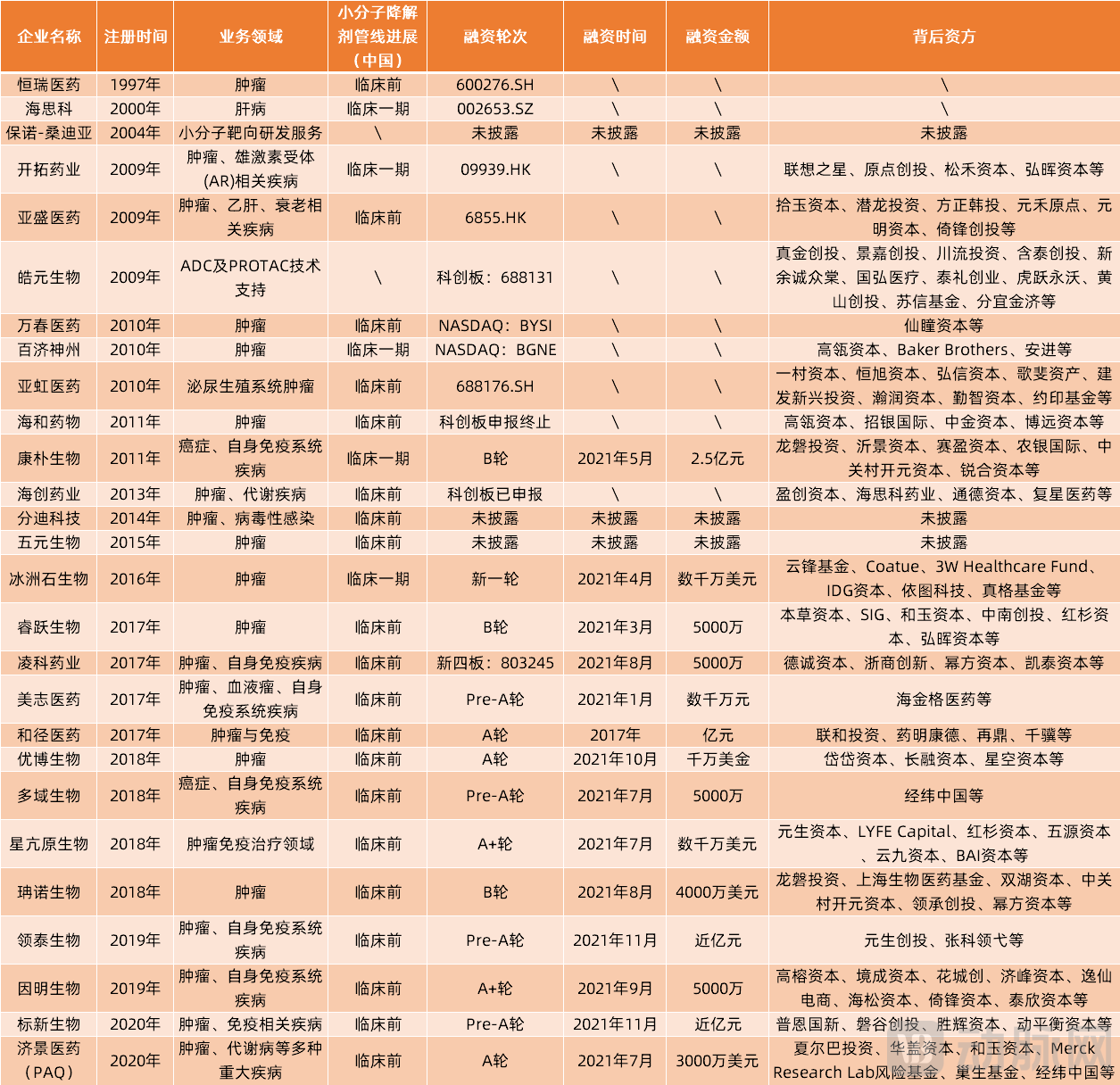
Overview of Domestic Companies Involved in the R&D of Small-Molecule Degraders
(Note: Data compiled from public sources. For any inaccuracies or omissions, please contact VCBeat for further discussion.)
As can be seen from the table above, among domestic enterprises engaged in the development of small-molecule degraders, 20 pharmaceutical companies are directly developing small-molecule degrader drugs, while another two companiesBionorica-Sandea、Haoyuan BiologyIt is a CRO/CDMO that provides technical service support for small-molecule degraders. Among pharmaceutical companies engaged in the development of small-molecule degraders, eight are publicly listed, and another 13 innovative drug companies secured tens of millions to hundreds of millions of yuan in financing in 2021.
HaiscoEstablished in 2000, the Company is a diversified and specialized publicly listed pharmaceutical group integrating new drug research and development, manufacturing, and sales. Its pipeline candidate, HSK29116, is an oral PROTAC small-molecule antitumor agent that selectively inhibits BTK kinase activity and modulates signaling pathways to interfere with B-cell development, thereby controlling the progression of various B-cell malignancies.

In April 2021, HSK29116 received approval from the National Medical Products Administration (NMPA) to initiate clinical trials for relapsed or refractory B-cell lymphoma. HaiSiKe plans to conduct Phase I clinical trials of HSK29116 granules at approximately six research centers to evaluate the safety, tolerability, and pharmacokinetics/pharmacodynamics of HSK29116 granules in patients with relapsed or refractory B-cell lymphoma. To date, no products with the same target and mechanism have entered clinical trials either domestically or internationally, positioning this drug as a potential first-in-class therapy.
Kintor PharmaceuticalFounded in 2009, the company is a novel drug R&D enterprise focused on the development of anti-cancer and androgen receptor (AR)-related therapeutics. Its pipeline candidate, GT20029, is an AR-targeting PROTAC molecule that received approval from the Center for Drug Evaluation (CDE) of the National Medical Products Administration in April 2021 to initiate clinical trials for the treatment of androgenetic alopecia and acne. In July of the same year, Kintor Pharmaceutical completed the enrollment and dosing of the first cohort of subjects in the Phase I clinical trial of GT20029 in China, marking it as the world’s first topical PROTAC compound to enter clinical development.
BeiGeneFounded in 2010, the company is a global commercial biopharmaceutical enterprise focused on the research and development of molecular targeted therapies and immuno-oncology drugs. Its pipeline candidate, BGB-16673 film-coated tablets, is a PROTAC molecule targeting BTK. It received Investigational New Drug (IND) approval in December 2021, becoming the second BTK-PROTAC to enter clinical stages in China (the first was HSK29116). In August of the same year, BeiGene had already registered the U.S. Phase I study of BGB-16673 on ClinicalTrials.gov for the treatment of B-cell malignancies, with a planned enrollment of 76 subjects.
In addition to the small-molecule degrader pipelines that have already entered clinical stages, we will also introduce several other candidates in the same class that are advancing rapidly in preclinical development.
For example,Meizhi PharmaceuticalMZ-001, a BTK-targeting PROTAC molecule, has achieved significant antitumor efficacy via oral administration through optimized molecular design, and the company is currently preparing its Investigational New Drug (IND) application. Meanwhile, Meizhi Pharmaceutical’s investigational molecular glue project, a GSPT1 degrader, has also made substantial progress, demonstrating robust pharmacological activity by inducing complete tumor regression in animal models. Furthermore,Biaoxin BiologyGT919, the most advanced pipeline asset under its portfolio, is a molecular glue degrader targeting IKZF1/3. The company has initiated the IND application process and expects to complete the submission by June 2022.
Hot Targets Crowd the Field, Ubiquitin Ligases Face Limitations, and Molecular Patent Protection Is Key to Commercialization
As mentioned above, we discussed the advantages and disadvantages of molecular glue degraders versus PROTAC molecules, as well as the landscape of small-molecule degrader companies and their pipeline portfolios both in China and abroad. PROTAC molecules are currently the most intensively studied and rapidly advancing class of small-molecule degraders. In the development of clinically relevant pipelines, PROTAC molecule design needs to overcome “Off-target effects, cell permeability, oral bioavailability, molecular stability” and other technical barriers.
For example, in PROTAC moleculesDelivery MethodDue to the inherent ternary chimeric structure of PROTAC molecules, their molecular weight is relatively large, typically ranging from 700 to 1200 Daltons. This places them within a chemical space traditionally considered undruggable based on empirical small-molecule drug discovery principles. Consequently, the vast majority of PROTAC molecules suffer from poor solubility, poor permeability, poor absorption, and low oral bioavailability. Therefore, many pharmaceutical companies are attempting to optimize PROTAC molecules to enable oral administration.Oral PROTAC DrugsThe R&D also fully demonstrates its technological attributes and innovativeness.
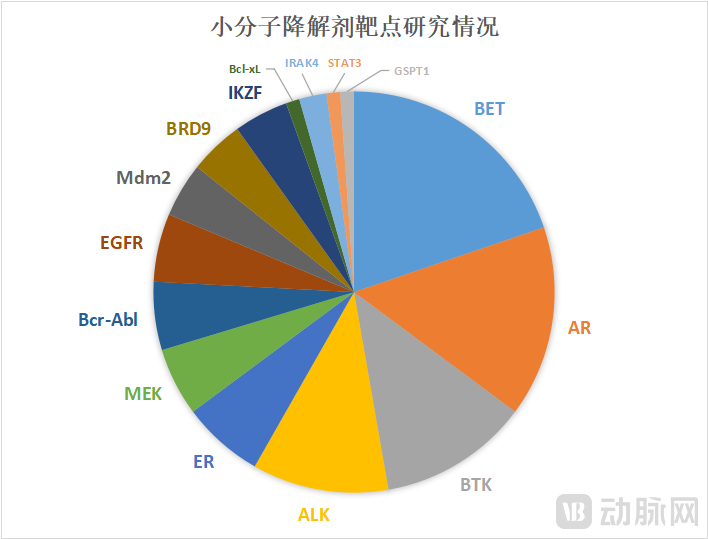
FromResearch TargetsFrom the above perspective, in addition to the AR, ER, and IKZF1/3 targets mentioned earlier, popular targets for small-molecule degraders also include BET, BTK, and ALK.
For the same disease target, the key to different pharmaceutical companies building their own technical barriers lies in the differences in molecular design and the selection of indications.Dr. Shu Yongzhi, General Manager of Meizhi PharmaceuticalMeizhi Pharma told VCBeat that against the backdrop of intense competition around popular targets, patent protection for molecular design is particularly crucial. Since the industry shares a common understanding of the underlying principles of PROTAC technology, there is a high risk of overlapping molecular designs. Therefore, it is essential to establish patent portfolios early to facilitate the future market launch and commercialization of small-molecule degraders. Meizhi Pharma has filed 14 PROTAC-related patents and obtained four grants, securing a first-mover advantage in PROTAC patents targeting multiple indications.
In addition to the above two points, another breakthrough in the small-molecule degrader track lies inE3 Ubiquitin Ligaseapplications. Although there are over 600 E3 ubiquitin ligases in the human body, most current targeted protein degraders still rely on a limited set of five to six E3 ligases, primarily CRBN or VHL.
Dai Han, Chief Innovation Officer and Head of Investment at Via GroupDr. Dai Han explained, “Screening for E3 ligase binders is by no means easy. Although there are more than 600 E3 ligases in the human body, our understanding of them remains limited. Each E3 ligase has its own tissue distribution profile and specific substrates, which require continuous research and validation.” Dr. Dai Han currently serves as Chief Innovation Officer and Head of Investment at Viva Group (1873.HK) and as an External Innovation Advisor to Johnson & Johnson. He has previously held senior executive roles in R&D, business development, and external innovation at global pharmaceutical and biotechnology companies, including over a decade at GlaxoSmithKline’s (GSK) U.S. R&D headquarters, where he served as Scientific Leader and GSK Fellow for the protein degradation team.
In the future, expanding the repertoire of E3 ubiquitin ligases will represent a major opportunity in the development of small-molecule degraders. Moreover, achieving targeted protein degradation independently of E3 ubiquitin ligases is also an innovative direction worthy of significant investment.