

Putting the Hospital in Your Pocket: Smart Innovation in China's Healthcare
In the post-pandemic era, a wave of informatization has swept across China. In March 2021, the National Health Commission issued the “Graded Evaluation Standard System for Smart Hospital Management (Trial),” making the level of hospital informatization a core criterion for assessment. In June of the same year, the General Office of the State Council released the “Opinions on Promoting High-Quality Development of Public Hospitals.” Over the next five years, public hospitals will focus on improving quality and efficiency, implementing refined management, and placing greater emphasis on talent and technological factors.
Yet the difficulty of medical reform has long been entrenched. Healthcare reform expert Li Ling once remarked, “Hospitals are the most complex social organizations ever created by human society, integrating the functions of all types of social organizations. They serve the roles of the catering industry, factories, enterprises, and research and teaching institutions; they are even akin to a miniature city…”
The emergence of digital technologies and new productivity tools such as DingTalk has provided a viable path for hospitals to advance into the era of smart healthcare.
On the 2020 China Hospital Rankings (Fudan Version), many of China’s top 100 hospitals were using DingTalk as a digitalization tool. Leveraging DingTalk’s out-of-the-box products, open ecosystem, and easily built low-code applications, these top-tier hospitals have embarked on a new phase of smart transformation.
Hospital on Your Phone
The First Affiliated Hospital, Zhejiang University School of Medicine (FAHZU) is a large-scale, Grade A tertiary general hospital integrating medical care, teaching, and scientific research. Historically, the hospital’s informatization initiatives were largely customized by different vendors. Over the years, this has resulted in dozens or even hundreds of disparate, siloed systems. Medical staff are required to log into multiple systems repeatedly each day, significantly undermining physicians’ management and operational efficiency.
As digital transformation advances, The First Affiliated Hospital of Zhejiang University School of Medicine has adopted DingTalk as its unified workplace portal. Routine hospital operations—including medical record management, staff scheduling, attendance tracking, logistics administration, meeting coordination, and administrative approvals—can now be handled anytime, anywhere via mobile devices, with the ability to locate corresponding organizational members within seconds. By integrating previously siloed systems, the hospital no longer needs to dedicate specialized time to data consolidation, enabling the hospital president to monitor the overall operational status of each department in real time.
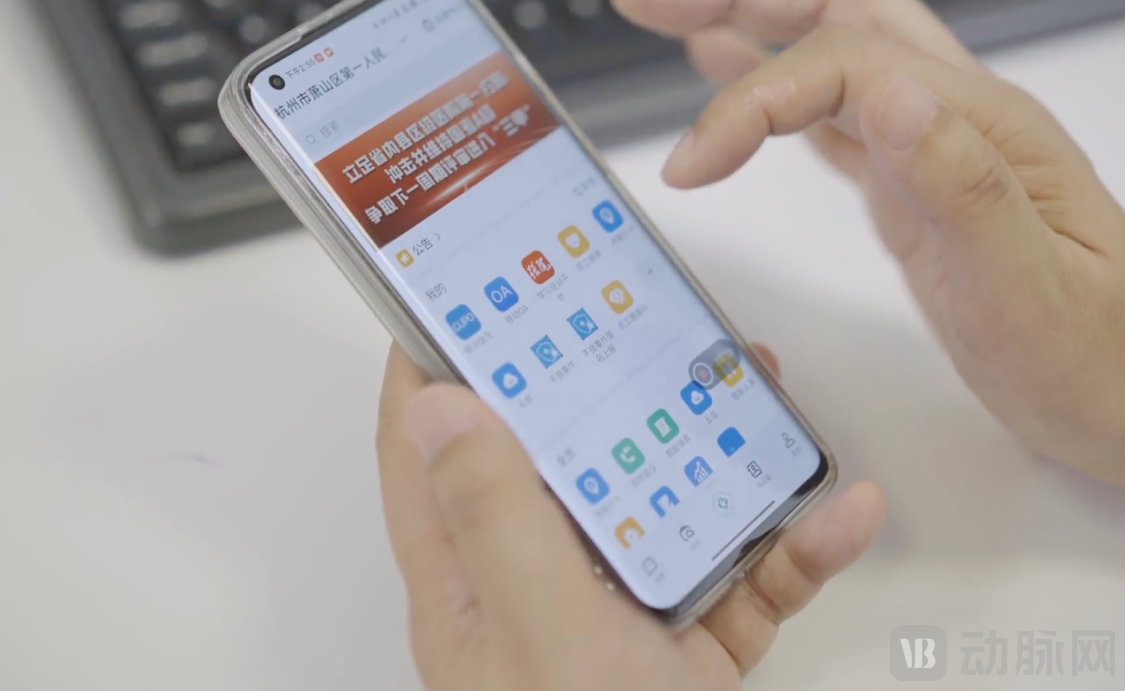
Hospital on DingTalk
To address the universal pain point of “schedule management” faced by all public hospitals, the Second Affiliated Hospital of Zhejiang University School of Medicine has adopted DingTalk as a powerful tool for staff scheduling. Hospital schedule management is extremely complex: different departments have various shifts, including day shifts, early night shifts, late night shifts, and primary responsibility shifts. Each shift type entails different working hours and job responsibilities. Assignments must be tailored to nurses’ individual competency levels and work experience, while also tracking working hours and calculating night-shift allowances. Every week, head nurses spend an entire day creating schedules. Any leave requests or shift swaps necessitate further revisions. As the saying goes, “The most worn-out book in the hospital is the schedule book.”
At the Second Affiliated Hospital of Zhejiang University School of Medicine (SAHZU), head nurses use DingTalk for staff scheduling, reducing the time required from one day to just half an hour and enabling one-click generation of expense reports. While traditional schedule changes were cumbersome, nurses can now directly swap shifts by submitting a request via DingTalk. Key information, such as assigned ward numbers, shift sequences, and departmental staff rosters, is clearly displayed at a glance, and nurses receive timely push notifications regarding their individual schedules.
At the Sun Yat-sen University Cancer Center, physicians have leveraged DingTalk’s low-code platform to digitize numerous administrative processes, including credentialing reviews, standardized residency training, and final assessments for resident physicians. Currently, one-third of the applications within the center’s DingTalk system are built by frontline healthcare professionals themselves, who create these low-code applications with the same ease as using Word or PowerPoint.
For a long time, hospital management has been plagued by prolonged decision-making cycles due to the lack of a unified platform and data accumulation, compounded by a large workforce, complex processes, multi-campus operations, and fragmented systems. The emergence of DingTalk, a new productivity tool, has streamlined these cumbersome processes, enabling medical staff to move beyond manual workflows and guiding hospitals toward intelligent management.
"Patients Make at Most One Visit"
The ultimate goal of smart hospital management is to unleash the productivity of every healthcare professional. The root cause of “difficulty in seeing a doctor and accessing medical care” lies in the growing contradiction between surging demand for medical services and increasingly scarce healthcare resources.
New productivity tools such as DingTalk not only free healthcare professionals from cumbersome administrative tasks, but also enable valuable medical expertise to transcend physical limitations and serve more patients.
One day in June 2018, Ding Kefeng, Vice President of the Second Affiliated Hospital of Zhejiang University School of Medicine (SAHZU), suddenly received a call from the on-duty physician after returning home from work. The call concerned a patient who had undergone surgery six days earlier and was now presenting with abdominal pain and high fever. Ding immediately accessed the patient’s electronic medical record via the DingTalk mobile app, reviewed the CT images and relevant laboratory reports, and determined that the patient had intra-abdominal inflammation that was not severe enough to require surgical intervention. After discussing with the on-duty manager, a conservative treatment plan was established. The entire process took only 30 minutes, sparing the patient the ordeal of a second surgery and enabling a safe discharge. In the past, it would have taken Dr. Ding more than 30 minutes just to travel to the hospital.
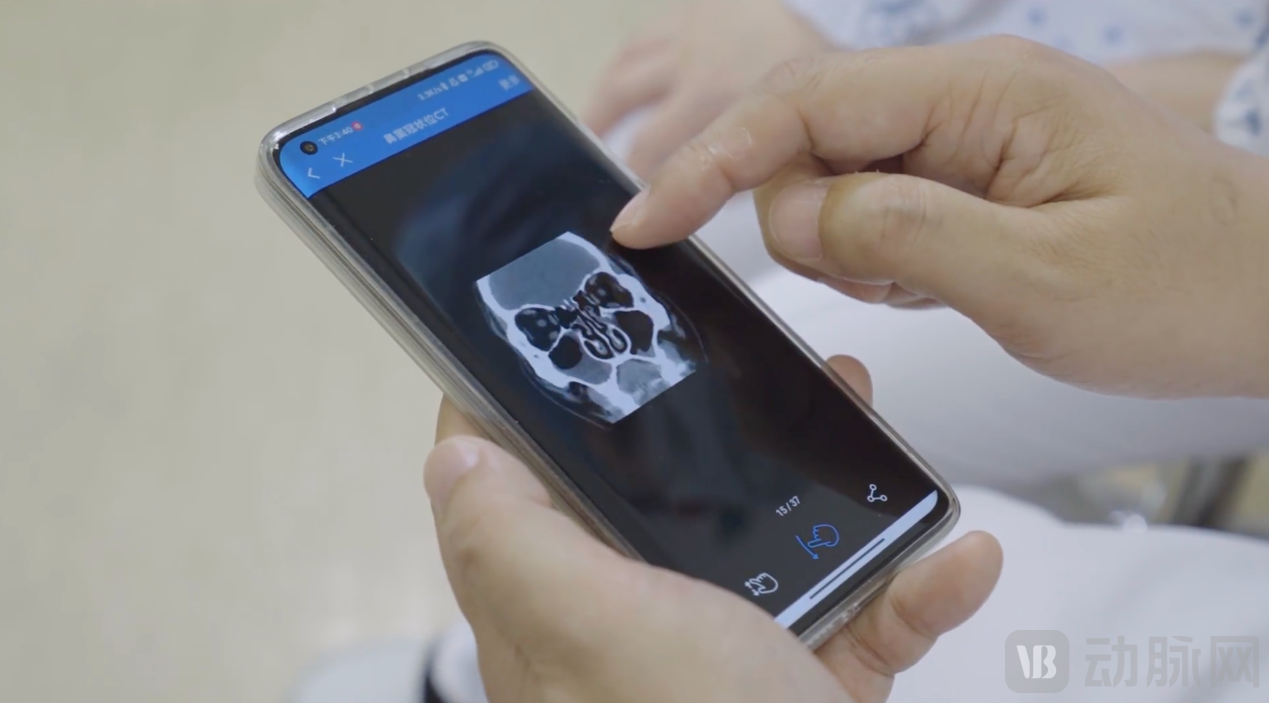
DingTalk Remote Consultation
Earlier, The Second Affiliated Hospital of Zhejiang University School of Medicine adopted DingTalk as its unified mobile office platform. In addition to covering daily administrative management, the hospital leveraged innovative applications such as Pocket Medical Records to integrate various medical data systems. This initiative has significantly reduced the need for patients to make multiple visits, enabling them to complete their medical consultations with minimal or even no physical trips, adhering to the “at most one visit” principle.
Notably, the Affiliated Hospital of Qingdao University (Qingdao University Affiliated Hospital) has also migrated patient education and tripartite consultations to the DingTalk platform. Medical staff can efficiently complete a wide range of clinical services simply by accessing DingTalk on their mobile devices. The hospital has implemented digital solutions on DingTalk for inpatient admission notifications, examination scheduling, appointment booking and reminders, meal ordering, patient transport, and post-discharge follow-up visits, thereby enabling “data to do the running so patients don’t have to.”
Smart Healthcare, Digital Upgrade
In recent years, digital and smart healthcare has evolved from exploration to innovation. The expanding rigid demand for medical and health services is driving the unprecedentedly rapid development of smart hospitals. However, the healthcare industry possesses unique characteristics, including diverse needs, high levels of specialization, and complex information systems. Critical challenges, such as how to standardize hospital management systems and how to build digital medical platforms, require collaborative solutions from experts across various fields.
DingTalk has refined hospital management granularity down to the level of departments, medical teams, and clinicians, enabling hospitals to achieve real-time, precise coordination and collaborative management of medical resources. By leveraging secure, controllable, and efficient foundational capabilities, it gradually facilitates the sharing of medical resources and services.
At Beijing Chest Hospital, medical staff fully launched remote video conferencing and live-streamed training during the pandemic;
At the First Affiliated Hospital of Soochow University, the head nurse utilized DingTalk for staff scheduling, resolving the previously complex scheduling issue involving over 2,000 personnel and more than 100 different shift types across the entire system;
At the Shanghai Public Health Clinical Center, the OA system is integrated with DingTalk to facilitate weekly work schedules for middle management, mobile pay slips, and outpatient and inpatient satisfaction surveys, thereby leveraging data to diagnose the quality of medical services.
The First Affiliated Hospital of Zhejiang University School of Medicine, the Second Affiliated Hospital of Zhejiang University School of Medicine, Sun Yat-sen University Cancer Center, the Affiliated Hospital of Qingdao University... Top 100 hospitals choose DingTalk to step into the era of smart healthcare.
As hospitals become smart, talent, equipment, and resources can be allocated to the fullest extent; when patients’ medical records are accessible in real time, the challenges of “difficulties in seeing a doctor and accessing medical care” will be readily resolved.
As Wang Jian’an, President of the Second Affiliated Hospital of Zhejiang University School of Medicine, stated, “The shift toward mobile solutions is an inevitable trend. Traditional hospitals must transform their mindset and broaden their horizons to keep pace with the new era. By leveraging ‘Internet Plus’ technologies, we provide patients with a high-quality service platform, establish efficient management models for staff, and foster a people-centered corporate culture that enables seamless communication from administration to clinical practice.”