

Xiaomi Emerges as Biggest Winner Behind NineAn Medical's $1.28 Billion U.S. Order and 27 Daily Trading Limits
Over the past two years, orders for COVID-19 testing kits have been the largest source of cash flow for domestic in vitro diagnostics (IVD) companies, creating countless wealth-building legends. These orders once enabled Chinese companies to earn seven years’ worth of profits in just six months, and propelled some firms from the brink of collapse to overnight riches.
Yet no one could have predicted that among hundreds of IVD companies, Andon Health, a manufacturer of electronic blood pressure monitors, would emerge as the biggest winner in the U.S. market.
On January 14, Andon Health announced that its U.S. subsidiary, iHealth Labs Inc., had received an order worth $1.275 billion from the U.S. government for COVID-19 test kits, equivalent to approximately RMB 8.1 billion. This amount exceeds 50% of the company’s audited main business revenue for 2020 (RMB 1.004 billion).
Securing a Major U.S. Government Contract, Andon Health’s Stock Price Surges Again with 27 Consecutive Daily Limit-Ups; Over the Past 49 Trading Days, Its Share Price Has Cumulatively Risen by More Than 1,154%. The Company’s Current Total Market Capitalization Reaches RMB 36 Billion, Having Increased by Over RMB 30 Billion in Just Two Months.
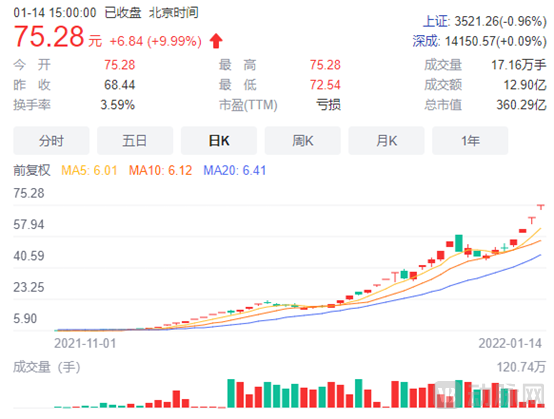
Jiuan Medical Has Recorded 27 Consecutive Limit-Ups – From Eastmoney.com
COVID-19 diagnostic test kits experienced explosive growth in both domestic and international markets, with different winners emerging at various stages. In the first half of 2020, early entrants largely emerged as victors. Companies such as Daan Gene, BGI Genomics, Sansure Biotech, Orient Gene, and Shuoshi Biotech all initiated the development of test kits immediately upon the outbreak of the pandemic and secured various market approvals ahead of competitors as the virus spread. As more players entered the market, the early-mover advantage diminished, and centralized procurement of COVID-19 test kits commenced, making price control capability the core competitiveness for domestic manufacturers. With the containment of the epidemic within China, overseas demand surged dramatically, leading to supply shortages. Companies that secured orders from the U.S. government, such as Andon Health and Orient Gene, became hotly traded concept stocks.
Andon Health’s core business previously centered on manufacturing home medical devices such as infrared thermometers, blood pressure monitors, and glucometers. How did it surpass numerous leading domestic IVD companies to secure a major contract from the U.S. government? What insights does Andon Health’s successful flanking maneuver offer to Chinese IVD enterprises? VCBeat has compiled an analysis.
Andon Health’s iHealth COVID-19 home self-test products differ from those used in China’s large-scale nucleic acid testing campaigns. Domestic testing relies on PCR molecular assays, which offer high accuracy but require specialized instruments and professional laboratories, resulting in higher costs. In contrast, iHealth’s products are antigen tests that can be performed at home, delivering results in just 15 minutes. They are convenient, affordable, and suitable for rapid screening. PCR-based test products follow a B2B model targeting hospitals, while antigen test products adopt a B2C model aimed at households.
Unlike China’s leading IVD companies, which have been deeply rooted in the industry for decades, Andon Health has only been mass-producing its test kit products for two months.
Prior to the COVID-19 pandemic, Andon Health was best known for its vital signs monitoring products (including temperature, blood pressure, blood glucose, blood oxygen, body fat, and ECG). With 35 years of experience in the blood pressure sector, the company’s blood pressure product portfolio comprises traditional hardware brands for the Chinese market, ODM and OEM services for the U.S. and European markets, and its proprietary iHealth brand globally.
The traditional blood pressure monitor and blood glucose meter markets no longer present significant technical barriers. The industry is characterized by numerous companies and products, severe homogenization, intense competition, and market space that is approaching saturation. Moreover, Andon Health is not a market leader in this sector. Taking blood glucose meters as an example, according to relevant reports, foreign brands accounted for approximately 40% of the market share in 2020. Sinocare achieved a market share of 36%, while Yicheng, ACON, and Yuwell held 7%, 6%, and 5%, respectively. Andon Health and other brands collectively accounted for only 5% of the market.
At a disadvantage in market competition, Andon Health once suffered losses for an extended period. From 2013 to 2019, its net profit attributable to shareholders of the parent company, excluding non-recurring gains and losses, was RMB -11.28 million, RMB -81.54 million, RMB -155 million, RMB -146 million, RMB -182 million, RMB -139 million, and RMB -242 million, respectively.
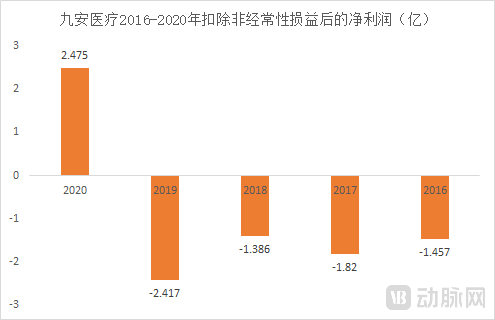
In 2020, Andon Health finally turned a profit, with its net profit after deducting non-recurring gains and losses reaching RMB 240 million. The primary reason behind this was that Andon Health capitalized on the surge in demand for anti-epidemic supplies for the first time.
During the domestic epidemic in China in 2020, iHealth saw a significant surge in global sales of its epidemic prevention-related products, such as forehead thermometers and pulse oximeters. Its thermometer products became best-sellers, turning the company’s revenue from loss to profit. The net profit attributable to shareholders of the parent company reached RMB 242.3293 million, representing a year-on-year increase of 264.68%.
The blockbuster success of Andon Health’s forehead thermometer was foreshadowed as early as 2014, when Andon Health and Xiaomi partnered on mobile healthcare initiatives.In 2014, Xiaomi entered the mobile healthcare sector by investing $25 million in Andon Health. In September 2017, Xiaomi launched the iHealth forehead thermometer, marketing it with the slogan “Born for Fever.”
iHealth Labs Inc., the subsidiary of Andon Health that secured the major U.S. government contract, was jointly established by Andon Health and Xiaomi. Andon Health holds an 80% equity stake in the company, while Xiaomi holds a 20% stake in iHealth Inc.
Through its collaboration with Xiaomi, Andon has gained access to new retail channels. According to the revenue composition of Andon Medical in the first half of 2021, revenues from iHealth and Xiaomi-authorized stores accounted for over 60%.
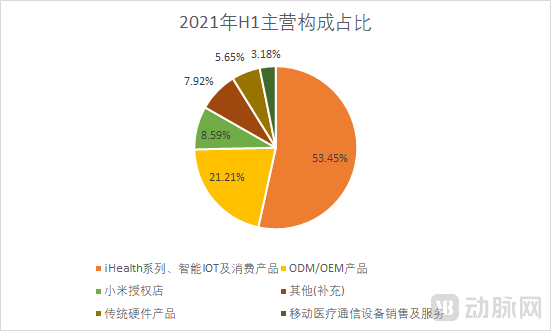
But more importantly, Andon Health has learned from Xiaomi the philosophy of ultimate price-performance ratio.Consequently, launching ultra-high cost-performance blockbuster products on new retail platforms has become Andon Health’s core strategy, striving to achieve perfection in product quality, pricing, and user experience. Andon Health believes that the success of the Pinduoduo and Xiaomi models demonstrates that ultra-high cost-performance has become a “universal” consumer value.
As early as ten years ago, Andon Health had already begun laying the groundwork for overseas markets, primarily through original equipment manufacturing (OEM). After establishing iHealth, Andon Health targeted new retail platforms, continuously launching iHealth-branded home medical devices with exceptional price-to-performance ratios on Amazon US and other channels.
In late 2021, Andon Health’s home-use COVID-19 antigen test kits once again capitalized on the pandemic response theme, as the U.S. market for home-based COVID-19 antigen testing surged—a sector where Andon Health holds a competitive advantage through its established distribution channels for home medical devices.Why Did Andon Health Suddenly Enter the COVID-19 Testing Market?
Neither the 2020 annual report nor the 2021 semi-annual report of Andon Health mentioned COVID-19 home testing products; its diagnostics business was primarily focused on diabetes management.Andon Health’s Launch of At-Home COVID-19 Testing Products May Be Linked to Changes in the U.S. Pandemic Situation
Amid the lack of effective data to assess the fatality rate and transmissibility of the Omicron variant, schools, enterprises, and other institutions have required students and employees to provide negative test results for normal attendance. This has led to a rapid short-term surge in demand for COVID-19 test kits in the United States, with highly diversified sales channels extending from offline pharmacies and supermarkets to online food-delivery platforms. Even merchants that previously did not deal in medical supplies have begun listing COVID-19 testing products. Under these circumstances, significant gaps have emerged on the supply side of COVID-19 tests in the United States, resulting in stockouts in many regions.
Perceiving market shifts, Andon Health rapidly deployed its portfolio of COVID-19 home self-test products and became one of the first Chinese companies to receive FDA Emergency Use Authorization (EUA).
Subsequently, Andon Health consecutively received procurement orders from the U.S. government, driving its stock price to successive peaks.. On January 12, Andon Health announced that its U.S. subsidiary received two purchase orders for iHealth test kits from the New York State Department of Health on December 21, 2021 (local time), with a total order value of approximately RMB 416 million; and signed a sales order for iHealth test kit products with the New York State Department of Health on January 10, 2022 (local time), with a total contract price including tax of approximately RMB 764 million. Meanwhile, the U.S. subsidiary secured purchase orders for iHealth test kits from the Commonwealth of Massachusetts and the Executive Office of Health and Human Services between December 3, 2021, and January 5, 2022 (local time), with a total contract price including tax of approximately RMB 944 million. The cumulative order amount reached RMB 2.124 billion.
Andon Health’s Prospect of Becoming a Major Supplier of At-Home COVID-19 Self-Tests in the U.S. Ignites Capital Market ExpectationsOn the 14th, Andon Health announced that it had secured a major contract worth RMB 8 billion from the U.S. Army Contracting Command (ACC). To date, Andon Health has accumulated over RMB 10 billion in procurement orders from the U.S. government.
Meanwhile, starting January 15, the United States will launch a home COVID-19 testing program, under which consumers can seek reimbursement for purchasing at-home test kits. Analysts predict that this initiative will consume nearly 2.5 billion antigen test doses per month (averaging eight tests per person per month). Demand for at-home COVID-19 testing in the U.S. market is expected to surge significantly, further expanding the market opportunity for Andon Health’s products and propelling the company to new heights.
Returning to the initial question: why was it Andon Health, among the numerous IVD companies in China, that secured the large order from the U.S. government? Although Andon Health had less accumulated experience in product technology R&D compared to its domestic IVD peers, it had long prepared for this moment through its strategic overseas channel layout, market sensitivity, and business strategies.
In terms of its overseas channel strategy, Andon Health’s success lies not only in securing FDA Emergency Use Authorization (EUA), but also in penetrating the end-user retail market and establishing its own brand. While selling infrared thermometers, Andon Health identified the emerging opportunity in the U.S. new retail sector and implemented a strategy of launching high-cost-performance blockbuster products on new retail platforms. This laid the foundation for iHealth’s COVID-19 antigen test kits to obtain FDA EUA approval and for the independent iHealth brand to enter the end-user market.
Andon Health’s COVID-19 antigen test products are sold through both consumer (C-end) and business (B-end) channels. The consumer sales channels include the official iHealth website and Amazon’s U.S. e-commerce platform.
Establishing proprietary brands in developed-country markets is the aspiration of many IVD companies, as brand ownership enables more diversified and in-depth expansion into overseas markets. Although Chinese IVD enterprises have long pursued overseas market presence, most have entered through OEM/ODM contract manufacturing models.
Taking Oriental Bio as an example, it also obtained FDA EUA approval, but through a joint application with Siemens. In the European market, Oriental Bio’s home self-test version is exclusively licensed to Siemens for sales to end consumers.
Domestic IVD companies have no choice but to pursue the OEM route; an industry insider once told VCBeat:“The United States has established high entry barriers for foreign enterprises, and adopting the ODM (Original Design Manufacturer) model can help Chinese companies enter mature markets more rapidly. However, entering through contract manufacturing also means forfeiting core pricing power.”
Andon Health’s “good fortune” lies in having bypassed market entry barriers by selling products such as blood pressure monitors, blood glucose meters, and infrared thermometers, thereby establishing its own platform and unlocking retail distribution channels.
In terms of business strategy, Andon Health has carved out a unique path centered on ultimate cost-effectiveness, leveraging the advantages of China’s supply chain to secure orders in the United States.
The U.S. government also procured COVID-19 antigen test kits in 2020, but exclusively from domestic manufacturers. Andon Health adopted Xiaomi’s consumer electronics business model to market its home-testing products, a strategy that differed significantly from those of typical IVD manufacturers and made price a highly competitive factor.
In the U.S. market, two-test rapid antigen COVID-19 kits typically sell for $14–$24 per box. However, due to supply shortages, prices in some markets have multiplied several-fold, reaching $75 per box, with some listings as high as $80 per box. This highlights the competitive advantage of Andon Health’s price point of $6.99.
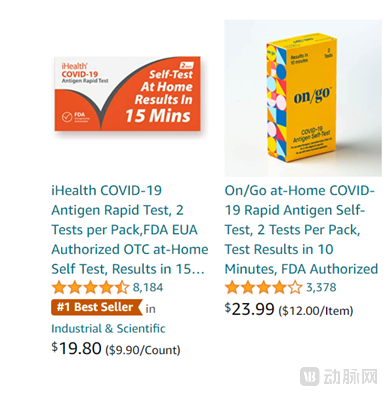
Price Comparison of iHealth COVID-19 Antigen Self-Test Products on the Amazon Platform
In addition to price, the stability of China’s supply chain is another advantage behind Andon Health.Currently, Andon Health’s monthly production capacity stands at 100 million tests, with plans to increase it to 200 million tests per month by early 2022.
The weakness of U.S. domestic companies lies in production capacity. The Board Secretary of Orient Gene once mentioned in response to investor inquiries: “In September 2020, the U.S. government purchased 150 million COVID-19 antigen test kits from Abbott. However, by October 2021, after a full year, these tests still did not achieve the same level of adoption as European antigen tests. We understand that the underlying reason was local protectionism by the U.S. government; at that time, the few approved companies had insufficient production capacity and suboptimal technical specifications.”
Expanding into overseas markets imposes high demands on enterprises in terms of production and operations, marketing, quality control, compliance management, refined management capabilities, and digital operational capabilities.Whether Andon Health can realize its performance commitments depends on strict quality control and securing the supply of core raw materials.
Opportunity favors the prepared. The companies that have recently received FDA EUA authorization for their home-use COVID-19 antigen tests—Andon Health, Acon Biotech, and Orient Gene—are all enterprises with a long-standing presence in overseas markets. Prior to the pandemic, Acon Biotech primarily sold point-of-care testing (POCT) products for drugs of abuse in the United States, while Orient Gene mainly offered diagnostic products for infectious diseases, drugs of abuse, and eugenics.
Oriental Bio expects to achieve a net profit of RMB 4.72 billion to RMB 5.12 billion for the full year 2021, representing a year-on-year increase of RMB 3.043 billion to RMB 3.443 billion, or 181.45% to 205.31%. Net profit excluding non-recurring items is projected at RMB 4.7 billion to RMB 5.1 billion, an increase of RMB 3.041 billion to RMB 3.441 billion from the same period last year, up by 183.30% to 207.41%. Following the earnings announcement, Oriental Bio’s stock hit the daily upper limit, with its cumulative gain since January 5 exceeding 75%.
At a time when test kits were in short supply overseas, their ability to secure market access was closely tied to their prior familiarity with and insight into overseas market entry rules, laws and regulations, and cultural differences.
Since the outbreak of the COVID-19 pandemic, numerous companies have successfully tapped into overseas markets. Nevertheless, more than 90% of enterprises have failed to secure a foothold in international markets due to factors such as delayed decision-making and insufficient clinical resources. An industry insider once remarked, “The overseas market for COVID-19 testing is significantly larger than that in China, but it is predominantly dominated by South Korean companies. Very few Chinese enterprises have achieved a leading position.”
The hype surrounding overseas “COVID-19 testing” concept stocks will eventually return to fundamentals. However, the high market enthusiasm for Andon Health reflects capital markets’ strong recognition of companies with internationalization capabilities. In the future, the degree of internationalization will serve as a key benchmark for assessing corporate growth potential and will become an essential imperative for domestic medical enterprises.
References:
Continuous Tracking and Recommendations for the COVID-19 Testing Sector: Global Monthly Testing Volume Shows Rapid Month-on-Month Growth, with Surging Demand in the U.S. Driving Significant Market Expansion — Essence Securities