

Molecular Targeting Technologies (MTTI) Files IPO Prospectus: Advancing Global Radiopharmaceutical Innovation with Integrated Diagnostic and Therapeutic Platforms

Molecular Targeting Technologies
Targeted Radiotherapy Developer
Certain tumors are defined as “rare” due to their low incidence rates and limited histological or molecular subtypes. The Surveillance of Rare Cancers in Europe (RARECARE) project defines rare tumors as those with an annual incidence of fewer than 6 per 100,000 individuals. Currently, many rare tumors still lack effective diagnostic and therapeutic strategies, resulting in five-year survival rates that are generally 15%–20% lower than those of patients with more common cancers, underscoring an urgent need for more effective solutions.
Molecular Targeting Technologies (MTTI), a developer of targeted radiation therapies headquartered in Pennsylvania, USA, is dedicated to developing targeted radiotherapies and diagnostic methods for rare cancers and is currently in the clinical stage. MTTI has obtained an exclusive global license from the U.S. National Institutes of Health (NIH) to commercialize selected targeted radiopharmaceuticals covered by patents on its Evans blue (EB) platform technology.
Radiopharmaceuticals, also known as nuclear medicines, are a special class of drugs containing radioactive isotopes (radionuclides) for medical diagnosis and treatment. According to data from Medraysintell, the global nuclear medicine market was valued at approximately $6 billion in 2019, with diagnostic agents accounting for the majority of the market. However, the launch of an increasing number of therapeutic agents is expected to drive the global nuclear medicine market size to around $30 billion by 2030.
What technological platforms and targeted radiopharmaceuticals does MTTI possess to capture a share of the nuclear medicine market? This article provides an overview.
Deeply Rooted in the Biopharmaceutical Industry, with an Experienced Team
As Chief Executive Officer and Chairman of the Board of Molecular Targeting Technologies, Inc. (MTTI), Dr. Chris Pak brings thirty years of experience in the biopharmaceutical industry. He previously served at Centocor, a biopharmaceutical company now acquired by the healthcare giant Johnson & Johnson, where he developed novel radiopharmaceuticals and participated in 12 Investigational New Drug (IND) applications for new therapies targeting cancer and cardiovascular diseases. Furthermore, Dr. Pak has published more than 80 articles and holds multiple patents in therapeutic and diagnostic fields. Dr. Pak has received numerous awards, including the 2019 EY Entrepreneur Of The Year™ Award for the Greater Philadelphia Region, the Asian American Business Award for Excellence from the Chamber of Commerce for Greater Philadelphia, the Ben Franklin Emerging Business Award, recognition on the Stony Brook University Alumni Honor Roll, and the 2014 Lifetime Achievement Award from the Chinese American Society for Nuclear Medicine and Molecular Imaging (CASNMMI).
Dr. Ji Li, a fellow member of the Board of Directors, serves as Chief Operating Officer at MTTI and is also President, Chief Executive Officer, and Co-Founder of the biotechnology company UFOVAX. He previously served as Vice President of R&D for Asia-Pacific at Rhodia, a French specialty chemicals company, and later became Managing Director of its Mergers & Acquisitions, Technology Development, and Pharmaceuticals divisions. He is also one of the principals at Comway Capital, a venture capital firm, and serves on the boards of several biotechnology startups.
MTTI’s Scientific Advisory Board comprises experts with many years of experience in the biopharmaceutical industry, including the Clinical Director of Nuclear Medicine Services at Memorial Sloan Kettering Cancer Center, a Senior Consultant Physician at Singapore General Hospital, the Director of the Center for Drug Targeting and Analysis at the Bouvé College of Pharmacy and Health Sciences, Northeastern University, and the Head of the Institute for Experimental Molecular Imaging at the Helmholtz Institute for Applied Engineering, RWTH Aachen University.
Focusing on Rare Cancers, Developing Novel Technology Platforms
MTTI possesses EvaThera, a novel targeted peptide radiotherapy platform based on Evans blue (an azo dye with high affinity for plasma albumin).TM, used to express somatostatin receptor type 2 (SSTR2) and αvβ3Integrin-Targeted Cancer Therapy.
EvaTheraTMThe technological platform exhibits strong affinity for albumin, thereby extending the blood half-life of targeted radiopharmaceuticals. It reduces toxicity while lowering blood clearance rates and enhancing uptake efficiency.
EvaTheraTMThe technology platform currently has two products under development: EBTATE for the treatment of neuroendocrine tumors (NETs)TM(177Lu-DOTA-EB-TATE) and EBRGD for the treatment of glioblastoma (GBM) and non-small cell lung cancer (NSCLC)TM(177Lu-DOTA-EBRGD). Both products have obtained the global exclusive patent commercialization license from the U.S. National Institutes of Health (NIH).
EBTATETM(177Lu-DOTA-EB-TATE)
EBTATETMis a type based on EvaTheraTMLong-acting somatostatin analogs for theranostic platforms, comprising octreotate targeting moiety, Evans blue for improved biodistribution, and radionuclide carrier177Composition of Lu chelators.
EBTATETM(177Lu-DOTA-EB-TATE targets tumors expressing SSTR2, while neuroendocrine tumors (NETs) highly express somatostatin receptors (particularly SSTR2). Currently, Molecular Targeting Technologies, Inc. (MTTI) has obtained FDA approval for an Investigational New Drug (IND) application for its lead product, EBTATE.TM(177177Lu-DOTA-EB-TATE) in patients with neuroendocrine tumors (NETs).
177Lu-labeled somatostatin analog octreotide (177Lu-DOTA-TATE) is currently the most widely used radiopharmaceutical in clinical practice. However,177Lu-DOTA-TATE is rapidly cleared from the blood via the kidneys, resulting in poor retention within tumor lesions. Compared with177Compared with Lu-DOTA-TATE,177Lu-DOTA-EB-TATE leverages the Evans blue moiety to reversibly bind albumin in plasma, effectively prolonging its blood half-life and thereby enhancing targeted accumulation and retention of the radiopharmaceutical within tumors.
A Prospective Pilot Study by MTTI in Patients with Advanced Neuroendocrine Tumors Demonstrates EBTATETMTumor uptake and therapeutic efficacy were both significantly higher than those of the comparative therapy.
A single low-dose (19.5 mCi) administration of EBTATE within 3 monthsTMThe treatment significantly reduced the volume of pancreatic and hepatic tumors.
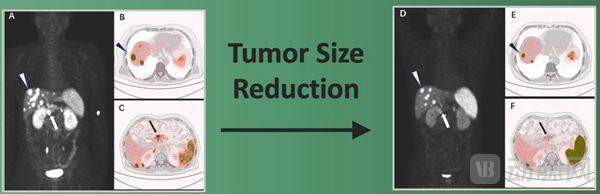
Image source: MTTI official website
Furthermore, compared with the control therapy, EBTATETMThe slower rate of peak attainment and the prolonged plateau phase also increased tumor uptake by 7.9-fold.
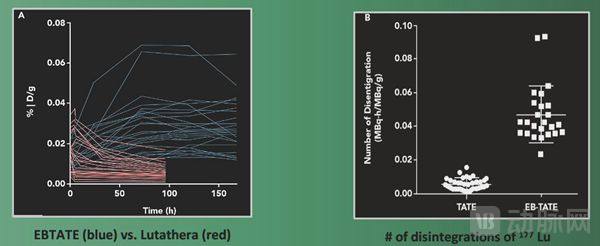
Image source: MTTI official website
EBTATETMIt is also applicable to the treatment of thyroid hormone cell carcinoma (HTC) expressing SSTR2. A comparative study showed that, in mouse models with HTC, EBTATE, compared with other therapies,TM(Left figure) Significantly reduced tumor size and prolonged overall survival.
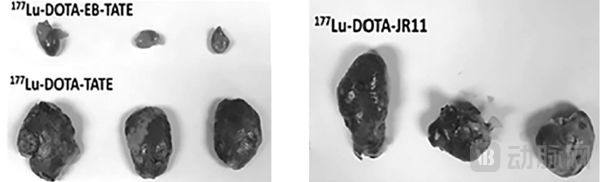
Image source: MTTI official website
Overall, EBTATETMPossesses the following three advantages:

EBRGDTM(177Lu-DOTA-EBRGD)
EBRGDTMis an EvaThera-basedTMRadiopharmaceuticals for theranostic platforms using Evans blue to target α-expressingvβ3Integrins in brain tumors, including glioblastoma and non-small cell lung cancer.
Early proof-of-concept studies have shown that, compared with NOTA-RGD or DOTA-RGD conjugates without Evans blue,177Tumor uptake of Lu-DOTA-EBRGD was significantly improved. Furthermore, when used in combination with PD-L1 checkpoint inhibitors or immunotherapy,177Lu-DOTA-EBRGD was also shown to synergistically prolong survival and reduce colorectal tumor volume.
EBRGDTMTargeted Expression αvβ3Integrin-Targeted Tumors Primarily Exhibit the Following Three Advantages:
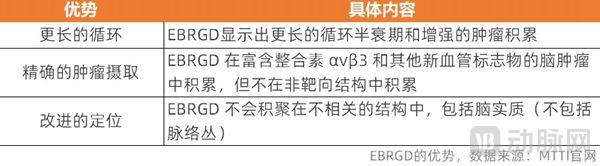
MTTI plans to conduct EBRGD in 2022.TMInvestigational New Drug (IND) application and conduct Phase I clinical trials.
Recently, MTTI has partnered with radiopharmaceutical company Isotopia Molecular Imaging (IMI) and radioisotope supplier Monrol to secure a stable supply of carrier-free Lu-177, supporting the clinical development of its targeted radioligand therapy products. Additionally, Evergreen, a contract development and manufacturing organization for radiopharmaceuticals, will assist MTTI in the production of EvaThera.TMPlatform-based radiopharmaceuticals.
Multi-Pronged Approach to the R&D of Diagnostic Radiopharmaceuticals
In addition to therapeutic radiopharmaceuticals, MTTI also offers a portfolio of diagnostic radiopharmaceuticals, with FGA and TDURA as its flagship products for the early detection of tumor response to pharmacological therapy.
FGA(18F-Fluoroglucaric Acid)
FGA(18F-Fluoroglucaric Acid is glucaric acid labeled with the radioactive isotope F-18. It is a PET imaging agent used to evaluate cancer diagnosis and treatment, belonging to the category of diagnostic radiopharmaceuticals.18F-FDG specifically targets necrotic cells; in addition to its use in the early detection of tumor response to pharmacological therapy, it can also be used for early imaging of cardiovascular diseases, such as acute myocardial infarction and stroke. Currently, MTTI has been granted by the United States Patent and Trademark Office1818F-FDG Patent.
TDURA(99mTc -hynic-duramycin)
TDURA(99mTc-HYNIC-duramycin is an imaging agent capable of visualizing dead cells. Upon cell death, phosphatidylethanolamine (PE) translocates from the inner to the outer leaflet of the cell membrane. Consequently, TDURA binds to PE after administration in the human body and emits gamma rays, enabling the visualization of dying or dead cells via gamma camera imaging. It demonstrates advantages such as high affinity, rapid penetration, and fast clearance. TDURA received the First Prize for Imaging at the 2017 Society of Nuclear Medicine and Molecular Imaging (SNMMI) Annual Meeting and the Second Prize in the Innovation Challenge at the 2017 Re-Early Stage Investment (RESI Boston) Conference.
MTTI has obtained approval from the European Federal Agency for Medicines and Health Products (FAMHP) for its Phase I clinical trial application for TDOURA, which will evaluate the safety, dosing, and therapeutic response of TDOUR in patients with advanced colorectal cancer (CRC).
Promising Future for Domestically Produced Medical Isotope Lu-177 and Related Radiopharmaceuticals
Lutetium-177 (Lu-177) is a therapeutic radioisotope recommended by the International Atomic Energy Agency (IAEA). The use of Lu-177 conjugated with various targeting molecules to treat malignant diseases with systemic metastases is widely recognized in the medical community as a revolutionary approach.
In 2019, China’s annual consumption of Lu-177 reached 50 curies, with a year-on-year demand growth rate of 30%, ranking first among major domestic medical isotopes. However, due to constraints such as limited awareness, capacity bottlenecks, and policy barriers, China had long relied entirely on imports for Lu-177. It was not until 2020, when the China Academy of Engineering Physics developed carrier-free Lu-177 products with independent intellectual property rights, that China broke its longstanding dependence on imported supplies of this radionuclide. Nevertheless, at present, domestic production of Lu-177 is limited to small batches, meeting only 5% of national demand, indicating substantial room for future development.
The reliance on imports for the radioactive isotope Lu-177 has led to ancillary issues such as international supply shortages, long product order lead times, decay-related losses, and high costs, which have hindered its widespread promotion and application in clinical departments in China. Internationally, Lu-177-labeled octreotide used for the treatment of neuroendocrine tumors (177Lu-DOTATATE), prostate-specific membrane antigen inhibitors for the treatment of prostate cancer (177Specialized radiopharmaceuticals such as Lu-PSMA-617 have not yet been introduced, and China also lacks independently developed original radiopharmaceuticals corresponding to Lu-177.
In 2021, the China Atomic Energy Authority, in conjunction with the Ministry of Science and Technology and six other departments, officially released the Medium- and Long-Term Development Plan for Medical Radioisotopes (2021–2035) (hereinafter referred to as the “Plan”). This is China’s first programmatic document specifically addressing the application of nuclear technology in the healthcare sector, and it holds significant importance for enhancing the capabilities of the medical radioisotope industry and supporting the implementation of the Healthy China strategy.
“The Plan” outlines detailed tasks for the domestic development of Lu-177: gradually resume the production of medical isotopes such as Lu-177; master key technologies for the development of carrier-free Lu-177, including irradiation and purification; and carry out177Lu-DOTATATE、177Development of radiopharmaceutical technologies with mature clinical applications abroad, such as Lu-PSMA-617; establishment of 3–4 large-scale Lu-177 production lines with an annual output of approximately 5,000 curies.
China has not yet achieved large-scale domestic production of Lu-177 and still lacks corresponding independently developed original radiopharmaceuticals. In the future, further breakthroughs are expected by leveraging policy advantages.