

USTC Professor Zhang Xiaochu's Startup EfLong Tech Files IPO Prospectus for Non-Invasive Brain-Computer Interface Platform Targeting Addiction, Mental Health, and Rehabilitation
When an individual possesses the conditions necessary to realize their ambitions, early dreams are earnestly elevated into reality, and the feasibility of their practical implementation begins to be assessed.
Professor Zhang Xiaochu of the University of Science and Technology of China is a case in point. “In fact, I have always harbored entrepreneurial aspirations, hoping to translate scientific research achievements into tangible productive forces. This desire grew even stronger once our product took shape. Ultimately, encouraged by others, I embarked on the path of entrepreneurship.”
Professor Zhang Xiaochu earned his bachelor’s, master’s, and doctoral degrees from the University of Science and Technology of China. During his doctoral studies, he initiated basic research on substance use disorders. After obtaining his Ph.D. in 2005, he conducted visiting research at the National Institute on Drug Abuse (NIDA) of the U.S. National Institutes of Health (NIH), where he began applied research on the mechanisms underlying interventions for substance use disorders.
Driven by the vision of translating scientific and technological achievements into real-world applications, Zhang Xiaochu founded Xiaolong Technology in 2018. Leveraging over a decade of research findings, the company successfully developed the NeuroSee brain-computer interface device. Currently, this product has been successfully applied in the treatment of nicotine, drug, and alcohol addiction at judicial drug rehabilitation bureaus in Anhui Province and other regions, as well as at leading research institutions.
In 2020, Lü Wei joined Xiaolong Technology as CEO, filling the gap in the company’s team for marketing talent.
Lv Wei also graduated from the University of Science and Technology of China (USTC), but he entered the field of marketing immediately after graduation, becoming one of the few in his class to transition from life sciences research to marketing. Over the past 20 years, he has served as Marketing Director at listed companies such as Xiamen Amoytop Biotech and Motic, possessing professional expertise in marketing strategy and communication management.
In 2018, Lü Wei accepted an invitation from Professor Zhang Xiaochu to jointly develop a laboratory prototype. Eager to embrace new challenges, Lü readily agreed. In 2019, Xiaolong Technology successfully developed its prototype. By 2020, Xiaolong Technology had completed the industrialization of its first-generation product, as well as obtained standard certification for electronic equipment and CE marking for medical devices in the European Union.
“At our age, if we wish to start a business, this may be our last opportunity. If we pass it up, the rest of our lives will be entirely predictable. We may well come to regret our hesitation at this moment.” These words from Professor Zhang Xiaochu resonated with Lü Wei. “In terms of my personal capabilities, I have accumulated considerable experience and resources in the fields of biopharmaceuticals and medical devices. I am willing to take the lead in making attempts that integrate my years of accumulation and apply them to this entrepreneurial venture.”
After careful consideration, Lü Wei officially became a co-founder of Xiaolong Technology.
Lu Wei shared that Professor Zhang Xiaochu has served as a Principal Investigator (PI) at the Laboratory of Cognitive Neuropsychology, School of Life Sciences, University of Science and Technology of China, since 2010, and is a leading figure in the field of cognitive neuropsychology in China. He is willing to engage hands-on and proactively communicates with government bodies, investment institutions, and market stakeholders to better integrate into the market. “This is also a key factor in my judgment that this venture can succeed.”
Furthermore, Xiaolong Technology’s NeuroSee brain-computer interface device has broad application scenarios in substance abuse and addiction treatment, as well as in the medical management of anxiety disorders, attention-deficit/hyperactivity disorder (ADHD), depression, and stroke rehabilitation. It is indeed a “hard technology” that delivers tangible social benefits.
Lü Wei oversees market operations at Xiaolong Technology, while the technical division is primarily led by Ma Ru, who holds a Ph.D. in Biophysics from the University of Science and Technology of China. She leads other full-time and part-time students in addressing technical issues. “Professor Zhang also supervises a team of more than 40 master’s and doctoral graduate students, which serves as a talent reserve for Xiaolong Technology.”
“With a shared technical background, Xiaolong Technology has the confidence to pursue technical excellence. ‘We have all carried forward the proactivity from our student days, demonstrating strong abilities in learning and absorbing new technologies and knowledge, which results in high work efficiency. After nearly five years of collaboration, the team has developed a strong sense of tacit cooperation.’”
At the same time, Lu Wei candidly stated that more complementary talents would be recruited in the subsequent team building. “Take Professor Zhang and me as an example. Professor Zhang is decisive and can accurately perceive the trends and directions in the field of cognitive psychology. Once he sets the course, I leverage my market commercialization capabilities to implement it. In this way, Xiaolong Technology will stay on the right path.”
Furthermore, leveraging the resources of the University of Science and Technology of China (USTC), Xiaolong Technology has aggregated superior assets in both research hardware and software, thereby completing its early-stage technological and capital accumulation. Additionally, benefiting from USTC’s favorable environment and mechanisms for translating scientific achievements into practical applications, Xiaolong Technology has established robust intellectual property barriers.
NeuroSee Brain Controller is the flagship product of Xiaolong Technology, comprising brain electrical stimulation hardware, brain-computer interface (BCI) software, and BCI-guided electrical stimulation devices. It currently features two functional modules: neurofeedback and electrical stimulation.
Professor Zhang Xiaochu introduced that one of the unique features of Xiaolong Technology’s products and technologies is that “the NeuroSee brain-computer interface device can intervene at the level of deep gray matter nuclei in the brain non-invasively, whereas other electrical stimulation methods can only reach the cortical surface of the brain.”
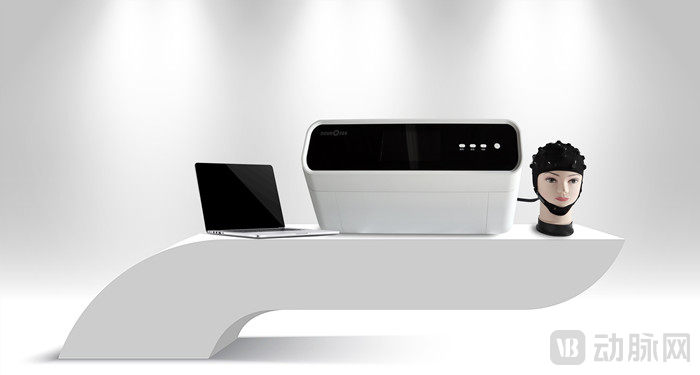
NeuroSee Brain-Controlled Device: Neurofeedback Module
The technical principle involves superimposing two or more high-frequency electrical stimulation signals (above kHz range) that do not directly affect neural activity, thereby generating low-frequency (<100 Hz) current signals capable of modulating neuronal firing patterns. This technique can focus electrical stimulation on deeper brain regions without affecting the superficial brain areas overlying the target region.
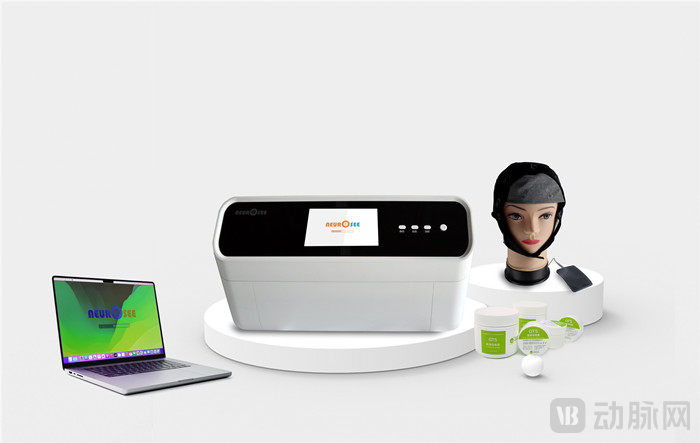
NeuroSee Brain-Controlled Electrical Stimulation Module
During use, the subject wears a brain-computer interface (BCI)-guided electrical stimulation device, with rubber electrodes containing a conductive medium placed on the scalp surface. The BCI software monitors the subject’s brain activity in real time, collecting and analyzing electroencephalogram (EEG) data from individuals with addiction to determine appropriate stimulation parameters and time windows. Transcranial electrical stimulation is then initiated within these optimal brain-state time windows for intervention. The stimulation current intensity does not exceed 2 mA, and the cumulative daily stimulation time does not exceed 30 minutes. Clinical trials have demonstrated that this is a safe and non-invasive therapeutic approach.
Xiaolong Technology adopted a double-blind, randomized controlled design, recruiting 73 individuals with methamphetamine addiction from the Anhui Province Binhu Compulsory Isolation Drug Rehabilitation Center. Participants were randomly assigned to an experimental group (n=36) and a control group (n=37). The experimental group regulated their own real-time brain activity, while the control group modulated brain activity signals matched to those of the experimental group, thereby undergoing a novel neurofeedback training protocol.
Clinical trials have demonstrated that the neurofeedback module yields significant therapeutic effects in patients with nicotine and methamphetamine addiction, with efficacy sustained for at least three months post-treatment; it also shows clear benefits in treating anxiety disorders and attention-deficit/hyperactivity disorder (ADHD). Furthermore, electrical stimulation technology has exhibited substantial efficacy in addressing addiction and is widely applied in the management of depression and stroke rehabilitation.
In 2021, Xiaolong Technology’s novel neurofeedback therapy for methamphetamine addiction, based on cognitive guidance, was selected as one of the advantageous educational and treatment projects for judicial administrative drug rehabilitation in 2021, and was included in the Ministry of Justice’s Case Library for Judicial Administration (Legal Services).
Xiaolong Technology’s brain-computer interface device has obtained approval under SGS international standards and is currently undergoing the review process for China’s medical device registration certificate. The company will primarily target psychiatric hospitals and the psychiatry departments of general hospitals within the healthcare system, exploring application scenarios in the treatment and rehabilitation of attention-deficit/hyperactivity disorder (ADHD), anxiety disorders, depression, and post-stroke recovery.
Xiaolong Technology’s first-generation product integrates neurofeedback and electrical stimulation modules, overcoming the drawback of subjects being entirely passive under standalone transcranial electrical stimulation, as well as the issue of excessive reliance on patients’ own initiative in standalone neurofeedback. Lu Wei revealed that Xiaolong Technology will subsequently develop product roadmaps tailored to specific indications.
Lu Wei also shared Xiaolong Technology’s next steps. First, Xiaolong Technology will expand the coverage of its first-generation commercial models to more research institutions and government entities. Second, it will continue to iterate and upgrade its products, primarily targeting psychiatry, neurology, and rehabilitation departments in the medical field. The company will also consider miniaturizing and portabilizing its products to provide services to individual consumers.