

Single-Cell Technology Focus Remains on Research Services, with Clinical Diagnostics Still an Emerging Opportunity
Eleven companies secured funding across 15 deals, with major investments from Hillhouse Capital Management, Sequoia Capital China, Lilly Asia Ventures, and IDG Capital—this was the financing performance of single-cell technology in 2021.
As a newly launched technology, this achievement is highly impressive.
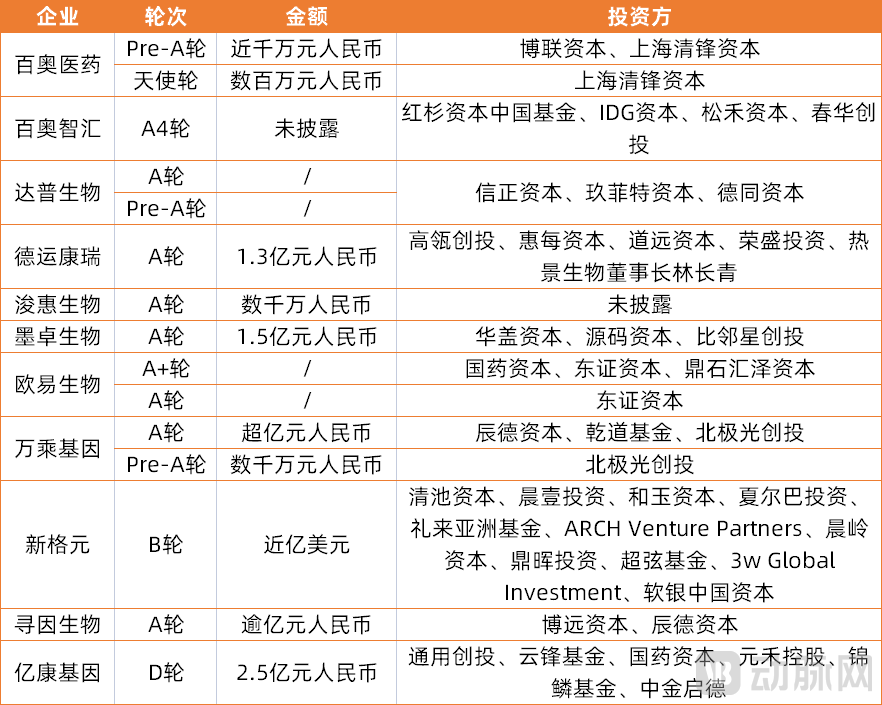
Financing Status of Domestic Single-Cell Technology Companies in 2021 (Compiled from Public Information)
Cells are the smallest functional units in the human body. Studies have shown that the heterogeneity of gene expression and function in individual cells determines cell fate during development and is closely related to the pathogenesis of diseases.
Traditional cell research conducts omics analysis on entire cell populations at the average level of large cell cohorts, failing to reflect cellular heterogeneity. Single-cell technologies investigate individual cells, enabling the decoding of life at higher resolution and within spatiotemporal contexts. These approaches reveal intercellular differences and functional dynamics within the microenvironment, with applications in precision oncology diagnosis and treatment, reproductive genetic health, immune system disorders, and infectious diseases, thereby advancing precision medicine to new heights.
In 2009, the first single-cell RNA sequencing data were released, marking the launch of the global single-cell sector; in 2011, the first high-throughput single-cell DNA sequencing data were published; in 2013, Nature magazine named single-cell sequencing its “Technology of the Year”; in 2017, the Human Cell Atlas project was officially announced, and Nature launched a special issue on single-cell technologies, stating that “single-cell genomics assays will become routine clinical tests within the next decade.”
In 2019, 10X Genomics successfully went public on the Nasdaq, sparking a global surge in single-cell technology. In 2020, the industrialization of single-cell technologies accelerated in China; Junhui Bio’s automated single-cell image analysis and separation system officially obtained the Class II Medical Device Product Registration Certificate, approved by the Hunan Provincial Medical Products Administration.
In 2021, single-cell technologies continued to advance. During this year, scientists worldwide mapped the cell atlases of human development, skin, spatiotemporal intestinal development, intestine, cerebral cortex, small cell lung cancer, gastric cancer, cerebellar development, T cells, and human chromatin.
According to statistics from VCBeat,In 2021, 11 companies in the single-cell sector completed financing, with a total of 15 financing transactions.Among them, BioAyt, Dapu Biosciences, OE Biotech, and Wancheng Genomics each completed two rounds of financing in 2021, while Singleron’s nearly $100 million Series B financing closed in November marked the largest single funding deal in China’s single-cell sector in 2021.
“Funding amounts and frequency for single-cell technology were quite robust in 2021, with capital flowing more heavily toward upstream hardware developers possessing core technologies. Industry investment enthusiasm is expected to continue rising in the coming years,” Li Zongwen, founder of Xunyin Bio, told VCBeat.
Li Jiacheng, CEO of Deyun Kangrui, stated, “As a revolutionary technology in the biomedical field for the next decade, single-cell technology has garnered significant attention from capital markets, with an increasing number of funds beginning to understand and strategically position themselves in this sector.”
In 2021, although the single-cell technology sector had not yet seen a surge of companies clustering together, nor did it attract tens of billions in capital inflows, with corporate financing rounds generally remaining in early stages, the value of this track was already evident from multiple financing deals exceeding RMB 100 million and the participation of several prominent investors.
Single-cell sequencing technologies can be divided into two categories, one of which isConduct gene-level analysisofSingle-Cell Sequencing, another category isProtein-Level AnalysisofMass Cytometry。
Single-Cell Sequencing: Urgent Breakthroughs Needed in Spatial Omics and Systemic Detection Capabilities
Single-cell sequencing is the core and highly popular technology in single-cell analysis, with the field’s rapid rise in recent years primarily driven by the swift advancements in single-cell sequencing.
Single-cell sequencing involves amplifying and sequencing the genome or transcriptome at the level of individual cells to detect single nucleotide variants (SNVs), copy number variations (CNVs), structural genomic variations, gene expression levels, gene fusions, alternative splicing in the single-cell transcriptome, and epigenetic modifications such as DNA methylation in the single-cell epigenome. This approach enables the identification of cell types and functions, as well as changes or variations in the health or status of specific cells, thereby facilitating the study of genetic characteristics associated with diseases and biological processes at the single-cell level. Furthermore, the high sensitivity of single-cell sequencing technology allows for the efficient and faithful detection of rare cell populations.
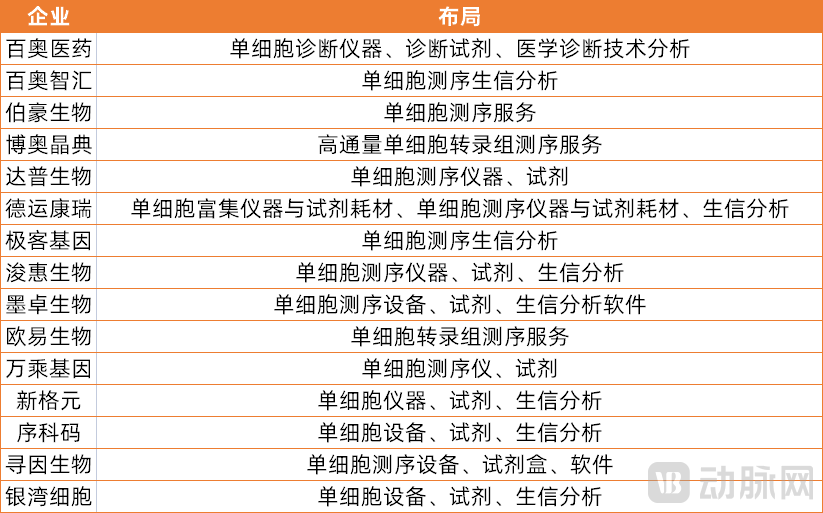
Domestic Single-Cell Sequencing Companies’ Strategic Layout (Compiled from Public Information)
The experimental workflow primarily includes single-cell suspension preparation, single-cell/single-nucleus isolation, cell sorting and library construction, sequencing, and bioinformatic analysis. Currently, single-cell sequencing still faces challenges such as upstream equipment monopolization, difficulties in cell sorting, high detection costs, complex workflows, and challenges in data interpretation and analysis. These are typical hurdles that any technology encounters during its early stages of development.
Li Zongwen believes that,Spatial omics is a critical challenge that urgently needs to be addressed in single-cell sequencing.“Currently, spatial omics products come in various forms and modalities, including fluorescence in situ hybridization (FISH) and subcellular-resolution technologies. Different techniques are suited to different application scenarios, and we look forward to the emergence of more advanced spatial omics technologies.”
Liu Jie, founder of BioMed Pharma, believes thatSingle-cell sequencing requires breakthroughs in systemic detection capabilities.“Currently, even 10X Genomics systems can only detect approximately 1,500 genes, which is still too few relative to the total number of genes expressed in a whole cell. Moreover, a significant proportion of the detected genes belong to the category of housekeeping genes, thereby limiting the clinical translation of single-cell sequencing. There remains substantial room for improvement in system detection capabilities.”
It is worth noting that overseas, the single-cell technology industry chain is clearly segmented; for instance, 10x Genomics and BD primarily focus on single-cell sequencing, while CellSearch specializes in single-cell capture. In China, however, multiple companies have already deployed comprehensive single-cell sequencing solutions covering the entire workflow—from single-cell capture and sequencing to bioinformatics analysis—including Bio-Pharma, Devotion Biotech, Xunyin Biotechnology, Bohao Biotechnology, and SeqCode.
In May 2021, DevonCare announced the acquisition of Weizhuo Biology. Following the completion of post-merger integration, DevonCare incorporated Weizhuo Biology’s single-cell sequencing platform and microsphere encoding technology into its existing portfolio, which includes single-cell enrichment and detection platforms, two single-cell sequencing platforms based on different principles, and a single-cell bioinformatics analysis platform. This strategic move has positioned DevonCare as one of the few companies globally with a comprehensive, end-to-end deep layout in the single-cell sector.
Xunyin Biology has established a comprehensive suite of single-cell sequencing products and services, covering the entire workflow from sample preservation and dissociation to bioinformatics analysis. Its proprietary SeekOne single-cell sequencing platform incorporates both microwell and water-in-oil emulsion methodologies, enabling flexible responses to diverse single-cell research needs. Meanwhile, its technical performance rivals that of leading international brands, offering more options for single-cell research in China. BioMed Pharmaceutical is also committed to providing integrated technical solutions that encompass single-cell diagnostic instruments, diagnostic reagents, and medical diagnostic technology analysis.
“The clinical implementation of single-cell technologies will ultimately take the form of in vitro diagnostics (IVD). To position themselves in the clinical market, companies must proactively develop comprehensive solutions.“Continuously improving the industrial chain to cover the upstream, midstream, and downstream sectors will be a long-term trend in the future,” said Liu Jie.
Li Zongwen stated, “The active development of comprehensive single-cell technology solutions by various enterprises is driven both by their own strategic choices and by the broader industry environment. End-to-end product and service offerings represent the ideal approach at this stage. In the future, as more companies enter the field, product diversity increases, and the number of upstream instrument manufacturers grows—leading to well-coordinated linkages between upstream and downstream segments of the industry—this phenomenon will change.”
Mass Cytometry: Suitable for Specific Scenarios with Faster Clinical Implementation
Mass cytometry is also an important technique for single-cell analysis.
Mass Cytometry Applied to Single-Cell Protein Analysis. This technology leverages mass spectrometry principles and unique metal-tagged antibodies to label cell surface and intracellular proteins, enabling multiparametric flow cytometric analysis at the single-cell level. It allows for the simultaneous analysis of more than 50 cellular parameters per cell, representing a significant improvement in analytical efficiency compared to conventional flow cytometry, which typically analyzes 4–10 proteins. This approach offers substantial advantages in clinical applications and the development of novel therapies.
Overseas, mass cytometry companies include BD and Fluidigm, while domestic enterprises include ChenAn Bio and Proteintech.

Mass Cytometry Corporate Landscape (Compiled from Public Information)
It can be observed that there are few enterprises in China involved in mass cytometry. In this regard, Li Zongwen stated that single-cell sequencing is a “discovery-oriented” tool, akin to a broad-spectrum detection method capable of analyzing tens of thousands of genes. Compared with single-cell sequencing, mass cytometry targets fewer markers; currently, it can detect up to 50 cellular parameters, with the international maximum reaching only 100 cellular parameters. Therefore, it is more suitable for specific applications, such as hematological diseases.
Single-cell sequencing is a segment within the NGS ecosystem, hence its high level of interest. However, for clinical applications, 40–50 targets are already sufficient, andMass cytometry offers the advantages of lower detection costs and faster analysis, enabling more rapid clinical translation compared to single-cell sequencing.
Overall, single-cell sequencing and mass cytometry are complementary, each offering unique value. With the launch of the Human Cell Atlas project and the significant cognitive breakthroughs brought by single-cell technologies in the field of complex diseases,Single-cell sequencing and mass cytometry are both poised to encounter greater commercialization opportunities in drug development and clinical applications,Both major technological fields hold the promise of spawning billion-dollar giants.
Research services, drug development, and clinical testing are the three major application markets for single-cell technology.
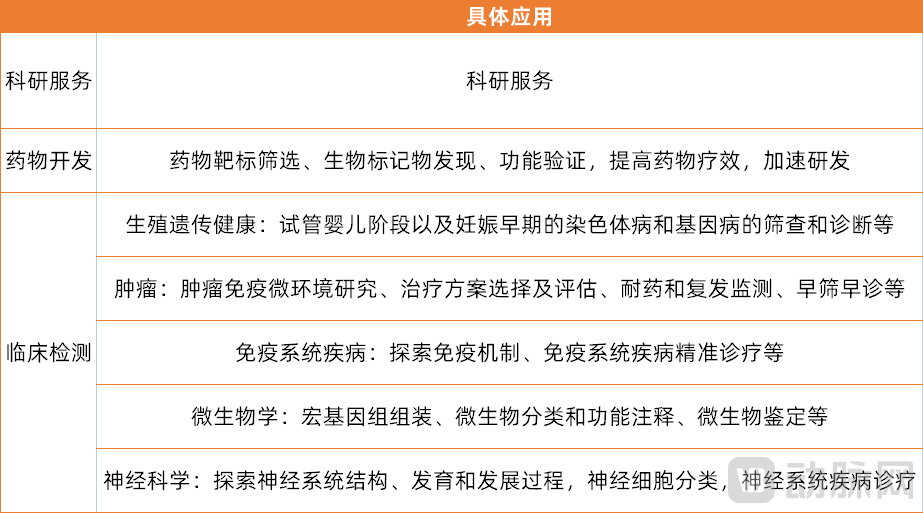
Three Major Application Markets for Single-Cell Technologies (Compiled from Public Information)
The scientific research services market is the most mature, but has not yet formed a head effect.
Currently, single-cell technology is the most mature application in the scientific research services market, with its market size in China experiencing multi-fold growth for several consecutive years. Xunyin Biology commenced commercial operations in April 2021, achieving revenue exceeding RMB 40 million. Singleron’s single-cell sequencing platform has gained recognition from over 700 users domestically and internationally, contributing to numerous scientific publications and achievements. BioCapital supports research institutions, enterprises, and public entities both in China and abroad, facilitating the publication of more than 2,000 SCI papers, with a cumulative journal impact factor exceeding 9,600; among these, 46 articles were published in journals with an impact factor above 20, and 87 in journals with an impact factor between 10 and 20.
Li Zongwen stated, “The research services market offers substantial growth potential. Most companies currently rely on imported foreign systems to deliver their services, while domestic self-developed solutions have yet to achieve scale. The market has not yet seen significant consolidation among leading players, leaving ample room for exploration. We anticipate that a clear market leader will emerge in the research services sector within the next two years.”
Drug development efforts have been made, but a complete system has not yet been established.
The application of single-cell technologies in drug development is growing rapidly. Single-cell technologies enable pharmaceutical companies to conduct high-throughput drug target screening, pharmacokinetic analysis, and efficacy evaluation at the single-cell level, significantly shortening the drug discovery cycle, reducing the cost of new drug development, and optimizing new drug pipelines.
Since 2018, a growing number of pharmaceutical companies have recognized the advantages of single-cell sequencing technology in drug development and have actively sought collaborations with single-cell technology firms. Among them, Singleron has established drug development partnerships with XtalPi and Junshi Biosciences. Danxu Biotechnology is leveraging its single-cell sequencing technology platform to expand into therapeutic areas such as SARS-CoV-2 neutralizing antibodies and infectious diseases.
Li Zongwen stated, “The drug development market is larger in scale than the scientific research services market, but it remains in an early exploratory phase and has not yet established a comprehensive ecosystem.” Liu Jie also remarked, “Due to cost constraints, the application of single-cell technology in the drug development market is currently limited. However, as costs decline and pharmaceutical companies deepen their understanding of single-cell technology, the drug development market is poised for explosive growth.”
The clinical testing market is still in its infancy and will see initial adoption in oncology and immune-mediated diseases.
The clinical market, with its broad prospects and boundless potential for innovation, is the ultimate aspiration of every single-cell technology company.
Markets such as reproductive genetic health, oncology, neuroscience, immune system diseases, and infectious diseases are all clinical application directions for single-cell technology.
Notably, low-throughput single-cell technologies have been successfully implemented in the field of reproductive genetic health. Single-cell sequencing technology enables genome-wide sequencing and quantification of germ cells and embryonic cells at the single-cell level, facilitating a better understanding of gametogenesis and aiding in the screening, diagnosis, and treatment of reproductive and genetic disorders, thereby improving the success rates of in vitro fertilization (IVF). In 2020, Berry Genomics’ PGT-A testing kit for third-generation IVF became the first to receive approval from the National Medical Products Administration (NMPA). In 2021, Jiabao Renhe’s PGT-A testing kit was also approved for market launch.
However, current single-cell technologies in the field of reproductive health are all low-throughput, and high-throughput single-cell technologies have not yet found particularly strong applications in the clinical market.
Liu Jie and Li Zongwen both agree that,High-throughput single-cell technologies will achieve clinical implementation first in oncology and immune-mediated diseases, while their applications in microbiology, neuroscience, and other fields will require more time.“As for the field of reproductive health, low-throughput single-cell technologies will remain dominant in the future.”
The greatest advantage of high-throughput single-cell technologies lies in the discovery of cellular heterogeneity.Heterogeneity is one of the greatest obstacles in the clinical diagnosis and treatment of tumors and immune-mediated diseases. Challenges such as disease refractoriness and post-treatment recurrence are directly associated with heterogeneity. Current clinical detection technologies are unable to achieve high-throughput molecular profiling at single-cell resolution. High-throughput single-cell molecular detection holds significant technical potential for identifying cellular heterogeneity, offering the possibility of fundamentally resolving the challenges in heterogeneity assessment. The results of such analyses can aid in determining clinical treatment strategies, thereby enabling personalized precision diagnosis and precision therapy.
Liu Jie believes that,The clinical testing market is in a nascent or pre-nascent stage.“At present, most ongoing initiatives are clinical research projects that essentially remain at the research level. Moving forward, enterprises need to reach a consensus with clinicians, identify suitable application scenarios, build an ecosystem, and foster collaboration among all stakeholders to rapidly unlock the potential of the clinical testing market.”
Li Jiacheng stated, “It is a common pattern for innovative technologies to first accumulate evidence through clinical research and then gradually be applied in specific fields. We need to conduct various clinical studies to explore the correlations between the information generated by single-cell technology and clinical diagnostics as well as various treatment modalities. Secondly, the high cost of single-cell technology has, to some extent, limited its broader application in clinical research. Furthermore, enhancing the automation level across the entire workflow of single-cell manipulation is another key issue that must be addressed to facilitate its future clinical implementation.”
Li Zongwen stated, “Entering the clinical testing market requires substantial support from extensive foundational knowledge bases and large-scale cohort studies. The market has not yet been unlocked, and there are no mature products available. However, it is certain that single-cell technology will eventually be implemented in clinical practice, although this will require a relatively long period. Medicine is a rigorous science; before entering clinical use, it is essential to accumulate vast amounts of data and conduct prospective experimental studies to determine the feasibility of clinical application.”
According to GeneThink’s forecast, the global single-cell analysis market size was estimated at USD 2.68 billion in 2020 and is projected to grow at a compound annual growth rate (CAGR) of 16.9% from 2019 to 2026. The domestic market size in China is expected to reach RMB 3.5 billion.
In the coming years, several key trends in single-cell technology warrant attention:
Financing momentum continues to rise.Both Li Zongwen and Liu Jie believe that the financing momentum for single-cell technologies will continue to rise over at least the next two to three years. Single-cell technology is currently garnering significant attention, making it relatively easier to secure funding.
“Multiple companies have already entered the commercialization phase. The next step is to secure substantial financial support to expand commercial scale and refine industrial layout. In the future, while the frequency of financing for single-cell technology may decline, the amount raised per round will undoubtedly increase significantly. Capital will increasingly concentrate on upstream raw material suppliers, hardware development firms, and downstream enterprises focused on industrial applications,” said Li Zongwen.
The scientific research services market is a key focus."The research services market is now generating tangible revenue. While companies are making concerted efforts in the clinical market, a surge in growth is not expected in the short term. 'Technological homogenization inevitably leads to direct price competition; in 2022, enterprises with differentiated technological innovations were able to secure a more advantageous position in the research services market,' stated Li Jiacheng."
Testing capabilities continue to improve, and the scope of testing continues to expand.“In the near future, the number of genes detectable by single-cell technologies will increase rapidly, and the scope of detection will expand from DNA expression to other levels such as cell surface proteins. It is even possible that sequencing may not be strictly necessary for single-cell analysis in the future; instead, a broader array of technical approaches could be employed to enhance single-cell resolution on a larger scale,” said Liu Jie.
Single-cell multi-omics technologies are advancing rapidly.Numerous studies have demonstrated that relying on a single omics approach has significant limitations, whereas multi-omics holds immense potential in elucidating pathogenic mechanisms, screening for tumor biomarkers and therapeutic targets, as well as enabling early diagnosis and treatment. Moving forward, we will integrate currently mature transcriptomic technologies with other omics platforms to achieve comprehensive multi-omics profiling—including transcriptomics, genomics, epigenomics, and proteomics—within the same single cell, thereby advancing personalized medicine.
Single-cell analysis has become a standard foundational research method.Li Zongwen stated, “Single-cell technology products will become increasingly diversified, serving as a foundational technology for basic and clinical research in the new era, much like next-generation sequencing (NGS).”
When discussing the key competitive factors in single-cell technology, Liu Jie stated that in-house development of upstream raw materials and system performance are crucial. If domestic companies’ systems can approach or even surpass those of 10X Genomics, they will quickly gain a competitive advantage within the industry.
Currently, the monopoly on upstream raw materials and equipment in single-cell technology represents one of the most significant pain points. Li Zongwen stated, “Achieving horizontal and vertical industrial integration to form a complete supply chain is key to ensuring independence from external constraints. Xunyin Bio has already achieved in-house research, development, and production of its core critical raw materials, resulting in a high rate of domestic production. The company plans to further increase this localization rate in the future.”
Furthermore, while a large number of domestic companies are independently developing single-cell instruments, their performance still lags significantly behind that of 10X Genomics’ systems, leading to various technical issues in practical applications.
Liu Jie stated, “This reflects the gap between China and the United States in technological and industrial capabilities. There is no easy short-term solution; companies must have sufficient patience and endurance. BioAid Medicine is developing a single-cell molecular detection system based on microfluidics and droplet encapsulation, which holds promise for achieving certain breakthroughs in detection performance.”
Li Zongwen, however, believes that product portfolio strategy and design philosophy will remain the focal points of long-term corporate competition. “At its core, any competition is a contest along product dimensions, with commercialization strategies serving merely as icing on the cake. Companies must possess a profound understanding of the market and their products, and establish a comprehensive product ecosystem.”
Li Jiacheng concluded, “The overall development environment for single-cell technology is currently favorable. Significant improvements have been made in various supporting processing technologies, microfluidic chip fabrication, and the level of industrial automation compared to the past, which will facilitate the commercialization and large-scale application of single-cell technologies.”
*Acknowledgements to Liu Jie, founder of BioEvol; Li Jiacheng, CEO of Deyun Kangrui; and Li Zongwen, founder of Xunyin Biotech, for their support of this article.