BrainCo Launches Revo 3: The World’s First 20+ DOF Open-Source Dexterous Hand with Full-Palm Tactile and Vision-Tactile Fusion

BrainCo
Non-invasive brain-computer interface technology solution provider
Using hands to interact with the world spans the entire history of human civilization. What hands can do has, for a long time, defined what humans are capable of.
Over the past decade, BrainCo has been deeply engaged in the field of brain-computer interfaces—reading and interpreting neural signals to help amputees regain flexible "hands" and restore control over their lives. In 2024, BrainCo's accumulation in bionic technology began to extend into the field of embodied intelligence. Within two years, from the deployment of the first-generation dexterous hand in humanoid robots, to the release of the tactile version, to the completion of deployments of the Revo 2 series across multiple versions at dozens of leading robotics companies.
Now, the Revo 3 with higher freedom and more comprehensive perception has been officially released.This is the world's first dexterous hand with a 20+ degree-of-freedom full-palm tactile and visual-tactile open-source ecosystem.
From Bionic Hand to Dexterous Hand
BrainCo has been researching "hands" since its establishment. The smart bionic hand developed for amputees needs to face almost all physical environments in real life. For amputees, this hand is not a device, but a part of their body.
To create this hand, the team spent a great deal of time studying the human hand itself: how the bones are arranged, how the tendons transmit force, how tactile feedback works, and what the mechanical logic behind gripping motions is. In 2019, BrainCo's intelligent bionic hand was selected as one of the Time Magazine's top 100 best inventions of the year.
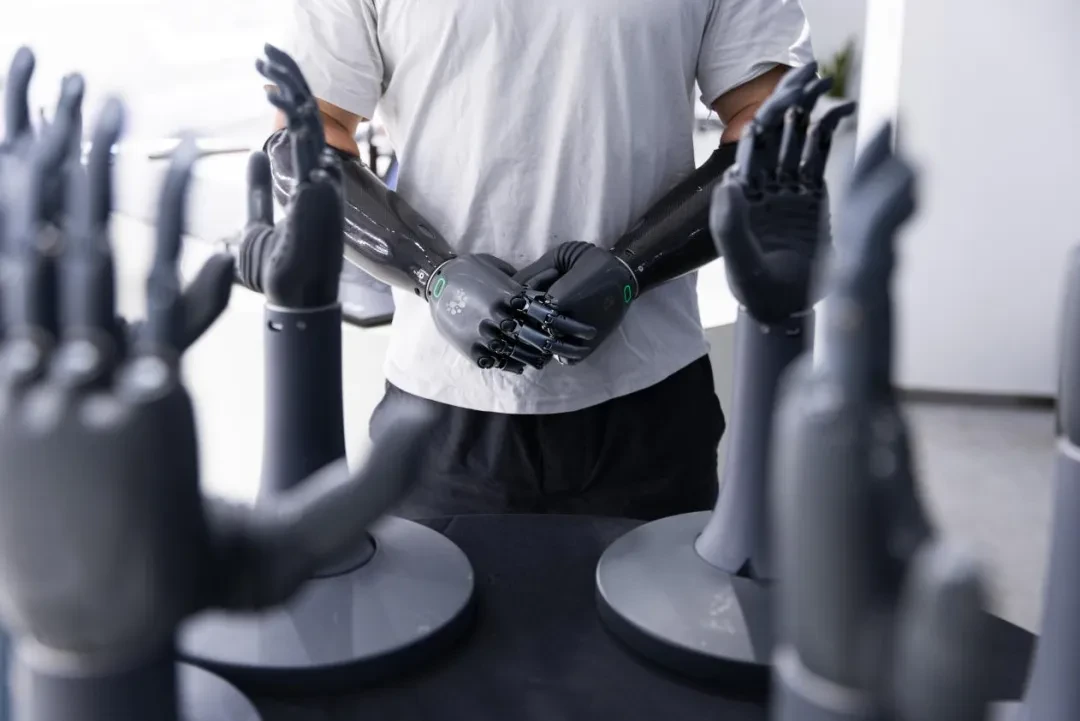
In March 2024, BrainCo launched the first generation of robotic dexterous hands and began applying them to humanoid robots. In August of the same year, the tactile version was released, integrating multimodal tactile solutions such as pressure, friction, force direction, and proximity distance. In April 2025, the Revo 2 series was officially launched, covering the Basic version, PRO version, and TOUCH version, with adaptation and deployment completed at dozens of mainstream robotics companies.
Each iteration is built on the same engineering problem: how to understand the structure, movement, and perception of the human hand and replicate it. Whether it's helping disabled individuals regain hand function or teaching robots to use hands, this question has never changed.
21 Degrees of Freedom, the Balance Point of Performance and Engineering
The human hand has 27 degrees of freedom. Revo 3 achieves 21.
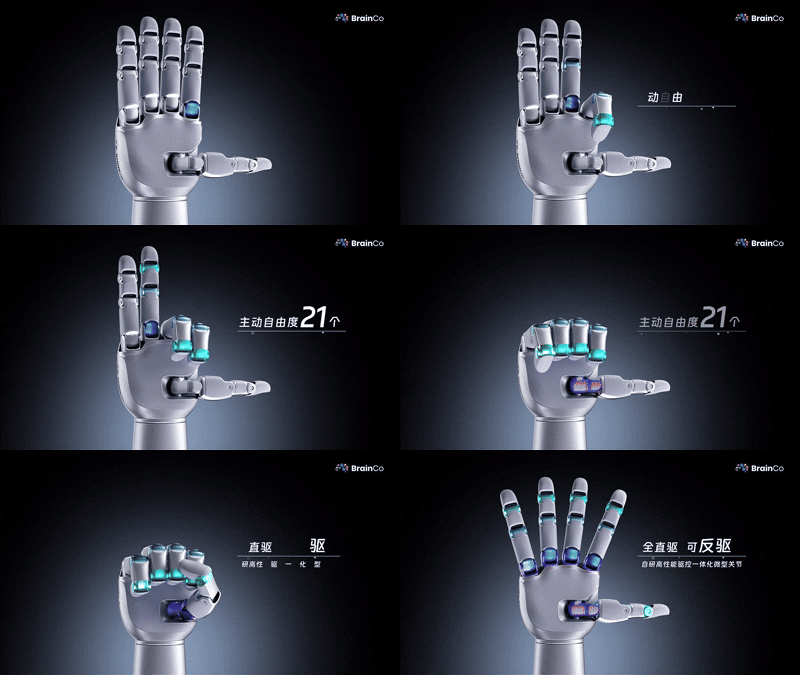
The selection of degrees of freedom is backed by extensive engineering tests. As the number of degrees of freedom increases from 11, the operational capability of the dexterous hand improves slowly and linearly; however, jumping from 20 to 21 results in a significant leap, making operations that were structurally impossible before now feasible. Beyond 21, performance improvements begin to diminish marginally, but control complexity and engineering costs rise rapidly.
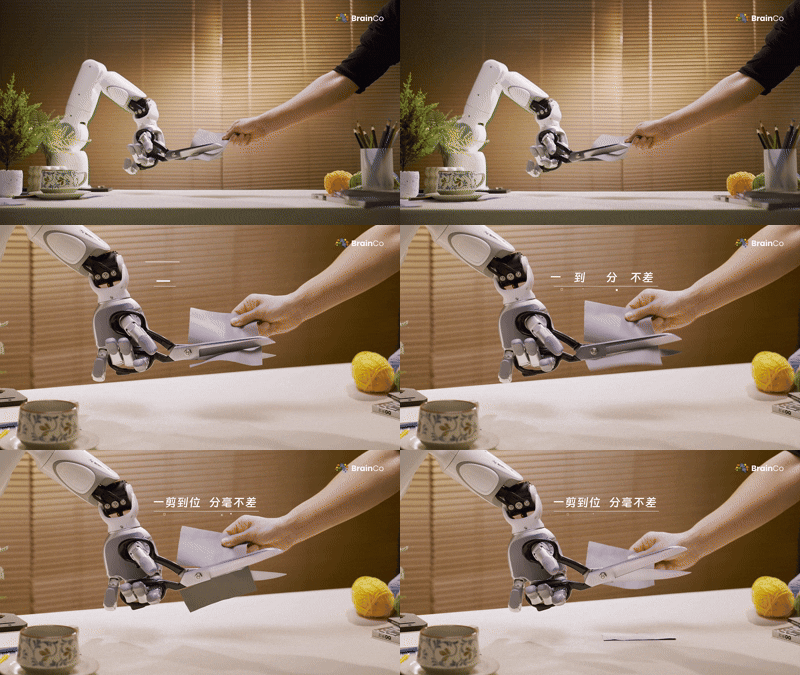
Revo 3 has 21 active degrees of freedom distributed as four for each finger and five for the thumb, with a range of motion surpassing that of a human hand, achieving a score beyond full marks in the Kapandji test. In practical tests, Revo 3 successfully learned the cat's cradle task in less than a week.
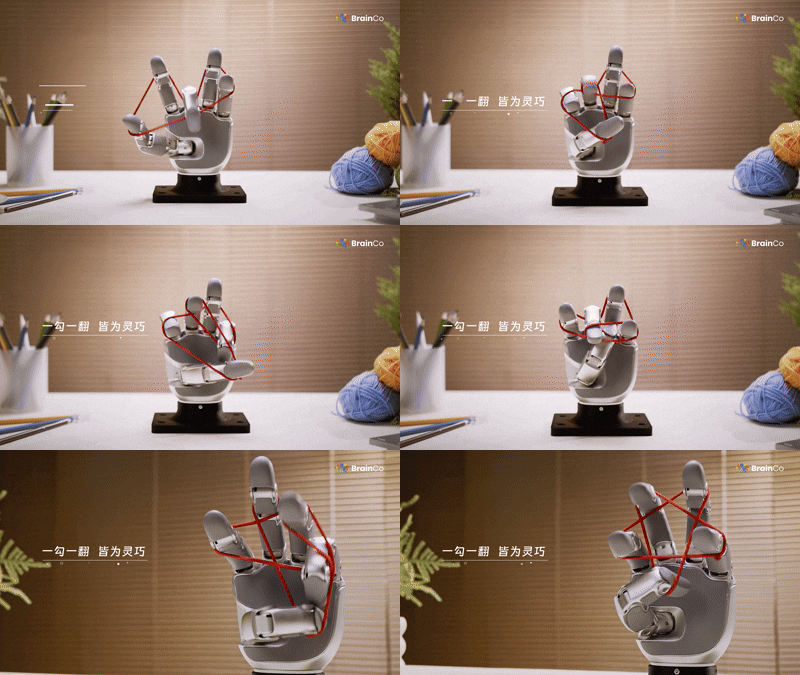
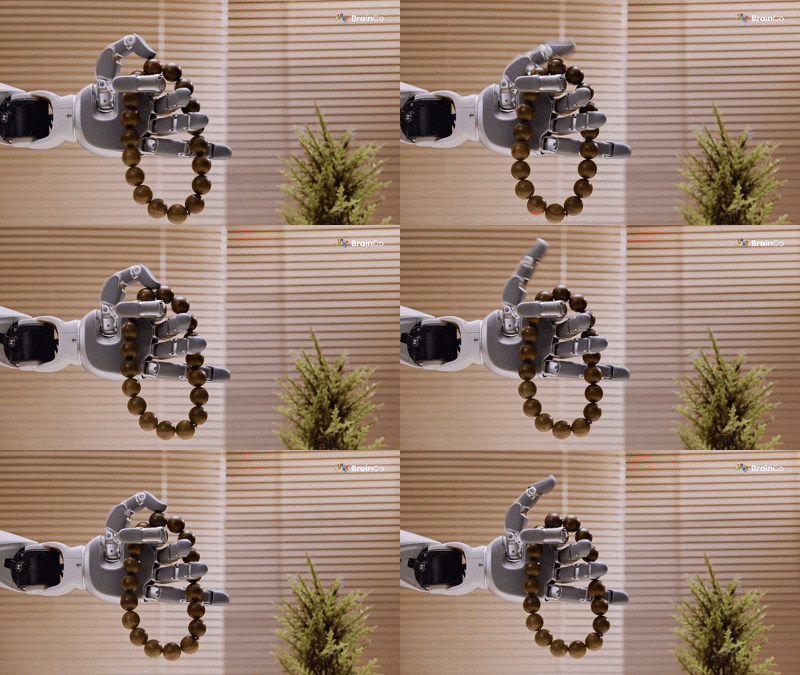
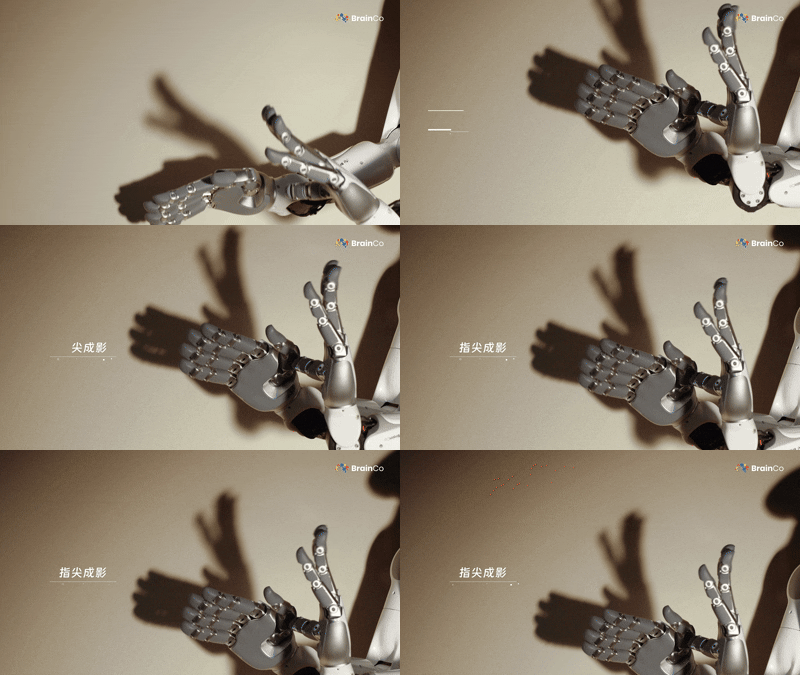
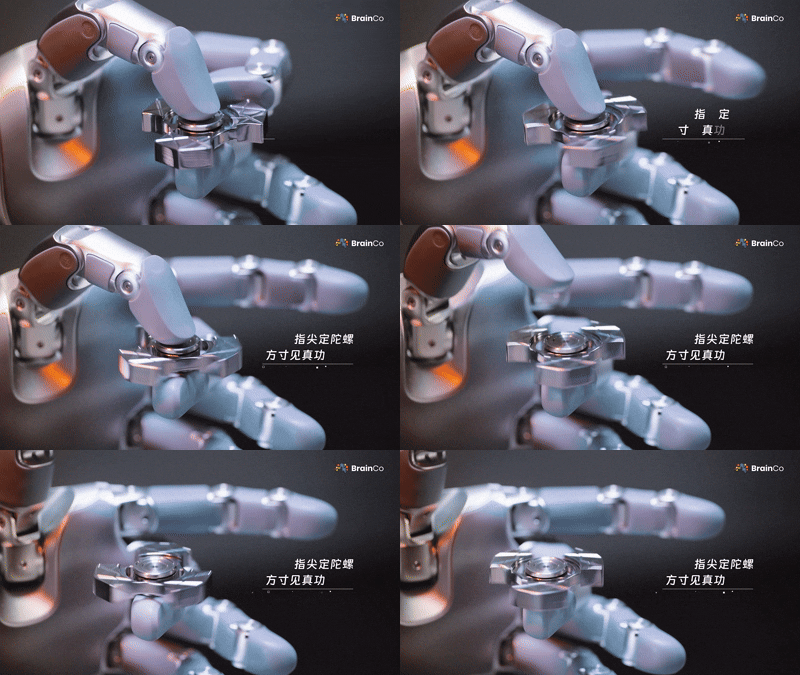
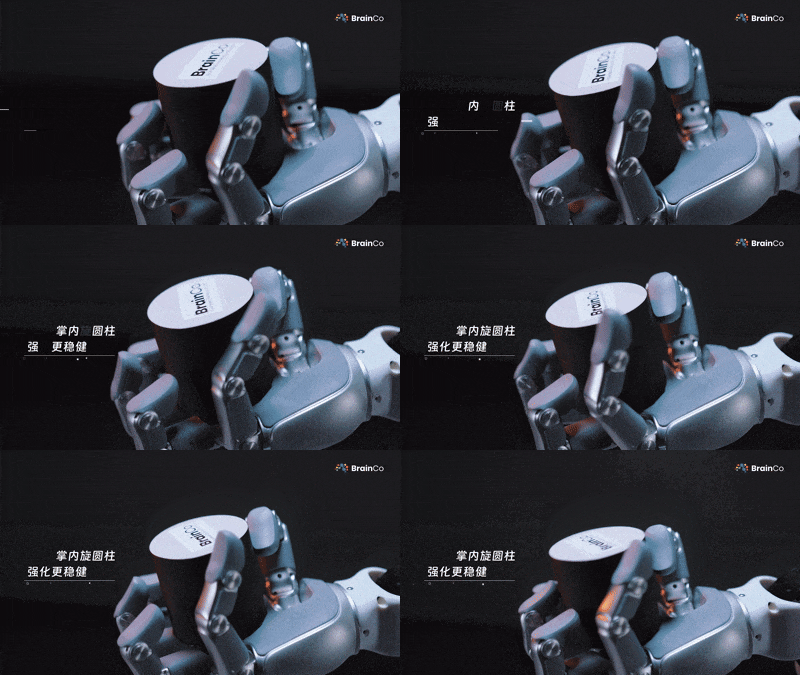
In addition, Revo 3 continues BrainCo's enveloping grasp mechanism in the field of bionic hands in its structural design. Unlike the parallel opening and closing gripping method, the natural grip of the human hand is to draw inward and form an enclosure. This design has been fully replicated in Revo 3, making the gripping motion more conforming to the object's surface and significantly improving holding stability.
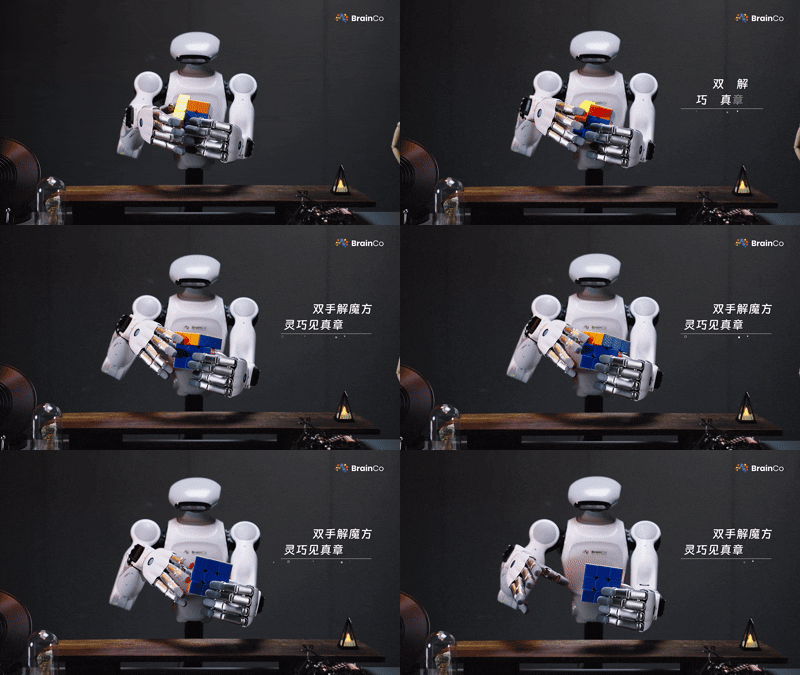
Full Direct Drive + Reversible Drive, Reconstruction of Control Base
Revo 3 is equipped with a self-developed "full direct drive + reversible drive" high-performance integrated micro joint. The drive control board is embedded inside the palm, and the movements are directly driven by the motor at the joint, eliminating transmission errors and response delays found in cable-driven or linkage solutions. It supports 3Hz ultra-fast opening and closing, completing three full cycles per second.
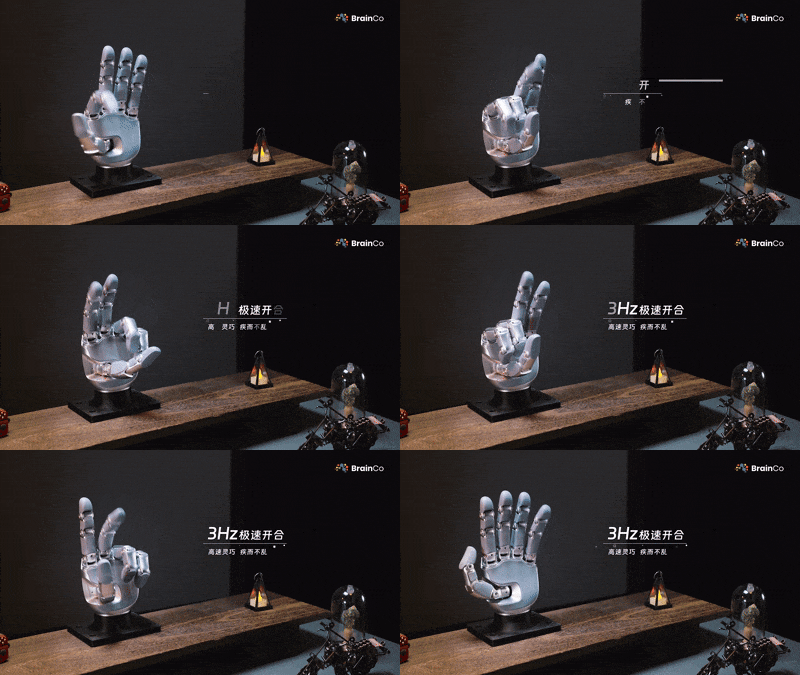
One of the core advancements of the Revo 3 control layer is its reversible drive capability. The joints are equipped with force feedback, allowing them to adapt to external resistance by adjusting in response to external forces. This enables the robot to perceive and modulate contact force in real time, rather than relying solely on preset trajectories to complete movements. For training large embodied models, having reversible drive significantly increases the likelihood that motion strategies trained in simulated environments can be successfully applied to real-world robots.
Full-palm tactile + fingertip visual-tactile
For a long time, the problem with dexterous robotic hands has not been a lack of strength, but rather a lack of perception. Whether the grip is secure, if it’s slipping, or whether the force is sufficient—this information cannot be provided by the hand itself and can only be indirectly inferred through external cameras. Robots don’t know how much force to use when holding an egg, whether a test tube is slipping, or if their handshake might hurt the other party.
Revo 3 puts tactile sensation directly into the hand. The full-palm array tactile sensor extends perception coverage to the entire hand, with a minimum detectable deformation of 130 micrometers. It can gently handle fragile objects, firmly grip slippery surfaces, and sense an object's softness or hardness in real time to adjust grip strength. The hand itself can make judgments without relying on external cameras for inference. Each finger has a maximum gripping force of 70N, a communication frequency of 500Hz, and supports various control modes including hybrid force-position control.
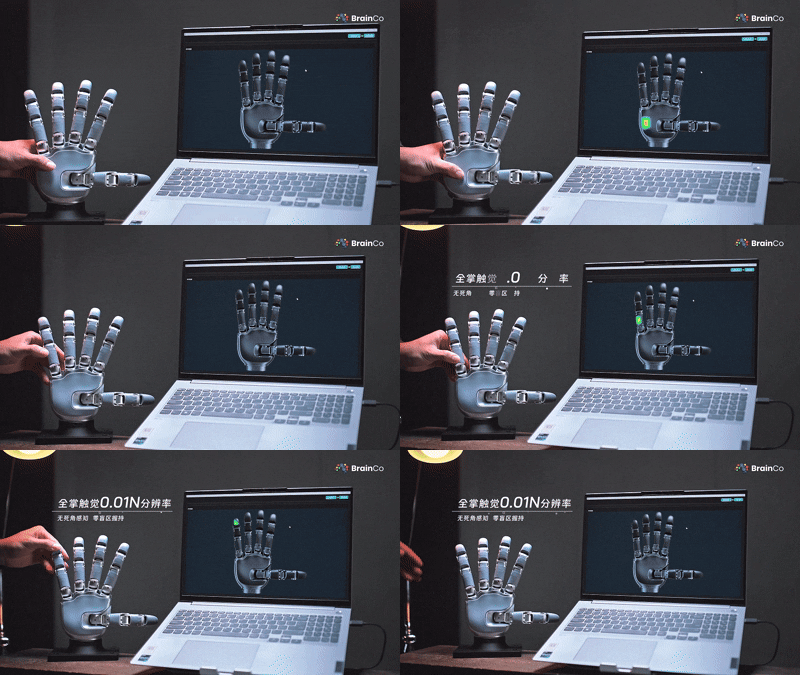
Fingertips are equipped with visuotactile sensors, enabling sub-millimeter alignment before grasping actions commence—essentially giving the fingers eyes. Tasks like threading needles and precision assembly, which previously had low success rates, now have a reliable perceptual foundation.
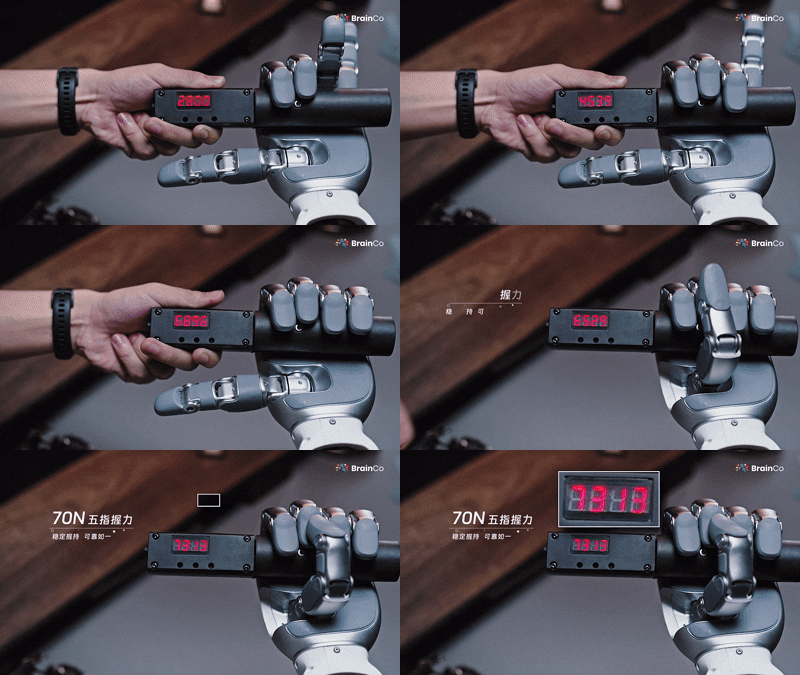
Stability is a precondition for the product's true implementation.
BrainCo has accumulated nearly a hundred reliability testing standards in the field of intelligent prosthetics, covering scenarios such as drop impact, stall load, prolonged force retention, heating, and electromagnetic compatibility. This set of standards has been fully extended to the development and production of the dexterous hand.
This commitment to hardware stability aims to build a foundation in the real physical world, but to truly integrate this technology into various industries, it is necessary to bridge the "last mile" from perception to algorithm. Revo 3 not only matches human capabilities in hardware parameters but also achieves deep integration within the ecosystem.
In terms of adaptability, Revo 3 supports wide voltage input and multiple communication protocols, and is compatible with mainstream simulation platforms such as MuJoCo, Isaac Gym, and NVIDIA Omniverse. The open-source ecosystem supports one-click deployment. A full 21-DOF teleoperation data acquisition solution is also introduced, supporting a complete chain from simulation training to real-machine deployment.
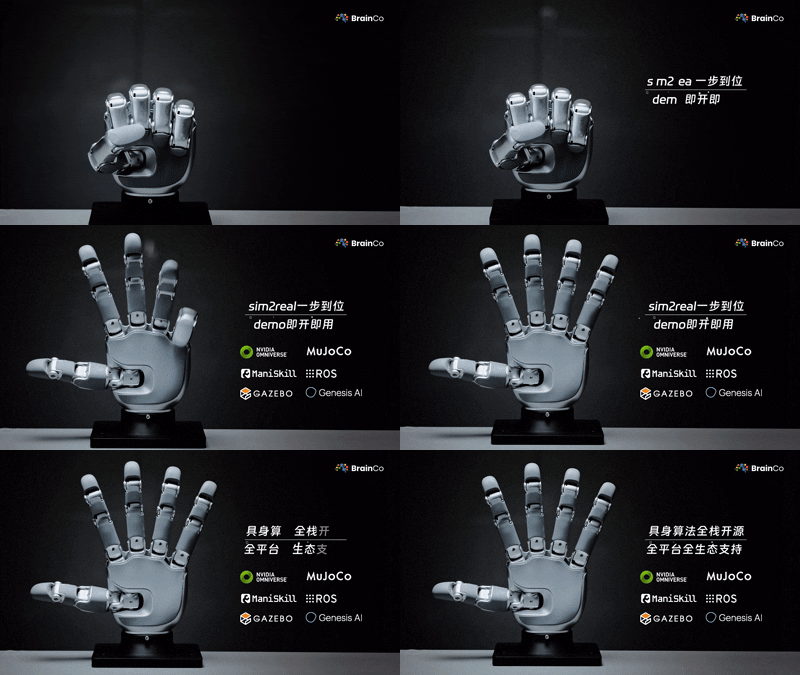
When Revo 3 integrates 21 degrees of freedom, full-hand tactile perception, and industrial-grade stability into one device, it has become a standard interface for embodied intelligence to connect with the physical world. Behind this evolution lies the leap from lab technology to large-scale commercial applications. This reliability, refined through complex real-world scenarios, is the critical prelude to humanoid robots achieving scaled mass production and entering households across the nation.
Based on brain-computer interface technology, future interactions between robots and humans will evolve from "executing commands" to "understanding touch." In this race to redefine the future of human-machine integration, BrainCo is defining new heights in embodied intelligence with an ultimate philosophy of bionics.