

How Germany's Largest Research Organization Balances the 'Calm' and 'Madness' of Scientific Innovation
Before the United States, it was actually Germany that stood at the center of global technology.
This is from the “Communication Records”one can clearly draw a conclusion. According to statistics, before World War I, approximately 10,000 Americans went to Germany for their studies, a figure far exceeding the combined total of those who studied in the United Kingdom and France.
And after the end of World War II, as the victor of the war, the United States incidentally“Poached” Nearly 400 Top German Scientists, including those who have made outstanding contributions to the U.S. space program“Father of Missiles” Wernher von Braun, and propelling the United States to global leadership in"Father of the Computer" John von Neumann.
This "One Way, One Return"Caused Germany to suffer heavy losses in scientific research, not only losing the crown of 'world science and technology center,' but also because of the post-World War II "Ten-Year Ban on Scientific Research”, resulting in a prolonged void in scientific research, the gradual collapse of a mature research system, and an increasingly steep decline.
But a starved camel is still bigger than a horse. Since 1948Max Planck SocietyReconstruction began, with Germany relying on its primitive accumulation andThe “Calm” yet “Frenzied” Scientific Research System, quickly caught up and once again assumed a leading position in global science and technology.
The “calmness” here primarily refers to the Germans’ rigorous and steady character.German grammar is quite rigid, with highly systematic rules for gender, number, and case. Sentence structures are fixed and cannot be arbitrarily rearranged or altered. This linguistic rigidity fosters a serious demeanor among Germans, who tend to be methodical and disciplined in their work. Their thinking exhibits greater logical rigor and meticulousness than that of most other ethnic groups, granting them an innate advantage in scientific research.
“Crazy” primarily refers to the massive investment Germans make in scientific research.. It is reported that Germany's annual investment in research and development accounts for more than 3% of its GDP, with the figure standing at$131.9 billionaccounting for 3.2%, with its investment ratio ranking second highest globally. However, Germany remains unsatisfied and plans to raise this figure to 3.5% by 2025.
On one hand, a calm demeanor; on the other, fervent dedication. How does the German research system strike a balance between the two? We can start fromGermany's Largest Research Organization, the Helmholtz AssociationFind the answer.
A History of Innovation Spanning Half a Century
As is well known, Germany has four prestigious research institutions, namelyMax Planck Society, Fraunhofer Society, Leibniz Associationas well as the key focus of this articleHelmholtz Association. It is Germany’s largest research organization and a symbol of its scientific prowess, holding a status equivalent to that of the Chinese Academy of Sciences in China.
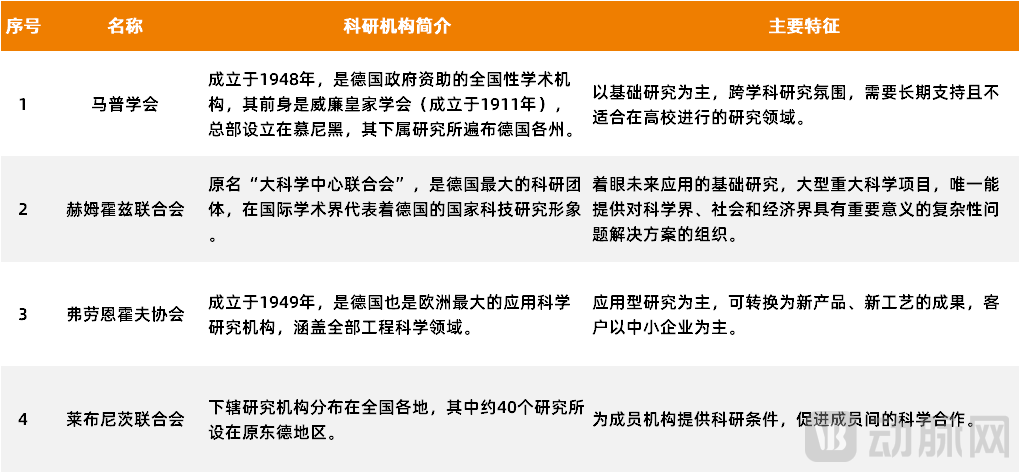
Figure 1 | Four Major German Research Institutions
This fromGovernment Appropriation Ratioits importance becomes clearly evident. It is reported that,Helmholtz AssociationOnly about 30% of the routine funding for scientific and technological expenses comes from research project funds obtained through project applications and competition, with the remainingApproximately 70%All of its funding comes from government institutional appropriations, whereas the proportion of government funding for the other three major research institutions does not exceed 50%.
But in fact, the Helmholtz Association was the last to be established among the four major scientific research institutions.
The predecessor of the Helmholtz Association was a number of national laboratories, characterized by German nuclear research centers, that gradually emerged and were established in the 1950s. Its original name was“Consortium of Big Science Centers”, it officially adopted the name "Helmholtz Association" in 1995.
Like the Fraunhofer Society, the Helmholtz Association is also named after a person, who was the greatest scientist of the 19th century.Hermann von Helmholtz. The reason why the association selected Helmholtz is because it advocated forInterdisciplinary Composite Research,Emphasizing Practical and Social Valueits technological innovation characteristics, which “align perfectly” with the association’s mission.
Therefore, the Helmholtz Association focuses its innovation efforts on six key subfields, namely:Energy, Earth and Environment, Medical Health, Aerospace and Transportation, Materials and Key Technologies.
In the field of medical and health, it mainly focuses onCancer Research, Systems Medicine and Cardiovascular Diseases, Infection Research, Neurodegenerative Diseases, and Diseases Caused by Environmental and Metabolic FactorsandA Cohort Study Based on a Population of 200,000Six Major Research Topics.
From “Fragmented Efforts” to “Unified Action”
In 2001, six years after its renaming, the Helmholtz Association officially embarked on a transformation, further clarifying itsNational Long-term NatureResearch tasks are goal-oriented, withNational Science and Engineering ProjectResearch characteristics centered on [core], emphasizing application-oriented basic research that serves the economy and society.
This transformation is of great significance to the Helmholtz Association.On one hand, it has transformed the previous research framework of the federation, which was characterized by fragmented and siloed efforts; on the other hand, it has broken through the model in which government departments dominated the management of scientific and technological funding.。
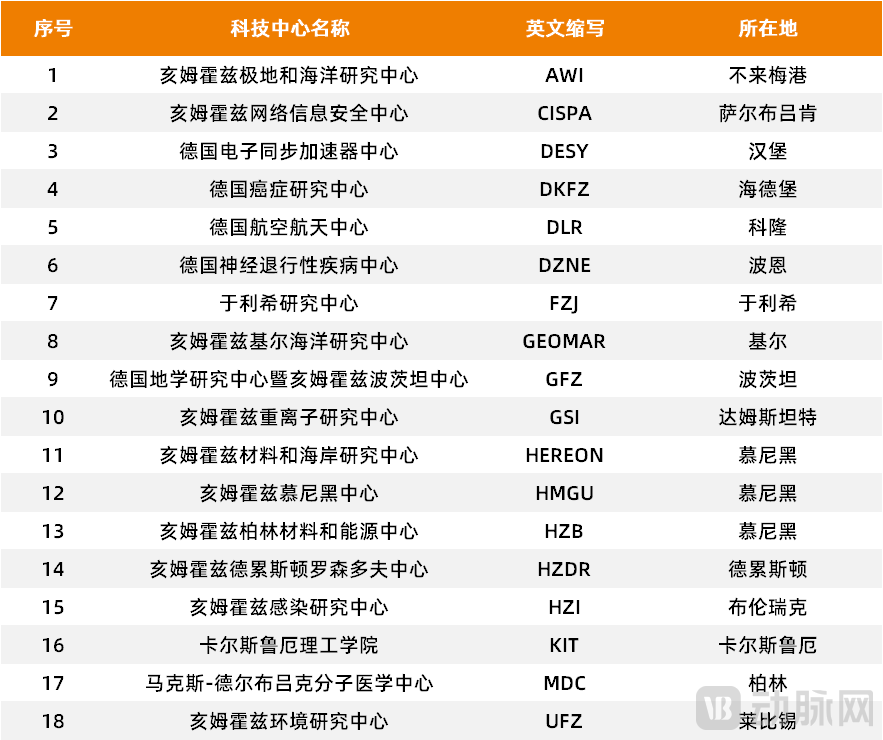 Figure 2 | The 18 Independent Research Centers of the Helmholtz Association
It is reported that the Helmholtz Association has a total of18 Independent Technology Centers, each center focuses on a different niche area and has its own"Five-Year Performance Goals". The reason for adopting a five-year assessment cycle is to fully account for the long-term nature of scientific research endeavors.
In addition to the “Humanization”, in addition, with regard to securing research funding, the Helmholtz Association has established “Act Within Your Means” principle, whereby science and technology centers compete fairly with one another based on their own capabilities and proposed plans to secure state-funded research grants.
The benefits of this approach areBreaking the inefficient pattern in which various technology centers would “rush” to secure funding, only to disengage from performance management afterward and revert to an egalitarian “iron rice bowl” approach within their institutions., forming internallyCross-disciplinary, Cross-departmentalcompetitive and collaborative model, which has detached the various technology centers from their original “Loose Management Model", with closer ties and cooperation than ever before.
Leveraging “External Forces” to Unearth More Innovative Elements
In addition to continuously refining its own capabilities, the Helmholtz Association also places great emphasis onPrioritize close collaboration with external innovation forces.。
First, in terms of collaboration on scientific research projects. The Federation has jointly established multiple research task forces with top-tier universities, research institutions, and innovative companies worldwide, aiming to fully leverage the Federation’s advantages and collaborate with other innovative forces to advance global technological research.
Secondly, in terms of building the "hardware" for scientific research. On the one hand, the Federation has established in various regionsHelmholtz Centers, Academies, and InstitutesOn one hand, it serves as an “outpost” to closely monitor future trends in international scientific research and cutting-edge technologies; on the other hand, it establishes strategic partnerships by collaborating with local research institutions and laboratories to build large-scale, highly complex research instruments and facilities.
Finally, in terms of cultivating scientific research talent. The Federation is veryEmphasize the Cultivation and Support of Outstanding Young Scientific Research Talents, not only will it provide valuable guidance at every stage of their career, but it will also enable them to participate in the federation’s national-level research projects.
In this way, the Federation can not only inject fresh blood on a global scale but also fully tap into the innovative potential of these scientific research talents through “practical training,” enabling them to rapidly grow into the backbone of the Federation.
According to statistics, the Helmholtz Association currently has more than 40,000 researchers, among whomThe proportion of foreign research personnel exceeds 30%., Chinese-American researchers also constitute a significant force.
Currently, the Helmholtz Association hasBeijing, China; Brussels, Belgium; Moscow, RussiaandTel Aviv, IsraelEstablish an office.
“The Five Major Plans” and the “Judgment System”
According to statistical data, in 2020, the Helmholtz Association published a total of18,461 articlesThe frequency of citations for papers and publications is higher than the European average. In addition, the Helmholtz Association conducts nearly 3,000 industry-academia-research cooperation projects with enterprises annually, with the number of patents reaching13,000 units, with annual revenue reaching€170 million。
The reason for such outstanding performance in innovation and translation is inseparable from the Helmholtz Association's proud "Five Major Plans”。
One of the plans is to promote the establishment of startups.. To enable more scientists to move out of the laboratory and into the marketplace, the Helmholtz Association provides field research funding for start-up projects and facilitates collaborative negotiations on technology transfer and market research. According to statistics, since 2005, the Association has incubated a total of242 Startups, among which 19 were incubated in 2019, itsSuccess rate as high as 90%。
Option Two: Proof-of-Concept Fund. To provide support to these startup projects at the earliest stage, the Helmholtz Association, together with the Fraunhofer Society and medical schools, has launchedProof-of-Concept Fund, with the aim of providing start-up funding to truly valuable innovative projects at an early stage, thereby facilitating their progression to the next phase.
Option Three is the Helmholtz Association’s Innovation Fund. This fund is primarily intended to provide the Helmholtz Association with additional budget for innovative projects, bringing the total amount of its Innovation Fund to€2.4 million. In addition, it jointly supports groundbreaking technology transfer projects with funding institutions such as the Helmholtz Validation Fund.
Plan 4: Verification and Pilot-Scale Project. Since 2011, the Helmholtz Association has supported 3 to 6 pilot-scale projects annually, specifically scaling them up beyond laboratory scale, enhancing their maturity, and evaluating their practical application. Statistics show that between 2011 and 2017, the Association funded a total of 34 projects, with maximum funding reaching €2 million.
The fifth initiative is the Innovation Laboratory. It is reported that the Helmholtz Association has spent a total ofCosting nearly €60 million, established 16 innovation laboratories, primarily includingOpen Innovation LabandUser Innovation Lab。
These laboratories are primarily designed to engage corporate partners with collaboration and development needs, facilitating joint R&D efforts to tackle shared challenges through close interaction.Not only does it help improve the iteration of technology, but it also introduces diverse perspectives from other participants in the early stages of the project., which is crucial for the transition from invention to industrial-scale application.
So this “Five Major Plans“How was it implemented in specific projects?”
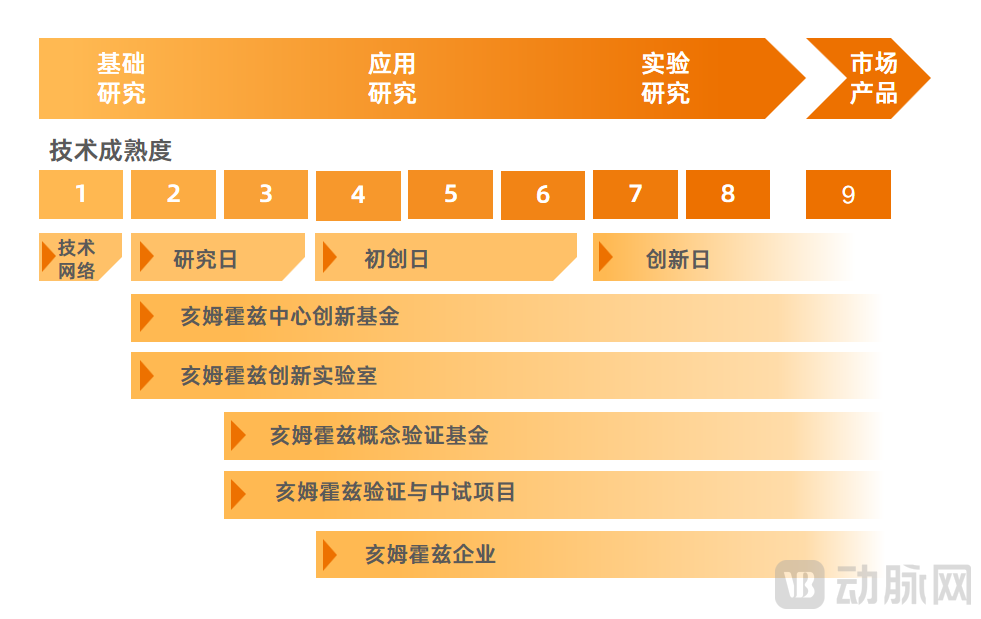 Figure 3 | Workflow of Technology Transfer at the Helmholtz Association
In response, the Helmholtz Association proposedTechnology Readiness Level (9-Level) System, through systematic evaluation,Conduct Different Types of Technology Transfer Activities at Different Stages, primarily including technical network support from the Helmholtz Association for early-stage achievements; Research Days, Startup Days, and Innovation Days organized for various mid-to-late stage phases; and various funds and action plans spanning different cycles.
Undoubtedly, scientific research is profoundly dispassionate, as it requires clarifying logic amidst chaos; yet it is also profoundly audacious, as it demands breaking free from conventional constraints and steadfastly pursuing what has never been done before.
Therefore, how to effectively integrate these two distinctly different emotions is a challenge that global research institutions must currently confront. Clearly, the Helmholtz Association has already forged a mature path, but this does not mean we can simply replicate it; research institutions must still “Act within your capabilities.”。