IVD Leader New Industries Biomedical Expands into Brain-Computer Interface with Strategic Investment in Yinghe NeuroScience
AMYGDALA NEURO
Developer of Neuroregulation and Brain-Computer Interface Technologies and Products

Source:IVDPractitioner Network, Qichacha
On April 7, 2026, data from Qichacha showed,AMYGDALA NEURO Completes Series A Financing, the investor is Hubei Xiachuang Venture Capital Investment Fund Partnership (Limited Partnership) (hereinafter referred to as "Xiachuang Ventures").The investment amount this time is approximately 148 million yuan (preliminary estimate), with an investment ratio of 7.4% and a subscribed capital contribution of 9.62 million yuan.
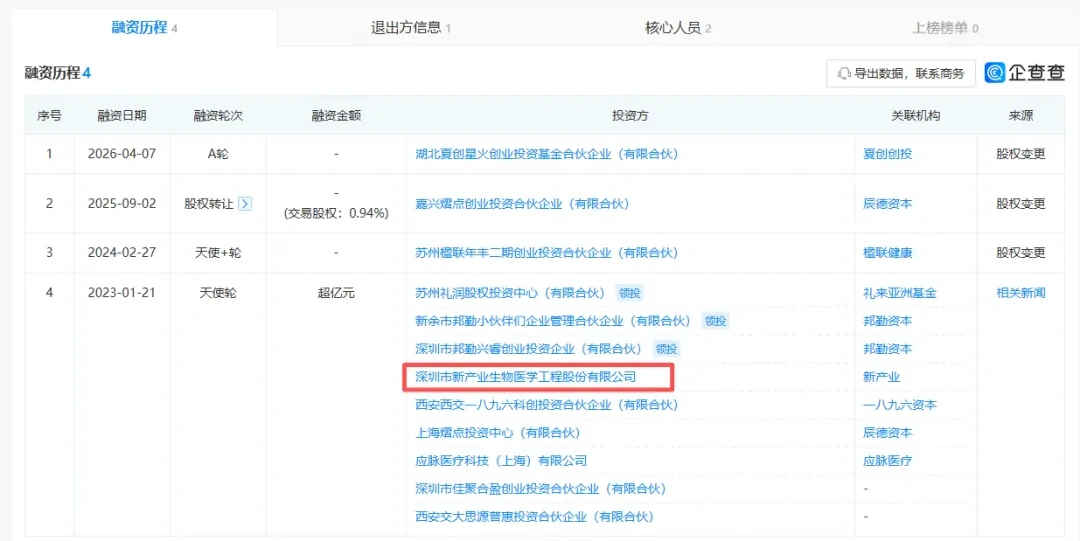
This Series A financing round is the third financing for AMYGDALA NEURO since its establishment, and also another significant financing milestone completed after the over 100-million-yuan angel round in 2023 and the angel+ round in 2024.In this round of financing, XiaChuang Venture Capital contributed 9.62 million yuan to acquire 7.4% equity in AMYGDALA NEURO, corresponding to a post-investment valuation of approximately 130 million yuan.The company's registered capital has significantly increased from 80,592,335 yuan to 129,939,074 yuan, with an increase of 49,346,739 yuan, representing a rise of over 60%.
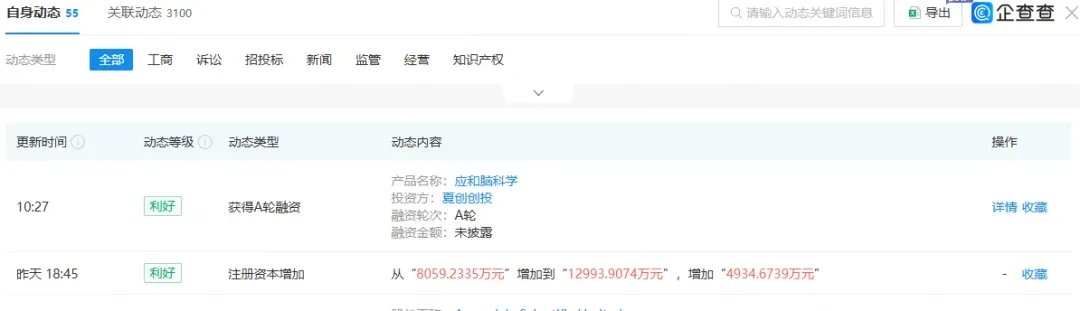
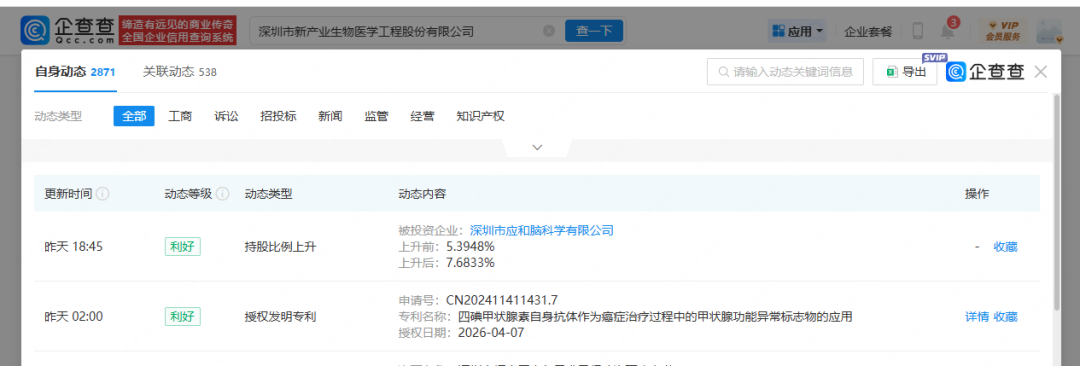
It is worth noting that,After the completion of this round of capital increase and share expansion, the A-share IVD listed company Snibe (300832.SZ), which has participated in multiple follow-up investment rounds, saw its shareholding ratio increase further from 5.39% to 7.68%, reinforcing its investment in AMYGDALA NEURO., showing a high level of optimism and determination for long-term investment in this field. In the angel round of 2023, New Industries Biotech entered as a follow-up investor and has continued to increase its stake, becoming one of the most important industry capital shareholders of AMYGDALA NEURO.
AMYGDALA NEURO was founded in October 2022, with its headquarters located in Pingshan District, Shenzhen. It is a medical device company oriented toward clinical needs, specializing in the development of next-generation neuromodulation and brain-computer interface technologies and products. The company was spun off from Yingmai Medical and has gathered a top-notch R&D team — CEO Dr. Ruilin Zhao graduated from the Young Talent Class of Xi'an Jiaotong University, holds a master's degree in electrical engineering and computer science with a focus on artificial intelligence from MIT, and a Ph.D. in biomedical engineering and medical physics jointly trained by Harvard and MIT. He has long been engaged in research in the field of neuroscience. CTO Dr. Xiaoyi Min has over 30 years of experience in neuromodulation and cardiac rhythm management product R&D at the U.S. headquarters of Medtronic and Abbott, holding more than 160 patents.
Since 2021, the AMYGDALA NEURO team has been independently tackling the development of invasive brain-computer interface technology. By early 2023, they successfully developed the first-generation intracranial vascular stent electrode, minimally invasive interventional delivery system, and electrophysiological signal acquisition system. To date, the R&D team has overcome technical barriers in areas such as autonomous system design, electrode design, chip design, signal acquisition and decoding, algorithm development, and MRI compatibility, establishing a universal neuromodulation platform. Several products under development have achieved China-based innovation and are about to enter the animal testing and clinical trial stages.
As the leading company in the IVD industry, Snibe has been accelerating the promotion of a diversified strategic layout in recent years, extending from the traditional chemiluminescence field to higher value-added cross-cutting-edge technology fields.In the angel round financing completed by AMYGDALA NEURO in 2023, New Industries Biomedical participated as a follow-up investor. The round was co-led by BioVenture Capital and Lilly Asia Ventures, with participation from Xijiao 1896 Science and Innovation Fund and several other institutions. At that time, the company expressed its optimism about brain science and brain-inspired intelligence as key tracks in Shenzhen's "20+8" industrial development focus, especially in the two subfields of brain diseases and brain rehabilitation, where both clinical efficacy and accessibility are relatively high.
In this Series A round of financing, Snibe's shareholding ratio has further increased, showing its continued optimism in the cutting-edge technology direction of brain-computer interface. For IVD enterprises, investing in brain-computer interfaces may seem like a cross-border move, but in fact, it has profound industrial logic:
First, the diagnosis of brain diseases requires the deep integration of IVD and neurotechnology.Currently, multiple teams worldwide are exploring early screening solutions for neurological diseases that combine brain-computer interface technology with blood biomarker detection. For example, the world's first 5G "Brain-Mobile" equipped with more than 10 patented technological achievements has been implemented in Guangzhou. It can conduct early Alzheimer’s screening in communities and elderly care institutions by integrating rapid brain-computer interface testing with blood analysis. Brain-computer interface technology and IVD testing methods form a complementary closed loop — “the brain-computer interface is responsible for neural signal acquisition and decoding, while IVD handles the quantitative analysis of biomarkers,” together building a complete diagnostic chain for neurological disorders.
Secondly, IVD companies have accumulated profound expertise in hospital channels and commercialization capabilities, which can provide ready-made industrialization pathways for emerging brain-computer interface technologies.As AMYGDALA NEURO has established a nationwide hospital network and customer resources in the field of chemiluminescence immunoassay diagnostics in China, it is expected to create synergies in the future market promotion of brain-computer interface products.
Third, brain-computer interfaces, as the forefront of next-generation human-computer interaction, have enormous market potential.According to the "China Brain-Computer Interface Commercialization Prospective Report," the market size of brain-computer interfaces is expected to exceed 5 billion yuan by 2026 and maintain rapid growth, reaching 15 billion yuan by 2030. For the IVD industry, which has already entered a stage of stock competition, exploring future industries such as brain-computer interfaces could be a worthwhile growth path.
The lead investor, XiaChuang Venture Capital, was established on November 21, 2022, with its registered address in Wuhan City and a registered capital of 500 million yuan. The executive partner is Hubei Xiachuang Venture Capital Management Co., Ltd. Its main business includes equity investment, investment management, and asset management activities through private equity funds.
XiaChuang Venture Capital Actively Invests in Healthcare and Cutting-edge Technology Fields; This Round Leading AMYGDALA NEURO's Series A Funding Marks a Significant Move in the Greater Health Sector. Previously, XiaChuang Venture Capital Partnered with Institutions like East Lake High-Tech to Establish Donggao Frontier Phase II Fund, Focusing Investments on Advanced Manufacturing, Integrated Circuits, and Greater Health among Other Frontline Technology Areas.
On April 1, 2026, the "China Brain-Computer Interface Commercialization Prospective Report" released by Beijing Fourth Wave Technology Think Tank in collaboration with Zhongguancun Tiancheng Innovation Research Center showed that since 2025, financing for brain-computer interface companies has entered an unprecedented active period. In the first three months of 2026, the total financing amount for brain-computer interface companies has exceeded the whole of 2025. The report predicts that by 2026, the market size of China's brain-computer interface industry is expected to exceed 5 billion yuan and maintain rapid growth, potentially surpassing 15 billion yuan by 2030.
A series of landmark financing events have confirmed the market's enthusiasm: In January this year, BrainCo, a non-invasive brain-computer interface company, completed a new round of financing worth approximately 2 billion yuan, setting a record for the largest single financing in China's brain-computer interface field to date; in March, Gestalt Robotics, an ultrasonic brain-computer interface company, completed an angel round of financing worth 150 million yuan, breaking the record for the highest angel round financing in this field. Additionally, Step Medical also received 500 million yuan in strategic financing led by Alibaba, further increasing the attention on this track with the entry of internet giants.
The 2026 Government Work Report, for the first time, included "brain-computer interface," explicitly listing it as one of the future industries to be developed, marking the formal rise of brain-computer interface as a national strategic science and technology direction. Against the backdrop of "national team" funds entering the market and industrial capital accelerating its aggregation, the completion of AMYGDALA NEURO's Series A financing round is a microcosm of this trend.
Brain-computer interface is not just a "black tech" concept, but a real technology that is accelerating towards clinical applications. In the diagnosis and treatment of neurological diseases, brain-computer interfaces and IVD are not substitutes for each other, but complementary—brain-computer interfaces provide the ability to directly "read" neural signals, while IVD offers quantitative analysis at the molecular level. The combination of the two is expected to open up new pathways for the early diagnosis and efficacy monitoring of neurological diseases such as Alzheimer's disease, Parkinson's disease, and epilepsy.
The successful completion of AMYGDALA NEURO's Series A financing, the further increase in New Industries Biotechnology's shareholding ratio, and the state-owned capital support from Summer Innovation Venture Capital collectively outline a clear picture of the "capital + industry + policy" triple-driven landscape in the brain-computer interface sector. For IVD enterprises, focusing on brain-computer interfaces and strategically positioning themselves in cross-disciplinary frontier fields is not only a strategic choice to address industry changes but also a crucial step in capturing the future ecosystem of medical diagnosis and treatment.
Disclaimer: This article is for sharing only and does not represent the platform's position. If there is any infringement or copyright issue, please contact us as soon as possible, and we will correct it immediately. Thank you!
To facilitate communication and exchange among the readers and fans of the In Vitro Diagnostics Network, we have specially established the 206th In Vitro Diagnostics Network group in China! Everyone is welcome to scan the QR code below and join the group to participate actively in discussions!