

From Reluctant Adoption to Proactive Use: How China's Largest Upstream Market Achieves Domestic Substitution in Cell Culture Media [Upstream Tools Special Report]

BIOENFINE
Supplier of Animal Cell Suspension Culture Products and Services
Just as flowers cannot bloom without fertile soil, and computers cannot operate without a CPU, the production of modern biopharmaceutical products is inseparable from cell culture media. The rapid development of global biopharmaceutical technology and markets has provided a favorable environment for the swift growth of the cell culture media market.
Culture media are among the key raw materials in biopharmaceutical production. However, their development poses significant technical challenges, requiring extensive experience and accumulated expertise to evaluate the effects of different medium components on cell lines, ultimately achieving efficient biopharmaceutical manufacturing. The continuous evolution of culture media has a positive impact on improving biopharmaceutical production efficiency, effectively reducing development costs, enhancing product competitiveness and accessibility, and thereby driving the overall rapid development of the biopharmaceutical industry.
Based on the composition and source characteristics of the culture medium,The development of animal cell culture media can be broadly divided into three stages:Natural media stage, synthetic media stage, serum-free media stage.
To date, mainstream serum-free media can be classified into four categories based on their compositional characteristics: Serum-Free Medium (SFM), Animal Component Free Medium (ACFM), Protein-Free Medium (PFM), and Chemically Defined Medium (CDM).
This article provides a comprehensive exposition and analysis of the localization of cell culture media, covering the historical development of culture media, classification of serum-free media, the developmental trajectory of domestic culture media in China, applications and market dynamics, core technological barriers, and strategies for achieving breakthroughs in local production, with the aim of providing reference and insights for the healthy development of the industry.
The Initial Exploration Phase of Animal Cell Culture Media IsNatural Culture Media Stage. The earliest tissue culture was performed by Roux in 1885, who cultivated chicken embryonic tissues in warm physiological saline, maintaining their viability for several months. Subsequent research by scientists into the nutrients required to sustain cell growth laid the foundation for the development of synthetic culture media.
Synthetic Culture Mediumis formulated based on the types and quantities of substances required by known cells. Due to its well-defined composition, it allows for the observation of phenotypic changes in cells by altering or adjusting the types, concentrations, and ratios of various components, thereby facilitating the study of the relationship between cells and their external environment and further elucidating the survival conditions required by the cells.
When it comes to synthetic culture media, one name that must be mentioned is Harry Eagle. In 1955, Eagle identified the nutritional components required for the growth of mammalian cells and experimentally determined the minimum concentrations of these nutrients in the medium necessary to support cell proliferation. In his research article published in Science, Eagle described the culture medium as “an isotonic mixture with pH-buffering capacity, containing inorganic salts, amino acids, sugars, vitamins, and other essential nutrients.”
In 1959, Eagle published another article on culture media in the journal Science, further improving the formulation and naming it “Minimal Essential Medium (MEM).” MEM requires the addition of bovine serum at a concentration of more than 10% to support cell growth. Nevertheless, even today, more than half a century later, MEM is still used in research and in the production of certain vaccines. Eagle’s work undoubtedly laid the foundation for the development of modern serum-free culture media.
However, the vast majority of synthetic culture media require the addition of serum to compensate for deficiencies in their formulation components. The complex composition and high cost of serum lead to a series of issues, including excessive costs, difficulties in the separation and purification of downstream culture products, significant batch-to-batch quality variations, and susceptibility to contamination by mycoplasma and other impurities.
Thus,Serum-Free Culture MediumThe research and application of serum-free media have gradually gained prominence. Serum-free media are developed based on synthetic media by incorporating fully or partially defined serum replacement components, thereby meeting the requirements for animal cell culture while effectively overcoming the issues associated with the use of serum.
To date,Serum-free media can be classified into four categories based on their compositional characteristics: Serum-Free Medium (SFM), Animal Component Free Medium (ACFM), Protein-Free Medium (PFM), and Chemically Defined Medium (CDM).
① General Serum-Free Media, i.e., culture media that support cell growth or maintenance without the addition of serum. To meet the requirements for cell growth, raw materials that substitute for the biological functions of serum are added to the medium. These additives may contain proteins of animal or plant origin, or their hydrolysates and extracts, among others, with undefined chemical compositions. Early serum-free media products continue to be widely used today.
② Animal-free culture mediumIt refers to culture media that do not contain animal-derived components, typically replaced by plant-based or other alternatives. This approach reduces the risk of animal-derived contamination and enhances the safety of recombinant protein therapeutics, and is currently widely used in the research, development, and production of biopharmaceuticals.
③ Protein-free culture mediumIt refers to a formulation that is completely free of protein components, but may include plant-derived or other protein hydrolysates, synthetic peptide fragments, and other derivatives. Protein-free culture media contain extremely low levels of added proteins with clearly defined compositions, which facilitates downstream production, separation, and purification of cellular protein products, thereby significantly reducing overall costs.
④ Chemically Defined Medium, referring to media with fully defined chemical compositions that minimize batch-to-batch variability. Chemically defined media facilitate the monitoring of cellular metabolism during culture and are currently regarded as the safest and most ideal option. Furthermore, chemically defined media support the growth of diverse cell types and can be sterilized by autoclaving; thus, their research and application will become a key focus and trend in development.
Currently, both serum-free and serum-containing culture media hold a certain share of the market. Due to reduced risks of exogenous contamination, lower product purification burdens, and minimized batch-to-batch variability, serum-free media are being widely used in vaccine and antibody production and are gradually becoming the mainstream choice. In industrial settings, large-scale suspension culture processes for CHO cells primarily utilize serum-free culture media.
Although international production of cell culture media began more than half a century ago, China did not see industrial-scale production of certain cell culture media until after 1996. Most domestic cell culture media companies have been established for no more than ten years.
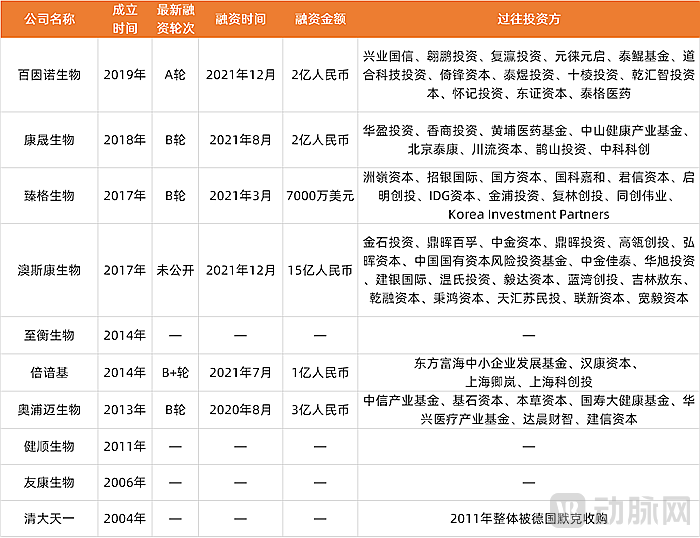
Current Domestic Cell Culture Media Companies (Based on Incomplete Statistics, Listed in No Particular Order)
Based on the development history of China’s cell culture media industry, it can be primarily divided into two phases, with 2010 as the dividing point.
Prior to 2010, as China’s biopharmaceutical market had not yet taken off, the country possessed virtually no production technologies for high-end or serum-free culture media. The domestic supporting industry for culture media had not truly developed, and the market was completely monopolized by three major brands: Thermo Fisher, Merck, and HyClone.
The rise of Tsinghua Tianyi, a culture media company founded in 2004, was primarily driven by its alignment with the rapid development phase of China’s vaccine industry, particularly in the veterinary vaccine sector, as serum-free culture media were largely unnecessary for veterinary vaccines at that time.
On the other hand, serum was quite expensive at the time and relied heavily on imports, creating bottlenecks in terms of cost and raw material supply cycles. Therefore, companies represented by Qingda Tianyi primarily collaborated with vaccine manufacturers to develop foot-and-mouth disease vaccines with low serum content.
However, with the rise of serum-free media, this cohort of companies encountered a development bottleneck around 2010. Furthermore, after 2011, China’s biopharmaceutical industry began to expand. A number of scientists with experience in the culture media industry returned to China to start businesses, while universities with foundational research capabilities in culture media development initiated technology transfer efforts. Responding to substantial market demand, these factors collectively spurred the emergence of a new wave of culture media companies.
Over the past five years, the rapid development of China’s biopharmaceutical industry has spurred the emergence of numerous support enterprises, including those specializing in cell culture media.
Although Chinese cell culture media companies have initially achieved a certain scale, they are still in the early stages of development compared to global industry giants. Early-stage companies typically require a relatively long accumulation period; however, the experience gained through trial and error will gradually help them build technical barriers. Most companies established in recent years were founded by industry scientists with prior experience in the field of cell culture media, enabling them to rapidly establish relevant systems and accelerate industrialization. Nevertheless, overall, domestic cell culture media enterprises still need a period of consolidation and maturation.
As a critical component of the life sciences support industry, the development of the cell culture media sector is inextricably linked to the rapid growth of the biopharmaceutical industry. According to a report by China Securities (CSC Financial), cell culture media accounted for 35% of the biopharmaceutical consumables market in 2020. The market share breakdown of biopharmaceutical consumable categories in 2020 is as follows:
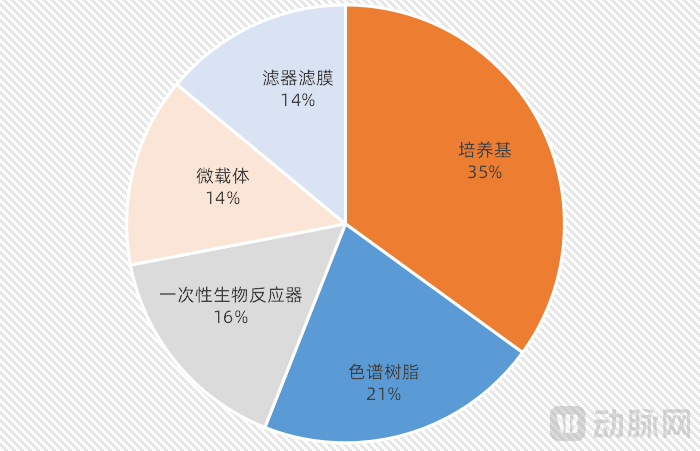
Data source: OPM's prospectus
According to a research report by Industrial Securities, the global cell culture media market was valued at $4.65 billion in 2020 and is projected to reach $8.24 billion by 2028, representing a compound annual growth rate (CAGR) of 7.4% from 2020 to 2028. According to a report by China Securities Co., Ltd. (CSC), the market size for biopharmaceutical culture media in China was RMB 4.4 billion in 2020 and is expected to reach RMB 8.4 billion by 2025. A study by Frost & Sullivan indicates that the CAGR for China’s culture media market will reach 29.0% from 2020 to 2025.
Which booming application scenarios are driving this rapidly growing market?
The cell culture medium market is primarily divided into the research market and the industrial production market.Research applications account for a negligible share of the overall market. The industrialization of biopharmaceuticals encompasses diverse scenarios, including vaccine production (e.g., viral vaccines and peptide vaccines), manufacturing of genetically engineered drugs (e.g., erythropoietin), production of antibody/gene therapy drugs, cell-engineered drug manufacturing, and in vitro assessment of biological activity using cell-based assays.
Different application directions require different cell types, leading to significant variations in the performance characteristics and production requirements of cell culture media, including technical difficulty, manufacturing processes, and product forms. Overall, the production of antibody drugs, gene therapies, and cell therapy products demands culture media with high technical complexity, intricate manufacturing processes, and a high degree of customization, resulting in higher prices. This segment represents a niche area with substantial technical barriers.
In the industrialization of biopharmaceuticals, selecting appropriate, high-quality culture media can significantly increase the expression levels of biologics and reduce the unit manufacturing cost. Despite being a widely adopted and rapidly growing market in China, it remains dominated by imported brands, with three major players—Thermo Fisher Scientific (brand: Gibco), Danaher (brand: Hyclone), and Merck (brand: Sigma)—accounting for approximately 80% of the market share.
Driven by the rapid expansion of China’s biopharmaceutical market, strong demand for cost control, long lead times for foreign cell culture media products, and concerns regarding supply chain stability and safety, the localization of cell culture media production has become imperative.
For domestic culture media manufacturers to secure a foothold, the primary challenge is to establish brand influence for Chinese-made products amidst the brand prestige of foreign giants.
An industry insider revealed, “If I were to purchase a problematic batch of culture media, my initial reaction would depend on the brand. If it were a major brand produced by an industry giant, I would likely assume first that the error stemmed from my own handling or procedures. However, if it were a product from a domestic startup brand, I would be more inclined to attribute the issue directly to the manufacturer’s product quality.”
It is evident that major brands, with decades or even centuries of industrialization behind them, have established robust quality and production systems as well as comprehensive product portfolios, thereby earning high levels of user trust. To win over users from these established players, Chinese enterprises must work in concert to cultivate a high-quality image for domestically produced culture media and gradually build brand influence in this emerging market.
In addition to the passage of time, the sudden outbreak of the pandemic has also accelerated this process.Liu Xuping, President of BIOENFINE, told VCBeat New Medicine:“Most domestic culture media companies have been established for only about a decade or even less, and it indeed takes time to catch up with the well-established global giants. However, the onset of the COVID-19 pandemic has led to tightness and instability in the global biopharmaceutical supply chain. In this context, the advantage of stable supply offered by local enterprises has shifted many customers from initially having ‘no choice but to use’ these products to ‘actively adopting’ them after trial. Consequently, the brand influence and market share of domestically produced products have risen rapidly.”
In recent years, the cell culture media market in China has steadily grown. According to data from China Customs, the growth rate of cell culture media imports declined from the second half of 2020 to the first half of 2021, with total import volumes even experiencing a slight decrease compared to the first half of 2020. Research by Frost & Sullivan indicates that the market share of domestically produced cell culture media in China increased from 18.6% in 2016 to 22.8% in 2020, with significant accelerated growth observed in 2020. The reliance on imported cell culture media products in China is expected to continue declining.
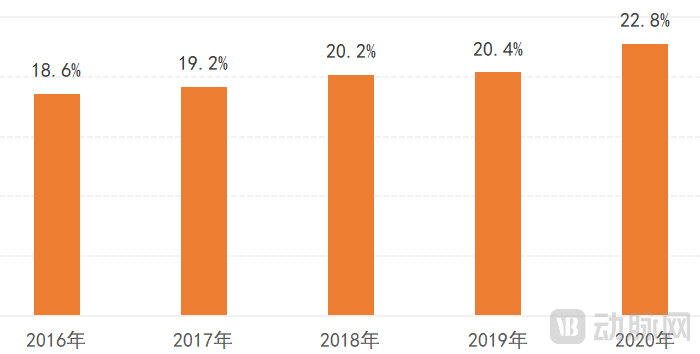
Data sources: Frost & Sullivan Consulting, Aupaimai’s prospectus
In the face of brand influence,Zhao Xiaojian, CEO of Baiyinuo, also told VCBeat New Medicine:“Brand effect has a significant impact on the research market. However, even though culture media can cost thousands of yuan per bottle, the share of the culture media market accounted for by researchers is merely a drop in the bucket. For the industrial sector, greater emphasis is placed on brand quality and supply stability. From the perspective of drug regulatory submissions, regulatory agencies do not focus on the brand of the culture media but rather on the quality metrics and yield of products such as proteins produced by cells cultured in these media. Therefore, batch-to-batch consistency, product yield, and quality are the key concerns for industrial clients.”
The true challenges of culture media lie precisely in technical barriers such as production quality and process stability.For example, a well-known foreign biopharmaceutical company developed cell lines and process formulations tailored to its own platform. Then something strange happened: after a period of time, the protein yield from cultures using this formulation’s medium suddenly dropped, plummeting from the original 2–3 grams to just a few tenths of a gram.
At that time, the company had more than 200 upstream process engineers and took three years to finally identify the root cause. The issue lay in the fact that the soy hydrolysate used in the original culture medium formulation was only coarsely filtered. Genentech later believed that raw materials corresponding to high-end culture media should also be “high-end.” Consequently, during the production of the hydrolysate, the original coarse filtration method was replaced with ultrafiltration, which inadvertently removed certain trace elements. However, the cell line in use happened to be particularly sensitive to copper; a deficiency in this trace element directly led to a sharp decline in yield.
This is merely one example of the profound impact exerted by a single trace element. Standard culture media typically comprise more than sixty raw materials, while premium-grade formulations may contain over a hundred. Even minor variations in any detail can compromise batch-to-batch consistency and uniformity of the final product. Such know-how can only be refined gradually through extensive industrial experience and the systematic accumulation of corresponding CAPA (Corrective and Preventive Actions).
While overcoming technical barriers, the production cost of culture media must also be controlled.
First is an understanding of the cell culture media industry.Although cell culture media constitute a supporting industry for biopharmaceuticals, they are not synonymous with the biopharmaceutical sector itself. In their early stages, domestic cell culture media companies can draw on the management and quality systems of pharmaceutical enterprises, while simultaneously addressing product cost considerations, given the well-known high costs associated with drug development and manufacturing.
Next is the localization of raw materials for culture media.Domestic substitution of raw materials is not merely a matter of simple metric evaluation. For instance, in purity testing, the difference between glucose with 99.99% purity and that with 99.9% purity may seem negligible. However, the primary factors affecting culture medium quality are the manufacturing processes of the raw materials and the impurities they contain. Detecting these impurities, such as trace element contamination, is not only costly but also difficult to achieve using traditional analytical methods. Therefore, even if the purity levels of raw materials are nearly identical, they cannot be directly interchanged due to differences in impurity content.
Although the localization of culture media raw materials is a complex and challenging endeavor, it is nevertheless a difficult yet correct path to take. Domestic culture media companies are also progressively advancing the localization of their raw materials.
Overall, the localization of culture media requires long-term accumulation in technical aspects such as brand influence and batch-to-batch consistency in production capacity.More importantly, the domestic culture media industry has yet to achieve synergistic effects.Regarding the "Big Three" cell culture media manufacturers that have nearly established a monopoly in the industry, although they are competitors, they actually maintain extensive synergy and collaboration. For instance, if one major player is unable to produce a specific media formulation due to certain constraints, another can immediately step in to ensure a stable supply for customers.
In China, both the biopharmaceutical sector and the cell culture media industry are still in their early stages of development, with even the most advanced biopharmaceutical companies having only one or two products on the market. If a domestic cell culture media supplier fails to provide stable supply, the pharmaceutical company faces life-or-death consequences. Therefore, domestic cell culture media manufacturers need to join forces to scale up production and enhance quality, fostering a complementary relationship characterized by both competition and cooperation, thereby eliminating customers’ concerns about product supply disruptions. For Chinese enterprises, formulation challenges have largely been resolved; the primary gaps lie in areas such as large-scale manufacturing and industrialization.
Furthermore, in terms of laws and regulations, industry collaboration is also needed to introduce group standards and industry standards, and even to work with relevant regulatory authorities to establish national standards. This will raise the domestic industry threshold and foster a healthy professional environment for domestically produced culture media during their early development stage.
Of course, domestically produced culture media will not be limited to the Chinese market in the future.After accumulating sufficient experience, domestic culture media companies can first develop the Asia-Pacific market.In markets such as India and South Korea, there is a lack of customized development services and technical support, while culture media prices are rising by approximately 10% annually. Chinese companies can leverage their geographical and pricing advantages to develop these overseas markets in the early stages. Furthermore, many startups collaborate with pharmaceutical companies that have established overseas presence, adopting a “borrowing a ship to go to sea” strategy to expand globally and compete in the international market.
In the future, we are confident that the fertile ground of domestically produced cell culture media will yield a diverse array of biopharmaceutical achievements across China.
Special Thanks (in no particular order):
Shanghai Beitongji Biotechnology Co., Ltd. (hereinafter referred to as "Beitongji"), Beijing Baiyinuo Biotechnology Co., Ltd. (hereinafter referred to as "Baiyinuo").
References:
1. Aupumai Prospectus.
2. Shang Yu, Zhang Qiming, Li Yue, Wang Yingbing. Development and Application of Serum-Free Media for Animal Cell Culture. Journal of Shaanxi Normal University (Natural Science Edition), 2015.04.344.
3. Zhang Song, Qiao Zilin, Wang Jiamin, Research Progress on Serum-Free Culture Media, "Jiangxi Journal of Animal Husbandry and Veterinary Medicine" 2018, Issue 1.
4. Chen Wenqing, Luo Haichun, Zou Wuke, Quality Control and GMP Management of Cell Culture Media, "Chinese Journal of Biopharmaceuticals", February 2007, Vol. 2, No. 1.
5. Duan Xujie, Ren Tong, Luo Houyong, Liu Rui, Xu Weitao. Research Progress on Animal Cell Culture Media for Antibody Drug Production. China Medical Biotechnology, February 2014, Vol. 9, No. 1.