

Electrophysiology: Safeguarding the Heart's 'Expressway' for Stable Cardiac Rhythm
Our lives are inseparable from electricity: we use electric lights to illuminate the darkness, computers to process work, and electric heaters to endure the harsh winter... Electricity is an integral part of our lives, and the normal functioning of modern society is sustained by it. The panic and inconvenience caused by power outages are not significantly different from those resulting from water shortages or food disruptions.
Our bodies also rely on electricity, which is present in many vital life processes.Electricity plays a role in processes such as the beating of the heart, thinking by the brain, and movement of the limbs. Unlike mobile phones, we never need to charge or replace batteries daily to maintain the electrical activity in our bodies. The energy source for life typically comes from food or light, while the electricity in our bodies is generated by ourselves.
In the environment where cells grow, there are a large number of ions. The charges carried by these ions form an electric potential difference due to their uneven distribution inside and outside the cell. This potential difference is also calledResting Potential. And when the switching states of cellular ion channels change, causing alterations in ion concentrations across the cell membrane, which ultimately leads to changes in the potential difference and generates an electric current, this is what constitutes the electricity within our bodies.Bioelectricity。
These bioelectrical signals present in our bodies transmit vital information.The visual images we see and the sounds we hear, among other sensations, result from physical signals such as light and sound being captured by sensory receptors in the body and converted into electrical signals that are transmitted to the brain, where they are perceived as sensations. However, some signals are so potentially hazardous that corresponding motor responses are executed via electrical impulses before reaching the brain for conscious processing, as exemplified by the knee-jerk reflex. Cognitive processes and motor control within the brain are also mediated by electrical activity; this underlying mechanism has enabled the development of brain-computer interface (BCI) technology using electroencephalography (EEG), thereby assisting individuals with disabilities in controlling mechanical prosthetic limbs.
Another important role of bioelectricity isMaintain Organ Rhythms to Ensure Normal Physiological FunctioningUnlike bioelectric signals in neurons, which typically require stimulation to be generated, certain specialized muscle cells can spontaneously produce rhythmic electrical fluctuations based on their resting membrane potential. This physiological characteristic, known as the basic electrical rhythm, enables regular muscular contractions, thereby allowing our hearts to pump oxygen-rich blood throughout the body and our intestines to peristaltically digest the delicacies we consume.
Organs with intrinsic electrical rhythms are not under cerebral control: we can neither will our hearts to stop beating nor consciously accelerate intestinal peristalsis. However, these autonomously functioning organs do not operate flawlessly indefinitely; they may malfunction due to internal or external factors. Such dysfunctions are relayed to the brain solely through sensory feedback, such as pain, yet the brain remains powerless to intervene due to its lack of direct control over these organs.
Cardiac Electrophysiology: A Complex Yet Orderly Electrical Conduction Process.During each cardiac contraction, electrical signals must propagate through specific regions at a defined speed and rhythm. This is analogous to traffic flowing on an expressway controlled by traffic lights; vehicles must adhere to the rules. If any portion of the traffic runs a red light, it can cause a collision, ultimately impairing the heart’s normal function.
For instance, premature atrial contractions (PACs), caused by premature depolarization in any part of the atria ahead of the sinoatrial node, or premature ventricular contractions (PVCs), caused by premature depolarization in any part of the ventricles ahead of the sinoatrial node, both result in disruption of the heart’s overall pacing due to the premature firing of subsequent electrical signals. When organized electrical activity in the atria is replaced by rapid, disorganized fibrillatory waves, leading to an irregular and rapid heart rhythm, atrial fibrillation occurs. Atrial fibrillation can lead to thrombus formation, which may cause stroke. If rapid, disorganized fibrillation occurs in the ventricles, this malfunction poses a significant threat to normal life functions.
When a traffic accident occurs on the road, we expect traffic police to identify the location of the incident, arrive at the scene promptly, handle the situation, and restore traffic flow as quickly as possible.Electrophysiology serves as such a “traffic police officer”; it is an instrument capable of precisely measuring and analyzing cardiac electrical rhythms, thereby monitoring and assessing the heart’s functional status and even pinpointing the location of pathological lesions., if equipment for “clearing the pathways” is added on this basis to adjust cardiac function, the electrophysiological conduction pathways of the heart—acting as express lanes—can be restored to normal operation as quickly as possible.

The cardiac electrophysiological process resembles an expressway with traffic lights; once cardiomyocytes ignore the signals, it can trigger a signal “collision,” ultimately impairing cardiac function. Illustration: Qing Ning
Electrophysiology is a technique that stimulates living organisms with various forms of energy to measure, record, and analyze the electrical phenomena and electrophysiological characteristics occurring within them. Electrophysiological techniques are crucial in cardiology, as they not only enable the diagnosis of arrhythmias but also facilitate catheter ablation therapy for tachyarrhythmias.
Magnetoelectric Dual-Positioning Technology can establish a three-dimensional model of complex cardiac anatomy by analyzing the patient’s cardiac electrical signals and utilizing electromagnetic scanning. This technology facilitates the assessment of cardiac function and enables precise localization of abnormal cells, allowing physicians to visualize lesions on a computer screen, thereby reducing the time required for lesion identification and minimizing surgical trauma.
With this technology, physicians need only place a slender probe into the cardiac chamber where pathology is suspected to comprehensively analyze the internal anatomical structures of the heart, eliminating the need for surgical dissection. This approach enables truly “minimally invasive” surgery, reducing operative time and enhancing precision while minimizing patient recovery time and the risk of traumatic complications.
Once the vehicle involved in an accident on an expressway is precisely located, the next step is to manage the incident and restore traffic flow. For patients with obvious symptoms, refractoriness to antiarrhythmic drugs, and significant pathological structural changes in the heart, treatment options other than medication are required. This is akin to two severely damaged vehicles on the road that can no longer be driven out of the accident scene by remote command; at this point, tow trucks must be deployed.
Ablation technology acts as a clearance vehicle in cardiac electrophysiology, precisely eliminating dysfunctional cells to restore normal heart function at minimal cost.Currently, the primary ablation technologies are radiofrequency ablation, cryoablation, and pulsed field ablation.
Radiofrequency Ablation (RF) kills abnormal cardiomyocytes at specific sites by delivering radiofrequency current,By incorporating cold saline irrigation to flush the catheter tip during radiofrequency ablation, the temperature of the tip electrode is reduced, the operating temperature at the tissue interface is stabilized, and the formation of complications such as thrombosis is minimized, thereby enhancing procedural safety. However, given the severe pain associated with radiofrequency ablation and the steep learning curve for physicians, there is heightened market anticipation for the emergence of new technologies.
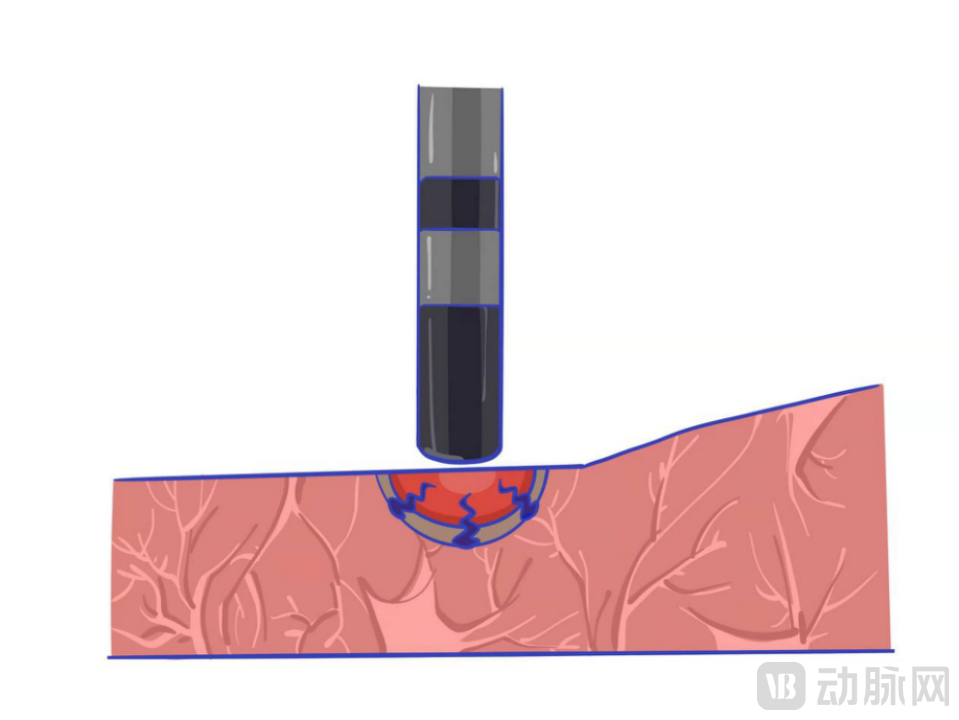
Cardiac electrophysiological ablation uses microcatheters to specifically destroy abnormal myocardial cells, clearing the “accident vehicles” from the fast lane and restoring unobstructed cardiac electrical conduction. Illustration: Qingning
Cryoablation utilizes the endothermic evaporation of liquid refrigerant within a probe-mounted balloon to induce a rapid temperature drop at the target site, thereby damaging or destroying abnormal cells in the surrounding tissue.Cryoablation technology imposes relatively simple requirements on surgical techniques, resulting in a short learning curve for physicians and good reproducibility of outcomes.
Kangfeng BiotechInnovatively using liquid nitrogen instead of traditional nitrous oxide as the refrigerant not only reduces the cost of obtaining the refrigerant but is also more environmentally friendly. In practical operation, Kangfeng Bio’s cryoablation system can achieve 360-degree circumferential ablation. Kangfeng Bio’s independently developed CryoFocus cryoablation system for hypertension and its cardiac cryoablation system for treating atrial fibrillation have both passed China’s Special Examination Procedure for Innovative Medical Devices, demonstrating global technological leadership and breaking foreign monopolies.
Pulsed Field Ablation (PFA) utilizes appropriately designed pulsed electric fields, employing multiple short-duration, high-voltage electrical pulses to induce electroporation in cardiomyocytes. This process allows extracellular cations to enter the cells, leading to cardiomyocyte fragmentation and death.Compared with radiofrequency ablation, pulsed electric fields do not generate Joule heat during the ablation process, eliminating the need for cold saline irrigation for cooling, and exhibit selective cellular injury. Since cardiomyocytes have a lower threshold for electroporation than other cell types, pulse parameters can be adjusted to selectively target and damage cardiomyocytes while minimizing impact on surrounding tissues such as blood vessels and nerves within the heart.
Compared with radiofrequency and cryoablation, pulsed field ablation features faster procedural speed, lower requirements for catheter-tissue contact, and the ability to perform cardiomyocyte ablation more precisely, whileHailed as the next-generation technology for atrial fibrillation ablation.
Jinjiang ElectronicsThe LEAD-PFA Pulsed Field Ablation System, an integrated cardiac pulsed field ablation platform combining 3D modeling, mapping, and ablation capabilities, was enrolled in a registered clinical trial last year. It is poised to become the first domestically developed pulsed field ablation system with independent intellectual property rights to receive NMPA approval for market launch in China.
Advances in cardiac electrophysiology have provided more treatment options for patients with heart disease, particularly those with atrial fibrillation. Electrophysiological ablation technologies that are safe, stable, and associated with minimal side effects can perform more complex procedures with minimal trauma. In recent years, a number of electrophysiological ablation devices with independent intellectual property rights have entered clinical trials. These technologies are expected to reach patients as commercial products soon, enabling access to state-of-the-art diagnostic and therapeutic services at more affordable prices.
GL Ventures, the venture capital platform under Hillhouse Capital that focuses on early-stage innovative companies, covers hard technology, software, biotechnology, and new
Key sectors including materials, emerging brands, and consumer technology. Hillhouse Ventures seeks out all entrepreneurs who are passionate about technology and believe in innovation; we aspire to grow alongside them.
FIRSTCALL for fundraising, with a greater expectation to accompany entrepreneurs on their long-term entrepreneurial journey.
References:
1. Grimnes, & Martinsen, Ø. G. (2015). Bioimpedance and bioelectricity basics (3rd ed.). Academic Press.
2. Chapter 1: Fundamentals of Cardiac Electrophysiology. Zhu Xiaoxiao ECG Information. Zhihu. https://zhuanlan.zhihu.com/p/148134910
3. Why Does the Heart Beat on Its Own: The Pact Between Cardiomyocytes and Electrical Signals. Yong Xin. Zhihu. https://zhuanlan.zhihu.com/p/192398061
4. Radiofrequency Ablation vs. Cryoablation vs. Pulsed Field Ablation: Johnson & Johnson, Medtronic, and Boston Scientific Have Different Strategic Focuses in Electrophysiology. Yixiehui. Zhihu https://zhuanlan.zhihu.com/p/440338188
5. After six years of exploration, Kangfeng Bio has developed two cryoablation technologies, breaking the monopoly held by foreign companies. VCBeat. https://www.sohu.com/a/342955295_133140)