

Qingrun Health Files IPO Prospectus: Pioneering Intelligent Aquatic Rehabilitation Solutions in China
Rehabilitation medicine, as a vital component of clinical practice, is recognized alongside preventive medicine, health maintenance medicine, and clinical medicine as“Four Major Medical Systems”。
However, rehabilitation medicine in China is still in its early stages and lags behind developed countries overseas. Nevertheless, driven by a vast patient population, China’s rehabilitation market remains remarkably large: according to statistics from the Ministry of Civil Affairs, the scale of China’s rehabilitation assistive device industry was approximately RMB 700 billion in 2020. It is projected that by 2025, the size of this industry is expected to exceed RMB 1 trillion.
On the other hand, a growing number of Chinese enterprises are deepening their engagement in the rehabilitation sector, providing comprehensive rehabilitation services to patients across China. For instance, Qingrun Health Group is a high-tech enterprise that leverages its independently developed aquatic rehabilitation technology as a foundational platform to deliver globally leading, intelligent, and comprehensive aquatic rehabilitation solutions to medical institutions, sports training centers, elderly care facilities, and athletic centers.
Aquatic rehabilitation technology can be applied to preventive medicine, rehabilitative therapy, and nursing care. Among these, aquatic rehabilitative therapy is a therapeutic modality widely used in the treatment and rehabilitation of various conditions, such as bone injuries, scoliosis, chronic pain, post-stroke limb dysfunction, cerebral palsy, Parkinson’s disease, and postpartum recovery.
Data indicate that aquatic rehabilitation therapy demonstrates superior clinical efficacy. In 2010, Li Hong and colleagues compared the therapeutic effects of aquatic rehabilitation versus land-based rehabilitation for chronic low back pain, concluding that aquatic rehabilitation yields greater improvements in functional disability and quality of life among patients with chronic low back pain than conventional land-based rehabilitation.
Other researchers have compared the therapeutic effects of aquatic rehabilitation versus land-based rehabilitation for knee joint injuries. The published data showed that the cure rate and effective rate for aquatic rehabilitation were 64.27% and 92.86%, respectively, whereas those for land-based rehabilitation were 30.77% and 84.62%, respectively. These findings indicate that aquatic rehabilitation significantly promotes the recovery of limb function in patients with knee joint injuries.
Based on long-term scientific research into aquatic rehabilitation, it is clinically recognized that aquatic rehabilitation can significantly improve patients’ range of motion and muscle strength, alleviate pain, reduce muscle stiffness and spasticity, and enhance balance. Consequently, prominent athletes such as Yao Ming have adopted aquatic rehabilitation following injuries to accelerate recovery and improve therapeutic outcomes.
Aquatic rehabilitation is an emerging therapy in China, yet it is widely practiced abroad. Zhang Ting, co-founder of Qingrun Health, stated, “In Europe and the United States, aquatic rehabilitation has reached maturity due to its favorable therapeutic outcomes and comfortable patient experience. For instance, in European countries such as Switzerland and the Netherlands, 90% of hospitals and rehabilitation institutions are equipped with aquatic rehabilitation centers. Furthermore, a significant number of elderly care facilities have also established aquatic rehabilitation centers.”
In addition to its widespread adoption, aquatic rehabilitation offers numerous advantages. First, while land-based rehabilitation cannot be initiated promptly, aquatic rehabilitation can begin as early as five days post-surgery, thanks to the effects of buoyancy. Second, aquatic rehabilitation demonstrates superior efficacy for certain conditions. For instance, patients with hemiplegia following stroke often struggle to perform gait training on land, which hinders the improvement of coordination and the development of a normal gait pattern. In contrast, aquatic rehabilitation exercises that leverage the physical properties of water often yield better therapeutic outcomes.
Faced with a rehabilitation modality that boasts significant advantages and widespread adoption overseas, Qingrun Health aims to introduce it to China and promote the development of the aquatic rehabilitation industry domestically, enabling Chinese citizens to access higher-quality aquatic rehabilitation therapy.
In fact, Zhang Ting had another personal reason for choosing to start a business in the field of aquatic rehabilitation. She said sorrowfully, “My grandmother was once a stroke survivor. In the 1990s, the concept of rehabilitation was not widely recognized. The lack of postoperative rehabilitation therapy left her with impaired physical and speech functions, compromising her quality of life. We founded Qingrun Health with the hope that all Chinese people can access high-quality rehabilitation services.”
To address the scarcity of aquatic rehabilitation resources in China, Qingrun Health initially provided qualification certification and aquatic exercise instructor training services to domestic aquatic rehabilitation centers with the support of the International Aquatic Therapy & Rehabilitation Association. Qingrun Health aims to empower the development of aquatic rehabilitation in China by supporting more aquatic rehabilitation centers and cultivating more professionals in the field.
At this stage, Qingrun Health also facilitated the establishment of the China Chapter of the International Association for Aquatic Rehabilitation and the Aquatic Exercise Therapy Group of the Chinese Association of Rehabilitation Medicine, contributing to the development of aquatic rehabilitation as a discipline in China.
In 2018, Qingrun Health partnered with Beijing United Family Rehabilitation Hospital to build and operate an aquatic rehabilitation center, marking its entry into the operation of such facilities.
Notably, the aquatic rehabilitation department built by Qingrun Health for Beijing United Family Rehabilitation Hospital is the first aquatic rehabilitation center in China to comply with both JCI and EU standards, and it remains one of the few such centers in the country that focuses primarily on aquatic exercise therapy while achieving profitability.
Based on the operational development of the Aquatic Rehabilitation Department at Beijing United Family Rehabilitation Hospital, Qingrun Health has validated the feasibility of a closed-loop business model integrating clinical care and rehabilitation within the non-public healthcare sector. The company plans to strengthen its business in the construction and operation of aquatic rehabilitation centers for B-side institutions, including hospitals, elderly care facilities, and rehabilitation hospitals.
Zhang Ting, Co-Founder of Qingrun Health, stated: “The Aquatic Rehabilitation Center is a comprehensive department that spans the entire life cycle and all medical disciplines,Provides end-to-end services ranging from preventive care to rehabilitation.。”
For example, in preventive healthcare, aquatic rehabilitation centers offer assessments of athletic performance, weight maintenance, balance, exercise tolerance, muscle strength, and metabolic function. In clinical hospital settings, they provide medical-grade services for departments including obstetrics, orthopedics, pediatrics, internal medicine, neurology, and neurosurgery. In terms of rehabilitative therapy, aquatic rehabilitation centers deliver comprehensive, department-wide rehabilitation services, such as orthopedic rehabilitation, sports rehabilitation, pediatric rehabilitation, neurological rehabilitation, cardiac rehabilitation, postpartum rehabilitation, pain management, and endocrine management.
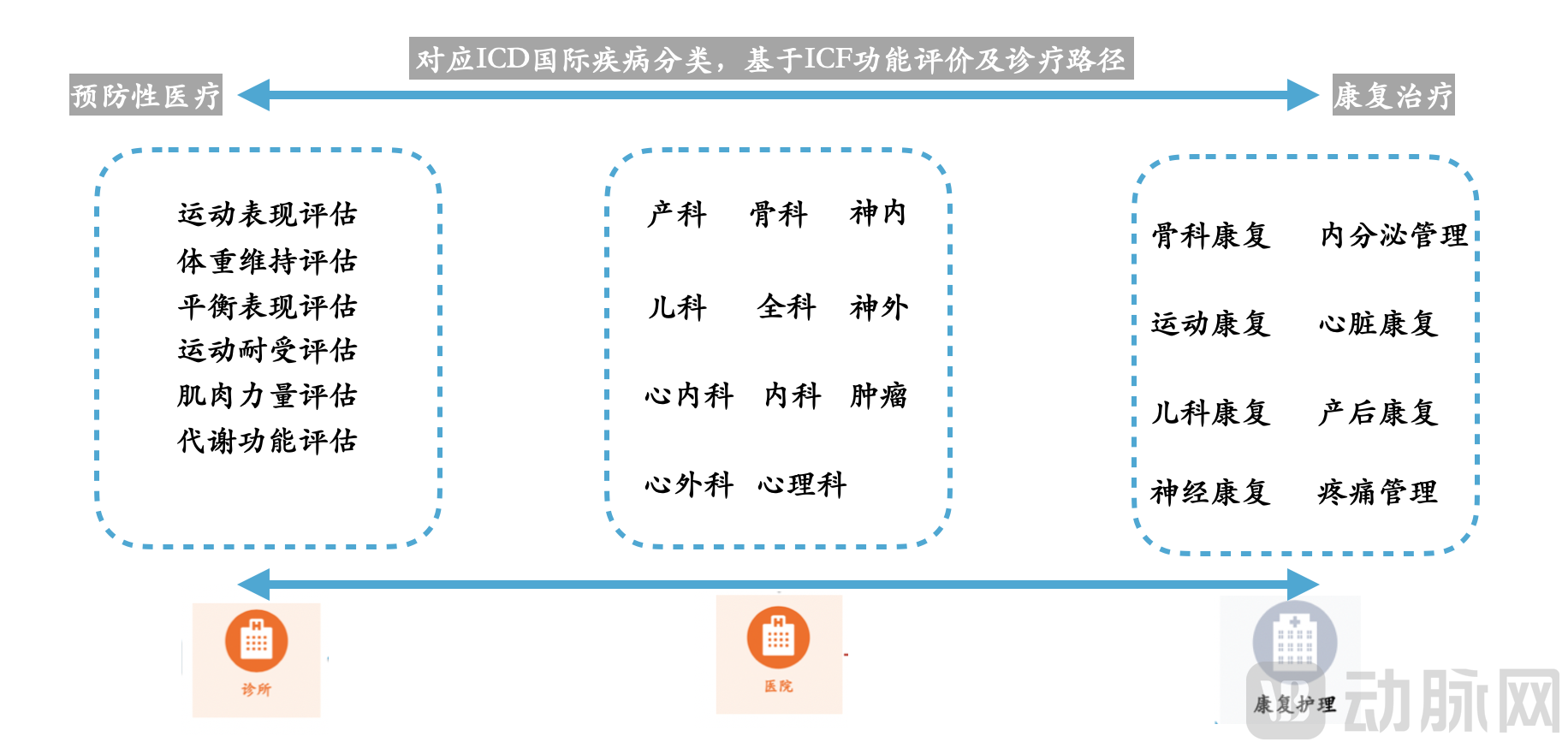
(The Aquatic Rehabilitation Center is a comprehensive department that spans the "full life cycle and all medical disciplines.")
However, it should be noted that aquatic rehabilitation equipment is currently entirely imported from overseas, with high prices that significantly limit the pace of development of aquatic rehabilitation in China. To address this issue, Qingrun Health aims to localize the production of aquatic rehabilitation equipment and leverage cost-effective devices to establish more aquatic rehabilitation centers, thereby launching consumer-facing aquatic rehabilitation services in a model similar to outpatient clinics.
According to reports, Qingrun Health currently provides rehabilitation services for patients of all ages with rehabilitation needs, including postoperative rehabilitation, postpartum recovery, aquatic rehabilitation for sports injuries, aquatic rehabilitation for individuals with disabilities, stroke rehabilitation, and cardiac rehabilitation.
Zhang Ting stated, “This is because, although Qingrun Health centers on aquatic rehabilitation technology, it also employs multidisciplinary rehabilitation therapists specializing in orthopedics, neurology, and cardiology. Qingrun Health aims to leverage domestic expertise in clinical medicine, nursing, nutrition, and exercise rehabilitation, along with established overseas aquatic rehabilitation systems, to build a rehabilitation platform centered on aquatic therapy that integrates the strengths of resources both in China and abroad.”
Building a rehabilitation platform centered on aquatic therapy, Qingrun Health’s confidence stems from its faith in industry development and team capabilities. According to reports, its team comprises top-tier physicians, professors of rehabilitation medicine, rehabilitation therapists, nursing staff, healthcare administrators, and equipment partners from both China and abroad, covering multidisciplinary fields including clinical practice, rehabilitation, nursing, healthcare management, and medical engineering. “A multidisciplinary team plays a crucial role in enhancing service quality and driving product innovation and R&D.”
Meanwhile, the core team members of Qingrun Health all have overseas work and study backgrounds. For instance, Catalina, its Technical Director, is an expert dispatched to China by the International Association for Aquatic Rehabilitation (IAAR). She has worked in Colombia and Switzerland for over 12 years, accumulating extensive experience in therapy, training, and management. Additionally, all members of its therapist team have more than five years of professional experience.
In addition, Qingrun Health has established a talent development system to lay the foundation for future services to C-end patients. It has supported the International Aquatic Rehabilitation Certification Training for six years, from 2016 to the present, cultivating 300 excellent aquatic rehabilitation therapists. To further empower therapists in various specialized fields, Qingrun Health will launch online and offline continuing education courses in pediatric rehabilitation, postpartum rehabilitation, orthopedic rehabilitation, and neurological rehabilitation, jointly released with partners such as the Chinese Association of Rehabilitation Medicine and the China Association for Maternal and Child Health Studies.
Zhang Ting concluded, “Currently, Qingrun Health is collaborating with a leading overseas manufacturer of aquatic rehabilitation equipment, with plans to introduce its products for domestic production in China. By leveraging China’s manufacturing advantages to reduce production costs, we aim to lower the prices of aquatic rehabilitation devices, thereby benefiting more patients across the country.”