Empowering Entrepreneurs to Innovate, Enabling Innovators to Advance – 2022 The 6th Future Healthcare 100 Summit

/
Hearing the distant rumble of thunder, sensing the approaching tide of fury,
We remain in an era of profound transformation within the healthcare industry,
In this era, we are closer to our dreams than ever before,
"It is not the outstanding who dream, but those who are good at dreaming who are outstanding,"
And countless outstanding dreamers have come together, gathering strength and breaking through,
Forging a Golden Age!
In 2016, VB100 held the inaugural “2016 Eye of the Storm · Future Healthcare 100 Conference.” What began as an obscure event with just over 400 attendees has grown into a highly influential healthcare industry summit attracting more than 7,000 participants. Over the past six years, VB100 has focused on doing just one thing—Focusing on innovation and entrepreneurship in the future healthcare sector, becoming a pioneer in the future healthcare industryAs the initial and most steadfast companions of new entrepreneurs, we understand that only by excelling in our own endeavors can individuals secure a promising future, and only by standing together can we uphold the future of the industry.
Each year, VB100 organizes the “Future Healthcare 100 Conference” by starting with the annual questions that innovators in the healthcare industry care about, identifying deep practitioners in various sub-sectors of the healthcare industry, and presenting our observations and research on healthcare innovation, as well as our understanding of national conditions, market dynamics, and policies, in a professional and systematic manner through rankings, paying tribute to the pioneers of the industry.
VB100 is not merely an observer, recorder, and researcher of the industry, but also a participant, thinker, and builder.Through the "Top 100 Future Healthcare Conference," we connect innovative startups with government entities and capital, providing early-stage companies with a broader platform and greater opportunities.
In 2022, we will once again launch the "Top 100 Future Healthcare Conference."
Over the past year, internet founders such as Zhang Yiming and Huang Zheng have ventured into the life sciences sector, with investment hotspots increasingly shifting toward the healthcare industry;
The novel coronavirus continues to wreak havoc globally, making online healthcare solutions such as digital therapeutics and internet-based medical services a focal point across the entire industry;
In terms of medical devices, multiple surgical robots have achieved significant clinical progress, with some products already in clinical application;
A major reshuffle is underway in the internet insurance industry, where only products compliant with the filing regulations for online life and health insurance are permitted to be sold via the internet.
The integration of the healthcare industry with policy and market dynamics is becoming increasingly tight. While changes in business models and updates to brand channels are undoubtedly important, the most critical technological transformations are also continuously brewing.
So, compared with 2021, what changes will occur in the healthcare industry in 2022? How will policy changes affect the industry, and will these changes be beneficial or detrimental to its development?All these answers will be revealed at the “2022 · 6th Future Healthcare Top 100 Conference.”
2021This year, although volume-based procurement and national reimbursement drug price negotiations continue to profoundly impact the industry, the emphasis on innovation remains unchanged, and the market’s definition of innovation is steadily evolving.On July 2, 2021, the Center for Drug Evaluation (CDE) released a draft for comment on the “Guiding Principles for Clinical Development of Anticancer Drugs with a Focus on Clinical Value,” raising the bar for the clinical research of innovative drugs.
Following the release of the draft for public comment, the secondary market experienced a significant correction, propelling pharmaceutical companies into the next phase of innovation driven by the tide of the times. In an era dominated by generic drugs, “Me-too” was considered innovation;However, in this currentIn an era rife with “me-too” drugs, only “me-better” and “first-in-class” therapies that withstand rigorous scrutiny truly constitute innovation.
Early movers in innovation are already beginning to see returns.
In August 2021, RemeGen and Seagen entered into an exclusive global license agreement for the development and commercialization of RemeGen’s novel antibody-drug conjugate (ADC), disitamab vedotin. Under the agreement, RemeGen is eligible to receive total potential payments of up to $2.6 billion, comprising a $200 million upfront payment and milestone payments of up to $2.4 billion.
In September 2021, cadonilimab, independently developed and industrialized by Akeso, became the first PD-1-based bispecific antibody drug globally to submit a marketing application, and is poised to become the first bispecific antibody drug independently developed and marketed in China.
In December 2021, BeiGene and Novartis entered into a collaboration agreement. Under the terms, Novartis will pay up to $2.9 billion, plus 20–25% sales royalties, to secure the rights to BeiGene’s TIGIT antibody in the United States, Canada, multiple European countries, and Japan.
Beyond the rapid advances in macromolecular drugs over the past two years, breakthroughs have also been successively achieved in more cutting-edge fields of biotechnology.

In the field of cell therapy, China’s first cellular therapy product, Axicabtagene Ciloleucel Injection, was approved in August 2021, followed by the approval of Relmacabtagene Autoleucel Injection in September 2021. The successive approvals of these two CD19 CAR-T products have brought new hope to patients with hematologic malignancies in China.
In the field of gene therapy, in January 2021, Edigene’s Investigational New Drug (IND) application for ET-01, a CRISPR/Cas9 gene-editing therapeutic product targeting transfusion-dependent β-thalassemia, was approved by the Center for Drug Evaluation (CDE); in January 2022, Nuofo Therapeutics’ NR082 received IND clearance from the U.S. Food and Drug Administration (FDA), becoming the first domestically developed in vivo gene therapy for ophthalmic indications to obtain FDA approval for clinical trials in the United States.
In the field of nucleic acid therapeutics, Abogen Biosciences completed three rounds of financing totaling over $1.1 billion in 2021, setting a new record for the largest single pre-IPO fundraising amount in China’s biopharmaceutical sector and ranking first globally in biotechnology financing. Sirnaomics was listed on the Hong Kong Stock Exchange on December 30, 2021, becoming the first publicly traded company in China specializing in small nucleic acid drugs.
In the field of AI-driven drug discovery, total financing in China’s AI pharmaceutical sector exceeded RMB 8 billion in 2021. As a cross-disciplinary domain with substantial market potential, AI-enabled drug R&D has attracted significant investment from both the TMT (Technology, Media, and Telecom) and healthcare sectors. Breakthroughs in biotechnology and declining costs have accelerated the accumulation of big data in biomedicine, creating favorable conditions for the application of AI in this field. Over the next few years, as AI-driven drug discovery undergoes further validation, we expect to see milestone deliveries from AI pharmaceutical companies and more investigational projects advancing into clinical stages.
The biopharmaceutical industry is standing at a new inflection point driven by emerging technologies. Relatively mature sectors form the cornerstone of industrial development, while new technologies will become the new growth engines for the industry in the coming years.
The development of the industry has also brought new opportunities, with more active exploration of new technologies and novel drug modalities. Differentiation is replacing homogenization, and the pace of internationalization is accelerating. Against the backdrop of domestic substitution, the biopharmaceutical supply chain is being continuously refined, nurturing future pharmaceutical enterprises within China’s ecosystem that will change the world.
In recent years, the medical device industry has been significantly impacted by volume-based procurement (VBP) and DRG/DIP payment reforms. Coronary stents subject to VBP have already entered clinical use. In September 2021, the centralized procurement of orthopedic artificial joints was opened in Tianjin. High-value consumables in other sectors are also gradually being included in the centralized procurement process.However, national centralized procurement policies for high-value medical consumables are expected to ease, and as device prices decline, overall market penetration will increase.
Medical Device Companies in the Primary and Secondary MarketsRemained active. In 2021, financing in the medical device sector further increased in both volume and scale.By the end of 2021, the number of financing deals exceeding RMB 100 million reached 137, a 78% increase from 77 in 2020. Transactions surpassing RMB 500 million also rose to 17, marking a 55% growth.
In the primary market, the surgical robotics sector has remained the hottest track in medical devices for two consecutive years, leading in both the number of financing deals and the total amount raised.
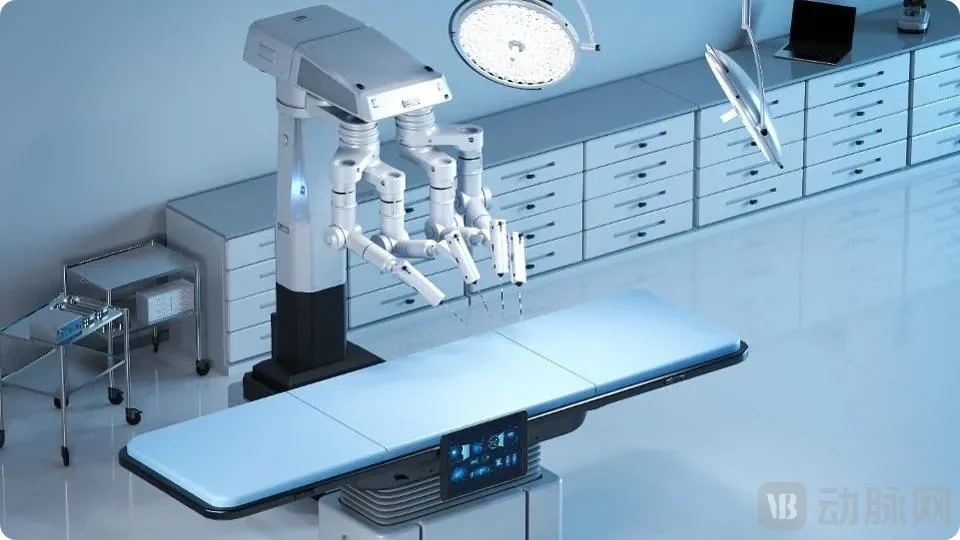
The Hong Kong Stock Exchange also welcomed its first surgical robotics company: MicroPort MedBot, with a market capitalization exceeding RMB 50 billion, making it the highest-valued IPO in the medical device industry.
In terms of product commercialization, Weimai Medical’s interventional surgical robot performed a PCI procedure at Beijing Anzhen Hospital, marking the first percutaneous coronary intervention completed by a domestically developed and independently innovated vascular interventional robot in China. In the laparoscopic surgery sector, Shandong Weigao’s “Laparoscopic Endoscopic Surgical Equipment” received approval from the National Medical Products Administration (NMPA) on October 27, 2021, becoming the first laparoscopic surgical robot approved for market entry in China. MicroPort’s Toumai surgical robot, Jingfeng Medical’s MP surgical system, and Kangduo’s laparoscopic surgical robot have all completed clinical trial enrollment. In the orthopedic surgery sector, the first fully intelligent domestic orthopedic surgical robot integrating navigation and surgical manipulation, developed and manufactured by Xinjunte, has received regulatory approval. Meanwhile, joint replacement robots from Yuanhua Intelligence, Jianjia, and MicroPort Robotics have entered the clinical trial stage. Products from multiple companies have advanced into clinical trials.
In terms of payment, the industry has also seen significant positive developments.In April 2021, the Shanghai Healthcare Security Administration included surgical robots in Shanghai’s medical insurance coverage; in August, Beijing added Tinavi’s orthopedic surgical robot to its Class A medical insurance reimbursement list, allowing patients to receive 100% full reimbursement.
The coming years will witness the large-scale clinical adoption of domestically produced surgical robots in China. The surgical robotics sector is entering a golden age of development. Beyond laparoscopic and orthopedic surgical robots, companies have already begun R&D efforts in vascular intervention, pulmonary intervention, and TAVR (Transcatheter Aortic Valve Replacement) surgical robots.
As population aging intensifies, the strong unmet demand in the cardiovascular sector has driven its sustained rapid growth.In 2021, as one of the earliest industries impacted by centralized volume-based procurement, the sector witnessed an accelerated process of survival of the fittest, with resources and market share becoming increasingly concentrated. Technologically, innovation has expanded from transcatheter aortic valve replacement (TAVR) to comprehensive competition across mitral and tricuspid valve interventions.
Transcatheter Mitral Valve (TMV) repair is regarded as the “crown jewel” in the field of interventional valve therapy. In China, there is intense interest in mitral valve interventions. Dejin Medical’s transfemoral transcatheter mitral valve clip, DragonFly™, and Hanyu Medical’s interventional device for mitral regurgitation, ValveClamp, have both entered clinical trial phases.
In the field of mitral valve replacement products, MicroPort’s MitraFix and Nuomai Medical’s Mithos have both entered the product registration application phase. Their technological standards are at the international forefront, with market launch expected within the next 1–2 years.
Medical imaging, as a basis for diagnosis and treatment, has always been a hot field. With technological iterations, leading companies are flocking to enter the imaging sector.In the AI sector, the medical imaging track has long evolved from “single-product” offerings to a stage driven by “big data and artificial intelligence,” with technology remaining the core competitiveness of enterprises.
Last year, AI medical imaging companies such as Shukun Technology, NanoVision, Argus Medical, Vmai Medical, and Yueying Technology all secured financing exceeding RMB 100 million. On the last day of 2021, United Imaging Healthcare submitted its prospectus to the STAR Market, poised to lead a wave of IPOs in the medical imaging equipment sector.
However, AI-powered medical imaging is still far from being able to replace human expertise within the closed-loop diagnostic process in healthcare. For companies seeking further growth, the key lies in enhancing the clinical value of AI imaging solutions.

The integration of healthcare and digital technology has long been a focal point of the industry. After more than two decades of development, the internet healthcare sector has entered a phase of deep transformation. The COVID-19 pandemic accelerated the demand for digitalization, and the emergence of diverse needs has further propelled medical digitalization to the forefront, driving industry growth.
In 2021,The integration of internet-based healthcare with chronic disease management and whole-course disease management is deepening, while the surge in digital therapeutics has provided a clear direction for validating the clinical efficacy of digital health solutions.
In May 2021, Miao Health and Weimai were officially certified by the Digital Therapeutics Alliance (hereinafter referred to as DTA), becoming the first Chinese enterprises announced as members of the International Digital Therapeutics Alliance. Subsequently, companies such as MedSci, Shuyu Medical, and Jianhai Technology have also joined the association as full members.
With the continuous advancement of the “Internet Plus Healthcare” policy, the post-pandemic era has seen a clear trend toward a pathway that is oriented toward health outcomes, driven by technological innovation, and facilitated by deep collaboration between hospitals and enterprises.
In 2021, WeDoctor, Dingdang Kuaiyao, Zhiyun Health, and Yuanxin Technology successively filed their prospectuses with the Hong Kong Stock Exchange.
Digital health companies already secured prominent positions in the 2021 Future Healthcare Top 100 list. Bolstered by various favorable factors last year, these enterprises are poised to achieve even higher rankings in the 2022 Future Healthcare Top 100 list. Of particular note is which companies will replace those already publicly listed and emerge as the leaders among innovative startups.
As an industry with a market worth tens of billions, the IVD sector has experienced robust growth over the past two years.CurrentlyListed Companies in the IVD Industry IncludeMore than 20; in 2021, a total of 16 companies went public. There are over 6,000 IVD-related enterprises, and the entire industry is exhibiting intense involutionary competition.trend.As Anhui Province launched centralized procurement of in vitro diagnostic (IVD) reagents in August 2021, industry enthusiasm hit rock bottom. The advent of this wave of centralized procurement has further intensified survival pressures on the sector, prompting companies within the industry to actively seek strategies to cope with the situation.
Due to severe product homogenization, market competition is fiercer than ever before.Domestic growth pressures have surged, while overseas markets yet to be tapped still hold significant opportunities.“Going global” has become a strategic choice for some IVD companies. Since the first half of 2021, overseas orders have served as the primary growth driver for the financial performance of domestically listed IVD companies.
As of now, only three companies—Acon Biotech, Orient Gene, and Andon Health—have successfully entered the U.S. market with their COVID-19 test kits. In January 2022, Andon Health secured a $1.275 billion order for COVID-19 test kits, resulting in 27 consecutive daily limit-up gains on its stock price.
In addition, there are also many companies that choose other niche tracks to engage in differentiated competition.
As a niche sector, the clinical mass spectrometry industry showed strong momentum for explosive growth in 2021, with annual financing exceeding RMB 1 billion.
Yingsheng Biology has multiple reagents approved, becoming the company with the most certifications in the field of clinical mass spectrometry.
The cancer early screening and diagnosis industry is in a transitional phase from R&D to commercialization.。
In October 2021, the Beijing Healthcare Security Administration officially included gene methylation testing in its Class A medical insurance services and Class A work-related injury insurance programs. With this expanded insurance coverage, the commercial landscape for early cancer screening and diagnosis is gradually maturing and rapidly penetrating primary healthcare settings.
Helio Health, under the Laimeng Group, has launched its commercial early detection test for liver cancer in the United States, becoming the first cancer screening company to achieve commercialization in both China and the U.S.
New Horizon Health Officially Lists on the HKEX, Marking the Debut of China’s First Cancer Early Screening Stock.

As the Second Curve of Tumor Genetic Testing, a considerable number of companies have also entered the field of MRD recurrence monitoring.
In early 2021, TumorTree Genomics and Huidu Medical successively launched their MRD detection products; furthermore, PanGene Medicine’s blood cancer MRD detection product obtained CE marking for access to the European Union market, thereby entering overseas markets.
Genetron Health Enters the Solid Tumor MRD Testing Arena, Announces Collaboration Agreement with AstraZeneca’s Global R&D China Center to Jointly Invest in and Develop Solid Tumor MRD Products, and Signs an Exclusive Commercialization Agreement with Fosun Pharma, Marking the Full Market Launch in China of Its First Product in the Hematologic Malignancies and MRD Testing Field.
In the field of single-cell technology, in 2021, 11 companies in the single-cell technology sector completed financing, with a total of 15 financing rounds,Backed by significant investments from Hillhouse Capital, Sequoia Capital China, Lilly Asia Ventures, and IDG Capital.
A significant portion of IVD companies’ product costs is allocated to raw material procurement, and the quality of these materials directly impacts the quality of reagent products. On the other hand, demand for specific types of raw materials is very low. For IVD companies, the upstream sector resembles a seller’s market.
Due to the impact of the pandemic, the IVD raw materials market has evolved from a niche segment into a multi-billion-dollar industry. Core upstream suppliers such as Sino Biological, Vazyme, and Fapon Biotech have gone public in succession, while emerging players like Hanhai New Enzyme, Apis, ACROBiosystems, and Yinjia Bio have risen to prominence.Mergers, Acquisitions, and Integration of Upstream and Downstream Companies Will Become a Major Trend in the Future。
Although the IVD industry continues to experience intense competition, new niches and approaches always emerge, enabling companies to stand out and achieve a remarkable turnaround. Rather than weakening enterprises, such fierce rivalry spurs innovation, ultimately driving the comprehensive upgrading and transformation of the entire industry.
Biopharmaceuticals, medical devices, digital health, and in vitro diagnostics (IVD) are part of China’s young, vast, and highly promising multi-billion-dollar healthcare market. What unfolded in these sectors last year was merely a microcosm of the industry as a whole. From VCBeat’s perspective, more than 20 other niche segments also warrant close attention.
Areas worth anticipating in 2022 also include:
The Integration of Rehabilitation Devices with Brain-Computer Interface Technology and the AI+ Technological Boom;
Introduction of ITBT Technology Toward Macromolecules and Nucleic Acid Drugs;
High Growth Potential and Broad Market Prospects of Electronic Pulse Therapy Technology;
Innovative Mental Health Service Solutions Enter the Market;
The dental chain industry is moving toward large-scale operations and entering the final sprint phase for initial public offerings, with investment increasingly concentrated in leading enterprises;
Integrated healthcare delivery systems and the rise of novel payment models;
......

These industry trends, converging like streams into rivers and rivers into the sea, are poised to trigger a new wave of transformation in the sector, bringing distinct changes to the rankings.
A CountryA value depression that facilitates profit-making; a spiritual highland of a nation that enables people to ascend and gain a broader perspective; the growth of an industry is inseparable from the collective contributions of its myriad practitioners.
VB100 focuses not only on those in the spotlight but also on those who contribute their share to making it all happen. Who says that only those standing in the light are heroes?
All things come into being because dreams never die.
In April 2022, the 6th Future Healthcare Top 100 Conference will be held in Suzhou. The conference will undergo comprehensive upgrades in themes and content, releasing rankings for the Future Healthcare Top 100 across five major sectors, over 20 value-based sector lists, and more than 20 thematic forums. Stay tuned to the Future Healthcare Top 100 Conference for more highlights from the healthcare industry.
/

To express our gratitude for your support of VB100, we are specially launching a limited-time discounted ticket offer.ActivityTime: From now until February 28, 2022, conference tickets are as low as¥169Rise!
Conference Date: Mid-April 2022 (exact date to be determined)
Venue: Suzhou, China (specific location TBD)
Limited-Time Offer: Special Launch Tickets
Purchase Channels:Search for the “VB100” mini-program on WeChat to purchase.
Your trust will grant you the following benefits:
1. All-access pass for the forum, exhibition, and interactive activities (separate registration required for certain invitation-only sessions)
2. On-site Resource Coordination Group
3. Guest-authorized PPTs, conference proceedings, public reports, and other restricted materials
4. Lunch vouchers during the conference (only for those with meal tickets)
Scan the QR code to register for the 2022 · 6th Future Healthcare Top 100 Conference
Inquiries Regarding the 2022 Future Healthcare Top 100 Conference and Rankings