

Nearly RMB 1 Billion Invested in Medical Support for Beijing 2022 Winter Olympics: Ski Doctors, Helicopter Rescue, and Mobile Emergency Systems
10-Day Countdown to the 2022 Beijing Winter Olympics!
According to the Chinese special edition of Olympic Review, the official magazine of the International Olympic Committee, approximately 2,900 athletes representing more than 90 National (Regional) Olympic Committees will gather in Beijing for the Winter Olympics to compete in 7 major sports (6 for the Winter Paralympics), 15 disciplines, and 109 events (78 for the Winter Paralympics). The competitions will be held across three competition zones in Beijing and Zhangjiakou.
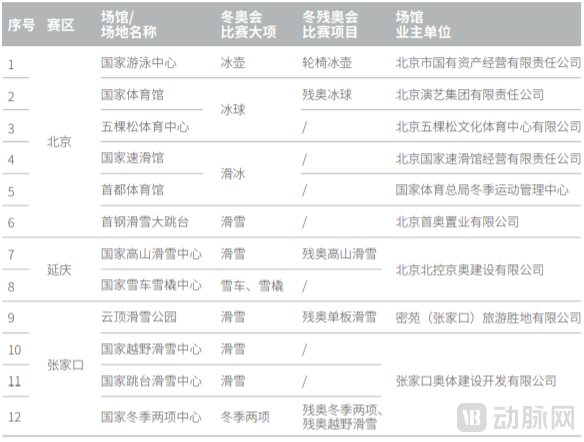
Venues for Events at the Beijing 2022 Winter Olympics, Source: Beijing 2022 Winter Olympics Sustainability Report (Pre-Games)
This marks the first time in China’s history that it has hosted the Winter Olympic Games, making Beijing the world’s first city to have hosted both the Summer and Winter Olympics. The distinction of being a “Dual-Olympic City” has drawn significant attention to the 2022 Beijing Winter Olympics. Thorough preparation serves as the fundamental prerequisite for the successful hosting of the event, with preparatory work spanning more than six years since the successful bid in 2015. In December 2015, the Beijing 2022 Organizing Committee for the Olympic and Paralympic Winter Games (hereinafter referred to as the Beijing Organizing Committee) was established.
Winter sports carry high risks and a significant likelihood of athlete injuries. Competition venues may be affected by extreme weather, and the complex epidemiological situation further compounds these challenges. Therefore, medical and health support for the Winter Olympics is particularly critical and poses substantial challenges. The Beijing Organizing Committee for the 2022 Olympic and Paralympic Winter Games established a Sports Services Department to oversee medical services, epidemic prevention and control, and related tasks. Meanwhile, health administrative departments at all levels, medical institutions, centers for disease control and prevention, relevant public service agencies, and social forces in the host regions have been extensively engaged in providing medical and health support.
To more focusedly showcase the medical and health support capabilities for the Winter Olympics, VCBeat has compiled and analyzed over 110 pieces of bidding information directly related to the Winter Olympics from 2015 to the present, involving a total amount of 893 million yuan.
It should be noted that medical and health support for the Winter Olympics is a vast and complex undertaking. The data from winning bids presented here is merely a snapshot and does not represent the entirety of such efforts. The information compiled in this article was obtained by searching with the keyword “Winter Olympics”; however, some procurement projects that actually served the Winter Olympics may not have included this specific term. Furthermore, certain projects with smaller contract values are not subject to mandatory public tendering. Therefore, the actual investment in medical and health support for the Winter Olympics likely exceeded RMB 893 million. The focus of this article is not on the monetary amount itself, but rather on the distinctive features of the support provided specifically for the Winter Olympics.
The global COVID-19 pandemic remains severe. The Winter Olympics will bring a large influx of inbound travelers, and with recent isolated positive cases reported in Beijing, epidemic prevention and control have naturally become the top priority.
Nucleic Acid Testing and Epidemic Prevention Supplies Cost 315 Million; Aerosol Monitoring Put into Use
Nucleic acid testing and the provision of epidemic prevention supplies are essential components of pandemic control. Bid award data show that as of January 18, 2022, relevant authorities had invested approximately RMB 315 million in nucleic acid sampling and testing services and the procurement of epidemic prevention supplies, with the highest single procurement amount reaching RMB 165 million.
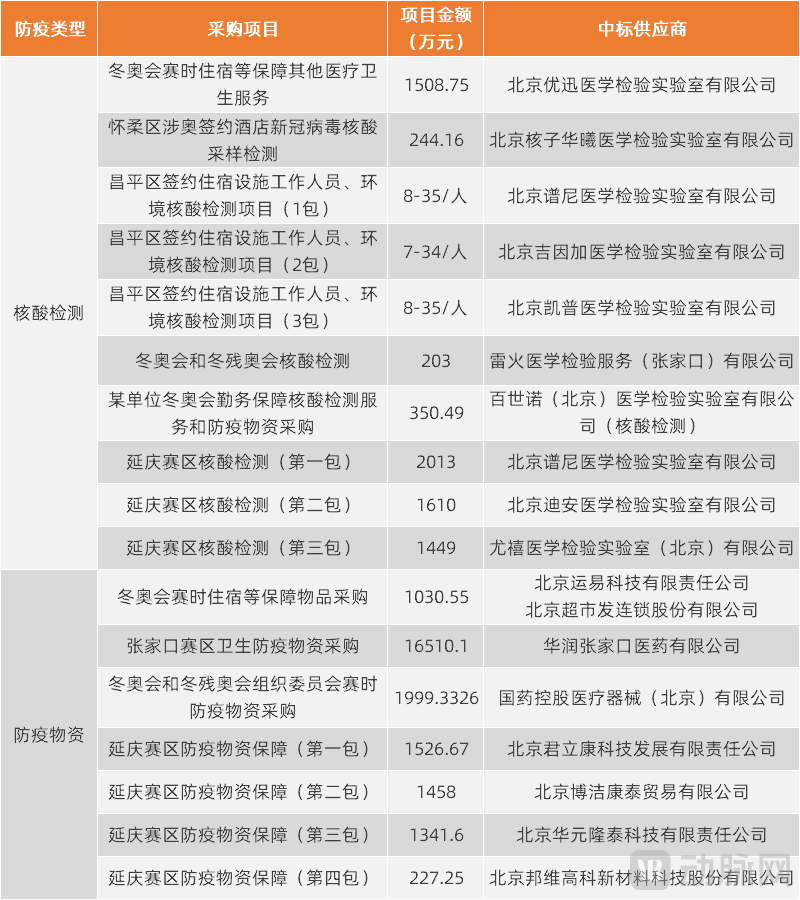
Winter Olympics Nucleic Acid Testing and Epidemic Prevention Supplies Procurement Project, Source: China Government Procurement Network
Among these projects, the Beijing 2022 Organizing Committee, the Health Commission of Yanqing District in Beijing, the Health Commission of Changping District, and the Health Commission of Huairou District were the primary purchasers. Additionally, entities such as the Culture and Tourism Bureau of Haidian District in Beijing and the Bureau of Industry and Information Technology of Zhangjiakou City also procured services for epidemic prevention and control. On the supply side, given the wide variety of epidemic prevention materials involved, they were mainly supplied by distributors. Meanwhile, several third-party medical testing institutions, including Hybribio, Yxgen, Dian Diagnostics, and Genetron Health, were able to directly provide nucleic acid sampling and testing services.
From the perspective of procurement content, third-party medical testing institutions will conduct nucleic acid sampling and testing for Olympic-related personnel at competition venues, accommodation facilities, and other locations, as well as environmental nucleic acid testing at accommodation facilities.
It is also understood that, in addition to traditional nucleic acid sampling and testing methods, major venues of the Winter Olympics will deploy a bioaerosol-based SARS-CoV-2 nucleic acid monitoring system for environmental surveillance. The system was urgently developed through a collaborative effort by Professor Liu Peng’s team from the Department of Biomedical Engineering at Tsinghua University School of Medicine and multiple partner institutions. From April to July 2021, the system underwent trials at Beijing Ditan Hospital.Clinical validation with over 100 samples demonstrated that the positive detection rate was three times that of existing real-time quantitative PCR systems; from October to December 2021, the system was extensively applied and validated during the Winter Olympics test events.
According to reports, the bioaerosol SARS-CoV-2 nucleic acid monitoring system demonstrates high sensitivity in detecting aerosols with low viral loads, and can serve a supplementary and early-warning role within the epidemic prevention and control framework for the Winter Olympics.
“Closed-Loop Management”: Advancing Epidemic Prevention and Control Alongside Daily Operations
Certainly, in addition to nucleic acid testing and epidemic prevention supplies, epidemic prevention efforts encompass a broader scope.
In October and December 2021, the Beijing Organizing Committee for the 2022 Olympic and Paralympic Winter Games released two editions of the *Beijing 2022 Olympic and Paralympic Winter Games Epidemic Prevention Manual* (hereinafter referred to as the *Epidemic Prevention Manual*). Each edition comprised two booklets: one targeted at athletes and team officials, and the other at all other stakeholders. Both editions clearly outlined six core principles for epidemic prevention and control, namely: vaccination, closed-loop management, COVID-19 liaison officers, testing, tracing and isolation, minimizing contact, and hygiene awareness.
Among the six major principles, closed-loop management serves as a special administrative measure during critical periods. By minimizing unnecessary contact, it ensures the safety of both Olympic-related personnel and the Chinese public while enabling the completion of daily operations related to the Games. The specific management process is as follows: Individuals who have completed the full course of COVID-19 vaccination will enter closed-loop management directly upon arrival via dedicated transport for the event. Those who have not completed the full vaccination course must undergo 21 days of centralized quarantine at designated facilities before entering the closed loop.
Within the closed-loop management system, Olympic-related personnel traveling to China (including relevant domestic staff) are required to undergo daily health monitoring and COVID-19 nucleic acid testing. They must travel exclusively via designated vehicles between specified locations (including competition venues and accommodation hotels, etc.). Strict adherence to epidemic prevention measures is mandatory, and contact with individuals outside the closed loop is prohibited. After the conclusion of closed-loop management and prior to departure, these individuals must still use event-specific transportation.
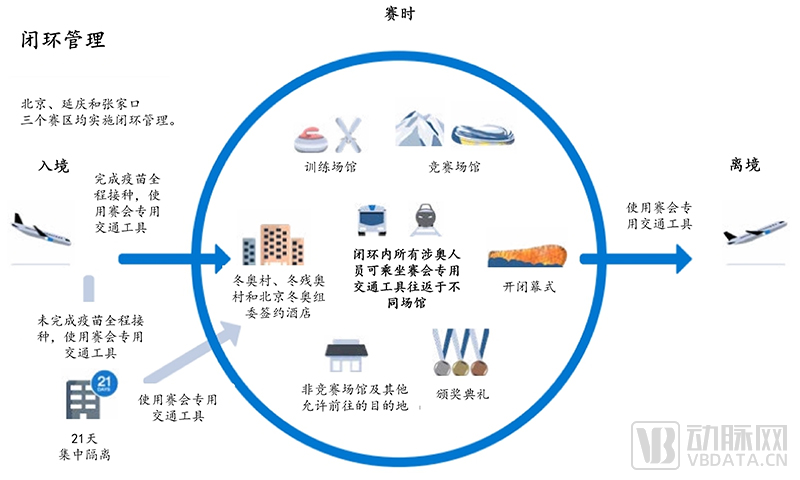
The Full Process of “Closed-Loop Management” for Epidemic Prevention at the Winter Olympics, Source: The Second Edition of the Beijing 2022 Olympic and Paralympic Winter Games Epidemic Prevention Manual
It is evident that the Epidemic Prevention Manual systematically outlines the epidemic prevention rules that athletes, team officials, and other stakeholders must adhere to. This endeavor requires meticulous preparatory work for support, with nucleic acid testing and epidemic prevention supplies constituting critical components thereof.
In addition, closed-loop management requires the arrangement and coordination of services such as transportation, catering and accommodation, and security duties. According to the China Government Procurement Network, there were more than 700 procurement projects for these support services. However, since few health and medical enterprises are involved in these areas, they are not included in the statistics presented in this article.
Some Winter Olympic events take place on high-altitude snowy terrain, where courses are winding and steep, posing high risks and significant challenges for rescue operations. Data from the International Olympic Committee indicate that the injury rate among athletes participating in snow sports at the Winter Olympics is relatively high, ranging from approximately 10% to 14%. Therefore, the distinctive aspect of medical rescue at the Winter Olympics lies in overcoming difficulties caused by factors such as low on-site temperatures to provide immediate treatment to the injured. This approach not only safeguards the health and lives of the athletes but also lays the foundation for their subsequent recovery through scientific first aid, thereby preserving their professional careers.
On-Site Emergency Care: Four Years of Rigorous Training Give Rise to China’s First Generation of Ski Doctors
VCBeat has found that among the procurement projects related to the Winter Olympics, Beijing Jishuitan Hospital and the Third Hospital of Hebei Medical University purchased not only a batch of emergency medical devices and consumables but also a batch of skiing equipment. What is the reason behind this?
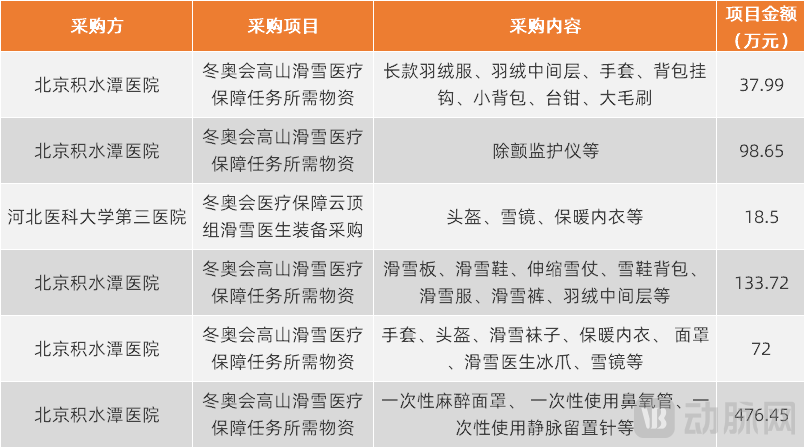
Procurement of Supplies for Ski Doctors, Source: China Government Procurement Network
It turns out that these supplies were specifically prepared for emergency medical services in alpine skiing events. In such competitions, the race course serves as the primary site for emergency care, with a critical “golden” rescue window of four minutes.
According to the rescue plan for alpine skiing venues, Field of Play (FOP) medical stations are established every 300–400 meters along the competition and speed courses. Each FOP medical station is staffed with two ski doctors and four rescue personnel. In the event of an injury, referees immediately halt the race. The ski doctors must carry a 15-kilogram rescue pack and rely on their proficient, near-professional-level skiing skills to reach the athlete within four minutes, providing initial treatment in severe cold conditions. This poses a significant challenge for physicians who are accustomed to interpreting imaging scans, reviewing reports, and wielding scalpels.
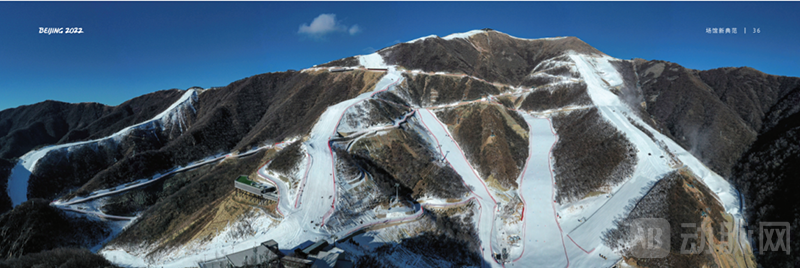
National Alpine Skiing Centre, image source: Beijing 2022 Winter Olympics Sustainability and Legacy Brochure
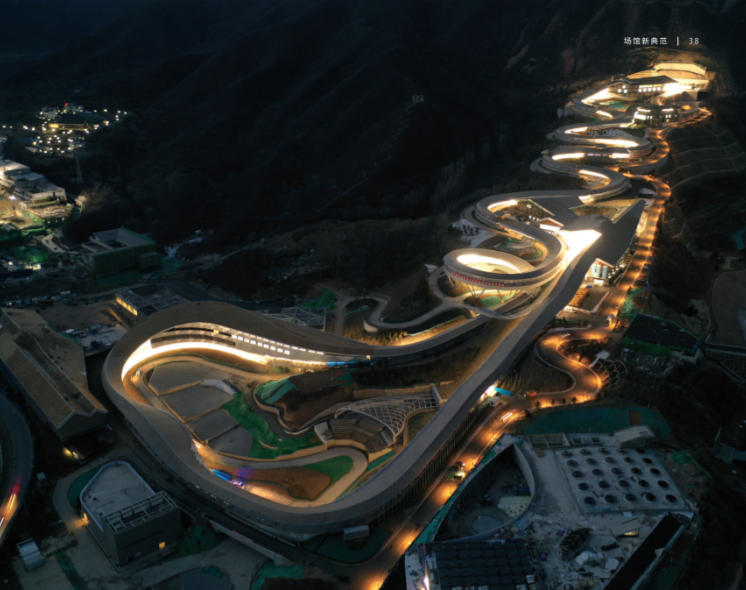
National Sliding Centre, image source: Beijing 2022 Winter Olympics Sustainability and Legacy Brochure
Rome Was Not Built in a Day. To ensure the successful completion of rescue operations in extreme weather conditions, some doctors have undergone four years of specialized training, becoming China’s first generation of ski doctors.
In 2018, the Gaoshan Medical Team established an alpine skiing medical support team through rigorous testing and selection. The team comprises 40 ski physicians from specialties including spinal surgery, neurosurgery, and anesthesiology. A professional ski coaching team was engaged to train these physicians, a program that has now spanned four ski seasons. During the training period, the physicians underwent both ski skills instruction and specialized technical training in anesthesiology, neurosurgery, orthopedics, thoracic surgery, general surgery, and emergency care.
The medical support team for alpine skiing was organized and implemented by Beijing Jishuitan Hospital and the Third Hospital of Hebei Medical University, prompting both institutions to procure the necessary supplies.
Following rigorous training, the alpine skiing medical support team successfully completed their respective support duties in January and February 2021 during two test events: the 14th National Winter Games and the “Invite Beijing” Alpine Skiing Invitational. After New Year’s Day 2022, the ski doctors were stationed at the venues ahead of schedule to familiarize themselves with the courses, consolidate their technical skills, and undergo further intensive training.
Rescue Helicopter: Arrives on Scene in 4 Minutes, Transports to Hospital in 15 Minutes
Transportation for snow sports also has its particularities. Due to the distance between the alpine competition venues in Yanqing and Zhangjiakou and the designated hospitals, helicopters are required to assume the role of patient transport.
Procurement data shows that a consortium comprising the Beijing Red Cross Emergency Rescue Center, the Emergency Critical Care Center, and CITIC Offshore Helicopter Co., Ltd. has been selected as the service provider for helicopter rescue operations during the Winter Olympics. The budget for helicopter rescue standby services in the Yanqing and Zhangjiakou competition zones amounted to RMB 15.59 million, with an operational rate of RMB 35,000 per flight hour. Understanding the preparatory work involved in helicopter rescue operations makes it easy to see why the costs are so high.
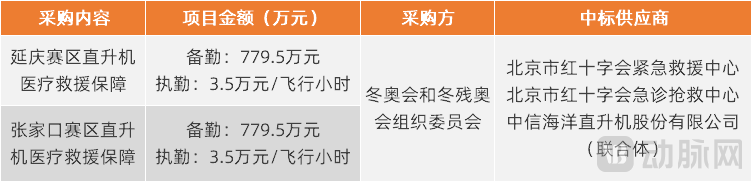
Beijing 2022 Olympic and Paralympic Winter Games Organizing Committee Helicopter Medical Rescue Service Procurement Project, Source: China Government Procurement Network
In accordance with the requirements of the International Olympic Committee (IOC), international sports federations, and bid commitments, helicopters must reach the airspace above a patient within 5 minutes and transport the patient to the nearest designated hospital within 15 minutes for events such as alpine skiing and ski jumping. The IOC and international sports federations also required a review of the helicopter medical rescue plan 40 months prior to the Games (i.e., in 2018). In fact, the aforementioned procurement was already awarded in 2018.
According to public information, the Beijing Red Cross Society dispatched two H155 rescue helicopters, two H135 medical helicopters, and 66 aviation medical support personnel to undertake corresponding rescue missions. The H135 medical helicopters were equipped with comprehensive emergency medical devices, including oxygen cylinders, vacuum stretchers, suction apparatus, ventilators, and defibrillator monitors. Prior to the start of the Winter Olympics, the helicopter support team had already developed various emergency contingency plans covering scenarios such as snowy weather and rotor icing, and conducted multiple drills and training sessions.
This demonstrates that helicopter rescue operations, which entail “years of preparation for a single moment of action,” involved substantial preparatory work conducted prior to the Games. During the event, helicopter rescue support will be provided from January 27, 2022, to March 13, 2022, spanning the period from the opening of the Winter Olympic Village to the closing ceremony of the Winter Paralympics, for a duration of over one month.
Currently, the Winter Olympics has established a medical service system comprising venue medical stations (primarily for emergency care), the Olympic Village polyclinic (for non-emergency general practice and specialist consultations, as well as certain emergency services), and designated hospitals (for severe injuries, critical care, and rehabilitation). Follow-up to emergency care involves promoting injury treatment and recovery through comprehensive clinical services and rehabilitation programs.
General Practice Clinics and Designated Hospitals Implement “Tiered Diagnosis and Treatment”
To ensure follow-up medical services, new hospitals were built and existing ones upgraded for the Winter Olympics. For example, the Yanqing District and Zhangjiakou City separately established the Winter Olympics Medical Support Center and the Chongli Campus of Peking University Third Hospital; 48 public hospitals in Zhangjiakou City collaborated with 60 major hospitals in Beijing on 62 joint projects.
In September 2018, the Zhangjiakou Municipal People’s Government, the Chongli District People’s Government, and Peking University Third Hospital jointly signed an agreement under which Peking University Third Hospital would take full management of the Chongli District People’s Hospital in Zhangjiakou and establish the Chongli Campus of Peking University Third Hospital. During the Games, this campus served as the designated hospital for medical support in the Zhangjiakou competition zone. The Chongli Campus of Peking University Third Hospital was upgraded from a county-level Grade II Class A hospital that rarely performed major surgical procedures into a National Regional Medical Center for Sports Trauma. In addition, the Yanqing Hospital of Peking University Third Hospital transformed from a county-level Grade II Class A hospital into a comprehensive Grade III public hospital.
On the basis of deploying high-quality medical resources across major competition zones, the Beijing 2022 Organizing Committee signed agreements with 41 hospitals and emergency centers in Beijing and Hebei Province, designating them as designated hospitals for the Winter Olympics.
Comprehensive clinics were also newly built in the three Winter Olympic Villages, featuring 18 departments including dentistry, emergency medicine, internal medicine, surgery, ophthalmology, and otology, to meet the daily needs for 16 hours of basic outpatient services and 24-hour emergency treatment and transfer.
The aforementioned system consolidates high-quality medical resources from Beijing and Hebei Province, allocating them according to the characteristics of each sporting event. According to information released by the Beijing 2022 Organizing Committee, given that ice hockey carries a risk of dental injuries, a Beijing-based stomatological hospital was designated as the primary responsible institution. Meanwhile, as alpine skiing is prone to causing fractures and multi-site injuries, Peking University People’s Hospital, renowned for its expertise in sports trauma, and Jishuitan Hospital, distinguished for its orthopedic care, were assigned as the designated hospitals for venue medical support.
Medical Devices and Equipment Support Diagnostic, Therapeutic, and Rehabilitation Needs
Although the provision of healthcare services is largely met through resource allocation, equipment configuration remains a critical component due to ongoing new construction and upgrades.
Procurement data show that health departments, medical institutions, and public health agencies involved in the preparation for the Winter Olympics carried out 64 procurement projects for medical devices and consumables, totaling RMB 417 million. In terms of both the number of projects and the total amount, these accounted for the majority of healthcare-related procurement for the Winter Olympics.
The more than 600 products procured across 64 projects cover various departments within healthcare institutions. Aligned with the support requirements of the Winter Olympics, the procurement focused primarily on orthopedics, medical imaging, and rehabilitation equipment. Among the R&D and manufacturing companies behind these winning bids, numerous domestic start-up innovators are represented.
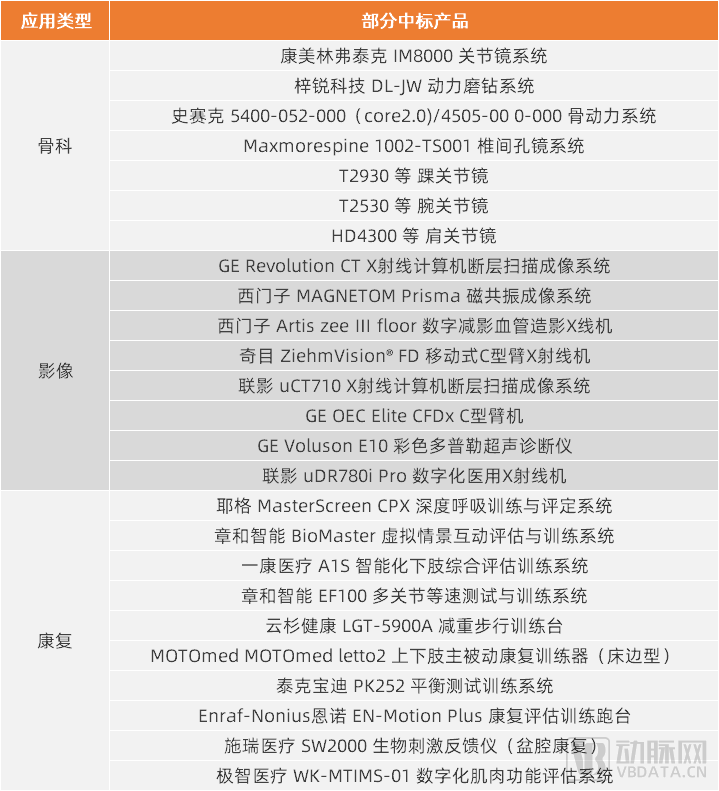
Some Products Involved in the Winning Bids for Medical Device Procurement Projects, Source: China Government Procurement Network
In orthopedics, surgical equipment has become the primary focus of procurement. Among the winners, Zhirui Technology’s powered burr drill system was selected. Zhirui Technology is a small and micro enterprise based in Guizhou Province, established in 2016. The company has secured over 40 patents in the field of minimally invasive spinal power tools, with leading technologies including facet joint forming burrs, endoscopic eccentric adjustment systems, reciprocating motion burrs, powered osteotomes, and internally irrigated ultra-fine burrs.
In terms of imaging, C-arms have become popular products, providing better support for orthopedic surgeons. Although GPS still dominates the imaging product market, United Imaging, a leading domestic manufacturer that recently submitted its listing application, won bids for two products: the uCT710 and the uDR780iPro. The uCT710 is equipped with the “Sky Eye AI” fully intelligent scanning navigation system, offering a comprehensive artificial intelligence solution that covers all stages from patient positioning and scan planning to optimization of scanning parameters.
In the field of rehabilitation, product offerings encompass various assessment and training systems. Rehabilitation equipment companies such as Zhanghe Intelligence, Yikang Medical, Yunshan Health, and Jizhi Medical have all had products successfully bid for procurement. Notably, Zhanghe Intelligence’s BioMaster Virtual Scenario Interactive Training System utilizes wearable wireless position sensors to capture joint movements in real time and automatically record data, providing targeted virtual scenario-based joint mobility training. Yikang Medical’s Intelligent Lower Limb Comprehensive Assessment and Training System enables changes in patient positioning under body-weight-supported conditions to conduct stepping exercise training, simulating the physiological gait of normal human walking to maximize the restoration of patients’ ambulatory function.
Newly built and upgraded hospitals, along with newly purchased medical equipment, will serve local residents after the conclusion of the Winter Olympics. Therefore, these initiatives not only provided support for the Games but also drove improvements in healthcare service levels in some host regions.
The aforementioned safeguard measures are primarily directed at the injured or patients. To make these measures more precise, efficient, and systematic, digitalization must play a pivotal role.
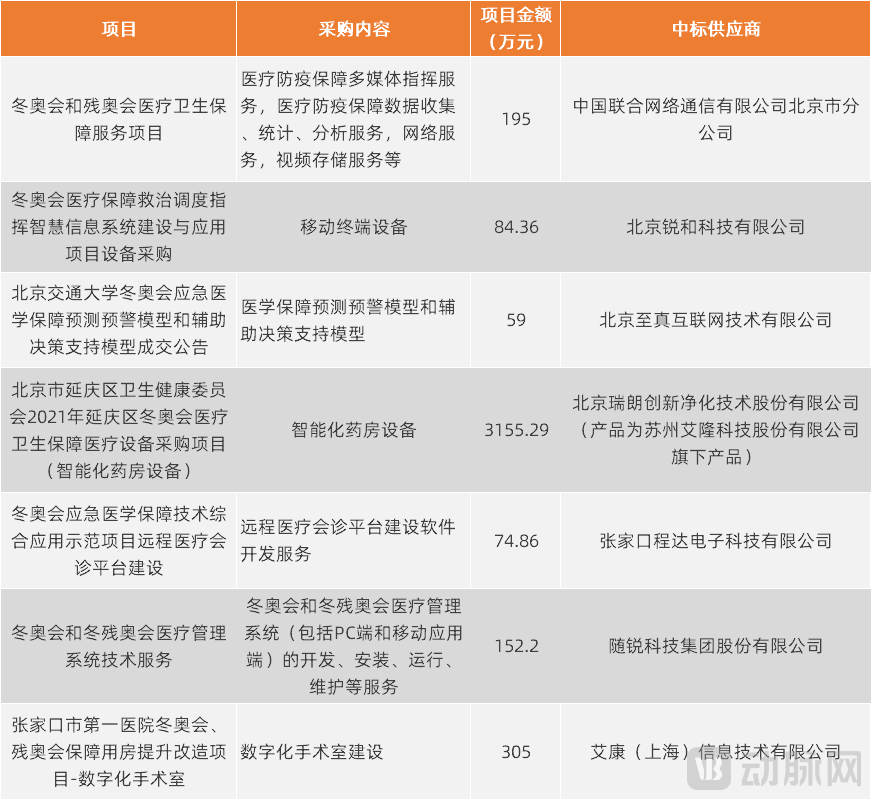
Procurement for the Digitalization of Medical Services at the Winter Olympics, Source: China Government Procurement Network
For example, the Beijing 2022 Organizing Committee procured through tender a medical management system for the Olympic Winter Games and Paralympic Winter Games. According to the bidding documents, the system covers medical stations at all competition and non-competition venues of the Olympic Winter Games and Paralympic Winter Games, polyclinics in the three Olympic Villages, designated hospitals for the Games, and referral hospitals. It provides medical management services for relevant medical officers at medical stations, clinics, and hospitals; physicians and nurses; pharmacy staff; medical operations personnel of the Beijing 2022 Organizing Committee; and International Olympic Committee medical operations staff. These services include visit management, medical record management, medication management, public health information, consolidated statistics, system configuration, permission allocation, and mobile applications.
If healthcare institutions associated with the Winter Olympics are viewed as a medical consortium, then the medical management system serves to facilitate information interoperability and integrated management within that consortium. As the winning bidder for the system’s development, Suirui Technology is a service provider offering solutions such as remote collaborative office platforms and remote video conferencing, with healthcare being just one of its business sectors; Suirui Technology also served as the supplier of collaborative office software for the Winter Olympics.
Beijing Jiaotong University, in collaboration with experts from renowned hospitals, has focused on the application of 5G, Internet of Things (IoT), big data, and artificial intelligence technologies to construct an intelligent diagnosis and treatment system. This system comprises three functional modules: intelligent prediction and risk scoring of injuries and illnesses, intelligent assessment of injury and illness conditions, and intelligent online mass monitoring. It enables early detection, diagnosis, and treatment of critical injuries and illnesses. By employing computational modeling for 18 major emergency medical support scenarios encountered during the Winter Olympics—such as “venue collapse,” “stampede,” and “fire”—the system scientifically identifies key injury patterns, thereby enhancing healthcare professionals’ comprehensive management capabilities for critically injured or ill patients.
Digitalization has helped the Beijing 2022 Organizing Committee, relevant medical institutions, and research organizations improve efficiency. The total procurement amount for these specialized systems and products reached RMB 40 million. Although this figure accounts for a relatively small proportion of the total procurement volume covered in this article, digital support is in fact indispensable across all aspects of the Winter Olympics, including emergency care, medical services, and pharmaceuticals. In the future, digitalization will continue to accelerate its penetration into the healthcare sector.
Furthermore, a significant number of initiatives leveraging existing resources, corporate pro bono support, or charitable donations cannot be quantified by monetary value in procurement data. Regardless of the type, all such contributions reflect the sense of responsibility and commitment demonstrated by every participant in the healthcare industry during these major events.
In the long run, the successful hosting of the Winter Olympics and the smooth implementation of medical and health safeguards will usher in a new round of development opportunities for the industry.
First, the orthopedics and rehabilitation industries have broader prospects.
According to the *Beijing Winter Olympics Sustainability and Legacy Promotion Handbook*, the number of domestic ice and snow sports events has increased year by year, with 77 events held in the 2018–2019 season; the number declined after 2020 due to the impact of the pandemic. The caliber of these events has continuously improved, with a series of international competitions being hosted in China, including the World Women’s Curling Championship and the FIS City Cross-Country Skiing Points Race.
Governments at all levels have strengthened policy support and guided the participation of social capital, accelerating the construction of a number of ice and snow sports venues and facilities across China, thereby creating conditions for public participation in winter sports. By 2020, the number of ice skating rinks nationwide had expanded from 609 in 2018 to 1,187 in 2020, while the total number of ski resorts increased from 524 in 2018 to 701 in 2020.
It is worth noting that winter sports are no longer concentrated solely in northern regions, nor are they confined to the winter season. Seizing the opportunity presented by the Beijing Winter Olympics, the General Administration of Sport of China has vigorously implemented the strategy of “expanding winter sports southward, westward, and eastward,” and has carried out mass winter sports activities in a phased and focused manner throughout the year. Statistical survey data from a study commissioned by the General Administration of Sport of China and conducted by the National Bureau of Statistics shows that the number of people participating in winter sports nationwide has reached 346 million.
The increase in professional winter sports events and the growing number of participants will drive up the demand for orthopedic diagnosis and treatment, as well as sports rehabilitation.
In 2021, on the upstream device side, more than ten companies, including Bangbang Robotics, Fourier Intelligence, and Zhuodao Medical, secured significant financing. On the downstream service side, U-Rehab Medical completed a Series B+ financing round worth tens of millions of US dollars, providing professional medical services to sports enthusiasts, orthopedic patients, postoperative individuals, and those in suboptimal health conditions. Ban’er Orthopedic Hospital obtained RMB 300 million in Series D financing; its affiliated hospitals are specialized hospitals and small general hospitals featuring specialties in trauma orthopedics, hand and foot surgery, spinal surgery, joint surgery, traditional Chinese medicine orthopedics and traumatology, and rehabilitation.
The Winter Olympics has promoted the popularization of ice and snow sports among the general public, making national fitness programs more comprehensive, and bringing broader development prospects to the fields of orthopedics and rehabilitation.
Second, mobile devices and applications will meet the needs of more medical scenarios.
Frostbite and maxillofacial trauma are two types of injuries with relatively high incidence in ice and snow sports. However, the traditional diagnosis and treatment models for frostbite and maxillofacial trauma in China are not suitable for medical care at the Winter Olympics, which is characterized by "speed, accuracy, and efficiency."
During the Beijing Winter Olympics, a mobile intelligent diagnosis and treatment platform, spearheaded by Peking University School of Stomatology, will address the aforementioned challenges. The platform’s smart mobile cabin is equipped with supine-position cone-beam computed tomography (CBCT) systems, a remote expert consultation platform, equipment for frostbite rewarming, basic facilities for maxillofacial trauma management, and devices for cardiopulmonary injury care. Additionally, elevators are installed to accommodate individuals with limited mobility, ensuring comprehensive equipment availability and user-friendly operation.
Athletes’ mental health is also a key concern for major sporting events. Led by Professor Wang Weidong, Chief Medical Officer of Beijing Huayou Hospital and Chief Physician of the Department of Traditional Chinese Medicine Psychology, a team was responsible for the comprehensive management of athletes’ sleep and psychological well-being at Chinese venues during the Winter Olympics. Due to strict pandemic control measures, Professor Wang’s team incorporated a mobile application designed to facilitate psychological regulation and promote relaxation and sleep into their psychological interventions for athletes. The team systematically assessed athletes’ reported symptoms to identify factors contributing to their psychological issues and employed guided protocols and verbal techniques to modulate brain neural function. Compared with traditional face-to-face consultations, the app offers greater flexibility, providing on-demand support to athletes anytime and anywhere.
Mobile devices are modular and highly flexible, with mobile applications closely integrated with digital therapeutics and internet-based healthcare. In the future, these software and hardware solutions will fully meet the needs of diverse scenarios, including emergency responses, large-scale events, and primary care settings.
Although the medical and health support for the Winter Olympics will face challenges due to various factors, it also presents an opportunity to showcase China’s epidemic prevention experience, medical technology innovations, and service innovations to the world. Over the past long period, China has made significant achievements in the development of its healthcare and public health systems. Coupled with the experience gained from providing medical support during the 2008 Olympic Games, it is believed that with the concerted efforts of all parties, we will surely support the Beijing Organizing Committee for the 2022 Olympic and Paralympic Winter Games and relevant departments in delivering a successful and splendid event!
References:
Official Website and WeChat Official Account Reports, Coverage, and Handbooks of the Winter Olympics
Xinhua News Agency: Aerosol-based COVID-19 Monitoring System Delivers Results in 45 Minutes, Serving the Beijing Winter Olympics
Beijing Daily: Treading on Frost, One Knows Ice Is Coming
Smart Mobile Cabin Supports the Tech-Enabled Winter Olympics—Peking University School of Stomatology Releases Achievements of the Project “Research on Comprehensive Prevention and Control of Frostbite and Maxillofacial Trauma and Key Technologies for the Winter Olympics”