

Technological Revolution in Biopharma Tools: Drug Discovery at Single-Cell Resolution and AI-Driven Disruption of Biologics CMC

Proxima Capital
Investment Institutions in the Medical Technology Field
Looking back at the nearly century-long development of biopharmaceuticals, it is evident that platforms for biotechnological innovation tools have been continuously driving transformation in the biopharmaceutical industry.。
· The first phase of rapid development in modern biopharmaceuticals can be traced back to the 1920s through the 1960s, a period referred to within the industry as the “Era of Organ-Based and Microbial Pharmaceuticals.” Insulin, penicillin, corticosteroids, and enzyme preparations emerged during this time, becoming the first generation of biopharmaceutical products. The application of purification technology platforms served as the primary driving force behind this advancement.
· Entering the 1960s, novel bioengineering separation technology platforms—such as extraction, crystallization, and membrane exchange—propelled the biopharmaceutical industry into a phase of refinement, ushering in a new period of rapid development. The number of biochemical products surged to more than 600.
· Entering the 1980s, the rapid development of genetic engineering technology platforms (including cell engineering, fermentation engineering, enzyme engineering, and tissue engineering) and the continuous integration of technologies drove another qualitative leap in biopharmaceuticals. To date, more than 500 biotech new drugs have been launched on the global market.
· Since 2010, the biopharmaceutical industry has witnessed another wave of disruptive development, with multiple gene therapy and cell therapy products brought to market. This progress is attributable to the rapid advancement of platform technologies, including gene editing techniques, as well as increasingly mature manufacturing processes and equipment.
Entering the 21st century, it is evident that the discovery of biopharmaceuticals has entered a phase characterized by high throughput, high sensitivity, and high specificity, with novel biotechnology tool platforms continuously facilitating innovative drug discovery.。
In the interview,VCBeat has learned that biotech innovation tool platforms have become one of the strategic focuses continuously pursued by major investors. To this end, VCBeat conducted exclusive interviews with Mr. Sun Xiaolu and Mr. Li Zhe, Partners at Proxima Capital, aiming to gain deeper insights into biotech innovation tool platforms from the perspective of industry investors, and to thoroughly understand the underlying investment logic and market opportunities.. We have recorded the interview insights of the two partners below, in the hope that entrepreneurs and investors in the field of biotechnology tool platforms may also spark ideas and foster collaboration through these perspectives:
Achieving Precision Drug Discovery at the Single-Cell Level
Historically, the process of drug discovery was highly random. With the advancement of modern medicine and biology, targeted drug screening has emerged. Meanwhile, continuous improvements in detection technologies have steadily increased the throughput of drug screening, leading to the development of various high-throughput screening methods over the past few decades.
In the field of macromolecular therapeutics, B cells were first discovered in 1890. In 1975, Georges Köhler and César Milstein published the first method for producing large quantities of monoclonal antibodies in the United Kingdom, making lymphocyte hybridoma technology a household tool in biological laboratories and popularizing it for nearly half a century. In the following decades, new technologies continued to emerge, including phage display, yeast expression systems, and humanized mice. However, fundamentally, nearly all antibodies originate from B cells (with the exception of some synthetic libraries). Therefore, the efficient acquisition of antigen-specific B cells has long been a key direction for the iteration of antibody technologies. Entering the 21st century, with the development of microfluidics, optics, and semiconductor industries, as well as their integrated applications in life sciences, single-B-cell antibody platforms have gradually come to prominence.
Sun Xiaolu, Partner at Proxima Capital, stated, “Our investment team’s industry research revealed that foundational patents in single-cell microfluidics are concentrated at Harvard University, the University of Chicago, ESPCI Paris (École Supérieure de Physique et de Chimie Industrielles de la Ville de Paris), the California Institute of Technology, and the Japan Science and Technology Agency. Among these, Harvard University and the University of Chicago have taken the lead in commercialization, fostering companies such as Bio-Rad, 10x Genomics, and RainDance Technologies. In late 2016, we first came into contact with Hifibio through Professor David Weitz of Harvard University. Hifibio is a biotechnology company that integrates microfluidics and single-cell technologies from Harvard University and ESPCI Paris. At the end of 2017, Hifibio welcomed a new leadership team headed by CEO Ms. Liang Schweizer, bringing extensive experience in leading innovative oncology drug development in the biopharmaceutical sector, and formulated a new strategy to strengthen its biopharmaceutical R&D capabilities. Recognizing that the opportunity had matured, Proxima Capital invested in Hifibio in late 2017 and assisted the company in securing additional funding. Hifibio was also the first biotechnology project invested in by our fund.”
By integrating multiple technological platforms, including microfluidics, single-cell sequencing, and droplet-based reactions, Hifibio has established its unique Celigo single B-cell antibody development platform and Drug Intelligence Science (DIS) platform. These capabilities accelerate the research and development of antibody therapeutics for cancer, autoimmune diseases, infectious diseases, and other indications. The DIS platform combines intelligent single-cell data with single-cell analysis to optimize outcomes in target discovery, candidate drug identification, lead optimization, and patient selection.
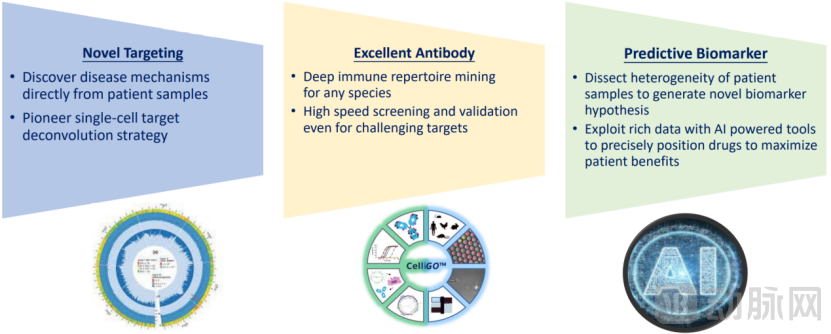
Over the past few years, the investment thesis of Proxima Capital has been increasingly validated. Since its inception, the company has completed multiple rounds of financing, raising a total of over USD 200 million. Its technology platform has garnered favor from numerous international pharmaceutical and cell therapy giants. The company has established deep collaborations with multiple firms, including Kite and Takeda, to assist clients in identifying novel targets, screening and discovering antibodies, and co-developing breakthrough antibody therapies. In addition, Gaocheng Biologics has developed more than ten innovative pipelines in research, some of which have received FDA approval to proceed into clinical trials.
AI Breakthroughs in Biologics CMC
Applications of Artificial Intelligence in the New Drug Sector Span Multiple Stages of Drug Development, Including Drug Discovery, Preclinical Research, Clinical Trials, and Post-Marketing Surveillance. AI Technologies Can Accelerate the Research and Market Approval Processes for New Drugs, Shorten Development Cycles, Reduce R&D Costs, and Improve Success Rates.
Proxima Capital has also been closely monitoring the application of AI in new drug discovery, keeping track of industry-leading AI tool companies and awaiting breakthroughs in AI-enabled R&D and new drug development. Two landmark events in the past two years have sent a clear signal: AI technology in the field of new drug R&D has moved from early exploration into the application phase:
1) AlphaFold2, an artificial intelligence product developed by Google’s DeepMind team, defeated over a hundred other competitors in the 2020 Critical Assessment of protein Structure Prediction (CASP) biennial competition. It achieved a score of nearly 90 out of 100, with its prediction accuracy approaching the level of experimental data.
2) On November 30, 2021, Insilico Medicine, a leading AI-driven drug discovery company, announced that ISM001-055, a candidate drug discovered by its end-to-end AI drug discovery platform Pharma.AI, had been administered to the first healthy volunteer in clinical trials. As a novel small-molecule inhibitor targeting a previously unexploited target, ISM001-055 holds the potential to become a global first-in-class new drug.
Throughout the entire biopharmaceutical industry chain, the most time-consuming phase in “R&D/New Drug Discovery” is “process optimization and scale-up.” To obtain high-expression, stable cell lines, new drug companies often need to invest tens of millions of yuan and spend several months on process development. Compared with upstream new drug discovery, the rapid, simple, and cost-effective development of high-quality cell lines has become a major unmet need in biopharmaceutical development.
Li Zhe, Partner at Proxima Capital, stated, “Proxima Capital has been searching globally for innovative technology platforms that can address these pain points and be commercialized into products. In 2021, we were delighted to discover BayeBio. This biotechnology startup, which integrates AI technology and was founded by a seasoned CMC (Chemistry, Manufacturing, and Controls) team, is disrupting the CMC industry with its unique perspective.”
As seasoned veterans in the biopharmaceutical industry, Dawan Bio’s founding team, Mr. Liang Guolong and Dr. Chen Liang, have led multiple new drug development initiatives and industrial process optimization projects, accumulating extensive industry experience and spearheading numerous process improvements. They keenly recognized that the process development of high-performance cell lines represents a core bottleneck in the biopharmaceutical sector, creating an urgent need for tools to enhance efficiency.
AI algorithms can predict small-molecule structures through modeling and analysis, and should also be capable of making predictions at the cellular level. By modeling high-expression cell lines, it may be possible to predict high-performance cell lines. Therefore, the founding team rapidly mobilized key business personnel to conduct research and experiments, starting with the screening of high-expression cell lines and quickly establishing the experimental infrastructure. After thousands of experiments, the team was delighted to find that the AI algorithm achieved over 90% accuracy in screening high-expression cell lines. To date, the company has completed tens of thousands of experiments and validated its approach through nearly one hundred client projects, building a comprehensive CMC (Chemistry, Manufacturing, and Controls) service platform for biopharmaceutical development.
Among these, the high-expression cell line development platform, Klone4.0, enables precise screening of high-yield monoclonal cells within four hours. The cell line stability prediction platform, AlfaStaX, leverages artificial intelligence algorithms to predict 90-day cell line stability based on data from day 15, and completes passage stability predictions for all candidate cell lines within two weeks, effectively enhancing R&D efficiency and reducing development risks. The intelligent media development platform, AlfaMedX, utilizes AI algorithms such as big data mining, deep machine learning, and transfer learning to construct media formulation models, replacing traditional Design of Experiments (DOE) and metabolic analysis. This allows for the rapid development of customized media formulations for client cell lines, significantly shortening development timelines and reducing costs. Since their launch, these platforms have successively signed contracts with renowned pharmaceutical companies and leading CDMO platforms both domestically and internationally, continuing to receive positive acclaim.
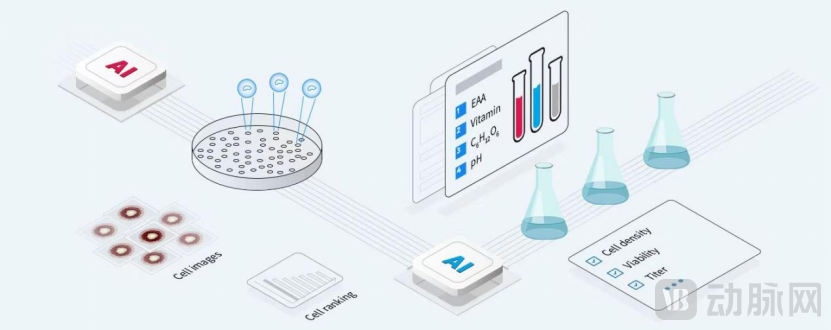
The Bay Area Biologics team applies AI technology to the entire CMC (Chemistry, Manufacturing, and Controls) process of biologic drug development, an approach that remains highly advanced on a global scale. Bay Area Biologics is committed to leveraging AI and other cutting-edge technologies to address numerous challenges in biologic CMC development, such as high failure rates, lengthy development timelines, and high costs. This enables predictable, proactive development, delivers high-quality products, and significantly reduces costs. Li Zhe stated that they firmly believe Bay Area Biologics is the ideal biotechnology tool platform Proxima Capital has been seeking; therefore, Proxima assisted the company in restructuring and led its Series A financing round.
Looking ahead, Proxima Capital stated that new drug development is an endeavor critical to human life and health, characterized by substantial investment requirements and extremely high risks. In its pursuit of disruptive innovations in medical technology, Proxima Capital will continue to focus on innovative biotechnology tool platforms, with the aim of identifying and investing in more outstanding companies to accelerate the rapid development of the industry.