

Ali Health's XiaoLu TCM Platform Ensures Uninterrupted Care with Over 70,000 TCM Practitioners Online During Spring Festival
The Year of the Tiger is fast approaching. Amid the recurring outbreaks, meeting patients’ healthcare needs during the Spring Festival—particularly those seeking medical care away from home—has become a “tough battle” that multiple stakeholders must overcome.
“During the 2021 Spring Festival holiday, Xiaolu TCM received thousands of patient consultations daily. The majority were patients with chronic conditions such as gastric and renal diseases, along with others experiencing common sub-health symptoms like insomnia, hair loss, and irregular menstruation,” said Zimo, CEO of Alibaba Health’s Xiaolu TCM. He noted that Traditional Chinese Medicine (TCM) excels in managing chronic diseases, which often require long-term medication; thus, many patients still had needs for follow-up visits and medication adjustments during the holiday period.
During this year’s Spring Festival, Xiaolu TCM launched its “Non-Stop Spring Festival Health Services” campaign for the sixth consecutive year, with more than 70,000 TCM practitioners on online duty to provide health consultations and follow-up visit services to patients. Among them, over 30% of the doctors are from Grade A tertiary hospitals, covering more than 50 specialties including gynecology, dermatology, gastroenterology, and rheumatology. Additionally, more than 100 licensed pharmacists were stationed on the front lines.
“Unlike Western medicine, traditional Chinese medicine (TCM) prescriptions often require a combination of more than a dozen herbal ingredients. Therefore, we have made ample preparations to ensure that patients never face the situation of having a prescription but no access to the required herbs,” stated Zi Mo. Xiaolu TCM’s pharmacy stocks over 1,800 types of TCM decoction pieces, basically meeting the compatibility requirements of prescriptions and further enhancing the accessibility of TCM. Through its independently developed smart pharmacy system, TCM medications can be dispatched from 16 dispensing centers located in Beijing, Guangzhou, Changchun, Xi’an, and other cities to patients across China, even during holidays. Residents in remote areas can also enjoy high-quality TCM services comparable to those available to residents in major cities.
The imbalance in medical resources also exists within the traditional Chinese medicine (TCM) system. “A shortage of physicians, and particularly of highly competent ones,” is a common challenge facing most urban and primary healthcare institutions.
For most patients seeking Traditional Chinese Medicine (TCM) solutions, their pain points in accessing care are highly concentrated. The majority of TCM patients suffer from chronic diseases and typically require continuous medication in seven-day treatment courses. After completing one or two courses, patients need follow-up consultations for the physician to reassess their condition and prescribe a new formula. Patients in remote areas often face challenges such as inconvenient transportation, which hinders their ability to attend these essential follow-up visits.
The internet can create new pathways for the decentralization of high-quality traditional Chinese medicine (TCM) resources, delivering a better healthcare experience to patients and fostering warmth on both ends of the platform, even during the Spring Festival.
Yu Runbing (a pseudonym) is from Weng’an County, Qiannan Buyi and Miao Autonomous Prefecture, Guizhou Province. At the blossoming age of 16, she was diagnosed by physicians with Henoch-Schönlein purpura nephritis, which is described in Traditional Chinese Medicine as “heat-toxin injuring the kidneys.” In October 2020, while seeking medical care across various regions, Yu Runbing had her initial in-person consultation in Chengdu with a chief physician specializing in Traditional Chinese Medicine at a Grade III Class A hospital.
Driving from Weng’an County in Guizhou Province to Chengdu takes at least eight hours, while the high-speed rail journey requires over three hours. Due to the long distance and significant inconveniences associated with round trips, Yu Runbing opted for a hybrid approach combining online consultations for medication adjustments with periodic in-person visits to continue long-term treatment with this physician. Since the initial consultation, the patient has consistently adhered to the prescribed treatment regimen, with all current indicators remaining stable and within normal ranges; ongoing consultations are still in progress. During the Spring Festival holiday, Yu Runbing also plans to schedule routine follow-up consultations and obtain prescriptions through the Xiao Lu TCM platform.
Zhang Zecheng (a pseudonym) from Guide County, Hainan Tibetan Autonomous Prefecture, Qinghai Province, had long been troubled by chronic hair loss and alopecia areata. By chance, through a referral, he visited a Grade 3A traditional Chinese medicine (TCM) hospital in Hubei Province, where he was diagnosed with seborrheic alopecia. The TCM practitioner attributed the condition to damp-heat steaming upward, compounded by liver and kidney deficiency. Zhang reported that after taking the prescribed medication, “new hair grew in the previously bald areas, showing effectiveness.”
Thereafter, Zhang Zecheng continued his treatment with the same physician. The distance between Guide County and Wuhan exceeds 1,600 kilometers. With a long journey ahead and an urgent desire for medical care, Zhang happened to have completed his medication course during the Spring Festival and required a prescription adjustment; therefore, he consulted the doctor online.
On the Xiaolu platform, cases similar to those of Run Bing and Zhang Zecheng are not uncommon. In fact, more than half of the patients served by physicians on the Xiaolu Traditional Chinese Medicine (TCM) platform are from cities below the third tier. By connecting physicians with patients, the Xiaolu TCM platform effectively facilitates the decentralization of high-quality medical resources to grassroots regions.
Xiaolu TCM is a comprehensive traditional Chinese medicine (TCM) diagnosis and treatment service platform that integrates physician-patient management, remote consultations, and home delivery of medications. It boasts over 70,000 registered physicians and has served more than 8 million patients. In August 2021, Alibaba Health announced its integration with Xiaolu TCM, expanding its strategic footprint into the internet-based TCM sector. This move aims to leverage technological advancements to facilitate the flow of high-quality traditional Chinese and Western medical resources, thereby benefiting more patients at the grassroots level.
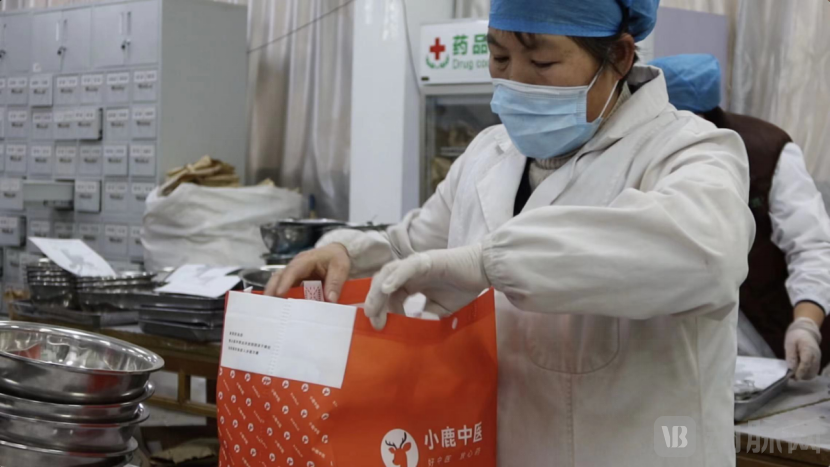
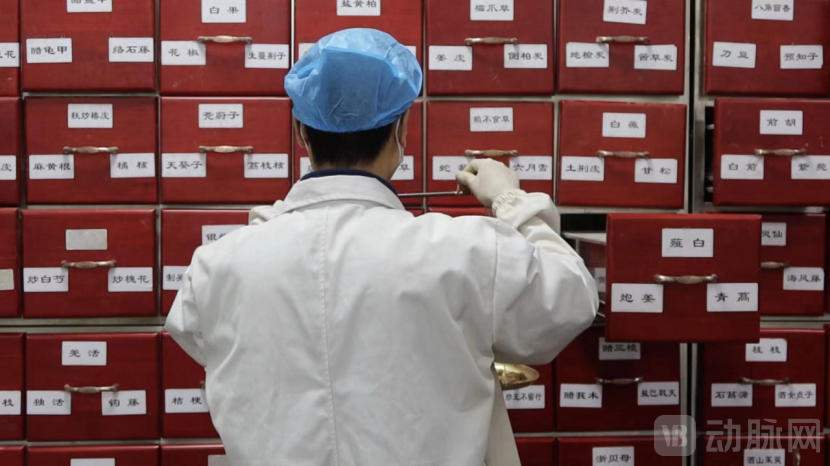
Pharmacists at the Xiaolu TCM Dispensing Center are preparing prescriptions for patients.
In recent years, the Chinese government has repeatedly issued policy documents to vigorously promote the development of Traditional Chinese Medicine (TCM). Since the outbreak of the pandemic, TCM has become a hallmark of China’s approach to epidemic control, further accelerating the inheritance, innovation, and development of TCM.
Although the field of Traditional Chinese Medicine (TCM) has entered a fast track of development in recent years, with the revitalization and growth of grassroots TCM services ushering in a new era of prosperity, there are still practical difficulties and bottlenecks hindering its progress: there is an insufficient number of TCM healthcare professionals, and there is a significant shortage of high-quality medical resources at the grassroots level.
According to the “2020 Statistical Summary Report on the Development of Traditional Chinese Medicine” released by the National Administration of Traditional Chinese Medicine, TCM practitioners accounted for only 7.8% of the national health technical personnel in 2020. The shortage of TCM talent is more pronounced at the primary care level, where primary-care TCM physicians comprise less than 30% of all TCM physicians nationwide.
There is substantial public demand for Traditional Chinese Medicine (TCM) at the primary care level. Channeling high-quality TCM resources down to the grassroots level and enhancing the service capacity of primary TCM care are important strategies and measures to promote the high-quality development of TCM.
The development and widespread adoption of emerging technologies such as mobile internet, artificial intelligence, and big data are reshaping traditional perceptions of healthcare. Currently, the internet has become a driving force in making high-quality traditional Chinese medicine (TCM) resources more accessible and inclusive. Notably, every national policy document on TCM development in recent years has included provisions related to the digitalization of TCM.
As early as 2017, the National Administration of Traditional Chinese Medicine issued the Guiding Opinions on Promoting the Integrated Development of Traditional Chinese Medicine Health Services and the Internet, laying out a clear roadmap for the deep integration of TCM with online platforms. In April 2018, the General Office of the State Council released the Opinions on Promoting the Development of “Internet Plus Medical Health,” thereby accelerating the growth of “Internet Plus Healthcare.”
In recent years, policies supporting the development of “Traditional Chinese Medicine (TCM) + Internet” have been continuously introduced. The Opinions on Further Strengthening TCM Work in General Hospitals and Promoting Collaborative Development of Traditional Chinese and Western Medicine, released on June 30, 2021, explicitly encourages the provision of online TCM diagnosis and treatment services.
In July 2021, the National Development and Reform Commission and three other departments issued the Implementation Plan for the Construction of a High-Quality and Efficient Healthcare Service System during the 14th Five-Year Plan Period, which stated, “Support the development of ‘Internet + Healthcare Services’ to improve the accessibility and overall efficiency of medical resources with traditional Chinese medicine characteristics.”
Leveraging internet technology can significantly improve the accessibility of high-quality traditional Chinese medicine (TCM) resources, enabling more people to “access and afford” these services. Taking Ali Health’s Xiaolu TCM platform as an example, a 2020 survey report on 10,000 chief physicians registered on the platform showed that, in addition to their routine offline outpatient duties at their respective hospitals, these doctors collectively provided over one million additional online consultations, thereby increasing the total supply of high-quality medical resources available to society.
As the initiative to extend high-quality traditional Chinese medicine (TCM) resources to the grassroots level is implemented and solidified, the disparity in medical resources between urban and rural areas continues to narrow.