

CureApp Inc. Files IPO Prospectus: Pioneer of the World’s First Approved Digital Therapeutic for Smoking Cessation

CureApp
Digital Health Therapy Developer
As an emerging therapeutic modality, digital therapeutics enable physicians to prescribe “therapeutic applications” tailored to patients’ conditions, sparking significant enthusiasm in both the European and American markets and the Chinese market.
Among them, the United States and China are respectively recognized as the most developed market for digital therapeutics and the market with the greatest growth potential. Suddenly, digital therapeutics companies in both countries found themselves thrust into the spotlight, standing center stage.
However, in one corner of the stage, we found that the Japanese market was also racing alongside.
In fact, Japan’s capabilities in developing digital therapeutic products have always been formidable. Takeda’s myPKfit has secured both FDA clearance and Class III medical device certification from China’s National Medical Products Administration (NMPA) for the treatment of hemophilia, a rare disease. In the broader smoking cessation market, CureApp, a Japanese health-tech startup, has long been an active player.
CureApp has developed the world’s first digital therapeutic product approved by national regulatory authorities for the effective treatment of nicotine addiction—the CureApp SC Nicotine Addiction Treatment App and Carbon Monoxide Detector (hereinafter referred to as “CureApp SC”).
This product was jointly developed by CureApp, Inc. and the Division of Pulmonary Medicine, Department of Internal Medicine, Keio University School of Medicine in Japan. Its safety and efficacy have been demonstrated through clinical trials, and it received manufacturing and marketing approval from the Japanese Ministry of Health, Labour and Welfare (MHLW) on August 21, 2020.
(Note: The Ministry of Health, Labour and Welfare is the primary Japanese government agency responsible for healthcare and social security. It comprises 11 bureaus and seven departments, and is mainly tasked with overseeing national health, health insurance, medical service delivery, pharmaceutical and food safety, social insurance and social security, labor and employment, and social assistance for vulnerable groups.)
According to WHO statistics, tobacco addiction is one of the greatest public health threats humanity has ever faced, causing more than 8 million deaths worldwide each year. Of these, over 7 million are attributed to direct smoking, while approximately 1.2 million result from exposure to secondhand smoke.
Quitting smoking can reduce or eliminate the health hazards caused by smoking. Individuals of any age can benefit from quitting, and the earlier one quits and the longer one remains abstinent, the greater the health benefits. However, individuals with tobacco dependence may experience a range of withdrawal symptoms upon cessation, including cravings, anxiety, depression, and headaches.
Tobacco dependence is highly recurrent, and its treatment often requires the support of professionals and scientific methods. Hence, some people say, “I understand the rationale, but nicotine addiction is hard to control on my own. Where can I find so many professionals to help me quit smoking?”
To address this issue, CureApp, in collaboration with the Pulmonary Division of the Department of Internal Medicine at Keio University School of Medicine in Japan, jointly developed CureApp SC, a digital therapeutic product for treating nicotine addiction. This prescription software medical device is designed to assist patients undergoing outpatient smoking cessation treatment in quitting smoking at home.
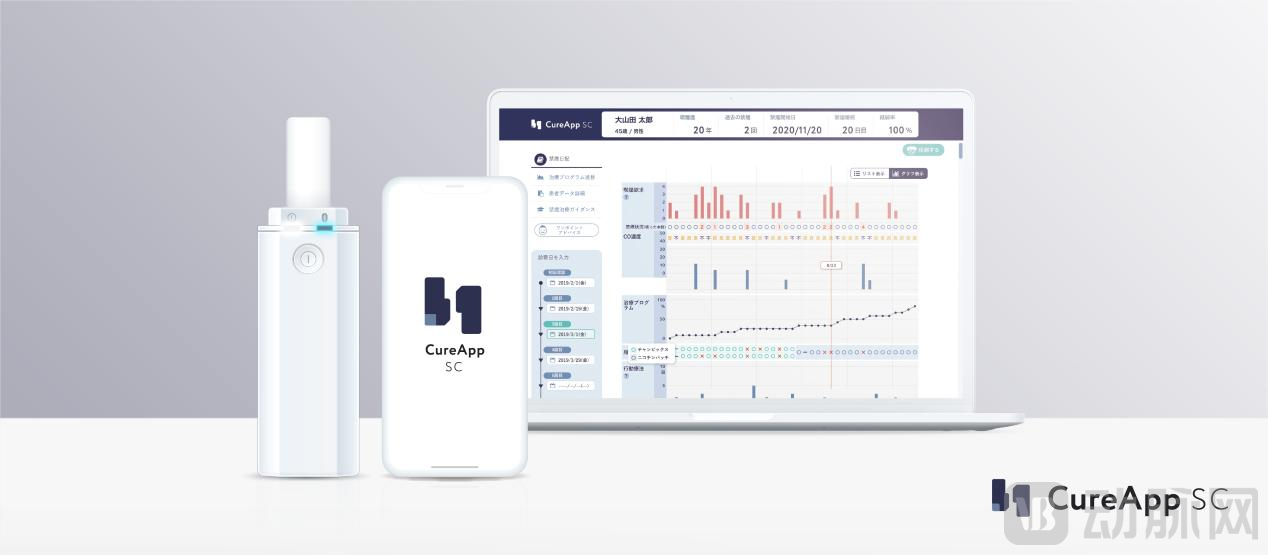
CureApp SC includes three components: a patient app, a physician app, and a portable carbon monoxide detector.
Prior to the launch of this application, the out-of-hospital treatment landscape remained largely unexplored territory, leaving healthcare providers unable to deliver interventions. Yet out-of-hospital settings are critical for patients achieving abstinence; bridging this gap can significantly improve smoking cessation success rates.
The patient application leverages the ubiquity of smartphones, offering interactive chat features with an automated guidance system (essentially a chatbot) and a digital diary for tracking patients’ experiences and progress. It provides personalized guidance tailored to the patient’s treatment status and condition in real time. The app also includes a carbon monoxide (CO) monitor that measures and tracks CO levels in the patient’s daily exhaled breath.
Patient condition data obtained from the patient application and carbon monoxide monitors will be shared with physicians via the physician application. The physician application enables doctors to gain deeper insights into patients’ treatment adherence between visits, provide higher-quality smoking cessation treatment plans, and ultimately achieve greater treatment efficiency.
CureApp conducted a Phase 3 randomized controlled trial for this product. Among the 572 actual participants, 285 downloaded and used the application, while 287 downloaded a placebo version of the app in which all therapeutic features potentially aiding smoking cessation were disabled. All participants received personalized animated video tutorials based on their profile information and needs entered after downloading. Physicians were able to monitor participants’ progress throughout the trial.
Trial data showed that, at the end of the 12-week smoking cessation program,75% of CureApp users have successfully quit smoking without relapse., while only 66% of those using the sham app achieved this goal.
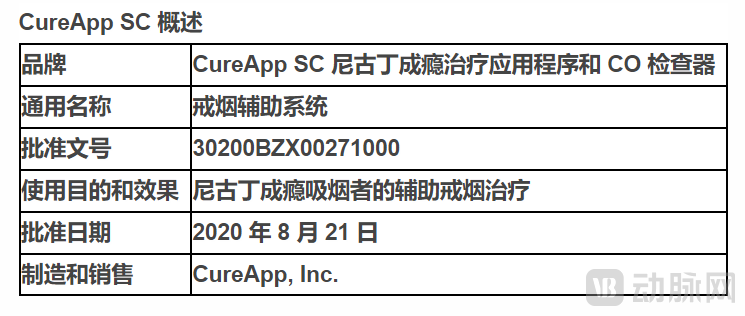
Following a period of clinical trials and regulatory approval, CureApp SC has been covered by Japan’s public health insurance system since December 1, 2020.
Japan has a universal health insurance system that allows people to freely choose their treatment locations and enjoy discounted prices. However, precisely because of this universal coverage, the insurance access regulations for digital therapeutics and other new forms of treatment are particularly strict.
Therefore, compared with commercial insurance companies, very few new therapies have received such approval. In this context, CureApp has successfully leveraged its unique advantagesPioneering a New Era in Treatment, sparking widespread attention in Japan.
This also marks the first time globally that a digital therapeutic product in the field of smoking cessation treatment has been covered by a national health insurance system. Following the inclusion of CureApp SC in the National Health Insurance,Patients will incur costs amounting to less than 30% of the product's price.。
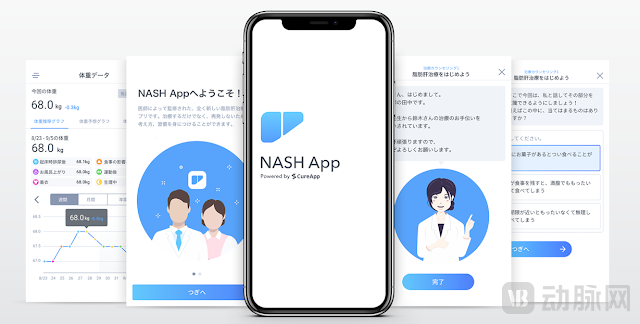
In addition to its already approved and commercialized digital therapeutic product for smoking cessation, CureApp has also initiated the development and clinical studies of its digital therapeutics for hypertension and non-alcoholic steatohepatitis (NASH).
Among them, the NASH digital therapeutic product was jointly developed with The University of Tokyo Hospital. The clinical study was launched in October 2016, and a multicenter clinical trial was initiated in April 2018.
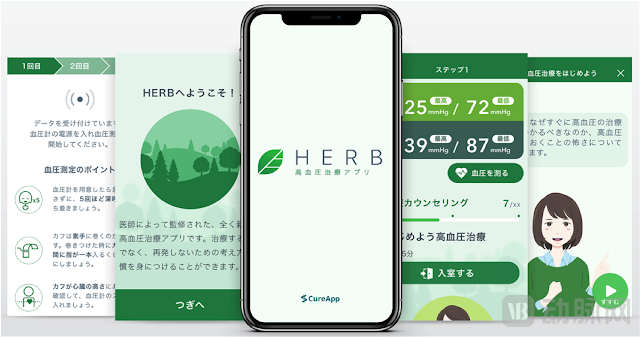
The hypertension digital therapeutics product was jointly developed with the Department of Cardiovascular Medicine, Division of Internal Medicine, Jichi Medical University School of Medicine in Tochigi Prefecture, and clinical trials were launched in December 2019.
The application automatically provides users with personalized treatment guidance, including IoT-based blood pressure monitoring, lifestyle habit logging, and nutrition, exercise, and sleep recommendations adjusted according to behavioral changes. According to CureApp, this new digital therapeutic for hypertension can reduce the risk of cardiovascular and cerebrovascular diseases by 10.7%.
CureApp is also developing a digital therapeutic for cancer management in collaboration with Daiichi Sankyo Company. Furthermore, the company leverages knowledge accumulated during its development processes to provide enterprises with “ascure,” an application designed to improve lifestyle habits. Currently, this mHealth program has been adopted by more than 180 companies, health insurance societies, and local municipal governments.
CureApp was founded in July 2014 by two physicians, Kohta Satake and Shin Suzuki, and is headquartered in Tokyo, Japan.
Since its inception, CureApp has been dedicated to the research, development, and production of evidence-based digital therapeutics for disease treatment. It has pioneered the novel healthcare concept of “treating diseases with apps” in Japan. The company has completed its Series D financing round, raising a total of JPY 6.28 billion (approximately RMB 350 million).
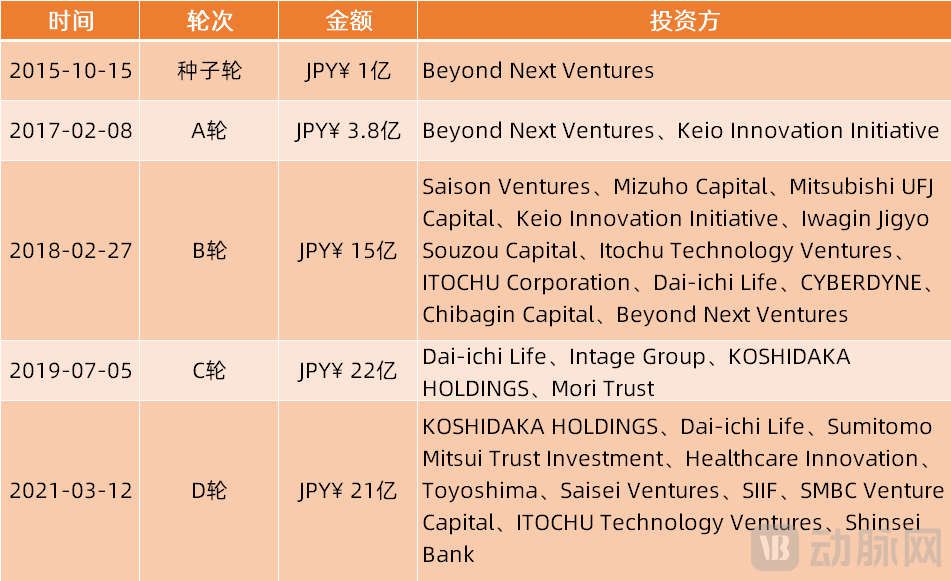
CureApp, Inc. Financing Overview | Data Source: Crunchbase, VCBeat
As the digital therapeutics industries in China and the United States experience rapid growth, CureApp, a leading Japanese digital therapeutics company, hasCEO Satake has strong ties with both China and the United States.。
In an interview, Satake mentioned that by 2012, he had already dedicated eleven years to the medical field: six years as an undergraduate at Keio University School of Medicine and five years as a pulmonologist. Eager to explore the wider world, he decided to pursue his studies at China Europe International Business School (CEIBS), a top-tier business school in Asia and ranked among the top ten globally.
“I could have easily gone to the United States for my studies, but I thought living in China would be more interesting.”During my student years, I backpacked through China once, and I want to further experience just how astonishingly fast this country is changing.“CEIBS has students from more than 20 countries across Europe and Asia, and I still keep in touch with many of my classmates,” said Satake.
While in Central Europe, Satake learned that his school would launch a dual-degree program with Johns Hopkins University the following year. He persuaded the school to allow him to join the program a year early. Subsequently, Satake successfully earned a Master of Business Administration (MBA) in Shanghai and a Master of Public Health (MPH) in the United States.
In the United States, the concept of public health is broader, and it was here that Satake first learned about the development of medical software for diabetes patients, which greatly inspired him to found CureApp. With a professional background in respiratory medicine, he decided to focus initially on developing a smoking cessation application.
Upon returning to Japan, he reconnected with his Keio University alumnus Shin Suzuki. Although three years younger than Satake, Suzuki is a physician with exceptional programming skills. The two decided that Satake would serve as Chief Executive Officer (CEO) and Suzuki as Chief Development Officer (CDO), and they co-founded CureApp in July 2014.
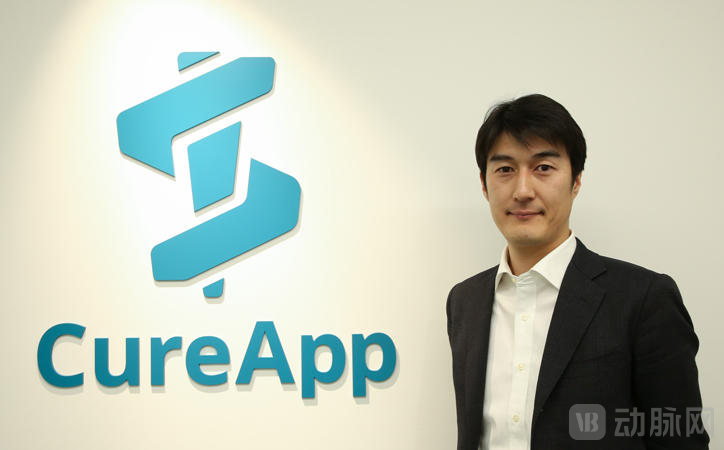 CureApp Founder and CEO Kohta Satake. Image source: Keio University official website
Keio University (commonly known as Keio) is widely recognized in Japan as one of the most prestigious and outstanding private universities. Surveys indicate that one in ten presidents of publicly listed companies in Japan are graduates of Keio University. Each year, Keio graduates enter the workforce and thrive across various industries, continuously supplying the nation with top-tier talent.
In 2019, CureApp established a subsidiary in Sunnyvale, California. “In addition to our existing products, we are collaborating with various medical institutions to develop an application capable of effectively treating behavior-related disorders and mental health issues,” said Satake.
CureApp will also fully leverage the advantages of its U.S. subsidiary, using it as an operational base to secure approval from the U.S. Food and Drug Administration (FDA) for its products. CureApp plans to gradually promote this “digital health solution from Japan” worldwide, following the model established in Japan, while also considering expansion into China.