

How Terumo Became a Global Leader in Peritoneal Dialysis: From Thermometers to Medical Innovation
There are three treatment options for patients with end-stage renal disease (ESRD): hemodialysis, peritoneal dialysis, and kidney transplantation. Although kidney transplantation has the lowest average annual cost, due to the scarcity of donor kidneys, patients generally rely on hemodialysis and peritoneal dialysis to sustain life or as a bridge therapy prior to transplantation.
These two dialysis modalities differ in their underlying principles, each with its own advantages and disadvantages. In most countries worldwide, the majority of patients with end-stage renal disease (ESRD) primarily undergo hemodialysis, with the ratio of hemodialysis to peritoneal dialysis patients being approximately 9:1.
Although the proportion of patients undergoing peritoneal dialysis (PD) is far lower than that of those receiving hemodialysis, PD technology has made significant progress over the past 30 years. In particular, the use of biocompatible dialysis solutions, more refined connection systems, and the application of automated peritoneal dialysis (APD) machines, coupled with improved technical proficiency and accumulated experience among healthcare professionals, have substantially enhanced the quality of PD. This has led to marked improvements in patient survival and technique survival, a significant reduction in the incidence of peritonitis, and notable increases in social reintegration rates and work capacity.
According to relevant research reports,In 2019, the global peritoneal dialysis market size reached RMB 720 million, and is projected to reach RMB 1.1 billion by 2026, with a compound annual growth rate (CAGR) of 6.1%.
In 1988, Terumo, which started with thermometers, launched a peritoneal dialysis system."To date, Terumo has become one of the top three players in the global peritoneal dialysis market, trailing only Baxter and Fresenius."
Furthermore, this century-old enterprise has also made significant strides in other medical devices, such as medical catheters, heart-lung machines, artificial stents, and pharmaceuticals.
Peritoneal Dialysis (abbreviated as PD) is one of the primary renal replacement therapies for end-stage renal disease (ESRD). As a home-based treatment modality, peritoneal dialysis offers numerous unique advantages, including a slower decline in residual renal function, hemodynamic stability, superior clearance of middle-molecule substances, greater patient independence and lifestyle freedom, higher rates of social reintegration, and preserved work capacity. Furthermore, patients undergoing peritoneal dialysis exhibit lower rates of hepatitis virus infection and a reduced incidence of delayed graft function following kidney transplantation.
Compared with hemodialysis (HD), peritoneal dialysis (PD) consumes fewer medical resources, including manpower, space, and medical equipment. The treatment cost of PD is significantly lower than that of HD, with annual expenses for PD amounting to approximately RMB 50,000–60,000, whereas HD costs RMB 60,000–100,000 per year.
According to relevant research reports from 2014, the 5-year patient survival rate and technique survival rate in most international peritoneal dialysis centers can exceed 50%. The number of individuals using peritoneal dialysis technology has been increasing year by year, and some countries and regions, such as Thailand and the Hong Kong Special Administrative Region of China, have even implemented "peritoneal dialysis-first" policies.
In recent years, automated peritoneal dialysis (APD) has emerged as a new direction in the development of peritoneal dialysis, owing to its unique advantages of requiring fewer manual operations and freeing up patients’ daytime hours.
Terumo’s peritoneal dialysis business falls under the Hospital Systems Division of Terumo General Hospital Company. This business unit primarily operates three core segments: Medical Devices (General Hospital Products), Pharmaceuticals, and Consumer Healthcare (DM and Consumer Healthcare). Its product portfolio includes infusion system products such as IV sets and syringes; vital signs management products such as blood glucose meters, blood pressure monitors, and thermometers; environmental control products such as UV disinfection robots and hand sanitizers; pre-surgical oncology products such as sprayable adhesion barrier gels and analgesics; and diabetes care products such as insulin patch pumps and needles for single-use injections.and peritoneal dialysis products, including peritoneal dialysis solutions, manual connection peritoneal dialysis solution exchange systems, sterile tube welders, and automated peritoneal dialysis systems.
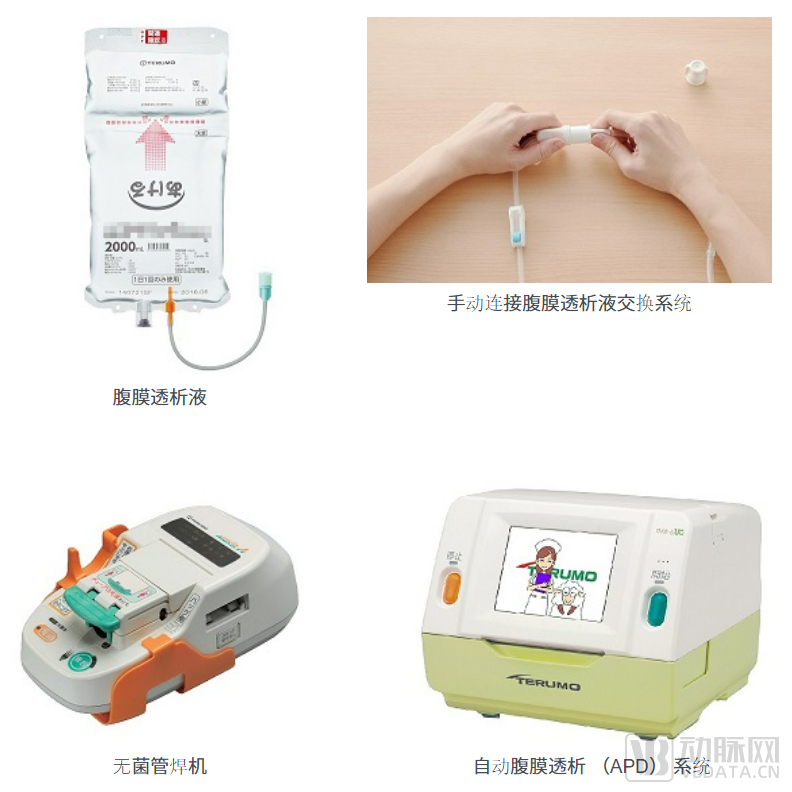
Terumo Peritoneal Dialysis Products (Source: Terumo Global Official Website)
In addition, the general hospital company has established an Alliance Department to operate its CDMO business, primarily providing products and services such as CDMO services, supporting consumables for biopharmaceuticals, and ancillary equipment for drug packaging.
Terumo’s financial report for the first half of fiscal year 2021 (from March 2021 to March 2022) showed that the General Hospital Company generated revenue of JPY 92.0 billion, a 12% year-on-year increase, with an adjusted operating profit of JPY 13.4 billion and an adjusted operating profit margin of 15%.
Financial report analysis indicates that,In Japan, where general hospitals account for 70% of total revenue, demand for medical devices such as syringes and infusion sets has driven double-digit growth for general hospital companies.Amid weak demand for infection prevention products, high value-added items such as infusion sets and disposable supplies served as key growth drivers. Additionally, while the recovery and growth of infusion-related pharmaceuticals in the pharmaceutical sector remained sluggish, similar to the broader recovery in medical demand, pain management and anti-adhesion therapies achieved double-digit growth. The DM & Healthcare business posted steady growth, driven by strong demand for thermometers and blood pressure monitors from the healthcare industry, resulting in mid-single-digit growth from the first to the second quarter. The Alliance Division also maintained stable performance, sustaining a growth rate of approximately 20%. In terms of profitability, an improved product mix driven by higher revenue offset the negative impact of rising freight costs.
According to Terumo’s fiscal 2020 annual report, the company reported consolidated revenue of JPY 175.5 billion and adjusted operating profit of JPY 25.7 billion, with an adjusted operating profit margin of 14.7%. Revenue from the Hospital Systems Division amounted to JPY 146.9 billion, accounting for 83.7% of total revenue.
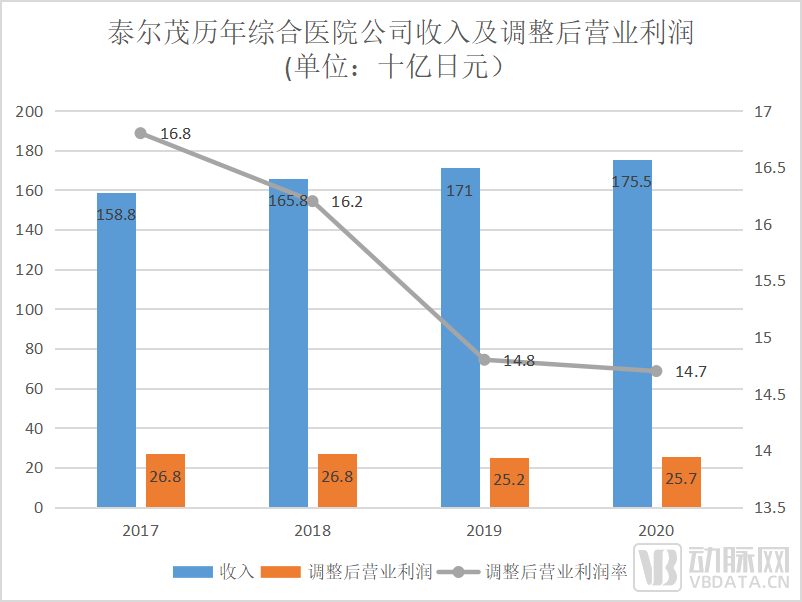
As can be seen, compared with fiscal year 2020, Terumo General Hospital Company achieved significant growth in revenue and operating profit in fiscal year 2021.
According to relevant research reports, Baxter holds an absolute dominant position in the peritoneal dialysis market, with a 72% share. Fresenius ranks second, and Terumo ranks third.With Terumo’s core business focused on non-peritoneal dialysis products and services, Terumo ranks third globally in the peritoneal dialysis market share. This position is attributable not only to Baxter’s absolute dominance in the peritoneal dialysis market but also to Terumo’s expertise in the medical device sector and its early strategic positioning.
This multinational medical device giant, which started out with thermometers, has been in business for over a century.
Terumo’s founding traces back to World War I. After the outbreak of the war, it became increasingly difficult for European goods to enter Japan, and thermometers, which had previously relied on German manufacturing, were no exception. A severe shortage of standard-compliant thermometers in Japan led to significant delays and disruptions in patient diagnosis and treatment. Eiji Takeuchi, who had prior experience in the industrial sector, spent five years inventing a red-core colored thermometer, thereby overcoming two major challenges with domestically produced thermometers at the time: the difficulty in reading the mercury column and the excessive effort required to shake down the mercury.
In 1921, Eiji Takeuchi, through the introduction of Sasagawa Sanzo, then President of the Tokyo Medical Association, secured the assistance of Dr. Shibasaburo Kitasato—a towering figure in the Japanese medical community, known as the father of modern Japanese medicine, as well as a bacteriologist and immunologist—and established “Akasen Ken'onki Kabushiki Kaisha” (Red Line Thermometer Co., Ltd.), the predecessor of Terumo.
In February 1922, the company officially began manufacturing the “Jintan Thermometer” and entrusted its sales to Morishita Jintan. In 1923, the company acquired the thermometer production division of Olympus Corporation, and in 1936, it was renamed Jintan Thermometer Co., Ltd., becoming a leading manufacturer of thermometers in Japan.
Over the past 40 years, Terumo has been dedicated to producing world-class, high-quality thermometers. In 1955, Terumo’s thermometers captured a 30% market share in Japan, ranking first; the company currently remains ranked second in the Japanese domestic market.In 1983, Terumo developed and marketed predictive digital thermometers. In 1984, Terumo ceased production of mercury thermometers.
In 1963, the company was renamed Nippon Jintan Terumo Co., Ltd., becoming the medical device manufacturing division of the Morishita Jintan Group. In 1974, the company spun off from the Morishita Group and was officially renamed Terumo Corporation, a name it retains to this day. The name “Terumo” is derived from the German word for thermometer, “Thermometer.”
Prior to its most recent name change, Terumo achieved multiple “firsts in Japan,” thereby expanding into new fields. In 1963, Terumo began independently manufacturing and sellingThe First Batch of Japanese Domestic Disposable Syringes, officially entering the field of disposable medical devices. In 1964, Terumo began producing and sellingHeadA Batch of Japanese Domestic Disposable Injection Needles. In 1969, Terumo began manufacturing and sellingThe First Batch of Domestically Produced Blood Bags in Japan, and became a leading enterprise in the field. In 1973, Terumo began to produce and sellFirst Batch of Japan’s Domestically Produced Plastic Soft Bag Intravenous Infusion Solutions, thereby entering the field of intravenous infusion solutions.
and initiated its internationalization process during this period.In 1971, Terumo established subsidiaries in the United States and Belgium. Following its initial public offering in 1985, Terumo expanded its international operations through acquisitions, joint ventures, and other strategic initiatives.
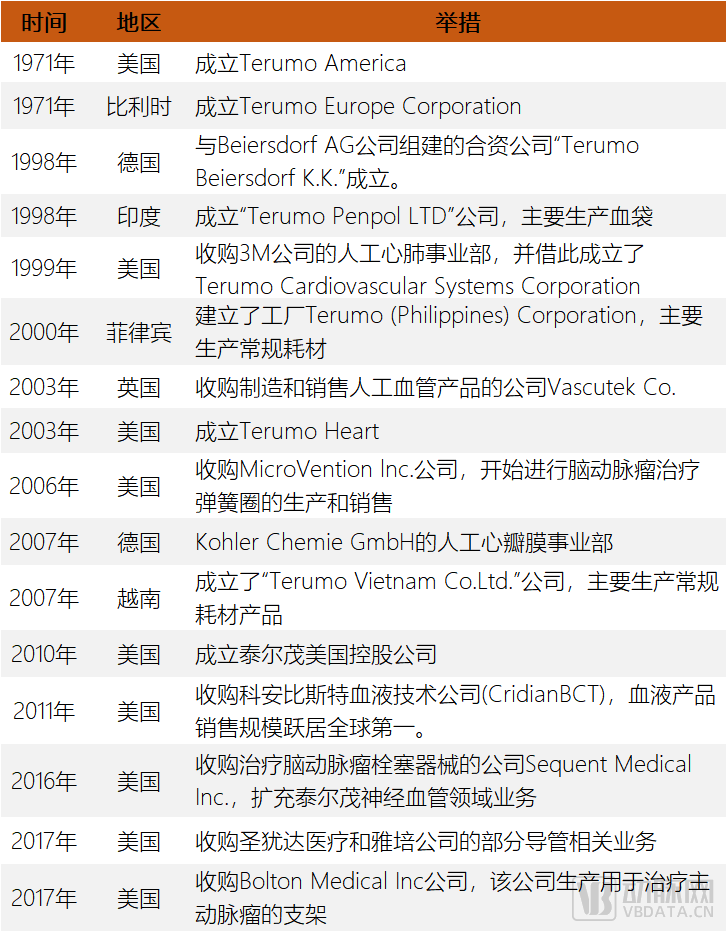
Terumo’s Overseas Footprint (Excluding China; Source: Compiled from Public Information)
Founded by scholars, Terumo adheres to the belief of Dr. Shibasaburo Kitasato that “scholars should not be self-satisfied with lofty research alone; it is their responsibility to translate research findings into practical applications and contribute to society.” With a strong commitment to R&D and practical implementation, Terumo explores the development of the healthcare sector from a long-term perspective.
Since the start of fiscal year 2017, Terumo has been implementing its medium- to long-term growth strategy and established a Corporate R&D Center, with a focus on meeting healthcare needs over the next 20 to 30 years. This represents Terumo’s “reverse” approach to creating core technologies that will support future healthcare, as well as developing specific products and solutions. Since then, Terumo hasMedical fields with high social impact, such as heart failure, stroke, and cancer, have been identified, while Terumo Medical Technologies is expected to focus on minimally invasive treatments, cell therapy/regenerative medicine, and digital technologies.
According to the financial report, Terumo's R&D expenditure for fiscal year 2020 was JPY 49.1 billion, accounting for 8% of its revenue. Previously, the company had consistently maintained an annual R&D investment of nearly JPY 50 billion.
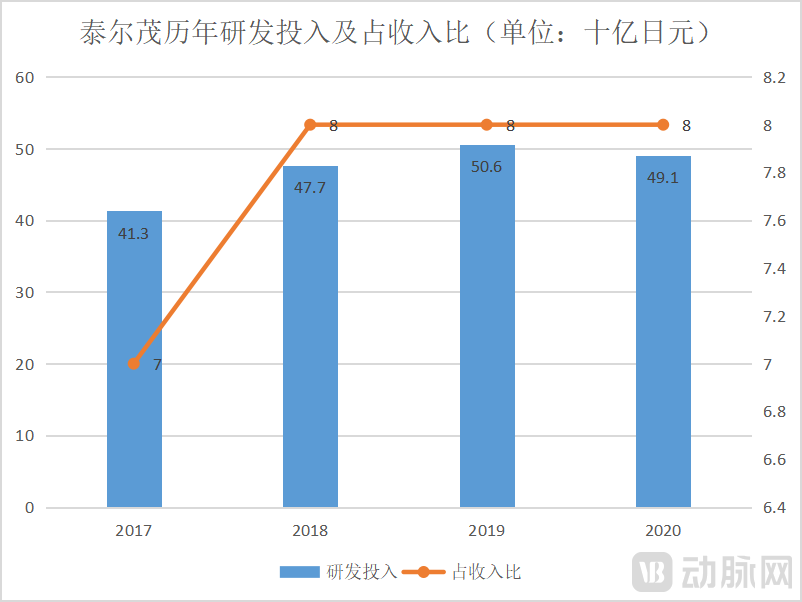
In addition, Terumo has established more than 10 R&D centers in the United States, the United Kingdom, China, India, and other regions, with its Japanese R&D base as the core, to accelerate business development.
To date, including the general hospital company mentioned earlier,Terumo has established a business structure comprising three companies and seven business units, primarily consisting of the Cardiovascular Company, the General Hospital Company, and the Blood and Cell Technologies Company., operating in over 160 countries and regions worldwide, with 103 affiliated companies domestically and internationally, and employing more than 15,000 staff members. To date, it has provided over 50,000 products and services to patients, various healthcare settings, and the pharmaceutical industry.
Among them, the Cardiac and Vascular Company is Terumo’s current core business unit.Beneath it are the TIS Division, which primarily operates Terumo Interventional Systems and provides diagnostic and therapeutic catheter products for the treatment of vascular diseases in fields such as cardiac and lower extremity interventions; the Neurovascular Division, which primarily provides treatments for neurovascular diseases based on minimally invasive endovascular catheter techniques; the Cardiovascular Division, which primarily provides life-saving technologies to heart surgery teams worldwide; and the Vascular Graft Division, which primarily provides products including surgical grafts and stent grafts for use by surgeons and interventional radiologists in treating patients with aortic diseases, including thoracic and abdominal aneurysms and dissections.
According to Terumo’s fiscal 2020 financial report, the Heart and Vascular Company generated revenue of JPY 328.5 billion, accounting for 54% of total revenue; followed by the General Hospital Company, with revenue of JPY 177.5 billion, representing 29% of total revenue; and the Vascular and Cell Technology Company, with revenue of JPY 109.5 billion, accounting for 18%.
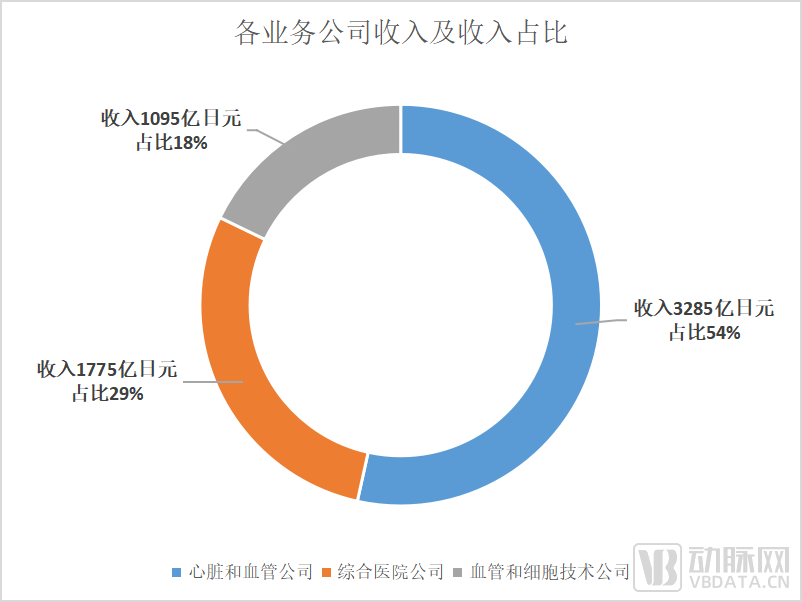 (Data source: Terumo Annual Report for Fiscal Year 2020)
Among them,Within the Heart and Vascular Company, the TIS Business Unit serves as the core division, generating JPY 220.6 billion in revenue in fiscal year 2020, accounting for 67.2% of the company’s total income. This is followed by the Neurovascular Division with JPY 45.0 billion (13.7%), while the Cardiovascular Division and the Vascular Graft Division recorded revenues of JPY 41.6 billion (12.7%) and JPY 21.3 billion (6.5%), respectively.
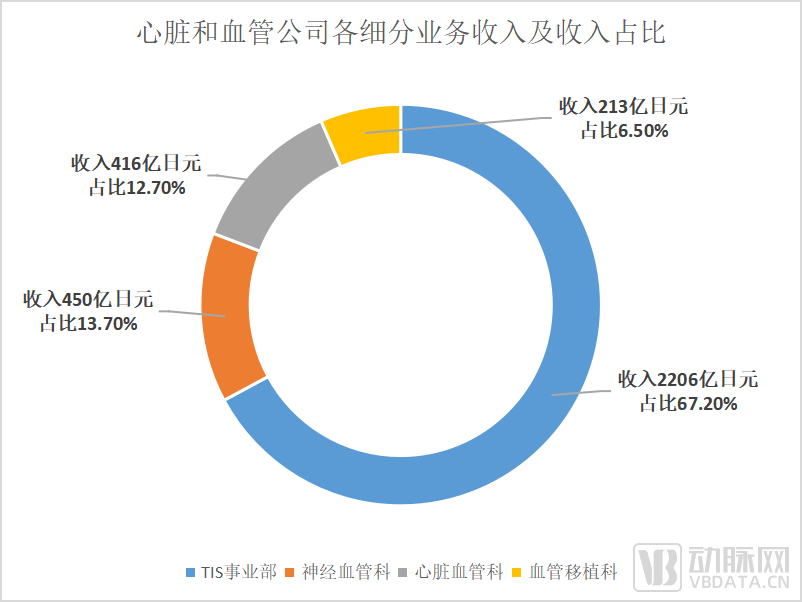
(Data source: Terumo FY2020 Annual Report)
Currently, the products and services offered by this company constitute Terumo’s core business portfolio, including angiography guidewires, angiography catheters, introducer sheaths, vascular closure devices, PTCA balloon catheters, coronary stents, self-expanding peripheral stents, intravascular ultrasound (IVUS) systems, drug-eluting stents, and imaging catheters; coils and stents for the treatment of cerebral aneurysms; aspiration catheters and clot retrieval devices for the treatment of ischemic stroke; oxygenators, shunts, and cardiopulmonary bypass systems; as well as artificial blood vessels and stent grafts.
Among them,Launched in 1982, Terumo’s independently developed world-first hollow-fiber artificial lung (oxygenator) is the extracorporeal oxygenator that most closely mimics human physiological conditions to date, and it is widely used in clinical practice.Terumo first proposed the technical concept of incorporating hollow fibers within the oxygenator housing, where oxygen flows through the hollow fibers and blood circulates through the blood compartment, enabling gas exchange across the hollow fiber membranes to significantly enhance blood oxygenation efficiency.
Currently, Terumo’s CAPIOX RX oxygenator primarily consists of a hard-shell cardiotomy reservoir, a heat exchanger, and an oxygenation chamber. Additionally, the more advanced FX model incorporates an arterial filter designed to remove microemboli from arterial blood, thereby preventing embolism and postoperative complications and enhancing the safety of cardiopulmonary bypass. Furthermore,All Terumo membrane lungs are coated with Xcoating, a biocompatible coating, on the blood-contacting surfaces to protect the blood.。
In 2015, Terumo's HeartSheet autologous skeletal myoblast sheet becameThe World’s First Approved Cardiac Regenerative Therapy Product for Production and SalesSingle skeletal myoblast sheets are fabricated by harvesting skeletal myoblasts from the patient’s own thigh muscle and culturing them into thin sheets. These autologous skeletal myoblast sheets can be directly transplanted onto the heart surface. This approach is regarded as a promising therapeutic option for cardiac patients who are unlikely to benefit from pharmacological therapy or surgical intervention.
Compared with the first two business units, Terumo Vascular and Cell Technology Company appears less impressive.However, based on the adjusted operating profit margins over the past four years, Vascular and Cell Technology Company is the only company that has seen an increase in its adjusted operating profit margin, with this figure reaching a new high of 17.4% in fiscal year 2020.
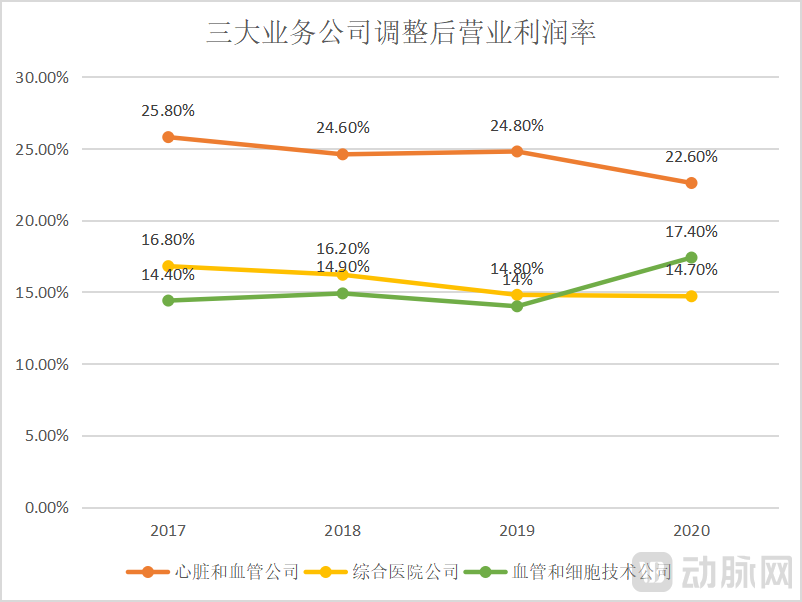
(Data source: Terumo Annual Report for Fiscal Year 2020)
This is consistent withThe company’s partnership announcement with CSL Plasma in 2021 played a certain role.Terumo stated that its entry into the plasma-derived products industry, alongside market leader CSL Plasma, demonstrates Terumo’s leadership and expertise in using apheresis technology to collect blood components and cells with the Spectra Optia Apheresis System and the Trima Accel Automated Blood Collection System.
Terumo Vascular and Cell Technologies Business ProductsMainly providing blood bags, automated blood collection systems, automated blood component processing systems, pathogen reduction technology, automated centrifugation blood collection systems, cell expansion systems, etc.
Among them,The Trima Accel Automated Blood Collection System plays a significant role in plasma collection by harvesting any combination of blood components, including plasma., and by collecting more of the required blood components, it has improved the productivity of blood centers, produced higher-quality blood components, and enhanced the experience for both donors and operators.
In 2021, the company was awarded the "Critical Infusion Award" by America's Blood Centers in recognition of its consistent supply of Trima Accel collection kits and their contribution to blood centers.
In addition,Terumo Blood and Cell Technologies has also been investing in growth areas, launching new products for cell and gene therapies., continuously providing new services and expanding into new fields.
Terumo’s development history in China dates back to 1995, when its manufacturing facility was established in Hangzhou, operating as Terumo Medical Products (Hangzhou) Co., Ltd. As a production-oriented enterprise, the Hangzhou plant provided internationalized solutions—ranging from hardware to software and from technology to services—that advanced modern management and informatization within China’s medical device manufacturing industry, thereby helping to establish benchmark standards for the sector.
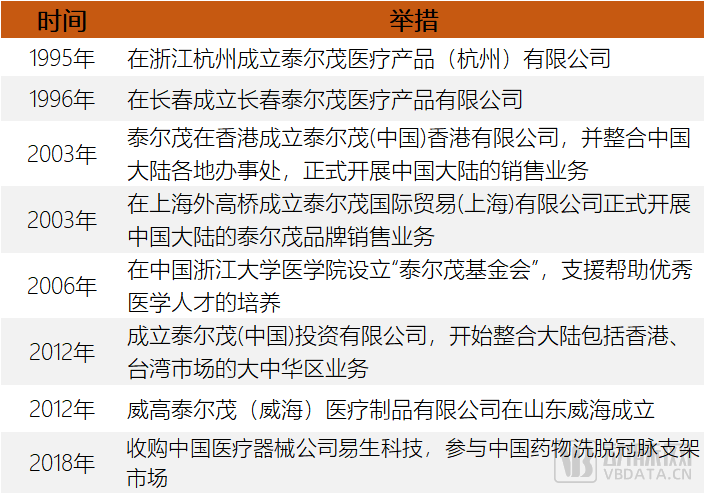
Terumo in China (Source: Compiled from public information)
Subsequently, a second company was established in Changchun. In 2003, Terumo founded Terumo (China) Hong Kong Co., Ltd. in Hong Kong, consolidated offices across China, and officially launched its sales operations in the Chinese market. In the same year, Terumo International Trading (Shanghai) Co., Ltd. was established in the Waigaoqiao area of Shanghai to formally commence sales of Terumo-branded products in China. As its business in China expanded, the company broadened its scope of operations and was renamed Terumo Medical Products (Shanghai) Co., Ltd., while successively establishing branches to integrate its sales network across China.
In April 2006, Terumo established the “Terumo Foundation” at Zhejiang University School of Medicine in China to support the cultivation of outstanding medical talents. In 2012, Terumo established TERUMO(China)Holdings Co.,Ltd. and began integrating its business operations across Greater China.
With the advancement of the “Healthy China 2030” strategy, Terumo is encountering unprecedented opportunities in its development history within the Chinese market.As Terumo’s top strategic market, China has maintained a double-digit compound annual growth rate (CAGR) over the past two decades, making it the fastest-growing region for Terumo’s global business.
In China, to advance localization, Terumo has been collaborating with domestic enterprises in the fields of peritoneal dialysis and cerebrovascular interventional therapy.
In 2012, Weigao Terumo (Weihai) Medical Products Co., Ltd. was established in Weihai, Shandong Province. The company was jointly founded by Terumo Corporation and Weigao Group.In March 2019, Weigao Terumo launched its peritoneal dialysis solution, which had undergone more than six years of R&D preparation and obtained product registration certification. Compared with traditional hemodialysis products, this solution better preserves patients’ residual renal function, reduces the medical burden, and is suitable for home-based dialysis, enabling patients to access advanced dialysis technology without leaving their homes.
In 2018, Terumo acquired Yisheng Technology, officially announcing its entry into the stent market and enriching, improving, and expanding its product portfolio in the cardiovascular intervention field.
In addition, Terumo has implemented distinctive strategic initiatives in the Chinese market by aligning with both market dynamics and its own unique characteristics.On October 9, 2018, Terumo BCT partnered with Shanghai UcarDi Biopharmaceutical Technology Co., Ltd. to collaborate on cell expansion systems.According to previous media reports, the system will design and develop specialized technologies for CAR-T cell culture for hundreds of patients with hematologic malignancies, ensuring stability and consistency of cell products, thereby improving the quality of CAR-T products and enhancing the efficiency of clinical treatment.
From a thermometer manufacturer to a multinational medical device giant, Terumo has continuously expanded its overseas business layout through mergers and acquisitions, joint ventures, factory construction, and subsidiary establishment, comprehensively accelerating its globalization process. It has gradually become a leading enterprise in the medical device manufacturing industry in Japan and even globally. Terumo’s next step in development is worth anticipating.