

Infervision Secures National Key R&D Program Under China's 14th Five-Year Plan for AI-Driven Early Detection and Treatment Strategy of Fibrotic Interstitial Lung Disease
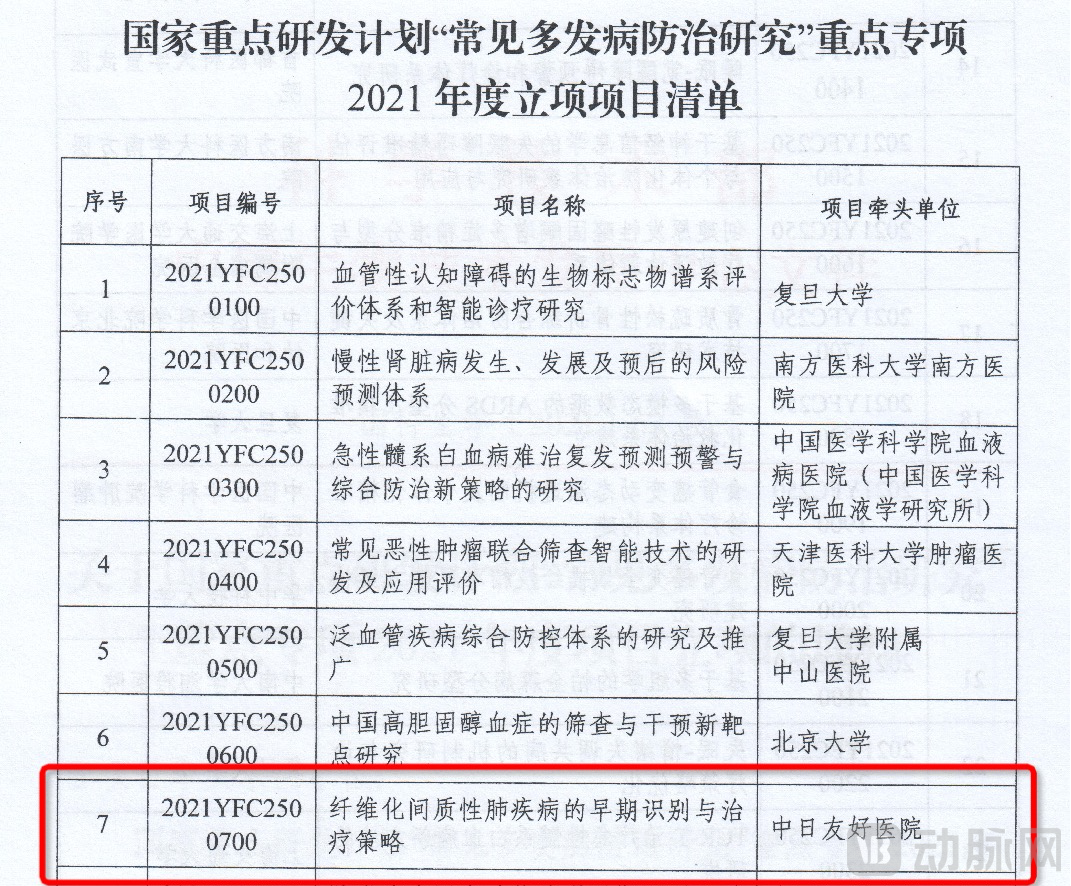
Recently, the key project “Early Identification and Treatment Strategies for Fibrotic Interstitial Lung Diseases” under the 2021 National Key R&D Program of China’s 14th Five-Year Plan—Key Special Project on “Prevention and Control of Common and Frequently Occurring Diseases,” in which Infervision participated in the application, has been officially approved. Led by China-Japan Friendship Hospital, with Professor Dai Huaping, Director of the Department of Pulmonary and Critical Care Medicine, serving as the principal investigator, Infervision participates as a sub-project undertaking entity. Other participating institutions include many renowned hospitals and universities such as The First Affiliated Hospital of Guangzhou Medical University and Nankai University. This marks another innovative exploration by Infervision in the field of pulmonary diseases, following its achievement of the “milestone” of gaining market access in the four major global markets.
Shouldering National Responsibilities: Enhancing Capabilities for Early Diagnosis and Early Treatment
In recent years, pulmonary diseases have become increasingly prevalent, with their rising incidence and mortality rates seriously affecting the physical health and life expectancy of residents in China. Therefore, focusing on common and frequently occurring diseases as a breakthrough point, strengthening comprehensive prevention and control, enhancing early screening and detection, promoting early diagnosis and treatment as well as scientific prevention and management, and shifting the focus from disease treatment to health management are of paramount importance, both for improving the overall health of the population and from the perspective of health economics.
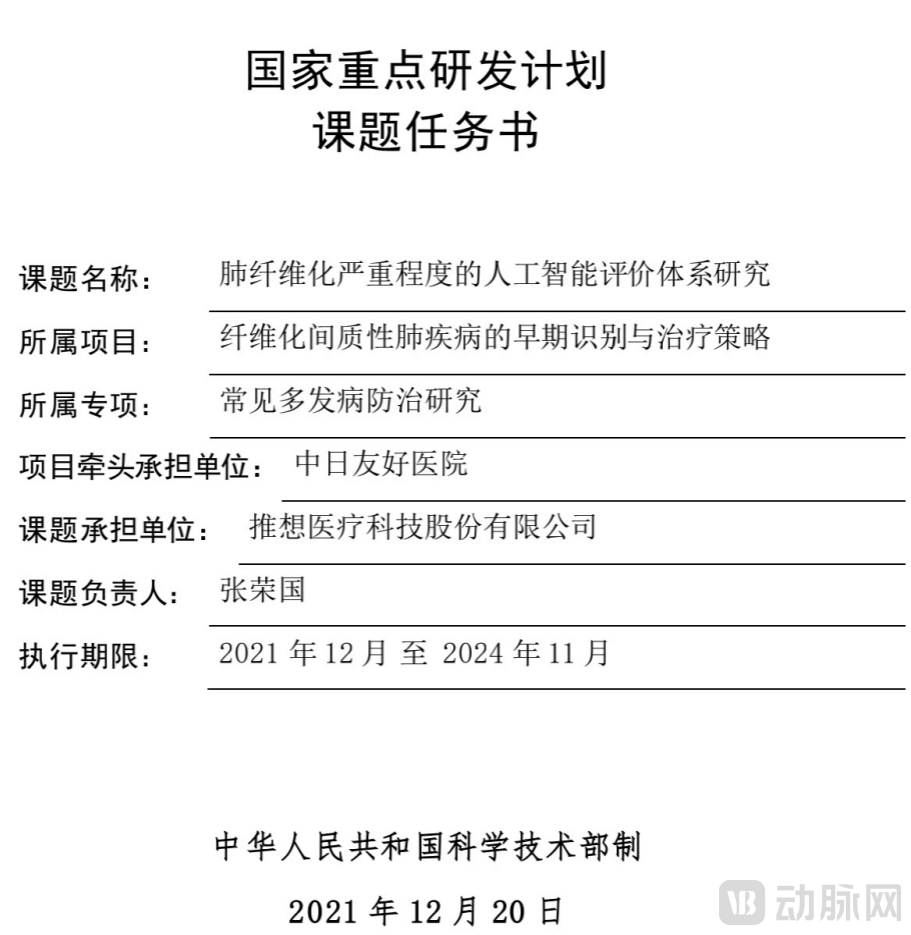
The overall objective of the National Key R&D Program’s key special project on “Research on the Prevention and Treatment of Common and Frequently Occurring Diseases” is to strengthen scientific research and technological innovation in common and frequently occurring diseases, comprehensively improve the diagnosis and treatment levels for these conditions in China, reduce disability and mortality rates, alleviate the disease burden, enhance China’s international academic standing in this field, and provide a scientific basis for the formulation of national prevention and control strategies. The implementation period of this special project spans from 2021 to 2025, with four tasks and 17 research directions initially launched in 2021. The project undertaken by Infervision falls under the fourth research direction within the second task (“Research on Early Screening, Intervention Technologies, and Strategies for Common and Frequently Occurring Diseases”), specifically focusing on “Early Identification and Treatment Strategies for Fibrotic Interstitial Lung Disease.” As the lead institution, Infervision is conducting the project titled “Research on an Artificial Intelligence Evaluation System for the Severity of Pulmonary Fibrosis,” which aims to establish artificial intelligence (AI) models based on deep learning for the identification and classification of interstitial lung disease, and to develop methods using deep learning and machine learning for the quantitative assessment of fibrosis and its severity. Over the next three years, Infervision will collaborate with other participating institutions to jointly develop a series of key technologies and intervention strategies with significant clinical importance and social benefits for the prevention and treatment of fibrotic interstitial lung disease (f-ILD) in China, and promote their application nationwide.
Driven by Innovation, Building the Cornerstone of National Health
Infervision is committed to its mission of “AI for Better Health” and strives to build a globally leading brand in hospital-wide AI solutions. The company has adopted a strategic layout featuring “horizontal and vertical integration” alongside “internationalization” to develop a multi-dimensional product portfolio. As of August 12, 2021, Infervision was the first and only AI healthcare technology company to receive regulatory approvals in China, the United States, the European Union, and Japan. Its products have been deployed in more than 400 medical institutions across nearly 20 countries worldwide, providing advanced, integrated smart healthcare services to governments, medical institutions, physicians, and patients.
Infervision and participating institutions in this project, such as the China-Japan Friendship Hospital, had already engaged in long-term collaboration prior to this initiative. By pursuing “symbiotic” innovation and working closely with physicians to refine products and features that best meet clinical needs, they jointly developed an AI-based imaging evaluation system for various respiratory diseases, including pulmonary nodules and pulmonary vascular disorders. The successful approval of this project represents another successful exploration based on this innovative approach.
Fibrotic interstitial lung disease (f-ILD) and its associated socioeconomic burden have become significant public health issues with profound implications for societal well-being. Early identification of fibrosis and effective intervention are crucial for slowing the progression of f-ILD and improving patient outcomes. Artificial intelligence may serve as a key breakthrough in the early detection of pulmonary fibrosis. Driving clinical innovation through technological advancement and facilitating the rapid development and practical application of cutting-edge technologies represent essential missions for the medical artificial intelligence industry.
In terms of clinical translation, this project will adhere to the requirements of the key special program, which emphasizes “strengthening the integrated innovation of information technology and healthcare services to enhance primary care diagnosis and treatment capabilities.” By integrating multidimensional data from clinical practice and medical imaging, we will construct early identification and progression warning models for fibrotic interstitial lung disease (ILD). This initiative will establish optimized histopathological diagnostic methods and an AI-based evaluation system for assessing the severity of fibrosis, thereby forming comprehensive strategies for early detection and intervention in fibrotic ILD. These solutions will be promoted and implemented across multiple hospitals, contributing to the intelligent development of diagnostic and therapeutic technologies for major diseases and jointly building a solid foundation for national health.