

Fusion Pharmaceuticals: Pioneering Targeted Alpha Therapy to Conquer the Next Frontier in Oncology
Fusion Pharmaceuticals
Biopharmaceutical R&D and Manufacturing
In the millennia-long struggle against cancer, humanity, guided by wisdom and an indomitable spirit, has navigated uncharted waters to develop anticancer therapies such as chemotherapy and radiotherapy.
However, conventional therapeutic approaches sometimes fail to distinguish between "friend and foe," unable to effectively differentiate healthy cells from cancer cells, often resulting in a scenario where "inflicting heavy damage on the enemy also causes significant self-harm." This not only limits their clinical application but also drives humanity to advance toward the next frontier in cancer treatment.
Fusion Pharmaceuticals (“Fusion”), a Canadian biopharmaceutical company, is one such pioneer.
Fusion is the industry leader in targeted alpha particle therapy.This therapy utilizes a medical isotope that emits alpha particles. Researchers employ their proprietary technology to conjugate cancer-cell-targeting antibodies with the alpha emitters, thereby precisely targeting cancer cells. Upon entering the cancer cells, these high-energy particles induce cytotoxicity through multiple mechanisms, exerting an antitumor effect.
Fusion, established in 2014, is a clinical-stage oncology company focused on developing next-generation radiopharmaceuticals as precision medicines.Meanwhile, the company is a spin-off of the Centre for Probe Development and Commercialization (CPDC), a leading manufacturer and distributor of radiopharmaceuticals, with experience in establishing a robust R&D supply chain.
Fusion atListed on the Nasdaq with a bell-ringing ceremony in 2020; stock ticker: FUSN.This is a glorious moment for Fusion Pharmaceuticals, and it also sounds the charge toward conquering the next peak in the fight against cancer.
Radioimmunotherapy (RIT) is a next-generation targeted radiation therapy for cancer. It works by conjugating radioactive isotopes to monoclonal antibodies that target specific tumors, thereby selectively killing tumor cells while minimizing damage to healthy tissues.
Although breakthroughs have been made in treating hematologic malignancies such as non-Hodgkin lymphoma (NHL), beta decay-based radioimmunotherapy (RIT) has proven largely ineffective against solid tumors. This is likely because the energy released by beta decay, which generates free electrons, typically travels over relatively long distances (up to several millimeters). As a result, it fails to deliver concentrated cytotoxic effects to the tumor mass at the lesion site and may instead damage surrounding healthy tissues.
In contrast, Fusion Pharmaceuticals’ targeted alpha therapy offers distinct advantages—alpha particles emitted by medical isotopes can be used to kill cancer cells by inducing lethal double-strand DNA breaks.
Unlike most radiation therapies, alpha particles travel only one to three cell lengths, enabling selective killing of tumor cells. Alpha particles (composed of two protons and two neutrons, equivalent to the nucleus of a helium-4 atom) possess significantly greater linear energy transfer than free electrons, resulting in DNA damage to cancer cells that is more difficult to repair. More importantly, due to their relatively low penetrating power, the energy released by alpha particles is confined to a radius of 70–100 micrometers, delivering a concentrated cytotoxic effect to solid tumors.
It is worth noting that major pharmaceutical companies such as Bayer, Roche, Novartis, and Bristol Myers Squibb have also converged on “targeted alpha therapy (TAT),” expanding their coverage through acquisitions and in-house R&D. Among them, Bayer’s Xofigo® (generic name: radium-223 dichloride) is the first and only TAT approved in the United States. It received approval from China’s National Medical Products Administration (NMPA) in 2020 for patients with castration-resistant prostate cancer (CRPC) with symptomatic bone metastases and no known visceral metastatic disease.
Unlike Bayer’s Xofigo®, which directly injects radium into the human body, Fusion Pharmaceuticals conjugates actinium with antibodies to target cancer cells more rapidly and precisely. Furthermore, FusionPioneered the Fast-Clear linker technology,It can promote the rapid excretion of medical isotopes that are not specifically bound to cancer cells.Compared with traditional technologies, it can expand the therapeutic window.
Figure: Schematic diagram of the Fast-Clear™ linker
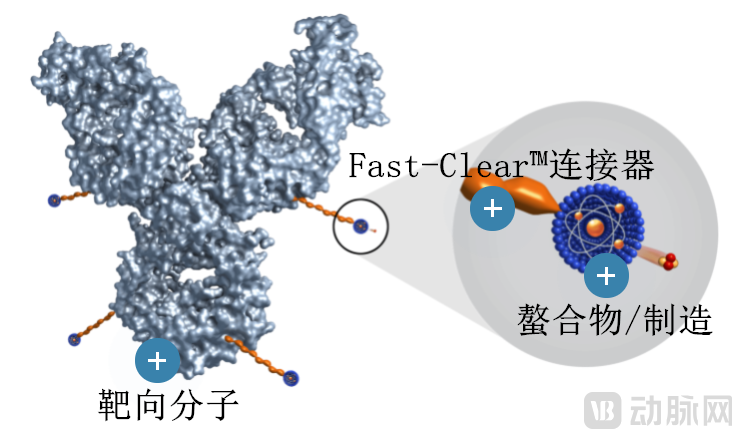
Image from the official website of Fusion Pharmaceuticals
Figure: Excretion Profile of the Fast-Clear™ Linker
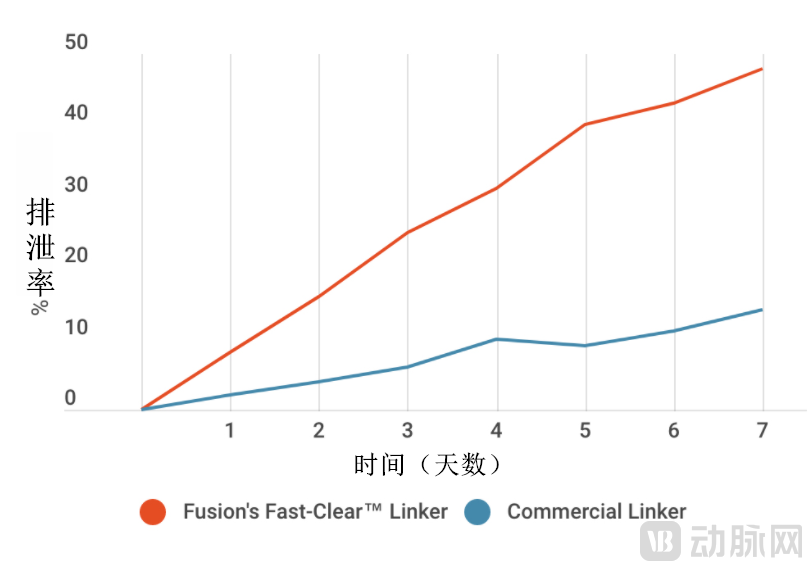
Image from the Fusion Pharmaceuticals official website
Given the robust performance of the Fast-Clear™ conjugation technology, Fusion is exploring its application across diverse drug modalities, such as antibodies and small molecules.
[225Ac]-FPI-1434 is Fusion’s lead clinical candidate for delivering alpha particles to cancer cells.IGF-1R is a well-established oncology target. This novel drug conjugates an IGF-1R antibody with actinium-225 via a Fast-Clear linker, creating a “targeted alpha therapy” for the treatment of multiple tumor types, and is currently undergoing Phase 1 clinical trials.
In terms of approvals, in August 2021,Fusion Announces U.S. FDA Approval of Investigational New Drug (IND) Applications for [225Ac]-FPI-1966 (FPI-1966) and Imaging Agent [111In]-FPI-1967 (FPI-1967)FPI-1966 is a targeted alpha therapy (TAT) designed to use the human monoclonal antibody vofatamab to target and deliver actinium-225 to tumor sites expressing FGFR3, a protein overexpressed in multiple tumor types, particularly head and neck cancer and bladder cancer. FPI-1966 utilizes Fusion’s Fast-Clear™ linker to conjugate vofatamab to actinium-225.
Cutting-edge therapies and innovative technologies rely on the exploration by research teams and the overall coordination of corporate management.

Chief Technology Officer, Eric Burak
Dr. Eric BurakHolds a Ph.D. in Analytical Chemistry from Temple University and a B.S. in Chemistry from Drexel University, with experience in biotechnology and large pharmaceutical companiesWith over 20 years of experience in drug research and development.
Prior to joining Fusion, he served as Vice President of Development at Theracos Inc., where he oversaw all research, clinical development, and manufacturing for a company developing type 2 diabetes therapeutics.

Chris Leamon, Chief Scientific Officer
Dr. Chris LeamonHe is the Chief Scientific Officer of Fusion Pharmaceuticals, bringing to the companyOver 25 years of experience in the development of precision medicines and radiopharmaceuticals.
Prior to joining Fusion Pharmaceuticals, Dr. Leamon served as Executive Director of Radioligand Drug Discovery at Novartis. Before joining Novartis, he was Vice President of Discovery Research at Advanced Accelerator Applications (a subsidiary acquired by Novartis in 2018). He has also held various key management and R&D positions at Endocyte, Ionis Pharmaceuticals, and GSK.

John Valliant, Founder and CEO
Dr. John Valliantis the Founder and Chief Executive Officer of Fusion.
Prior to founding Fusion, Dr. Valliant established the Centre for Probe Development and Commercialization (CPDC), a radiopharmaceutical research center dedicated to the discovery, development, and distribution of next-generation molecular imaging probes. Additionally, he is a Professor in the Department of Chemistry and Chemical Biology at McMaster University.
In 2009, Dr. Valliant was selected asone of “Canada’s Top 40 Under 40,”in recognition of his contributions to advancing molecular imaging probe technology, improving patient care, and promoting the commercialization of technologies to drive economic development at CPDC and McMaster University. In 2015, he receivedNSERC’s Brockhouse Canada Prize for Interdisciplinary Research in Science and Engineering。
The rest of Fusion’s executives come fromMerck, Novartis, McKinseyand other well-known enterprises,All possess backgrounds in life sciences, along with decades of experience and accumulated expertise in industry management and technology.
Fusion’s endogenous growth is reflected in strengthening its “targeted alpha therapy” platform and expanding its pipeline, while its exogenous growth is demonstrated through active external collaborations.
Figure: Progress Chart of Fusion’s Pipeline
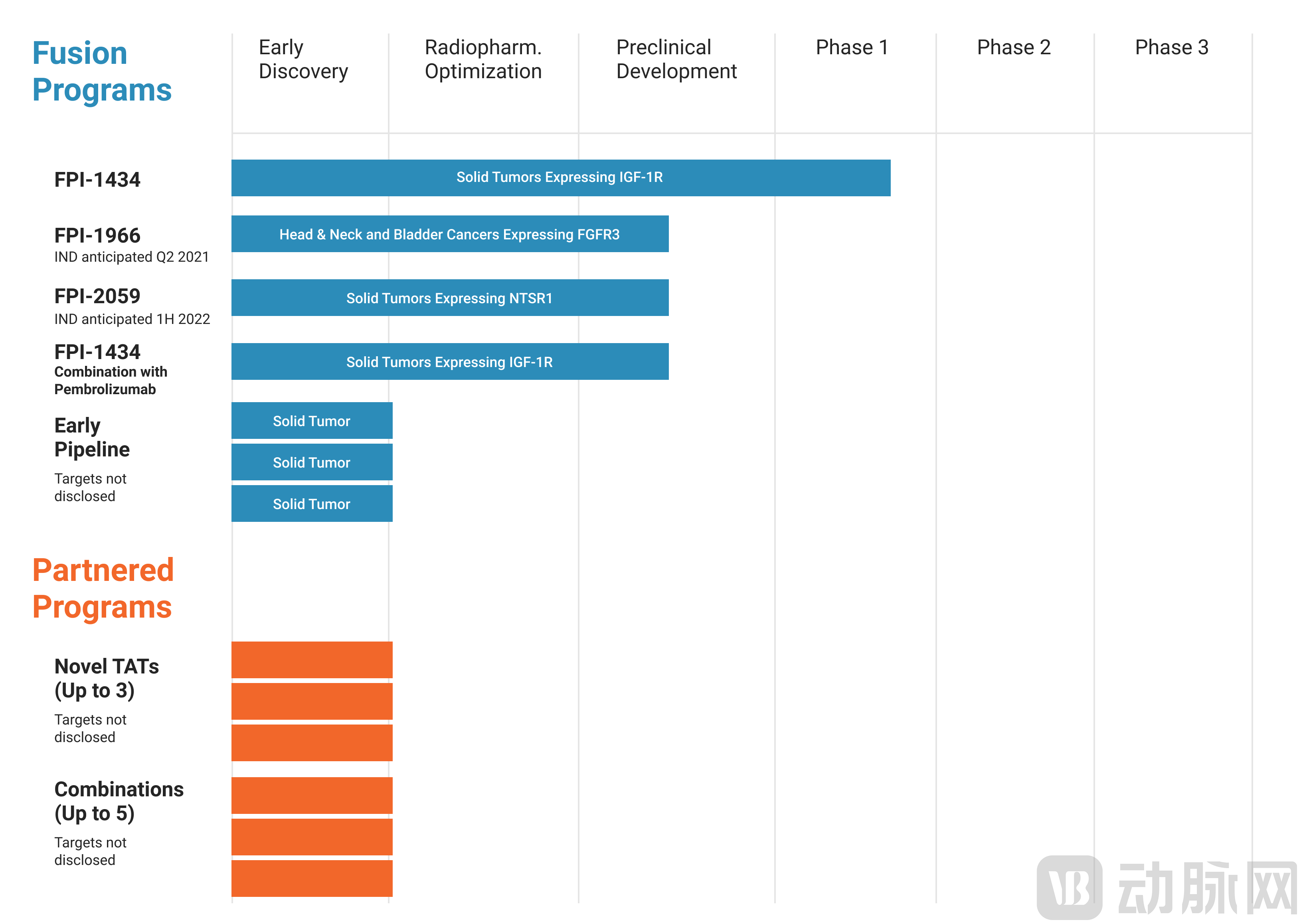
Figure: Overview of External Collaborations and Acquisitions by Fusion Post-IPO
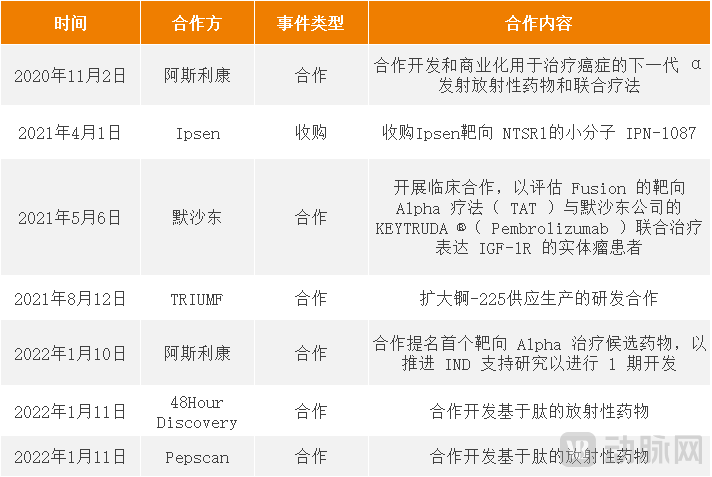
Data sourced from the official website of Fusion Pharmaceuticals; chart by VCBeat
Fusion’s external collaborations are not numerous, but they excel inEach step is closely aligned with its core business and technology,Steady progress with solid footing.
In terms of partnerships, Fusion collaborates not only with established pharmaceutical giants such as AstraZeneca and Merck & Co., but also with innovative start-ups. Collaborations with major pharmaceutical companies focus primarily on advancing the commercialization of existing pipelines, while partnerships with innovative enterprises are more centered on R&D and manufacturing, encompassing pipeline acquisitions, supply chain establishment, and new technology development.
Fusion’s internal innovation and external expansion are not disjointed; rather, they complement each other in a dual-drive model, enabling Fusion to achieve spiral growth through repeated collaborative “real-world” engagements.
Reference article: VCBeat, “Fusion Pharmaceuticals Completes $105 Million Series B Financing to Expand Clinical Trial Scope of Targeted Alpha Particle Therapy”