

E-Chord® Percutaneous Mitral Chordal Repair System Successfully Completes First-in-Human Procedure in Pivotal Clinical Trial
In the Year of the Tiger, good news keeps pouring in. At this time of bidding farewell to the old and welcoming the new, another remarkable achievement has been made in the field of interventional mitral valve diagnosis and treatment in China. The team led by Professor Wang Chunsheng, Professor Wei Lai, and Attending Physician Yang Ye from the Department of Cardiac Surgery at Zhongshan Hospital, Fudan University, successfully completed the procedure with the collaboration of Professor Guo Kefang and Attending Physician Jin Lin from the Department of Anesthesiology, as well as Professor Dong Lili from the Department of Echocardiography.E-Chord®Surgical Treatment of the First Patient Enrolled in the Formal Clinical Trial of a Mitral Valve Repair Device; The Patient, Postoperatively40discharged home within hours. This marks another breakthrough in the field of transcatheter mitral valve repair, following Zhongshan Hospital Fudan University’s successful performance of Asia’s first percutaneous mitral chordae tendineae reconstruction surgery last year.
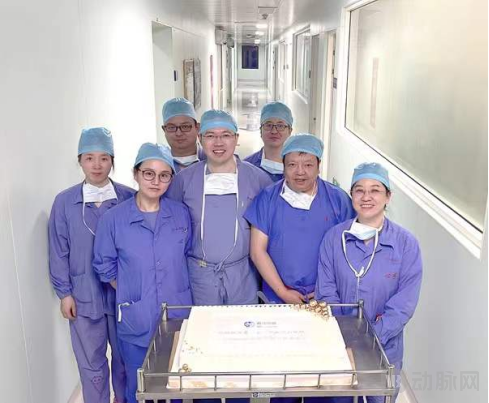
The patient is a 62-year-old female. Preoperative ultrasound diagnosed prolapse of the P2–P3 segments of the posterior mitral leaflet, chordae tendineae rupture with severe regurgitation, and acute heart failure. Following comprehensive analysis and evaluation by the Zhongshan Cardiac Surgery Team, she was successfully enrolled in the “Prospective, Single-Arm, Multicenter Clinical Trial on the Efficacy and Safety of Mitral Valve Repair Devices for the Treatment of Mitral Regurgitation.”
After the patient was placed under general anesthesia, a 4-cm minimally invasive incision was made in the chest wall at the location corresponding to the left apical region of the heart. Subsequently, under transesophageal echocardiography guidance, the E-Chord system was employed.®The mitral valve repair device successfully implanted three pairs of artificial chordae tendineae in the P2-P3 region and anchored them to the apex, resulting in immediate and complete resolution of mitral regurgitation. The entire procedure lasted approximately one hour, with only 20 minutes required for intracardiac manipulation, demonstrating a smooth and seamless execution. The surgery was performed without cardiopulmonary bypass, cardiac arrest, or cardiotomy, utilizing the E-Chord system.®The system has a diameter of only 3 mm (9 Fr), making it the world’s slimmest mitral valve repair device. It is minimally invasive, with virtually no bleeding. The procedure is performed under full ultrasound guidance, ensuring precise positioning without any radiation exposure, and is thus regarded as a “green interventional surgery.”
The patient recovered smoothly after surgery, with pre-existing symptoms such as chest tightness, shortness of breath, and orthopnea resolving completely. The patient was discharged home on the second postoperative day (40 hours).

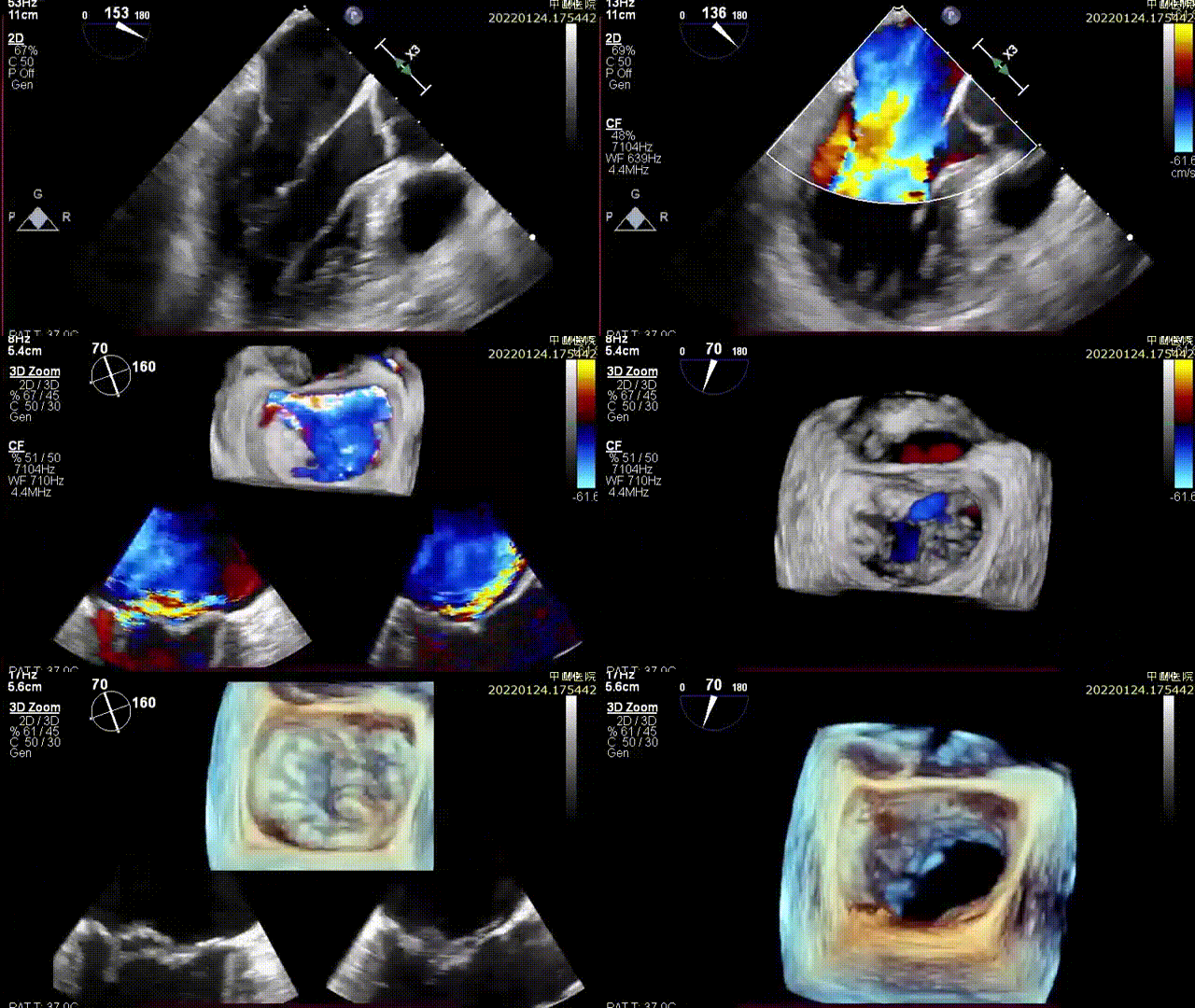
Preoperative Severe Regurgitation
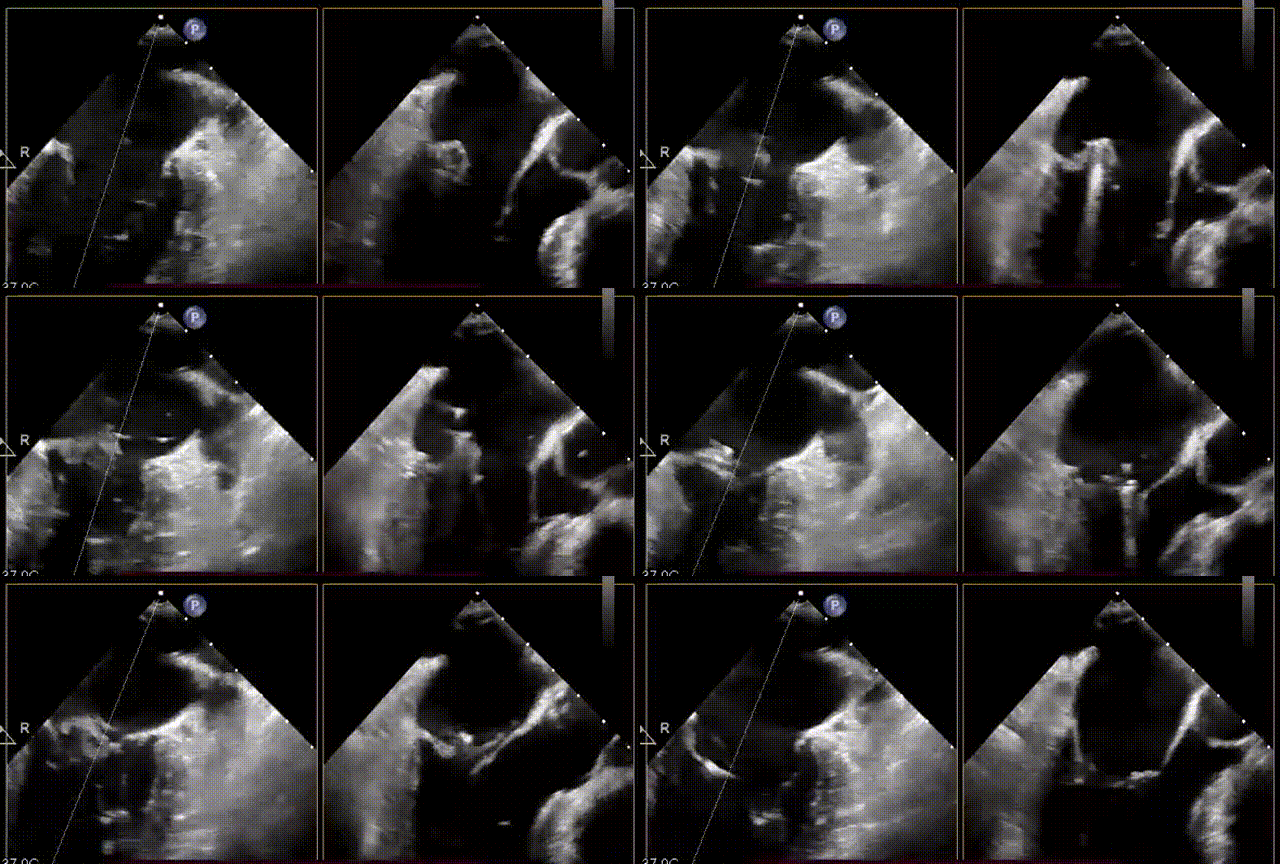
Intraoperative Chordae Tendineae Implantation, One-Click Deployment
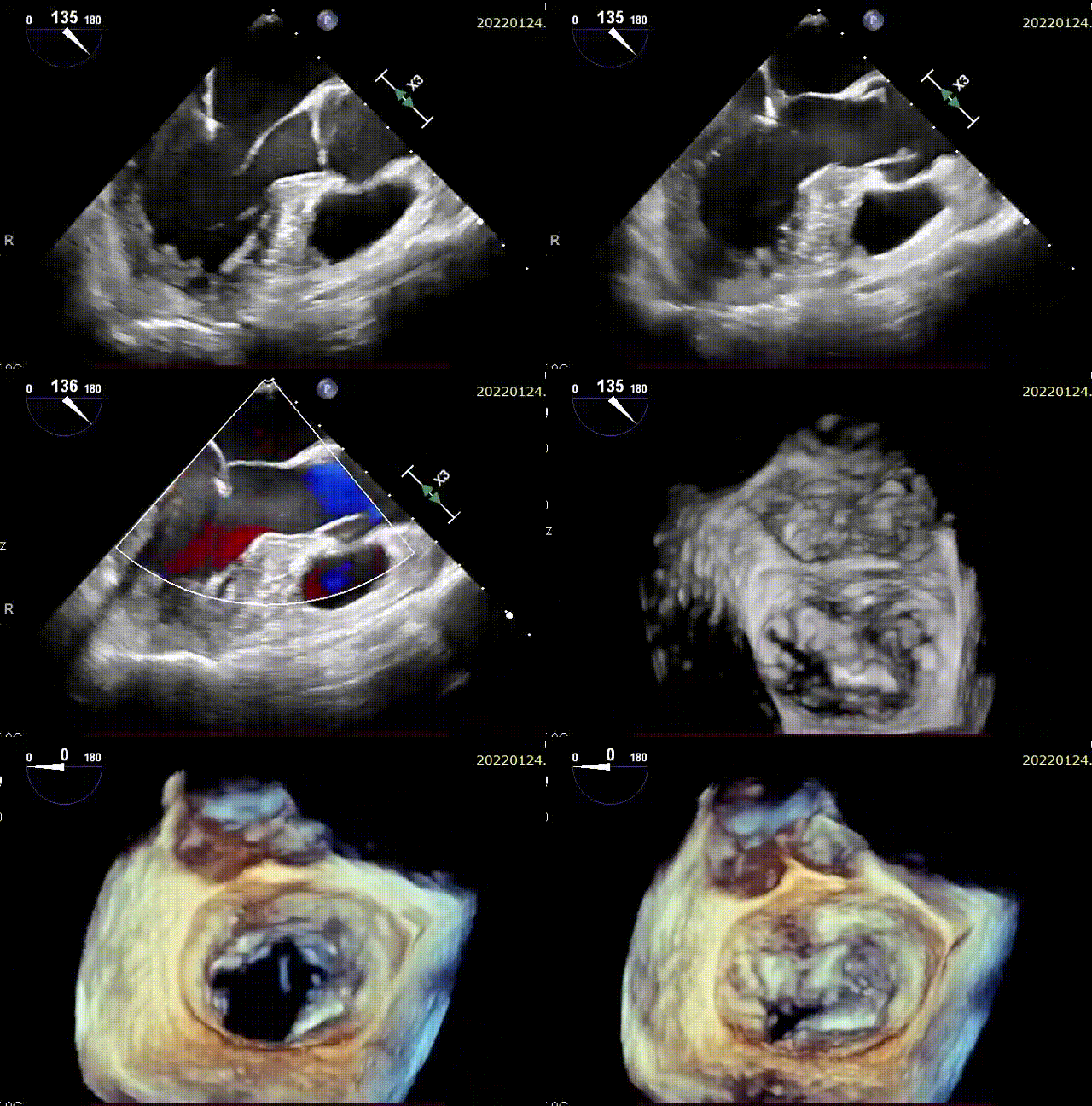
Mitral regurgitation resolved at the end of surgery
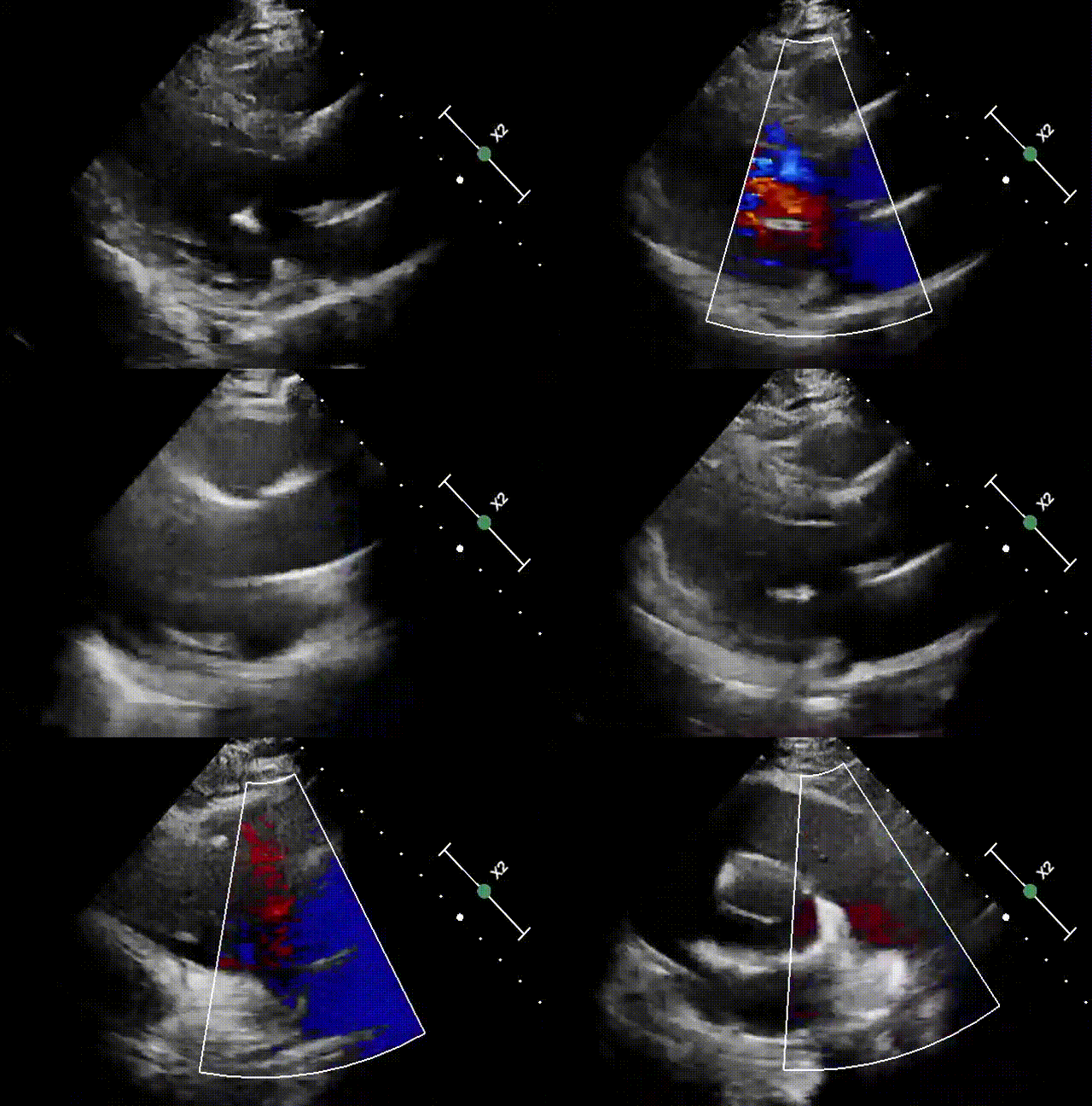
Pre-discharge Ultrasound
Mitral regurgitation (MR) is the most common valvular heart disease in the elderly, with a prevalence significantly higher than that of aortic stenosis; it affects more than 10% of individuals aged over 75 years (Lancet, 2006). Once severe heart failure develops, the annual mortality rate reaches 34% (NEJM, 1996). It is estimated that there are millions of patients in China with moderate-to-severe or severe mitral regurgitation requiring treatment. Although conventional open-heart surgery yields definitive outcomes, it is associated with drawbacks such as significant trauma, prolonged operative time, substantial blood loss, and slow recovery. The application of minimally invasive transcatheter mitral valve interventions will bring benefit and hope to patients with moderate-to-severe mitral regurgitation, particularly those at high surgical risk or with contraindications to surgery.
Dozens of mitral valve interventional devices are currently under development worldwide. However, due to the anatomical and functional complexity of the mitral valve, only a handful of products have successfully completed development and obtained CE marking in Europe and FDA approval in the United States. Most domestic and international mitral valve repair products employ techniques that involve grasping the leaflet edges to implant artificial chordae tendineae or achieve edge-to-edge coaptation. Upholding a spirit of independent innovation, Beijing Medtop Medical Technology Co., Ltd. organized a team of engineers to collaborate with renowned domestic cardiac surgery teams and echocardiography experts. After five years of dedicated effort, they successfully developed E-Chord, the first product in Asia to utilize a puncture-based approach for implanting artificial chordae tendineae.®Mitral Valve Repair Device.
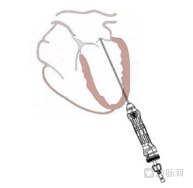
The device is positioned against the valve leaflets, ready for implantation.
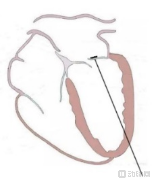
Chordae Tendineae Implantation
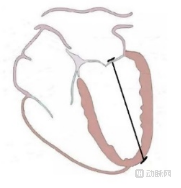
Suture the chordae tendineae to the myocardium
E-Chord®The design philosophy of the mitral valve repair device is derived from surgical techniques, achieving physiological mitral valve repair through a minimally invasive approach. In this case, E-Chord®The device provides clear ultrasound visualization, flexible maneuverability, precise orientation, and accurate localization of chordae tendineae implantation sites. Leaflet puncture and chordae release are performed synchronously, offering a rapid, simple, and easy-to-master procedure. As the heart continues to beat, artificial chordae can be precisely adjusted in length according to the patient’s physiological status under ultrasound guidance before fixation. E-Chord®In addition to enabling chordae tendineae repair, the device can be used in conjunction with MedPeak’s commercially available product, Easy-Knot.®In theory, it can also achieve "edge-to-edge" repair of the mitral valve leaflets, triangular plication, and "annuloplasty" repair of the mitral/tricuspid annulus.
In addition to the lead institution, Zhongshan Hospital Affiliated to Fudan University, Medtronic Peak has successfully established collaborations with multiple renowned medical institutions, including Union Hospital Affiliated to Tongji Medical College of Huazhong University of Science and Technology, Beijing Anzhen Hospital Affiliated to Capital Medical University, West China Hospital of Sichuan University, The First Affiliated Hospital of Zhengzhou University, Xiangya Second Hospital of Central South University, and the General Hospital of Northern Theater Command of the Chinese People's Liberation Army, to initiate E-Chord.®Confirmatory Clinical Study. With the continuous promotion and application of this product, its safety and clinical efficacy are bound to gain recognition from clinicians. We believe it will undoubtedly bring greater benefits to a broad population of patients with mitral regurgitation in the future!