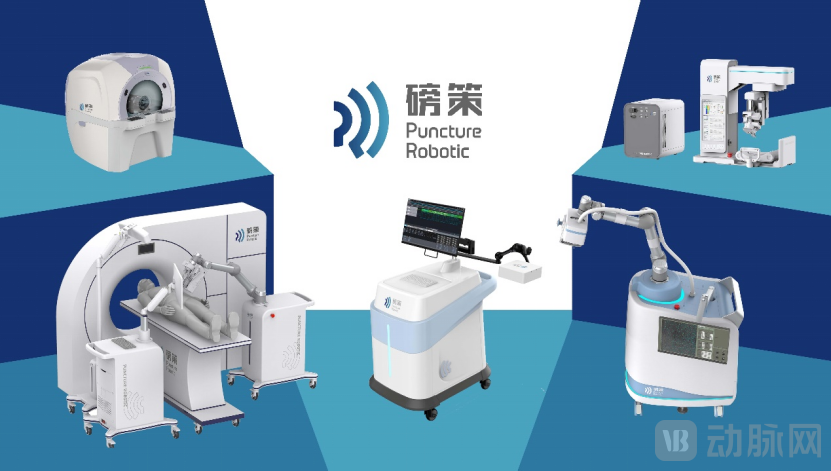
PangCe Medical: Pioneering Real-Time Image-Guided Navigation for Soft Tissue Interventional Puncture Robots

Puncture Robotic
Medical Robot Developer
The fever for surgical robots has been spreading like wildfire for years. Previously, the da Vinci Surgical System dominated the global market as the sole major player. Today, however, the surgical robotics sector is flourishing comprehensively. Global medical device giants are continuously increasing their investments in this field, with numerous surgical robotics companies having secured multiple rounds of financing and initiated initial public offerings (IPOs). Notably, MicroPort MedBot’s market capitalization exceeded RMB 40 billion on its first day of listing. Recently, Quantum Surgical, founded by Bertin Nahum, the “father” of the ROSA surgical robot, announced that the internationally renowned Gustave Roussy Cancer Center has become the first hospital worldwide to offer minimally invasive oncological procedures using the Epione robotic system.PROCEPTBioRobotics completed an $85 million financing round in late 2021, and its robotic system for prostate surgery received FDA approval, revolutionizing the surgical treatment of benign prostatic hyperplasia (BPH). Meanwhile, EDDA Technology, a developer of percutaneous navigational surgical robots, has filed a prospectus for an initial public offering in Hong Kong. These developments indicate that the Da Vinci Surgical System’s long-standing monopoly is being challenged by a growing number of specialized surgical robots.
New industry trends will give rise to more specialized surgical robots, disrupting traditional surgical treatment methods. These emerging trends will reshape the industry landscape. As the development of surgical robots in China is still in its early stages, it is expected that more innovative players will enter the market in the future.
Numerous domestic enterprises are poised for growth, with Puncture Robotic being one of them. Founded in 2019, Puncture Robotic secured angel-round financing from Legend Capital and GSR Ventures in early 2021. With multiple product pipelines spanning urology, hepatobiliary, and medical aesthetics puncture surgical robots, it has emerged as a dark horse not to be overlooked in the surgical robotics sector. On the topic of “How can Puncture Robotic achieve rapid development in the high-barrier, capital-intensive field of surgical robotics?” VCBeat interviewed Zhang Zhaodong, founder of Puncture Robotic.
Founded in2019Although Puncture Robotic is a young company in the surgical robot sector, the Puncture Robotic team has more than10Years of technical accumulation, composed of a team of veterans.
Puncture Robotic is a remarkably young company in the surgical robotics sector; however, having been incubated by HG Intelligent, a leading high-tech listed company in China specializing in advanced intelligent equipment manufacturing and AI robotics, Puncture Robotic actually boasts over a decade of accumulated expertise in robotics technology. In 2018, the Central Research Institute of HG Intelligent initiated the design and development of medical robots and assembled an elite team,Among them, several core team members have many years of collaborative experience., having obtained over 100 intellectual property rights.
After more than a year of development, the team’s R&D capabilities have been further strengthened, attracting several master’s and doctoral graduates from prestigious universities, including those under the Project 985 and Project 211 initiatives. The team now boasts a substantial pool of interdisciplinary talents with expertise in both medicine and engineering, senior clinical experts, and marketing professionals with extensive channel resources. Zhang Zhaodong, founder of Puncture Robotic, previously served as Dean of the Central Research Institute at HAS Intelligent (000584.SZ), R&D Director for Service Robots at HRG (Harbin Institute of Technology Robot Group), and Head of R&D at the Harbin Institute of Technology (Suzhou) Equipment Research Institute. He brings ten years of accumulated experience in robot technology R&D and product line development management.
The surgical robotics industry as early as the last century80emerged in the United States as early as the , but China’s surgical robots are still in the early stage of market development, with most domestic medical robot R&D teams facingWeaknesses in in-house industrialization experience, limited engineering capabilities, and patent barriers surrounding fine-tuned control and implementation pathwaysQuestion.
Puncture Robotic’s robust R&D capabilities have been forged by its mature research and development system and extensive experience in industrialization. Whether in foundational hardware design and manufacturing or in the precision control of robotics, Puncture Robotic has accumulated profound technical reserves.
Zhang Zhaodong stated, “At the foundational level of robotics, as our team originally specialized in robotics, we possess extensive experience in multimodal sensing and control—such as visual and force perception—as well as in the innovative design and manufacturing of robots.”
Experience in industrial translation has led Puncture Robotic to place greater emphasis on objective needs. Leveraging its accumulated expertise in robotics, the Puncture Robotic R&D team humbly conducted visits and surveys with numerous frontline clinical experts and established medical device R&D enterprises in China, identifying engineering opportunities derived from clinical needs. With its strong foundation in intelligent robotics and a mature scientific research team, Puncture Robotic has also gained recognition from many top-tier hospitals in China.Endorsement by KOLs and industrial collaboration with major medical device manufacturers to mutually empower, synergistically develop, and jointly build an ecosystem that enhances diagnostic and therapeutic capabilities in clinical medicine. Meanwhile, Puncture Robotic also collaborates with the Chinese People'sPLAMore than ten renowned hospitals in China, including the General Hospital, Ruijin Hospital Affiliated to Shanghai Jiao Tong University, Shanghai General Hospital, Shanghai Sixth People's Hospital, Shanghai Ninth People's Hospital, Huashan Hospital Affiliated to Fudan University, Zhongshan Hospital, and the First Affiliated Hospital of Naval Medical University, have collaborated on real-time navigated surgical robots for soft tissue procedures.In early 2021, Puncture Robotic entered into a comprehensive strategic partnership with the Shanghai Institute of Ultrasound in Medicine, the birthplace of medical ultrasound in China, and established a joint medical-engineering laboratory. Later that year, it also forged a strategic cooperation agreement with the Shanghai Innovation Center for High-End Medical Equipment.
When selecting product application directions, Puncture Robotic chose puncture navigation surgical robots.From the perspective of technical approaches, surgical robots are generally categorized into master-slave surgical robots and positioning-based surgical robots.
Master-slave surgical robots perform surgeries under the teleoperation of surgeons, with da Vinci systems as a representative example, which have been widely used in thoracic and abdominal surgeries. Meanwhile, positioning surgical robots, which provide localization and navigation tools for surgeons, have found extensive applications in minimally invasive diagnostic and therapeutic procedures involving thoracic, abdominal, and pelvic punctures, as well as in orthopedic and neurosurgical operations.
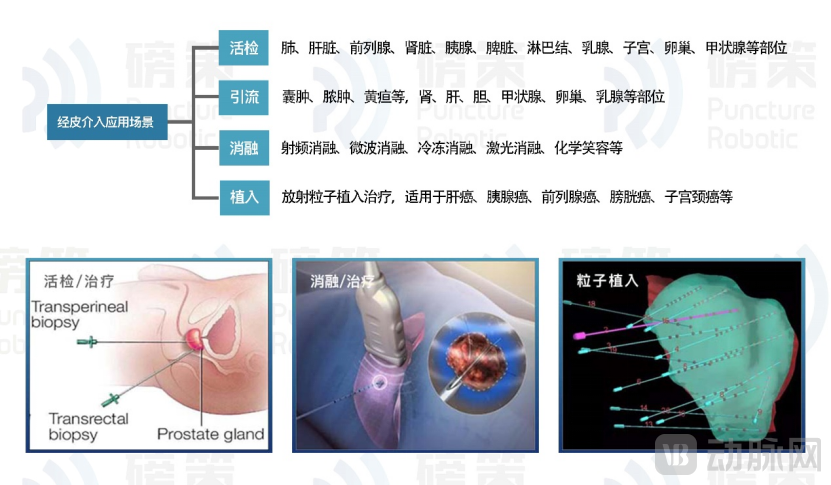
Why Choose the Direction of Puncture Navigation Surgical Robots?Zhang Zhaodong stated, “Major players both domestically and internationally have already begun to lay out their strategies for master-slave surgical robots via natural orifices, with widespread implementation across various application scenarios. Percutaneous interventions hold vast, yet-to-be-explored application potential in clinical areas such as biopsy, drainage, and tumor ablation of various organs and tissues, while many existing clinical pain points can be addressed using”AI+ROBOT+IMAGEtechnologies to address these challenges, which can effectively improve accuracy and diagnostic and treatment efficiency. Therefore, after comprehensive consideration, we have chosen the direction of puncture surgical robots, which is also within the company's/English Name(Puncture Robotic/Puncture)Origin,"Specializing in puncture diagnosis and treatment."
Having chosen this direction, Puncture Robotic established a soft tissue intervention navigation technology platform. In addition to the hardware advantages mentioned above, this platform also possesses unique competitive advantages in terms of algorithms and systems.
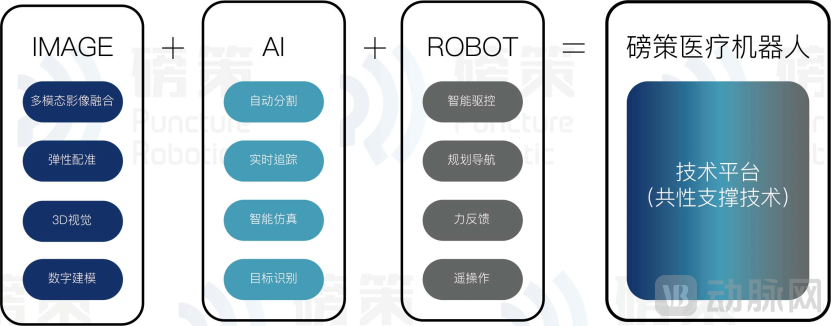
At the algorithmic level, Puncture Robotic has mastered core technologies including real-time tracking and navigation under imaging and visual guidance, robotic motion planning, noise reduction, force sensing, and image segmentation and reconstruction.Notably, while navigation robots in the industry currently rely on preoperative imaging for navigation, Puncture Robotic is the only company in China that addresses soft tissue displacement using intraoperative real-time imaging navigation technology.
The greatest challenge in the development of needle-guided surgical robots lies in inaccurate positioning and target displacement caused by soft tissue slippage. Puncture Robotic’s core technology enables tracking of soft tissue. The underlying core technology is real-time image guidance, primarily utilizing3D vision enables real-time navigation for hand-eye coordination, or ultrasound-guided real-time imaging is combined with preoperative CT or MRI scans to create fused navigation. Among these, ultrasound is currently the most widely owned and clinically used imaging modality both domestically and internationally. However, effective use of ultrasound requires proficient skills in image acquisition and interpretation, involving numerous manual techniques and cognitive expertise. Puncture Robotic has accumulated extensive clinical data on the techniques and imaging patterns of clinicians and medical technologists during ultrasound-guided procedures, thereby empowering robots to establish a core competitive barrier through advanced control algorithms.
At the system level, Puncture Robotic’s surgical robot has established proprietary data acquisition, simulation, and force control platforms. The data acquisition platform leverages the robot to control imaging devices, optimizing control and algorithmic strategies for specific application scenarios. This process ultimately yields specialized imaging acquisition techniques, ensuring the robot’s future capability for image-guided navigation and establishing a data moat for real-time, precise image-guided navigation.
Puncture navigation surgical robots must plan the robot's motion trajectory and various types of needle paths, including planning for the entire ablation zone. The force feedback technology of Puncture Robotic’s surgical system clearly reflects the ultrasound-derived position and orientation relative to the actual pose, accurately identifying and providing feedback on the forces exerted as the biopsy needle traverses different tissues. Through biomechanical simulation-based presets, the surgical robot achieves standardized force control when penetrating diverse tissue types, ensuring accurate targeting of the intended tissue. This force feedback technology can be widely applied across multiple fields—including tumor intervention, anesthesiology, and medical aesthetics—to perform precise punctures. This core technology from Puncture Robotic has been validated in scientific clinical trials involving hundreds of participants.
Meanwhile, Zhang Zhaodong stated that Puncture Robotic adheres to its business philosophy of “achieving independent R&D of core components through underlying technologies and building core intelligent drive-and-control systems,” which has laid a solid foundation for future cost reduction in mass production and standing out in clinical expansion.
After solidifying its technical platform, Puncture Robotic has developed multiple surgical robots for various departments on top of its percutaneous puncture navigation platform. Currently, its core commercial products are focused on the fields of interventional oncology and medical aesthetics.
Puncture Robotic’s core products have completed animal validation and laboratory safety verification in the fields of urology and hepatobiliary surgery, and have entered the type testing phase. In the field of tumor intervention, the application achieves precise positioning within 2 millimeters based on multimodal sensing and real-time image navigation. In the medical aesthetics sector, the application leverages “eye-in-hand” real-time perception technology, with precision far exceeding microsurgical requirements and stably maintained within 0.1 millimeters.
The aforementioned products are expected to be launched within the next three years, helping Puncture Robotic become a significant contributor and ecosystem builder in China’s surgical robot market.In the future, Puncture Robotic will further deepen the development of clinical applications, expand a wider range of clinical diagnostic and therapeutic procedures, and enhance the supporting consumables for both front-end and back-end energy platforms based on its technological infrastructure.
With years of accumulation in the field of intelligent robotics and a mature, steady product development team, Puncture Robotic is undoubtedly a dark horse not to be overlooked in China’s surgical robot sector. Let us wait and see!