

NetRain Secures Tens of Millions in Pre-A Funding to Lead Digital Transformation in China's Health Industry
VCBeat has learned that NetRain, a technology company focused on providing digital transformation services to upstream and downstream enterprises in the big health industry, has recently completed a pre-A round of financing amounting to tens of millions of yuan. The investor was SIG (Susquehanna International Group).
Naitrui stated that it will continue to leverage its role as a connector linking upstream and downstream players in the internet healthcare sector. Following the completion of this round of financing, Naitrui will further increase R&D investment in various products within the internet healthcare field to meet the needs of different types of enterprises. While private hospitals, clinics, and outpatient departments adopt the Naitrus Cloud HIS system, Naitrui will achieve online-offline synergy between the Naitrus Cloud HIS system and the Naitrui Internet Hospital system, thereby continuously refining and optimizing its medical digitalization products.
Naiterui was established in June 2019, and all team members have over ten years of experience in the healthcare and internet industries.Leveraging its accumulated expertise in the internet healthcare sector, the company has facilitated digital transformation for hundreds of enterprises across the broader medical and health industry. Its services span a diverse range of sectors, including physical medical institutions, chain pharmacies, insurance companies, pharmaceutical manufacturers, health checkup centers, biotechnology firms, and internet healthcare platforms. The company offers a portfolio of digital transformation solutions tailored to meet the specific needs of various client types.
In the more than two years since its establishment, Knightree has completed two rounds of financing.In addition to this round of financing, it also secured a multi-million RMB angel investment from industry chain partners in 2020.In the field of enterprise digital transformation services, Naiterui has undoubtedly garnered attention and recognition from the capital market. The sustained investment and confidence shown by investors further underscore the development potential of digital transformation within the healthcare industry.
We can perhaps understand why Knightree continues to attract investor favor from perspectives such as its market segment, corporate development, and technological and commercial innovation.
When discussing the market size of the sector in which Naiterui operates, Qu Yi, Founder and CEO of Naiterui, stated that their sector is a relatively cross-disciplinary one.

Qu Yi, Founder and CEO of Natry
“It is not entirely accurate to define NetRain as an internet healthcare company; what NetRain aims to achieve is the genuine integration of industrial resources. We serve as a connector for industry services. Just as our English name, NetRain, suggests, we hope to connect more enterprises through internet technology, with our technologies symbiotically interacting with and empowering businesses like ‘rain.’” Qu Yi pointed out that there is currently no clear definition for companies like NetRain, but precisely because of this, “experiencing the birth of something new is part of the charm of entrepreneurship.”
Although there is no precise estimate of the market size for this sector, some insights can be gleaned from the types of enterprises served by Naterry. Currently, Naterry provides services to a wide range of entities, including pharmaceutical companies, healthcare institutions, health management firms, insurance companies, biotechnology enterprises, and internet healthcare providers. “China currently has nearly 3,000 pharmaceutical manufacturers, 2,000–3,000 pharmaceutical retailers, close to 5,000 health management companies and insurance firms, nearly 20,000 internet healthcare enterprises, and approximately 30,000 public hospitals at secondary level or above as well as various private hospitals…”From the perspective of its target clientele, the market potential is sufficiently vast.
Another piece of corroborating data is that the market size of China’s internet healthcare industry reached RMB 133.688 billion in 2019. In 2020, driven by the pandemic, the market expanded to nearly RMB 200 billion, representing a 46.7% year-on-year growth—the highest rate since 2015.
In fact,Amid the landscape of medical innovation, the industry widely regards digitalization as the main theme for the future development of the health and wellness sector.This is partly attributable to the healthcare industry’s currently low level of digitalization. As companies’ ultimate goal is to achieve growth, digital transformation serves as a key growth driver. Consequently, healthcare enterprises demonstrate strong willingness to advance their digital transformation efforts.
From another perspective,Policies are also driving the digital transformation of enterprises in the big health sector.As a typical policy-driven industry, the healthcare sector has seen continuous policy rollouts that have accelerated the transformation of its overall landscape. The era of high gross margins for pharmaceutical companies has passed, prompting them to seek cost control across all operational links. Digital transformation has proven effective in controlling costs and improving efficiency, further compelling pharmaceutical companies to accelerate their digital transformation efforts.
andThe successful digital transformation of healthcare enterprises is also closely linked to the continuous advancement of policies in the early stages., such as—
The Advancement of the Policy on Physicians' Multi-Site Practice.This initiative enables physician resources on the medical supply side to transcend temporal and spatial constraints, allowing them to serve patients across broader physical and digital spaces.
Implementation of Prescription Circulation and Online Sales of Pharmaceuticals and Medical Devices.Pharmaceutical and medical device products, originally confined to the in-hospital market, are increasingly flowing to out-of-hospital channels and online platforms due to policy support, thereby further expanding patients' choices.
The industry's development and changes are further driving the digital transformation of the entire sector.For example, the emergence and rapid growth of independent third-party testing and inspection institutions, along with the proliferation of imaging centers spun off from hospitals, have further addressed laboratory and diagnostic challenges in the healthcare industry, thereby laying a stronger foundation for the implementation of internet-based healthcare.
As living standards improve, people’s demand for health continues to rise. The growing healthcare needs driven by an aging population may further exacerbate the burden on offline medical services. Digital healthcare can enhance medical efficiency while delivering greater public benefits, enabling patients to access healthcare services without leaving their homes.
Digitalization has significantly reduced social transaction costs, improved the efficiency of optimized resource allocation, and driven the rapid development of social productivity. The Chinese government has also elevated the digital economy to a position of strategic national importance, proposing the deep integration of digital technologies—such as the internet, big data, and artificial intelligence—with the real economy to foster the growth of the digital economy and build a Digital China.Against this broader backdrop, the outbreak in early 2020 accelerated the integration of digitalization with the health industry, demonstrating significant efficacy and fostering robust growth in the digital healthcare sector.
A growing number of visionaries recognize that digitalization will bring transformative changes to the entire industry, even reshaping its overall ecosystem. In response, companies dedicated to providing digital transformation services for the industry have emerged. Knightrei is one such company.
Currently,Naiterui's business composition and revenue sources are mainly derived from two aspects.
First, it helps healthcare companies achieve digital transformation by providing new digital infrastructure.For example, it assists enterprises in establishing internet hospitals and related system platform services—such as providing solutions for internet hospitals, medical research platforms, online traditional Chinese medicine (TCM) diagnosis and treatment, physician education, and prescription circulation platforms. Digital new infrastructure accounts for 60% of its total revenue.
Second, value-added services.Including diversified SaaS cluster services such as rational drug use, OCR prescription recognition, physician training and education, intelligent auxiliary diagnosis, medical literature databases, drug databases, nutrition databases, and Knightus Cloud HIS system services, which primarily provide operational support tools to hospitals and enterprises through a subscription model. This segment accounts for approximately 20% of Knightree’s revenue.
Qu Yi emphasized and pointed out,In the future, its development focus will be on the "industry middle platform," leveraging its self-developed middle-platform system to achieve deeper-level connectivity.This strategic path was chosen as a result of Netray’s integration of customer demands during its business operations. The company found that enterprise clients often require supplementary medical resources in their daily operations. For instance, launching an internet-based specialized hospital typically involves multi-dimensional services across pre-diagnosis, intra-diagnosis, and post-diagnosis stages, necessitating the integration of resources from various stakeholders, including testing facilities, physical examination centers, pharmaceutical companies, and insurance providers. In the process of expanding its business, Netray has accumulated substantial medical resources, which has revealed new opportunities. Currently, its “Industry Middle-Platform” services account for 20% of its revenue, a figure expected to continue growing in the future.
Capital’s favor toward Nightree may not stem solely from the fundamentals of its business development, but rather from a broader recognition of competitive dynamics within the sector, team resources, and other factors.
In terms of track, Naitrui has targeted the digital transformation of healthcare enterprises and taken a pioneering position in this sector. In this highly promising field, Naitrui has already delivered comprehensive solutions, including internet hospital system development, digital operations, and one-stop services for obtaining internet hospital licenses. As an emerging business model, Naitrui serves as a connector within the industry chain, and its industrial value is likely to attract greater attention from investors.
In terms of the teamMore than 20 core members of the Naiterui team have maintained long-standing relationships with Qu Yi for over a decade. It is this very team that has navigated the transitions from pharmaceutical e-commerce to mobile health and then to internet healthcare, witnessing the overall development of the internet healthcare sector. In his introduction, he noted that few teams have managed to remain intact as a cohesive unit to this extent. The familiarity among team members has also laid a solid foundation for Naiterui’s subsequent growth. Furthermore, Qu Yi himself previously served as CTO at other companies for many years, bringing extensive expertise in the technology field.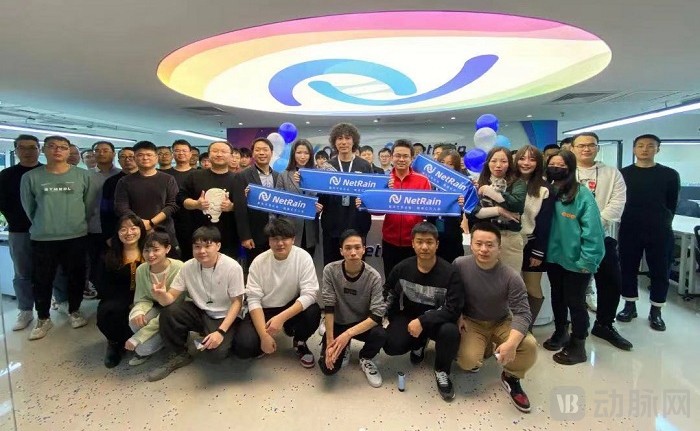
Currently, Netra has a team of nearly 100 employees, distributed across Beijing, Guangzhou, Tianjin, and Chengdu, with R&D personnel accounting for more than 80% of the total.Another distinctive feature of this team is that the majority of its sales force, which extends to Netray, also consists of former programmers who transitioned from technical roles.This means that Natrai has a sales team that is “both technically proficient and business-savvy.”
Founded in the second half of 2019 and then hit by the surge of the pandemic in 2020, Netray has certainly faced its share of tough moments. Yet, as a company approaching its third anniversary, it has already served more than one hundred enterprise clients—a feat that may seem somewhat remarkable. In Qu Yi’s view, this achievement is largely attributable to the team’s accumulated technical expertise over the years.As a “technology-driven company,” Naiterui did not wait for substantial market demand to emerge before developing its products; instead, it proactively cultivated and refined its offerings in the early stages to pioneer and secure corresponding business opportunities.
In its early days, Naiterui relied on the funds Qu Yi had accumulated from his previous work to “burn cash.” Despite having virtually no business operations, the company managed to survive for a full year. Remarkably, it experienced almost no staff turnover, maintaining strong core cohesion. When the pandemic struck in 2020, Naiterui pro bono assisted a Tier-II Grade-A hospital in Jiangsu Province in deploying systems to support free clinic services. This experience helped the team recognize the value and significance of their work. Driven by favorable policies promoting internet-based healthcare and growing demand from medical enterprises, Naiterui’s long-refined systems soon found their place in the market. The company achieved rapid business growth, secured angel-round financing in 2020, and quickly expanded its market presence.
Unlike practitioners in other industries, Netrai initially targeted the national market to help pharmaceutical companies establish internet hospitals and manage their system operations.The advantage of this choice is that when other local industry players are constrained by the pandemic, Netrai can help customers rapidly advance their business layout in other regions. For example, when a client in Tianjin sought to establish an internet hospital amid tightening epidemic control measures in the city, Netrai facilitated its rapid deployment in Chengdu. Qu Yi stated that with continuous system refinement and an expanding customer base, the company’s product pricing will become more affordable in the future—offering even more pronounced price advantages alongside enhanced functionality.
Continuous investment in technology and deep industry insights have driven Natrui’s forward momentum, shaping today’s Natrui into an organization that “understands technology, understands business, and understands healthcare.”
In 2021, VCBeat also achieved new milestones and breakthroughs.
For instance, Neture has assisted clients in securing the first local internet hospital licenses in multiple regions, including Chengdu’s Jinniu District, Dongguan and Foshan in Guangdong Province, Shijiazhuang in Hebei Province, and Nanyang in Henan Province. This demonstrates Neture’s familiarity with policies governing internet hospital development and its deep understanding of the digital healthcare market.
For another example, Netrie launched the Netrius Cloud HIS system last December and signed an ecological cooperation agreement with Tencent. This, to some extent, corroborates Netrie’s R&D capabilities and its ability to integrate its industrial chain.
In terms of client contract signing and collaboration,Naiterui has further garnered favor from a series of leading industry enterprises, including Huadong Medicine, Kunming Pharmaceutical Group, Yifeng Pharmacy, Zhang Zhongjing Pharmacy, Shineway Pharmaceutical, Xinhua Pharmaceutical, Meinian Onehealth Healthcare, and Boohee Health.
In addition to helping companies obtain licenses,Naitrui goes the extra mile in operations to help enterprises enhance the experience of their clients and end users.Qu Yi emphasized that, in addition to providing one-stop solutions for internet hospitals, helping clients match the medical and technical resources they need during operations is a key advantage of Natray and a strategic focus for future development.
Regarding investment in Knight Therapeutics,Yan Qinglong, Partner at SIG Chinastating: “There is still significant room for improvement in the digitalization of China’s health industry. By providing a one-stop solution that covers everything from the establishment of internet hospitals to their informatization and digitalized operations, Knightree plays a crucial entry-point role and possesses enormous platform potential. Qu Yi is a serial entrepreneur with strong team leadership capabilities, and the Knightree team comprises a highly execution-driven entrepreneurial workforce. As an early investor in the company, we have witnessed Knightree’s journey from inception to its current state, growing stronger despite numerous challenges and setbacks. The company has achieved rapid development to date, with its platform aggregation effect becoming increasingly prominent. Therefore, we are optimistic about Knightree’s future prospects.”
Following the completion of this round of financing, Naiterui has grown even more confident in its future plans. Qu Yi stated that Naiterui will continue to update and iterate its technology to ensure the system remains the most professional and feature-complete, thereby serving as many enterprises as possible. Furthermore, while further reducing corporate costs, the company hopes to increase its visibility among more businesses and leverage its “Industrial Middle Platform” to aggregate resources within the healthcare industry, thus further stimulating the entire industrial chain and promoting the healthy and sustainable development of the healthcare sector.
Meanwhile, Netray will also achieve its own growth while supporting the digital transformation of enterprises in the healthcare industry.
About SIG (Susquehanna International Group)
SIG is a US-headquartered, globally leading quantitative trading financial firm. With its unique innovative and rigorous trading philosophy and technology, SIG is a global leader and innovator in high-performance, low-latency trading. Over the past 30 years, SIG has invested in markets worldwide, earning an international reputation particularly in the pricing and trading of financial derivatives. The company employs more than 2,500 people globally. Since 2005, SIG has been investing its own capital in innovative companies in China. For over 15 years, it has focused on sectors such as China’s internet and consumer industries, having invested in more than 350 companies to date, with total investments exceeding USD 3.5 billion.