

Comprehensive Self-Assessment and Targeted Improvements Essential for Maintaining Leadership in the mRNA Field: A Prospectus from Stemirna Therapeutics
The COVID-19 pandemic has ravaged the globe for over two years, with the virus continuously evolving and mutating, leading to a significant increase in transmissibility. In the face of the Omicron variant sweeping across the world, Zhang Wenhong, Director of the National Center for Infectious Diseases and Head of the Department of Infectious Diseases at Huashan Hospital Affiliated to Fudan University, stated that countries and regions need robust immune barriers and adequate medical resources to withstand the threats posed by the Omicron variant and other mutations.
InChina: mRNA Vaccine Research Started Relatively Late.Since the outbreak of the COVID-19 pandemic, the government has laid out five technological routes, with mRNA vaccines being one of them., national policy support and investment have facilitated the rapid development of domestic mRNA vaccines. Vaccines and novel therapies developed based on mRNA technology represent one of the key frontiers in current biomedical advancement. Since the onset of the pandemic, enthusiasm for the research and development of COVID-19 mRNA vaccines has remained undiminished. A number of highly competitive enterprises, such as Stemirna Therapeutics and Abogen Biosciences, have emerged, attracting widespread attention. Currently, Chinese companies represented by Stemirna Therapeutics and Abogen Biosciences are actively conducting clinical studies on novel coronavirus mRNA vaccines.

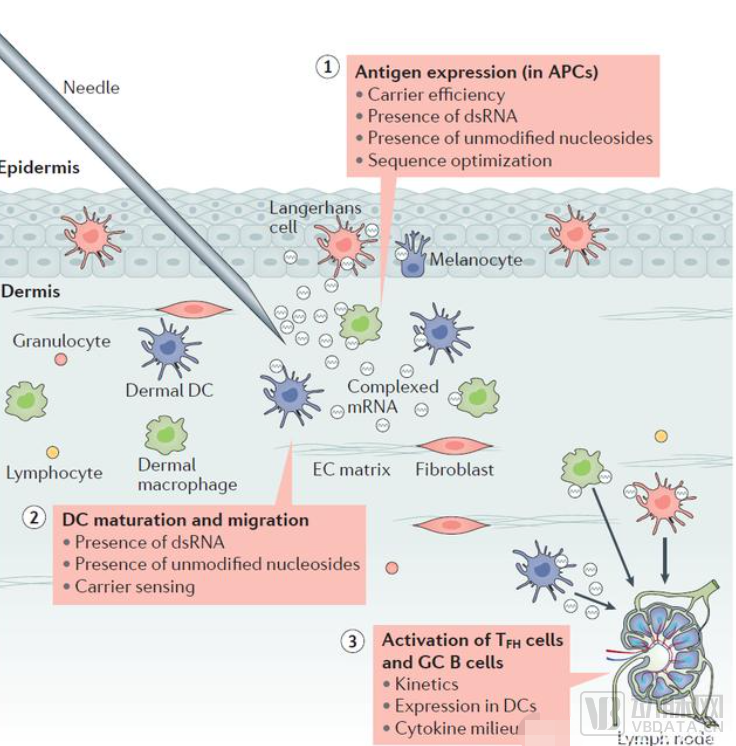
Messenger ribonucleic acid (mRNA) is a type of single-stranded ribonucleic acid transcribed from one strand of DNA as a template, which carries genetic information and directs protein synthesis. It plays a pivotal role in the transmission of genetic information and the regulation of physiological activities.mRNA vaccines are designed based on the primary biological functions of physiological mRNA. They deliver synthetic mRNA molecules into cells using technologies such as lipid nanoparticles, prompting the cells to produce specific proteins typically generated by pathogens or cancer cells. This stimulates the body to mount an adaptive immune response, thereby enabling the recognition and destruction of the corresponding pathogens or cancer cells.
As a platform technology,mRNA has a wide range of applications and is currently primarily used for the development of preventive vaccines, therapeutic vaccines, or drugs.mRNA can be used to encode various proteins, with applications in tumor therapy, rare disease treatment, gene editing, protein replacement therapy, infectious disease prevention, and immunotherapy. Currently, there are over 150 mRNA vaccine and drug pipelines worldwide, primarily targeting infectious diseases, oncology, protein replacement, and gene therapy; most of these pipelines are currently in the early stages or clinical trials.
Globally,BioNTechandModernaThe company inInitiate the R&D of mRNA vaccines at the earliest opportunity. Both companies employ a vaccine design in which lipid nanoparticles encapsulate mRNA encoding the SARS-CoV-2 spike protein. Upon entry into human cells, the delivered exogenous mRNA directs the synthesis of abundant viral proteins, thereby inducing the immune system to recognize these proteins and generate immunity against SARS-CoV-2 to resist viral infection.
On December 2, 2020, the BNT162b2 mRNA vaccine against the novel coronavirus, jointly developed by Pfizer and BioNTech, received emergency use authorization in the United Kingdom, becoming the first COVID-19 vaccine to be authorized for use globally—a milestone achievement. On December 11, BNT162b2 was granted Emergency Use Authorization (EUA) by the U.S. Food and Drug Administration (FDA). On December 18, 2020, Moderna’s vaccine also received EUA approval from the U.S. FDA. Recently, Albert Bourla, CEO of Pfizer, publicly stated that the company’s variant-specific vaccine targeting the Omicron strain would be ready by March this year.
Stemirna (Shanghai) Biotechnology Co., Ltd.(hereinafter referred to as “Stemirna”) was established in May 2016,is one of the first platform-based enterprises in China to engage in the R&D and production of mRNA drugs.In June 2021, Stemirna Therapeutics completed a new round of financing to accelerate the clinical research of its COVID-19 vaccine, construct GMP-compliant production facilities, and expand its R&D pipeline. Suzhou Abogen Biosciences Co., Ltd. (hereinafter referred to as “Abogen Biosciences”) was established in January 2019. Meanwhile, other Chinese companies involved in mRNA vaccine development include Liverna Therapeutics, Surexcel Bio, BlueJay Biotech, Regal Bio, Houchun Nano, and Meinuohengkang.
By the end of 2020, two novel coronavirus mRNA vaccines (mRNA-1273 and BNT162b2) had received Emergency Use Authorization globally. Phase III clinical trial results demonstrated that their efficacy in preventing symptomatic COVID-19 exceeded 94%. The two vaccines differ in immunization dosage, storage conditions, and target populations. Compared with the 100-μg dose of mRNA-1273, the 30-μg dose of BNT162b2 mRNA vaccine is associated with fewer side effects. The Pfizer-BioNTech vaccine showed 90% and 75% efficacy against infection with the B.1.1.7 and B.1.351 variants, respectively, starting 14 days after completion of the vaccination series; it was 100% effective in preventing severe, critical, or fatal disease.
Currently approved mRNA vaccines effectively protect against infection by classical strains, but the emergence of multiple SARS-CoV-2 variants has raised concerns about increased transmissibility and the potential for these mutant strains to evade immunity from natural infection or vaccination. Compared with the original SARS-CoV-2 strain,The Delta variant exhibits a 60% increase in transmissibility and a 45% enhancement in immune escape capability.Some research data indicate that mRNA vaccines remain highly effective against the Delta variant. A report from Public Health England (PHE) shows that completing the two-dose regimen of the BNT162b2 vaccine yields an efficacy of 88% in preventing symptomatic infection with the Delta variant and 95% in preventing hospitalization. Current preliminary study results show that,Regarding the Omicron variant, which has drawn global attention, the neutralizing antibody titers after two doses of BNT162b2 showed a 25-fold reduction in neutralizing potency. However, following a third booster dose, the neutralizing antibody titers against the Omicron variant returned to initial levels, providing effective protection. This demonstrates that mRNA vaccines have significant advantages in responding to variants.
In fact, as early as July–August 2020, Stemirna Therapeutics clearly recognized that the most advanced antigen design internationally adopted by Moderna and Pfizer—namely, the prefusion P2 technology—was key to eliciting highly potent antibodies with mRNA vaccines. Consequently, the company took the initiative to develop an iterative vaccine candidate that not only incorporated the P2 technology but also introduced Novavax’s fusion mutations, thereby becoming one of the most advanced designs worldwide.
Meanwhile, Stemirna Therapeutics recognized that viral mutations were inevitable; therefore, it designed vaccines targeting variant strains based on the then-prevalent UK strain (D614G).Although SARS-CoV-2 has since undergone multiple mutations, including Delta and Omicron, the D614G mutation remains present in all variants. This is why Stemirna’s iteratively updated vaccines are effective against the Delta and Omicron variants.
Amid the raging pandemic, research on China’s mRNA COVID-19 vaccines is a race against time. In the view of Li Hangwen, Co-founder and Chairman of Stemirna Therapeutics, while seizing the first-mover advantage is important, the core philosophy for maintaining leadership in the mRNA arena, achieving sustainable development, and ultimately reaching expected goals lies in comprehensively assessing one’s strengths and weaknesses to implement targeted improvements and refinements.
In the race to develop mRNA-based COVID-19 vaccines, Chinese companies still have opportunities to accelerate product development, as no mature products from Europe or the United States have been launched in these fields.Accelerate the construction of production capacity to establish genuine industrial-scale manufacturing capabilities,only then can the issues of domestic supply chains be truly resolved; meanwhile, patent-related efforts should be strengthened to effectively address patent challenges.Li Hangwen believes that in the post-pandemic era, patent requirements in Europe and the United States will inevitably become more stringent, necessitating that Chinese enterprises strengthen R&D efforts focused on genuine, independent innovation patents.
As an innovative therapeutic modality, mRNA offers certain advantages that traditional drug classes lack; meanwhile, the growing maturity of personalized vaccine technology has made mRNA drugs highly sought-after. Li Hangwen, Chairman of an innovative enterprise built on an mRNA technology platform, believes thatmRNA is currently being closely integrated with vaccine technology, nanodelivery, immunotherapy, and gene therapy, offering new approaches and insights for addressing infectious diseases, cancer, and genetic disorders in humans.
Li Hangwen explained in detail: First,High Safety Profile of mRNA Vaccines,It is non-infectious.、Characteristics such as non-integration, mRNA does not need to enter the nucleus of target cells to be translated into proteins in the cytoplasm and exert its effects; therefore, there is no potential risk of host infection or mutagenic risk due to integration into the host cell genome. Secondly, mRNA vaccines are highly effective, not only can theyInduction of Humoral Immunity in the HostAcceptableInducing cellular immunity,while avoiding the potential consequences of persistent antigen expressionT Cell Exhaustion; Third, mRNA vaccines are easy to produce,It offers the potential for rapid production, low cost, and swift scalability.
Given the unique advantages of mRNA vaccines in the prevention and control of the COVID-19 pandemic, the research, development, and industrialization of mRNA technology are poised to enter a phase of rapid emergence, with an accelerating pace of growth. Stemirna Therapeutics is a platform-based, technology-driven enterprise specializing in mRNA; its COVID-19 mRNA vaccine represents just one component of its extensive R&D pipeline. Regarding the future prospects of mRNA therapeutics, the decision-making leadership at Stemirna Therapeutics maintains a clear and measured perspective:mRNA technology is an emerging innovation with significant promise for drug development. It holds the potential to enable a comprehensive range of therapeutic approaches, such as replacement therapy and engineered CAR-T cell therapy. It is foreseeable that a substantial proportion of future pharmaceuticals will be mRNA-based drugs.
Li Hangwen stated that governments and enterprises in Europe, the United States, and other countries have already invested heavily in mRNA technology research and continue to increase their funding. In the future, more Chinese R&D companies are likely to enter the mRNA vaccine sector.mRNA technology R&D will not be limited to the field of infectious diseases, but will also rapidly advance in areas such as cancer vaccines, protein replacement therapies, and treatments for rare diseases.
“Delivery technology is the core barrier in the mRNA industry. Continuous efforts are still needed to precisely deliver in vitro transcribed mRNA to specific types of cells, such as through targeted delivery and inhalation administration,” pointed out Li Hangwen. It is understood that European and American companies generally possess comprehensive patent portfolios for delivery systems and are also investing significant human and material resources into developing new patents. Apart from mRNA-based candidate factor expression technology, based onmRNA Gene Editing Is Gaining Increasing Attention in Scientific Research。
In fact, infectious disease vaccines have become the primary focus and pillar products for biopharmaceutical companies. Meanwhile, these companies are vigorously developing oncology products, antibody-based therapeutics, gene therapy products, and other related offerings. Internationally, mRNA production capacity has reached scales ranging from hundreds of grams to kilograms, with continuous automated manufacturing emerging as a key trend. Nanoparticle formulation technologies are increasingly adopting novel processes, while upstream and downstream supply chains are trending toward clustering and integration. Li Hangwen believes that for Chinese enterprises, scalable manufacturing processes remain a bottleneck; the costs of raw materials and consumables remain exceedingly high, and securing adequate raw material supplies poses another significant challenge to achieving scale.
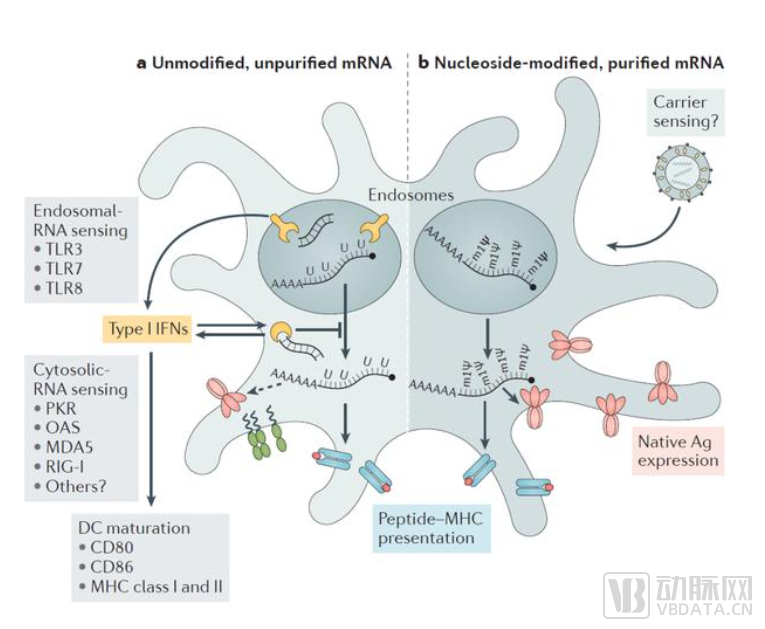
During the design and preparation of mRNA vaccines, techniques such as nucleoside modification can significantly inhibit the immune recognition of exogenous mRNA by the host, thereby reducing toxic side effects and enhancing mRNA expression efficiency. Furthermore,The purity of in vitro-synthesized mRNA is critical, particularly because double-stranded RNA (dsRNA) impurities that may arise during mRNA synthesis can be recognized by pattern recognition receptors (PRRs), thereby triggering unnecessary non-specific immune responses and inhibiting the production of candidate immunogens.Li Hangwen stated bluntly that Chinese companies generally remain at a stage of following international trends in reducing the side effects of modified nucleosides, lacking independently developed intellectual property rights for nucleoside modification methods and patent protection. Meanwhile, there is still a lack of large-scale, systematic, and comprehensive comparative studies on the relationship between the clinical efficacy, side effects, and prognostic responses of mRNA therapies.
In Li Hangwen’s view, although the aforementioned challenges may hinder the future development of mRNA therapies in China, they will also serve as new directions for effort and R&D among Chinese biopharmaceutical companies.