

Tsinghua Industrial Research Institute President Jin Qinxian Advocates Applying Breakthrough Engineering Technologies to Areas of Greatest Clinical Need
Recently, at the “Welcome Spring Scientist Forum” hosted by the Global Health Industry Innovation Center and jointly guided by the Beijing Municipal Science & Technology Commission, the Administrative Committee of Zhongguancun Science Park, and the Beijing Tsinghua Industrial Development Institute,Jin Qinxian, Deputy Secretary-General of Tsinghua University and Dean of the Beijing Tsinghua Industrial R&D InstituteRegarding"Key Elements and Processes in the Translation of Medical Research"Delivered an in-depth report.
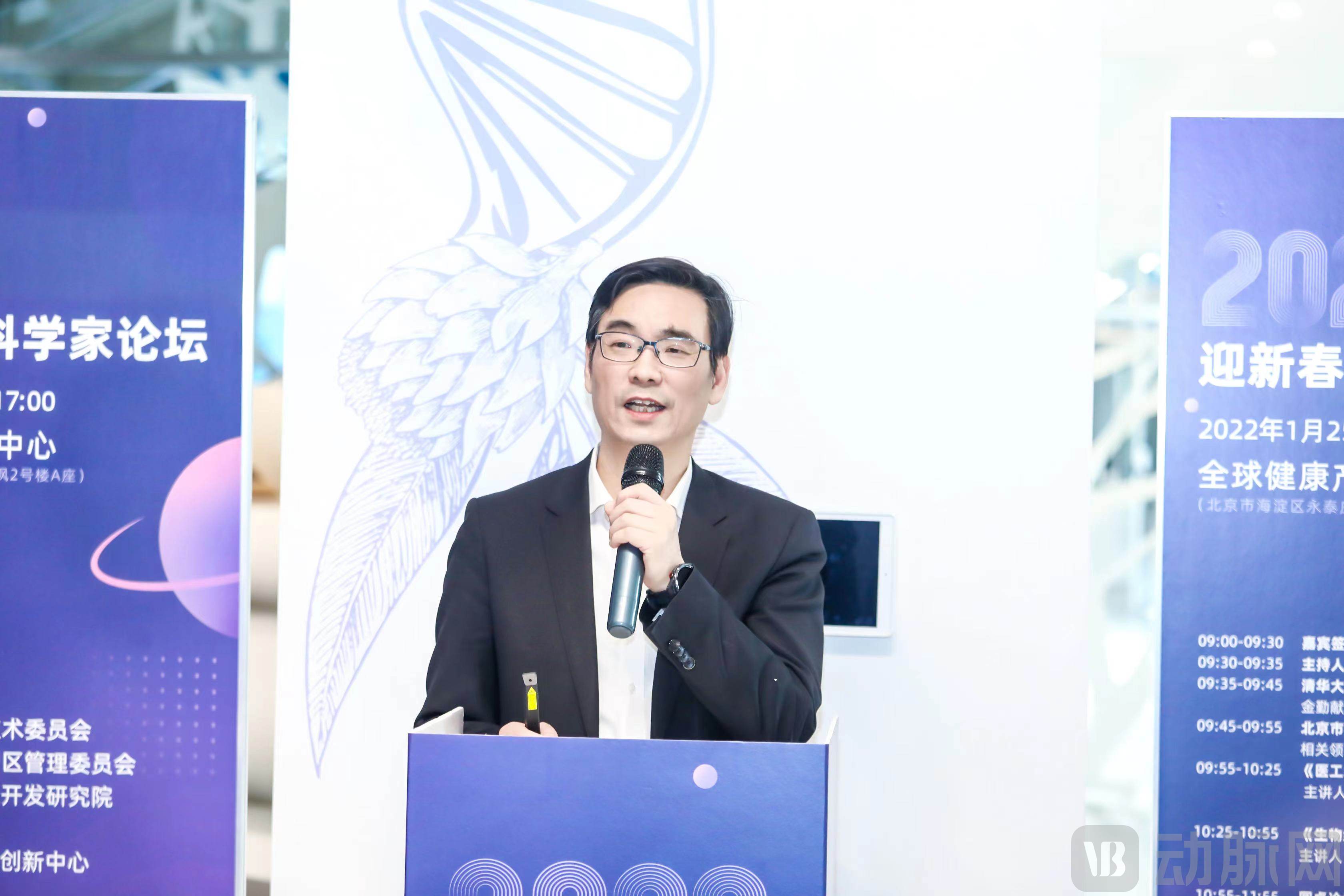
The following is the verbatim transcript of President Jin Qinxian’s report, presented to facilitate reader comprehension,VCBeat Orange BureauEdited the text without altering its original meaning:
Innovation and Commercialization “Approach” of the Institute for Industrial Technology Innovation, Tsinghua University
Tsinghua Industrial Research Institute, a public institution jointly initiated by the Beijing Municipal People’s Government and Tsinghua University, is tasked with facilitating the commercialization and local implementation of Tsinghua University’s scientific and technological achievements in Beijing. Accordingly, the Institute has consistently focused its innovation and technology transfer efforts on three core dimensions.
First, we must continuously monitor China’s innovation advantages. These advantages are primarily reflected in two aspects: first, the vast market size and high level of openness; second, strong government policy support. However, challenges also exist, such as insufficient maturity of the business environment, a lack of innovation-oriented education, and a weak culture of innovation. Particularly in the fields of medical devices and innovative drugs, the approval process often becomes a significant barrier to innovation and commercialization.
The second initiative is to promote the integration of new technologies with industry. Taking artificial intelligence as an example, this emerging technology has already seen some application in the healthcare sector; however, its current use is predominantly concentrated in medical imaging, with insufficient integration and utilization in other areas. Therefore, the Industrial Technology Research Institute of Tsinghua University is gradually transitioning from a purely investment-driven development model to one that combines industrial investment with acceleration and incubation. By collaborating with leading enterprises in the field, the Institute aims to drive deeper integration between new technologies and industry.
Third, acceleration and incubation. In fact, innovation capacity is now highly focused, particularly in niche sectors; positioning oneself at the center of innovation can readily foster competitive advantage. Therefore, over the years, the Institute of Industrial Technology of Tsinghua University has been committed to building a robust ecosystem for technology transfer and innovation, with its efforts primarily directed toward establishing innovation centers, setting up technology transfer and commercialization bases, and launching innovation funds.
Furthermore, in terms of niche sector selection, the Tsinghua Industrial Research Institute has identified three key directions: pharmaceuticals and healthcare, new energy, and intelligent technologies. Particularly in the pharmaceutical and healthcare sector, we see greater market potential. With the establishment of the STAR Market (Science and Technology Innovation Board), policies have become more flexible and tax incentives have been significantly enhanced, providing innovative companies with broader growth opportunities than ever before.
Future Innovations and Future Models
In the past year or two, the era of “reading, recognizing, controlling, and writing” life information is rapidly maturing.
First, in terms of “reading,” the cost of nucleic acid sequencing has driven down the cost of genetic information testing at a rate surpassing Moore’s Law, enabling widespread application scenarios. Second, in terms of “recognizing,” advances in structural biology technologies have extended biological recognition to the molecular level, allowing for low-cost “imaging observation.” Third, in terms of “controlling,” progress in microfluidics has advanced the processing and control of biological systems to the micro- and nanoscale. Finally, in terms of “writing,” the emergence of CRISPR technology has rapidly enhanced gene-editing capabilities, with its role as a gene-editing tool driving industry advancement.
Breakthroughs in these core technologies have driven rapid development in the life sciences sector. Taking new drug R&D as an example, biotechnology has made novel therapeutics a key focus of industrial development, with projected growth rates reaching 30%–50%. In particular, gene therapy and cell therapy, although still in their nascent stages, are experiencing very rapid growth and represent highly promising niche segments for the future.
In terms of engineering technology, the primary driver is the development of the medical device industry. The strong synergy between engineering technology and the medical device sector is largely attributable to the industry’s higher profit margins compared to other sectors, as well as its stringent R&D requirements, which have made it feasible to apply technologies that were previously limited to small-scale implementations.
This is precisely why there is a current surge in med-tech convergence: to apply key breakthrough engineering technologies where they hold the greatest value within the life sciences sector. Therefore, the next critical step involves two priorities, the first of which is to focus intensively on frontier technological domains—such as drug target research—which are currently drawing significant attention from angel investors.
The second point concerns clinical translational research. Many innovative technologies are currently stalled at the stage of clinical translation, primarily due to extremely limited resources. Within China’s current healthcare system, hospitals remain predominantly focused on clinical care, with a relatively low proportion of efforts dedicated to scientific research. Furthermore, limited resources are preferentially allocated to established technologies, leaving minimal support for innovative ones. Therefore, the clinical setting represents a critical bottleneck that must be overcome.
So, how exactly can we break through? There are two main approaches: the first is “proof of concept + value validation,” which effectively addresses process validation issues rapidly. Throughout the entire innovation journey, speed is the most critical factor; accelerating the pace makes translation to clinical practice relatively easier and increases the success rate.
Second, innovation should drive pharmaceutical R&D from the laboratory to the market by focusing on four dimensions—mechanism, commercialization, clinical development, and platforms—to accurately identify core strengths and facilitate effective interactions among them.
First is mechanism innovation, primarily drawing on the ARPA-H model of DARPA. The first aspect is their topic selection capability, which mainly involves identifying areas where breakthroughs in basic research can be rapidly translated into applications. The second aspect is the full integration of basic biological research with the dynamic commercial sector. The third aspect is that, after integrating with the commercial sector, they identify the initiatives with the highest return on investment following government participation. The fourth aspect is the clear articulation of objectives, reflecting a highly systematic approach.
Of course, another critical element is the project manager, who can effectively support a system that thrives on bold ideas, agile and flexible personnel, transparency, rapid failure, and ultimate success. In essence, this role resembles what we in China refer to as a “strategic scientist,” although our definition may be broader. It involves defining each strategic direction, securing resources, and organizing implementation—tasks that particularly require such specialized professionals.
Next is commercial innovation, which primarily draws on the Flagship model. Flagship essentially brings together a group of world-leading scientists and researchers who have generated excellent ideas in life sciences, clean tech, sustainable agriculture, and renewable energy, and possess the capability to turn these ideas into reality.
It begins with hypothesis generation, followed by proof of concept, company formation, and ultimately, corporate growth. Thus, Flagship actually starts preparing subsequent resources from the hypothesis stage. During this phase, it dedicates significant time to matching the world’s best project resources, including laboratory platforms and more. In essence, it represents a form of proactive innovation.
Next is clinical innovation, which refers to reverse R&D based on clinical data. This process involves eight key nodes: clinical research, molecular biomarkers and multi-omics studies, big data computing, novel drug intervention targets, molecular/antibody/gene therapies for intervention, preclinical studies, clinical trials, and clinical practice.
Furthermore, clinical drug development, particularly in gene and cell therapies, has exhibited new R&D characteristics, such as physician- and patient-driven approaches, interdisciplinary integration of science and engineering, “development-as-manufacturing,” small-batch and multi-batch production, parallel processing, rapid validation and iteration, as well as collaborations between biotech firms and precision service providers.
Finally, there is platform innovation, which primarily involves building an ecosystem that covers the entire service chain. The first step is to establish a CDMO incubation platform with vertical integration across the entire industrial chain, such as the Cell and Gene Therapy Innovation Center. This center is an international innovation ecosystem platform in the field of biomedicine, jointly built by the Industrial Technology Research Institute of Tsinghua University and top-tier international research institutions.
Second, we are building a “Bio-Intelligent Manufacturing” platform, which includes an automated testing platform, a clean logistics GMP platform, an enterprise management system, and a production control system.