

T-MSC Stem Cell Therapy IMS001 Receives CDE Acceptance in China Following U.S. Clinical Trial Initiation
imstem
Developer of Totipotent Stem Cell Therapies
During the Spring Festival of the Year of the Tiger, Zhuhai Hengqin Imstem Biotech Ltd. (hereinafter referred to as “Imstem” or the “Company”) announced good news: its Investigational New Drug (IND) application for T-MSC stem cell therapy (IMS001 Injection), independently developed by the Company, has been formally accepted by the Center for Drug Evaluation (CDE) of the National Medical Products Administration of China, with the acceptance number CXSL2200064.
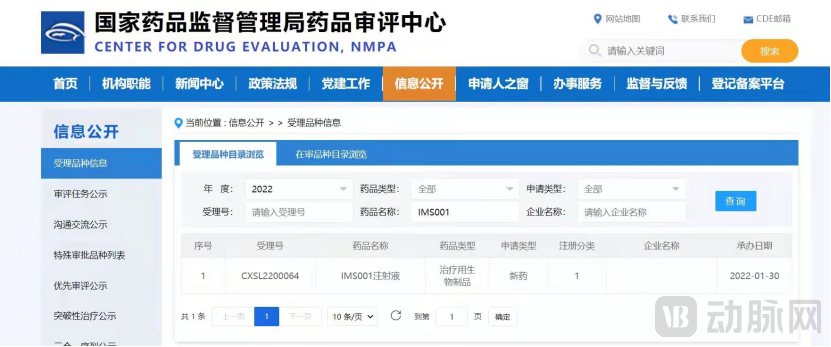
T-MSCs are mesenchymal-like stem cells derived from human embryonic stem cells, with the indicated indication for this application being multiple sclerosis. Leveraging the unique and disruptive technological advantages of T-MSCs, IMS001 Injection, a Class 1 therapeutic biological product, is composed of T-MSCs and clinical-grade formulation buffer. It has the potential to prevent immune-mediated inflammation and central nervous system demyelination, and promote recovery through neuronal repair and/or regeneration, aiming to address the unmet medical needs in multiple sclerosis.
This novel stem cell drug received Investigational New Drug (IND) approval from the U.S. FDA in 2020, making it the world’s first investigational, original mesenchymal-like stem cell therapy derived from human embryonic stem cells (hESCs) administered via intravenous infusion. Phase I/IIa clinical trials were formally launched in the United States in 2021, with multiple subjects having completed dosing. The submission of the Investigational New Drug application for “IMS001 Injection” in China marks both its first simultaneous filing in China and the U.S., and represents the first hESC-derived mesenchymal-like stem cell therapy in China for the treatment of multiple sclerosis, a rare disease.
T-MSC, the primary active ingredient in imstem’s new drug application, is derived from single human embryonic stem cells (hESCs) through trophoblast intermediates using imstem’s proprietary two-step cell differentiation technology. Compared with induced pluripotent stem cells (iPSCs), hESCs have not undergone genetic engineering, offering superior safety and genetic stability. As hESCs are isolated from the blastocyst stage of embryos and established as in vitro cell lines, they can be expanded indefinitely in culture and possess the potential to differentiate into nearly all tissues and organs of the body. Leveraging their capacity for unlimited expansion and differentiation, hESCs enable standardized manufacturing akin to chemical pharmaceuticals, thereby overcoming the limitations of source availability and inconsistent quality associated with traditional adult stem cells. This approach holds significant promise for medical applications.
Men Zengxuan, Founder and Chairman of imstem, stated: “Although multiple sclerosis is a rare disease, every small patient population deserves attention and care. Our Phase I/IIa clinical trial data in the United States have bolstered our confidence in the new drug registration process in China. Whether in China or the United States, we aim to leverage innovative scientific and technological advancements to bring greater benefits to patients and society.”
IMS001 Injection is an allogeneic mesenchymal-like stem cell product derived from a human embryonic stem cell line. Preclinical studies have demonstrated the immunomodulatory and reparative capabilities of IMS001 Injection, as well as its ability to cross the blood-brain barrier. These inherent properties may offer significant advantages in the treatment of neurological disorders, autoimmune diseases, and particularly rare diseases, thereby addressing higher unmet medical needs. Consequently, these characteristics may enable more effective reduction of disease relapse and progressive deterioration in conditions such as multiple sclerosis, thus providing therapeutic benefits.