

Zhuowai Medical: Six Years of Technological Accumulation and Full-Category Layout, Differentiating with Integrated Portable Electronic Laparoscopes
In the endoscopy sector, the predicament faced by domestic manufacturers is hardly a new topic: “Products are concentrated in the mid-to-low-end market, while the high-end market is firmly controlled by imported brands,” “The endoscopy field remains a laggard in domestic substitution,” “It is difficult to bypass the high technical patent barriers erected by industry giants,” and “The industry is fragmented.”
However, at the same time, under policy guidance, the momentum for domestic substitution in the endoscopy field is strong.On the one hand,, facing imported products that hold over 90% of the market share, domestic manufacturers must overcome numerous formidable challenges, ranging from product R&D and technological breakthroughs to market introduction and subsequent expansion of market share. This is inevitably a arduous struggle to"Protracted War"。
On the other hand, with the optimization of the domestic innovation environment, the long journey of “imitation-replacement” for domestic substitution will be impacted by innovative technologiesAccelerationRecently, the market has seen surging interest in innovative products such as 3D endoscopes, capsule endoscopes, single-use endoscopes, and fluorescence endoscopes, with domestic manufacturers leveraging technological innovations to seek opportunities for “overtaking on a bend.”
VCBeat learned that in November 2021,Joymedicare (Shanghai) Medical Electronic Technology Co., Ltd. (hereinafter referred to as “Joymedicare”) received the “first-of-its-kind” evaluation from the Center for Medical Device Evaluation of the National Medical Products Administration for its electronic laparoscope, and subsequently obtained a Class III medical device registration certificate issued by the National Medical Products Administration.。
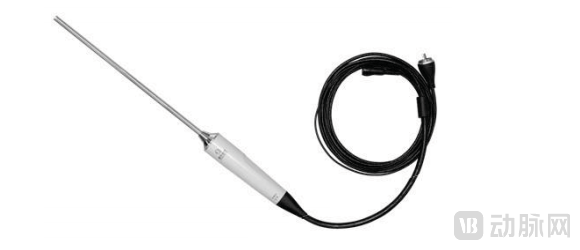
All-in-One Portable Electronic Laparoscope - Product Image Source: joymedicare
Joymedicare is a technology-driven company specializing in minimally invasive imaging, founded in 2015 and currently headquartered in Shanghai Zhangjiang Hi-Tech Park. It is reported that Joymedicare has established a foundational presence in the field of minimally invasive imaging, with its product line expanding to achieve comprehensive coverage across specialized segments including general surgery, urology, gynecology, orthopedics, and thoracic surgery.
Based on this, VCBeat conducted an interview with Mr. Mao Jungang, founder of joymedicare.
According to Frost & Sullivan statistics, the global rigid endoscope market size grew from USD 4.64 billion in 2015 to USD 5.69 billion in 2019, with a CAGR of 5.2%.In 2019, the domestic rigid endoscope market in China was valued at RMB 6.53 billion, and the market size is projected to exceed RMB 10 billion by 2024.
In the field of surgery, minimally invasive procedures, represented by endoscopic surgery, are gradually replacing traditional open surgeries. In 2019, the number of minimally invasive surgical procedures performed in China exceeded ten million, with a compound annual growth rate (CAGR) of 19.5% from 2015 to 2019. Among these, laparoscopes can perform the majority of minimally invasive procedures in general surgery and are the most widely used and frequently employed type of rigid endoscope, accounting for over 30% of the market share.
Joymedicare, incorporating feedback from clinicians and following rigorous market research, has chosen laparoscopy as its entry point.
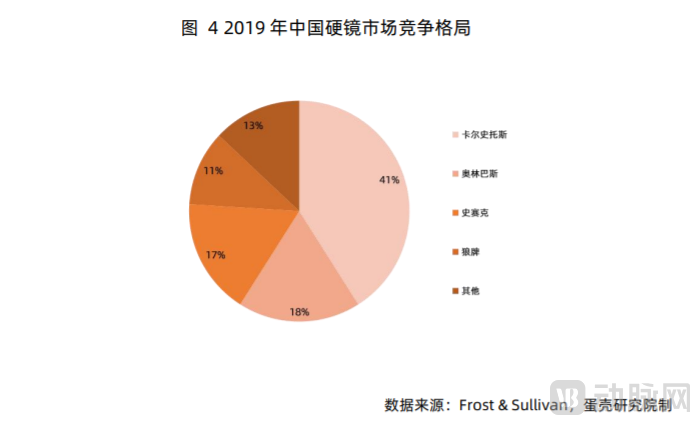
In addition to the rigid endoscope market,MassiveExternal, another direct perception isLow domestic production rate.According to Frost & Sullivan data, imported brands accounted for as high as 90% of China’s rigid endoscope market in 2019. The market is highly concentrated, with market share dominated by European, American, and Japanese companies such as Karl Storz, Stryker, Richard Wolf, and Olympus.
Source: VCBeat
Mao Jungang stated, “The healthcare sector is currently experiencing high levels of interest. Compared to a few years ago, companies are continuously entering the niche market of laparoscopy.”
VCBeat queried the official website of the National Medical Products Administration (NMPA) using the keywords “endoscopic camera system,” “cold light source,” and “endoscopic image processor,” and found that 110, 136, and 66 products, respectively, had been approved. This indicates intensifying competition in the endoscopy market. Based on product characteristics and industry barriers, imported brands still dominate the high-end rigid endoscope market; however, Chinese manufacturers have been increasingly entering this premium segment in recent years, attempting to challenge the dominance of imports through innovative technologies. In the low-end rigid endoscope market, domestic companies hold a small share, and competition has become extremely fierce.
In response, joymedicare's solution is:Technology and R&D platforms must be solidly established to serve as the foundation for product differentiation, enabling a competitive breakthrough in the market.
“In fact, our initial goal was to develop a product with global competitiveness.”
Rigid endoscopy systems primarily consist of the rigid endoscope, camera system, main unit, light source, and insufflator. Since the components of a rigid endoscopy system are relatively independent, most manufacturers on the market assemble their own complete systems by sourcing endoscopes, light sources, and other parts from external suppliers. This approach makes it difficult to ensure product compatibility and overall system performance, which has resulted in most domestic rigid endoscopy manufacturers being concentrated in the mid-to-low-end market. According to reports,The main gaps between domestic and imported brands lie in image quality and endoscope durability.
Joymedicare’s technological expertise in optics and algorithms ensures high imaging quality for its products. Comparative analyses demonstrate that Joymedicare’s laparoscopic systems are nearly on par with imported brands in key parameters, including field of view, angular resolution, full-field flatness, distortion, and effective depth of field. This performance is specifically attributed to its technological advancements in the following areas.
First, in terms of the optical system, Joymedicare is one of the few companies in the Chinese market that independently designs and manufactures large depth-of-field, ultra-high-definition optical lenses.Its Optical Director has previously worked at renowned domestic and international companies such as Mindray and Carestream, accumulating over 10 years of experience in the development of optical medical devices, and has undertaken multiple national R&D special projects. Joymedicare has also established a professional optical cleanroom laboratory for the assembly of endoscope bodies and the high-precision adjustment and packaging of optical lenses.
Secondly, in terms of image processing, Joymedicare has mastered key technologies such as high-throughput signal acquisition and transmission, highly integrated real-time image processing, multi-stage digital enhancement, and multispectral fusion algorithms, achieving real-time output of full HD video.
Third, Active Anti-Fogging Technology Based on Thermal Equilibrium。This technology not only resolves the issue of localized overheating during endoscope use but also achieves active anti-fogging through thermal equilibrium, holding promise for addressing clinical pain points such as intraoperative lens fogging.
Additionally, in terms of product durability,, Joymedicare’s laparoscopic products are on par with imported brands, capable of withstanding up to 500 cycles of use after sterilization. Behind this performance lies Joymedicare’s commitment to ensuring the safety, stability, and reliability of its products. Through extensive development and validation of product materials and packaging technologies, the company has ultimately established its high-precision packaging technology.
Mao Jungang stated, “We spent six years developing and validating the product. The majority of that time was dedicated to verifying its safety and reliability, sterilization, image clarity, and overall image stability.”
Building on the aforementioned technological accumulation and breakthroughs.In December 2021, Joymedicare’s electronic laparoscope obtained its registration certificate, officially commencing commercialization.
This electronic laparoscope not only features a large depth of field with focus-free operation and full HD image quality, but also enables active anti-fogging, thereby saving surgical time. Moreover,As it integrates the light source, video camera, and endoscope body into a single unit, the Center for Medical Device Evaluation of the National Medical Products Administration has comprehensively designated it as the “first of its kind.”
Compared with traditional endoscopy systems that are structurally complex and bulky, this “all-in-one portable electronic laparoscope” integrates the cold light source and main control unit into the handheld component, simplifying the product design. Physicians can perform minimally invasive laparoscopic surgery by simply connecting the laparoscope directly to a monitor.
“Integrated portability” is the key differentiating advantage of Joymedicare’s medical products.After careful consideration, the R&D team selected a highly integrated development direction for the product. For clinicians, while ensuring imaging quality and usage safety, they also desire operational convenience. Overly complex operation methods for medical devices can instead hinder physicians during diagnosis and treatment.
In addition to laparoscopic products, Joymedicare’s product portfolio also includes endoscopic cold light sources, intelligent insufflators, and ultra-high-definition endoscopic camera systems.
Among them, joymedicare'sThe ultra-bright cold light source delivers a maximum output of up to 1800 lumens, with its luminous flux comparable to top-tier international standards., a high color rendering index can more accurately reproduce colors.The insufflator has also reached a world-class level., with a maximum output flow rate of 50 L/min,It can rapidly establish pneumoperitoneum equilibrium and employs a proprietary algorithm to achieve precise control of pressure and flow, allowing for flexible configuration based on the distinct needs of adult and pediatric patients. Reportedly, some of its products have been submitted for registration in succession. In the foreseeable future, joymedicare is poised to enter a “harvest season” for its product portfolio.
Furthermore, we have learned that Joymedicare targets the mid-to-high-end market. This strategic focus remained unwavering throughout its six-year period of “silent” technological accumulation and product development. “Competing on a global scale” is Joymedicare’s next objective, with “integration” serving as the entry point for building its global competitiveness.
Since its inception, joymedicare has successively secured angel and Series A investments from Zhangke Lingyi Fund, and completed a Pre-B financing round invested by KORTEX in mid-2021.
Currently, the company occupies 2,000 square meters of office space and 1,000 square meters of small-batch production workshops, which include a static Class 1,000 cleanroom optical laboratory, electronics laboratory, mechanical laboratory, prototype assembly laboratory, R&D materials warehouse, and image parameter testing room. The company has established a medical quality management system compliant with YY/T 0287 and implemented a Product Lifecycle Management (PLM) system for R&D project management as well as an Enterprise Resource Planning (ERP) system for production management.
Joymedicare is a research-driven innovative enterprise with R&D as its core focus. The company currently has a team of over 40 professionals, integrating expertise from multiple fields including optics, mechanics, electronics, software algorithms, systems engineering, and marketing. To date, the company has filed more than 60 patent applications, among which 2 invention patents have been granted, 11 invention patents have been published, 6 software copyrights have been registered, and 11 utility model patents have been granted.
Looking back at the founding of Joymedicare, three statements stand out as particularly significant.
1. “Why not try it yourself?”
When Mao Jun first conceived the idea of starting a business, he had just turned 40. He previously held product development roles at ZTE, Carestream Health, and Medtronic, among other companies. Influenced by a variety of factors, he felt he had hit a career ceiling; meanwhile, he also perceived the uncertainties inherent in R&D at multinational corporations, where projects could be terminated at any time due to changes in corporate circumstances.
More importantly, he believed that although imported brands had technological barriers, there was still an opportunity to create high-quality products if one dedicated themselves to the work. The idea of starting a business began to take root in his mind, but he hesitated to make a final decision. At this stage of his life, there were many factors to consider. However, his family was straightforward: “Since your products are independently developed, why not give it a try yourselves?”
2: “Good, I am willing.”
The words of his family helped Mao Jun make up his mind, and he then began to assemble his team. He was well aware that"Leave it to the professionals: The founding core team of Joymedicare boasts years of experience at renowned enterprises.", including Chief Engineer Peter Gu, who oversees the technology and product systems; Vice General Manager John Xu, who is in charge of R&D management; Optical Director David D; and Product Director Jesson Z. When Mao Jungang extended invitations to these friends, colleagues, and partners, he quickly received a unanimous response: “Yes,” “I’m in,” and so on.
However, the formation of the core team is not merely based on the depth of personal relationships; rather, the fundamental cohesion stems from the consensus reached among core members during the early stages of the startup.
3. “By doing our best, we can also create world-class products.”
The initial team of joymedicare was established, and this statement also became the company’s mission. More specifically, joymedicare aims to become one of the leading Chinese manufacturers of endoscopes in the process of import substitution, providing high-quality products and services to the market; its longer-term vision is to evolve into an internationally competitive endoscopy company. Over the past six years, Mao Jungang and his team have witnessed these goals gradually coming to fruition.
With the product's approval,We understand that Joymedicare is currently launching a new round of financing.This round of financing will propel joymedicare to expand its team, promote the marketing of approved products, and enrich its product portfolio.