

Saijun Bio's First Stem Cell Injection CG-BM1 Receives IND Approval for Clinical Trial in ARDS

cellgenes
Stem Cell New Drug Developer
December 8, 2021,Guangzhou Cellgenes Biotechnology Co., Ltd.(hereinafter referred to as “cellgenes”) has officially received approval for clinical trials from the Center for Drug Evaluation of the National Medical Products Administration for its independently developed allogeneic human bone marrow mesenchymal stem cell injection, CG-BM1 (acceptance number: CXSL2101334). The approved indication for CG-BM1 in clinical studies is moderate-to-severe acute respiratory distress syndrome (ARDS) in adults caused by infection.
The approval of this Investigational New Drug (IND) application marks the transition of Cellgenes’ stem cell-based novel drug from research and development to clinical trials, representing a significant milestone in Cellgenes’ new drug R&D pipeline.
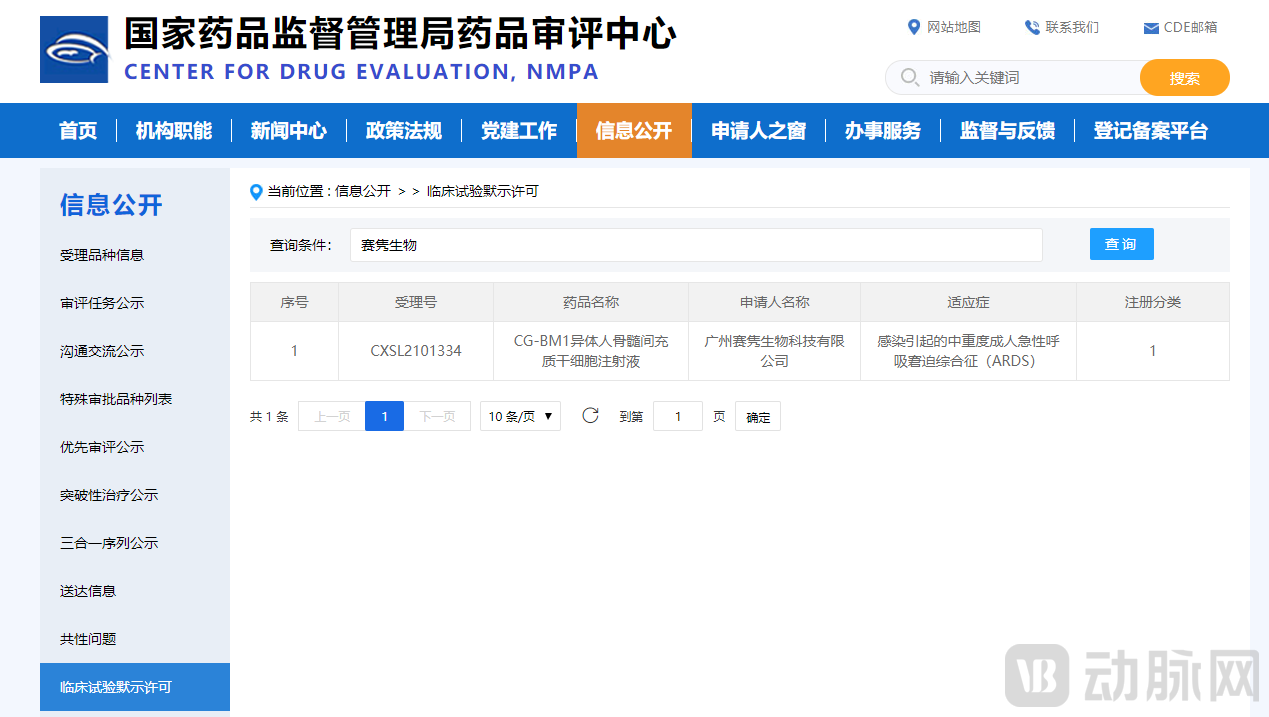
cellgenes’ “CG-BM1 Allogeneic Human Bone Marrow Mesenchymal Stem Cell Injection” Receives Implicit Approval for Clinical Trials
“In the stem cell drug market, there are currently over 20 projects in China that have obtained IND approvals, and we are the second in Guangdong Province.”Dr. Shen Yutian, Co-Founder of CellgenesHe stated, “This is our first IND approval, which holds significant meaning for us. First, it validates that our stem cell platform has been truly established and is effective. Second, by going through the complete application process, we have become familiar with the regulatory submission procedures and accumulated team experience. With this initial success, we can pave the way for the 10th, the 100th, and many more successes in the future.”
Cellgenes, established in March 2016, is aFocusing on the Development and Clinical Translation of Novel Stem Cell Therapeuticsa stem cell technology company. The company has established a novel R&D team integrating industry, academia, research, and clinical practice, comprising more than 20 scientists, and has forged close collaborative relationships with relevant research institutes. It also boasts professional project management personnel and industrialization technical experts.
The company has established a comprehensive technical system encompassing stem cell R&D, pilot-scale testing, production, and quality control. It boasts a fully equipped research and production base, featuring a 3,000-square-meter laboratory platform for clinical translation of stem cells that complies with GMP standards, with an annual production capacity of 3,000 doses of stem cell preparations.
China Has Abundant Stem Cell Technology Achievements, but Lacks a Bridge for Translation
As China’s population ages and lifestyles change in terms of diet and daily routines, the incidence of many major, difficult-to-treat diseases—such as cancer and neurological disorders—is experiencing an explosive rise, for which there are currently no highly effective treatments.
Stem cells are a class of cells with self-renewal and multi-directional differentiation potential, possessing exceptional regenerative and reparative capabilities. Based on their unique biological properties, stem cell technology secretes cytokines with diverse functions within the local microenvironment after implantation, demonstrating distinctive clinical application prospects, particularly in modulating immune and inflammatory responses and promoting cellular and tissue repair.
Dr. Shen stated, “The unique properties of stem cells offer vast potential for innovation. Novel therapeutic approaches represented by stem cell therapy have demonstrated promising application prospects in a variety of refractory diseases. Consequently, the development of stem cell-based products has become a new focal point of competition, with substantial market opportunities.”
Data shows that the potential global market size for stem cell medical applications is projected to reach $361.4 billion in 2024.
Globally, the stem cell sector has witnessed several cross-border mergers and acquisitions. In April 2015, Fujifilm Holdings Corporation acquired Cellular Dynamics International, a stem cell company, in an all-cash deal valued at $307 million. In September 2019, Vertex Pharmaceuticals acquired biotechnology firm Semma Therapeutics for $950 million to develop stem cell-derived human islets as a potential curative therapy for diabetes. In November 2020, Novartis acquired Mesoblast’s mesenchymal stromal cell (MSC) therapy for acute respiratory distress syndrome (ARDS) for $1.35 billion.
Mesenchymal Stem Cells (MSCs) are a type of adult stem cell that possess the properties of self-renewal and multilineage differentiation, and they represent the most widely utilized class of stem cells in clinical applications.
Since their discovery by Friedenstein et al. in the 1970s, mesenchymal stem cells (MSCs) have remained a focal point of academic and clinical translational research. In 2018, there were more than 7,000 MSC-related publications and 788 completed or ongoing clinical trials involving MSCs (Ayala-Cuellar et al., 2019).
Numerous clinical trials have confirmed that mesenchymal stem cells (MSCs) exhibit highly favorable therapeutic efficacy for a variety of aging-related diseases, including liver injury, cognitive decline, cartilage damage, late-onset hypogonadism in males, and premature ovarian failure.
Currently, in the field of mesenchymal stem cells, China’s academic achievements rank second worldwide, trailing only the United States, as measured by the number of patents filed for research projects, the volume of stem cell-related clinical trials conducted, and the number of published papers.
According to Dr. Shen, “In terms of drugs truly derived from stem cell technology, there are 13 stem cell products approved for market launch internationally, nine of which are MSC-based. Currently, no stem cell products have been launched in the Chinese market. Our research and analysis reveal that China’s stem cell research sector lacks a mature bridge for translating scientific achievements into commercial applications, which presents a significant business opportunity.”
Focusing on the Development of Novel Stem Cell Drugs and the Establishment of Platforms for Achieving Result Transformation
The core team members of cellgenes are from the company's chief scientistProf. Xiang PengThe stem cell research and development team at Sun Yat-sen University.
Professor Xiang Peng has dedicated over 20 years to basic and translational research in stem cells. He is a Professor and Doctoral Supervisor at Sun Yat-sen University, as well as the lead drafter of standards for mesenchymal stem cells.
Prior to 2016, numerous stem cell studies were conducted in China, but the overall scale was small, and industry-wide guidelines were lacking. At that time, researchers faced a significant challenge: although they possessed promising stem cell technologies with broad application prospects, they were unable to find any company capable of translating these laboratory achievements into commercial products.
From establishing industrialization standards, to pilot-scale product development, drug research, drug safety evaluation reports, and finally submitting an Investigational New Drug (IND) application,Requires robust and comprehensive capabilities in process development, technology transfer, and experimental reproducibility.。
To address this critical pain point, cellgenes was established in March 2016. Through six years of dedicated efforts, the company has focused on the development and clinical translation of novel stem cell therapeutics, establishing a comprehensive technical and process framework that encompasses process development, manufacturing, and quality control across the entire stem cell industry chain.
In addition, cellgenes is undertaking the development of large-scale expansion processes for stem cells, striving to build cost advantages while also enhancing the likelihood of stem cells becoming viable drug products through improved product quality.
Developing Third-Generation MSC Products to Tackle Major Refractory Diseases
Cellgenes is developing its first-generation MSC product as an emergency medication. The selection of ARDS as the initial indication is based not only on the in vivo distribution and pharmacological properties of MSCs, but also on the unmet clinical needs in ARDS treatment.
The 2016 LUNG SAFE study showed that the overall in-hospital mortality rate for acute respiratory distress syndrome (ARDS) was approximately 40%, depending on the severity of the underlying disease. In China, the incidence of ARDS among ICU patients is 8.2%, with approximately 720,000 new cases annually. ARDS is a major refractory disease characterized by high mortality and a lack of effective pharmacological treatments. The cost of stem cell therapy per patient is RMB 140,000, representing a market size exceeding RMB 100 billion.
While actively advancing the first-generation MSC products into clinical trials, the research team at Cellgenes, bolstered by robust foundational research, has conducted an in-depth analysis of the limitations associated with stem cell clinical therapies. The team has initiated the development of genetically modified MSC products and directionally differentiated MSC products to establish a technological advantage in product iteration.
Regarding the company’s future plans, Dr. Shen expressed his hope that its products would be licensed out to pharmaceutical companies both domestically and internationally in the future.
First, solidifying technology is the core., strengthen university-industry collaboration, fully leverage the basic research findings of universities and scientific research institutes, and engage in introduction, development, and re-innovation to further enrich the drug pipeline of stem cells and stem cell-related technologies, as well as discover new drug candidates.
Second, we will accelerate the launch of our first product into Phase I clinical trials this year and advance to Phase II clinical trials as soon as possible.We aim to accelerate the R&D progress of multiple product pipelines and reach the IPO stage in approximately three years.
3. Providing research translation services through a technology transfer platformOn one hand, it can generate revenue through services; on the other hand, it can identify more high-quality stem cell products and targeted indications, thereby creating a virtuous cycle.
“Over the past six years, we have invested substantial research funding to establish this platform system, with the intention that it serves not only our own interests. The platform can act as a bridge and holds significant market potential. We hope to leverage our stem cell application translation platform in the future to provide researchers with services for translating stem cell-related scientific achievements and technologies into practical applications, turning technologies into genuine pharmaceutical products. In doing so, we aim to truly ground our research in China’s real-world needs and translate scientific achievements into tangible benefits for more patients,” said Dr. Shen.