

Dialectic Therapeutics: Pioneering VHL-Based PROTAC Therapy with a Single-Pipeline Breakthrough in Oncology

Dialectic Therapeutics
Cancer Drug Developer
Since the concept of PROTAC was first reported in 2001, PROTAC protein degradation technology has evolved over 21 years. In its transition from academia to pharmaceutical commercialization, the therapeutic potential of PROTAC technology has been continuously validated, establishing it as the fastest-growing, most mature, and most representative protein degradation platform.
PROTAC molecules are heterobifunctional degraders that link a target protein on one end to an E3 ubiquitin ligase on the other, achieving therapeutic effects by degrading disease-causing proteins. Currently, scientists have utilized E3 ubiquitin ligases such as VHL, CRBN, cIAP1, and MDM2 to degrade various pathogenic proteins. Among these, PROTAC molecules based on VHL and CRBN have garnered greater interest from pharmaceutical companies due to their high degradation efficacy. In this context, Dialectic Therapeutics stands out as a leading company in the development of PROTAC-based drugs targeting the E3 ubiquitin ligase VHL.

Dialectic Therapeutics, founded in 2018 and headquartered in Dallas, Texas, is a biotechnology company dedicated to developing novel cancer therapies. The company aims to benefit cancer patients with limited treatment options by providing targeted therapies with low toxicity and few complications. Dialectic Therapeutics focuses on the PROTAC technology platform and is currently developing innovative drugs based on the VHL E3 ubiquitin ligase.
Previously, numerous pharmaceutical companies prioritized cereblon (CRBN) as their primary E3 ligase for PROTAC drugs, with only a few candidates targeting alternative E3 ligases successfully passing preclinical studies. Dialectic Therapeutics, however, identified the potential of von Hippel-Lindau (VHL) protein as an alternative E3 ligase in PROTAC applications, thereby emerging as a pioneer in the development of VHL-based protein degraders and introducing innovations in target selection and administration routes.
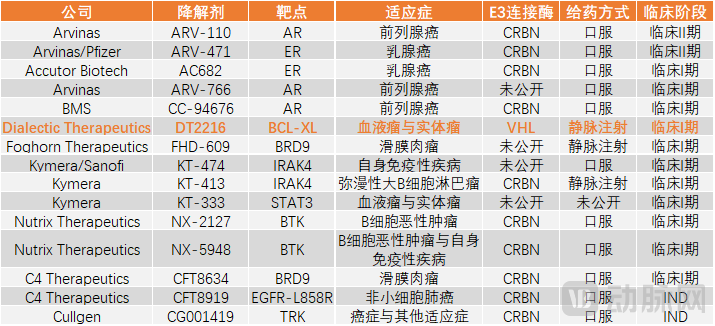
Selected PROTAC Targeted Protein Degraders in Clinical Development (Source:Nature Reviews Drug Discovery)
Currently, Dialectic Therapeutics has completed four rounds of financing totaling $19.9 million over a four-year period. The majority of the funding came from awards granted by the Cancer Prevention and Research Institute of Texas (CPRIT). These awards were primarily used to support drug development and advance Dialectic Therapeutics’ candidate drugs from the preclinical stage into clinical trials.
Dialectic Therapeutics was founded by three clinical development scientists and two investors and operators with extensive commercialization experience, creating opportunities and conditions for the company’s growth through both scientific translation and commercialization.

David Genecov
President and CEO David Genecov is a dedicated physician specializing in cleft lip and palate, craniofacial, and pediatric plastic surgery, as well as a successful healthcare entrepreneur. Dr. Genecov has founded or co-founded numerous companies in the healthcare sector, including AveXis, Skin Within, Inc., and Synergy Surgical Services LLC. Notably, AveXis not only went public on the NASDAQ but was also acquired by Novartis for $8.7 billion in 2018. Currently, in addition to his role at Dialectic Therapeutics, Dr. Genecov serves as a director of CerSci Therapeutics, a pharmaceutical startup based in Dallas, and as a director and co-founder of another startup, Cessation Therapeutics.

John Harkey Jr
John Harkey Jr., Chairman of the Board and Co-Founder, brings over 25 years of experience in investment management and the operation of publicly listed companies. He has merged, acquired, and operated eight public companies across sectors including biotechnology, energy, and aerospace, and has served as a board member for multiple companies outside the healthcare industry. As the founder and head of JDH Investment Management, an investment firm specializing in identifying early-stage startups in biotechnology, gene therapy, and related fields, he continues to drive innovation in these critical areas.
In addition to the empowerment provided by two investors in the company’s commercialization efforts, Dialectic Therapeutics leverages the continuously evolving research achievements of three scientists, achieving innovation and breakthroughs in drug development technologies, and inNature Communicationspublished research articles in international journals.

Guangrong Zheng
Dr. Guangrong Zheng, Director of Medicinal Chemistry, is an Associate Professor in the Department of Medicinal Chemistry at the University of Florida College of Pharmacy. He previously earned his B.S. and Ph.D. in Medicinal Chemistry from Fudan University, as well as a Ph.D. in Synthetic Organic Chemistry from the Shanghai Institute of Materia Medica. He subsequently completed postdoctoral training in drug design and discovery at the University of Kentucky College of Pharmacy. Dr. Zheng has established a distinctive research niche in areas such as the synthesis of derivative compounds and natural product-based compound design.

Robert Hromas
Board member Dr. Robert Hromas currently serves as Dean of the School of Medicine at the University of Texas Health Science Center at San Antonio. Previously, he held positions as Chair of the Department of Medicine at the University of Florida, Deputy Director of the Indiana University Cancer Center, and Chief of the Division of Hematology/Oncology at the University of New Mexico Cancer Center. In terms of academic contributions, Dr. Hromas’s laboratory has isolated and characterized multiple novel cytokines and several mutation genes associated with leukemia, while also identifying key components of relevant DNA repair pathways.

Daohong zhou
Board member Dr. Daohong Zhou is a Professor of Pharmacodynamics at the University of Florida College of Pharmacy. Over the past five years, Dr. Zhou has published more than 110 peer-reviewed scientific articles and book chapters, and co-invented over eight patents currently pending. In addition to his research, which has received continuous funding from the National Cancer Institute and the National Institute of Allergy and Infectious Diseases, he co-founded Unity Biotechnology to develop anti-aging therapeutics.
Currently, Dialectic Therapeutics has only one candidate drug—DT2216, a novel anti-apoptotic protein targeted degrader that can target hematologic malignancies and various solid tumors. It selectively induces the degradation of BCL-XL (B-cell lymphoma-extra large) protein and stimulates the initiation of the apoptotic program in cancer cells, or makes cancer cells more sensitive to chemotherapy.
BCL-XL is a member of the BCL-2 family of proteins. Scientists have been studying the BCL-2 family for over 30 years. Certain subgroups within this family (BCL-2, BCL-XL, MCL-1) inhibit apoptosis and are known as anti-apoptotic proteins, while other subgroups (Bax, Bak, Bad, Bim) trigger cascades leading to programmed cell death and are referred to as pro-apoptotic proteins. Due to the significant impact of gene activity on cell survival, the BCL-2 family has become a highly scrutinized therapeutic target.
Studies have shown that the BCL-XL protein inhibits apoptosis induced by various stimuli, thereby not only promoting cancer progression but also contributing to drug resistance in cancer cells. This class of anti-apoptotic proteins is frequently overexpressed in tumors and is closely associated with poor prognostic outcomes. Therefore, the development of therapeutics targeting BCL-XL holds significant potential to enhance the efficacy of cancer treatment. However, due to challenges such as a relatively large target interface and binding pocket, BCL-XL has proven difficult to drug, discouraging many pharmaceutical companies from pursuing drug discovery efforts against this target. Dialectic Therapeutics has achieved a major breakthrough in BCL-XL-targeted drug development by leveraging PROTAC technology.
Dialectic Therapeutics’ drug candidate DT2216 is a unique compound developed using its proprietary novel anti-apoptotic protein targeted degradation technology. In previous preclinical studies, DT2216 selectively induced the degradation of BCL-XL protein, stimulating cancer cell apoptosis or enhancing their sensitivity to chemotherapy.
DT2216 also demonstrated superior efficacy compared to BCL-XL inhibitors. The targeting and dose-limiting toxicity of BCL-XL inhibitors can kill platelets, leading to thrombocytopenia. This toxicological limitation restricts the use of BCL-XL inhibitors as safe and effective anticancer agents. According to Dialectic Therapeutics inNature MedicineAs published in the research findings, DT2216 significantly improves this deficiency.
Under this strategy, DT2216 demonstrates greater therapeutic efficacy against various cancer cells dependent on the BCL-XL protein. In vivo, it can effectively inhibit tumor growth as a monotherapy or in combination with other chemotherapeutic agents, without causing significant thrombocytopenia. In vitro studies further indicate that cancer cells are less likely to develop resistance to DT2216. These favorable properties position DT2216 as a promising first-in-class, safe anticancer drug targeting BCL-XL.
In March 2021, Dialectic Therapeutics received U.S. FDA approval for the Investigational New Drug (IND) application of its candidate drug DT2216 and initiated Phase I clinical trials for DT2216 in the first half of 2021. The primary endpoints of the study were to evaluate the safety and tolerability of the drug and to determine the maximum tolerated dose; the secondary endpoints were to explore the pharmacokinetics and antitumor activity of the drug.
This clinical study primarily enrolls patients with relapsed or refractory malignant tumors to evaluate the dosing regimen. The Phase 1 trial will enroll 20–40 patients, who will receive a single intravenous infusion of DT2216 twice weekly for at least 4 weeks, with each cycle lasting 28 days. In October 2021, Dialectic Therapeutics announced the completion of the first-in-human dosing in the Phase 1 clinical trial of DT2216.
Notably, the development of DT2216 is based on the company’s APTaD (Antiapoptotic Protein Targeted Degradation) technology platform, which focuses on the research and development of targeted degraders for antiapoptotic proteins. In the future, this platform will be applied to the discovery of a broader range of targets within the BCL protein family as well as other protein targets.
Currently, Dialectic Therapeutics is focused on developing next-generation APTaD candidates, with anticipation for the launch of its new pipeline and positive clinical results from DT2216.