

Qlife Medical Unveils New Brand Identity to Lead Multi-Omics-Driven Precision Medicine with Clinical Mass Spectrometry
On the first working day of the Year of the Tiger in the Chinese lunar calendar, Pinsheng Medical (formerly “Pinsheng Medicine”) fired the opening shot in the field of clinical mass spectrometry.
On February 7, Shenzhen Institute of Life and Health Medicine Co., Ltd. officially announcedRenamed “Pinsheng Medical”, abbreviated in English as “Qlife,” with the full company name “Jiangsu Pinsheng Medical Technology Group Co., Ltd.” (formerly known as “Shenzhen Institute of Life and Health Medicine Co., Ltd.”). Meanwhile, the company officially unveiled its new VI (Visual Identity) system and put it into full use.
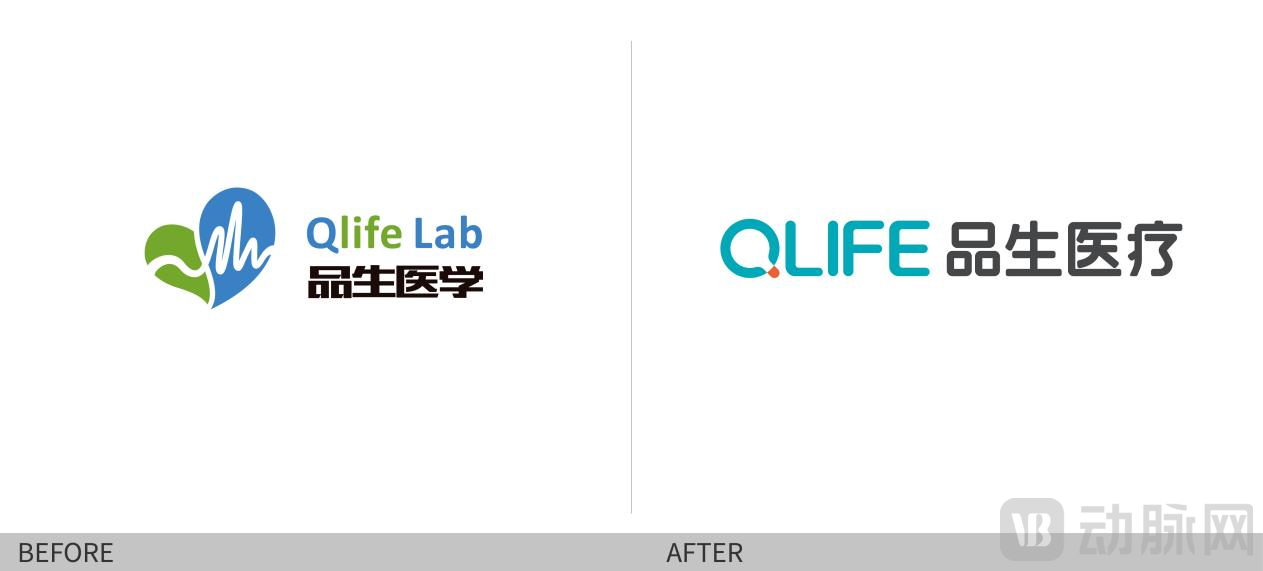
Since its establishment in 2016, Pinsheng Medical has developed rapidly, building a platform centered on metabolomics and proteomics.From omics research to mass spectrometry instruments, detection reagents, and third-party medical testing, comprehensive clinical mass spectrometry solutions.Qlife Lab’s 9000 Series Triple Quadrupole Mass Spectrometry Detection System has received market approval, with over 500 testing items implemented, and the company announced the completion of two consecutive rounds of financing in 2021.
Why did Pingsheng Medical choose to undertake a bold brand upgrade at a time when its product system had been fully established, the capital market held generally favorable views, and its business was in a phase of rapid growth? What were the considerations behind this decision? What major moves will the company make in terms of development strategy and business layout in the future? Recently, VCBeat conducted an exclusive interview with Dr. Cheng Xiaoliang, Founder, Chairman, and CEO of Pingsheng Medical.
Choosing a Different Path from the U.S. Market
Pioneering the Clarification of the IVD Business Model
In 2013, Dr. Cheng Xiaoliang, an authority in mass spectrometry technology who had cultivated the field of overseas mass spectrometry applications for many years, returned to China, aiming to bring a transformation to the still-silent Chinese clinical mass spectrometry market.
Upon returning to China, Dr. Cheng Xiaoliang quickly identified the vast gap in the developmental landscapes of clinical mass spectrometry between China and the United States.
“The clinical mass spectrometry market in China started late, and emulating the U.S. ICL (Independent Clinical Laboratory) model was the primary approach during the industry’s early stages. In reality, there are structural differences between the Chinese and U.S. healthcare markets. China’s healthcare system, dominated by comprehensive tertiary hospitals, is not well-suited for the ICL model. Furthermore, domestic ICL regulation remains inadequate, with challenges including product market access, methodological standardization, and a shortage of skilled technical personnel in mass spectrometry laboratories.”The IVD model better ensures compliance and quality of in-hospital testing.”
Therefore, after founding Shenzhen Institute of Life and Health Medicine Co., Ltd. in 2016, Dr. Cheng Xiaoliang established“IVD as the core, ICL as the supplement”'s business model isThe First Company in China to Clearly Define the Clinical Mass Spectrometry IVD Business Model, focusing on building a comprehensive product portfolio encompassing omics research services, instruments, reagents, and testing services, through the localization of equipment manufacturing and the expansion of reagent menus,Focus on Resolving Instrument and Reagent Compatibility Issues, taking the lead in capturing the entry point for in-hospital business traffic and ensuring sustained traffic growth.
The superiority of this business model was quickly validated in China and has gained widespread recognition in the clinical mass spectrometry field. Many companies are actively deploying one-stop solutions encompassing mass spectrometry instruments, reagents, and testing services, with a strategic focus on the IVD (In Vitro Diagnostics) model.
By virtue of its forward-looking layout in the clinical mass spectrometry IVD business model, Pingsheng Medical has fully capitalized on the dividends from the rapid growth of the clinical mass spectrometry market. The company’s Qlife Lab 9000 series triple quadrupole mass spectrometry detection system has been approved for market launch, offering over 500 testing items that cover newborn genetic metabolic disease screening, nutritional health assessment, endocrine-related testing, therapeutic drug monitoring, and specialized disease diagnostics, serving hundreds of hospitals.
If the “IVD-centric, ICL-supplementary” model has enabled Pinsheng Medical to firmly maintain its industry-leading position and served as the core driver behind the qualitative leap of China’s clinical mass spectrometry sector—from its nascent stages to a high-growth sunrise industry—then where lies the next qualitative transformation that will spark the next boom in the clinical mass spectrometry industry? Dr. Cheng Xiaoliang’s answer is“Multi-omics”。
Be Among the First Generation of Omics Researchers
Driving a Qualitative Leap in Multi-Omics and Clinical Mass Spectrometry
The period from 2010 to 2020 marked the era of genomics. Following the launch of the U.S. Precision Medicine Initiative in 2015, gene sequencing technology rapidly became a cornerstone of the precision medicine field. Dr. Cheng Xiaoliang, who participated in the drafting of the U.S. White House Report on Precision Medicine, possesses a profound understanding of precision medicine. He believes that,Precision medicine is inherently a multi-omics concept.
“The pathogenesis and progression of diseases are complex, and single-omics approaches cannot address all challenges. With the maturation and widespread adoption of sequencing technologies, genomics has become the primary focus in precision medicine; however, the contributions of other omics disciplines, such as proteomics and metabolomics, to understanding disease mechanisms, diagnosis, and treatment must not be overlooked.”
Consistent with Dr. Cheng Xiaoliang’s assessment, a growing body of research has demonstrated that reliance on single-omics approaches entails significant limitations. Multi-omics holds substantial potential in elucidating pathogenic mechanisms, screening for tumor biomarkers and therapeutic targets, as well as enabling early diagnosis and treatment. The industry believes thatThe 2020–2030 Decade Will Undoubtedly Be the Era of Life Omics.
Clinical mass spectrometry is the core analytical technology for proteomics and metabolomics,In the era of omics, clinical mass spectrometry will become a routine foundational technology in the field of precision medicine.
Dr. Cheng Xiaoliang is both a domesticThe First Generation of Mass Spectrometry Researchers, also isThe first generation of researchers in proteomics and metabolomics, Pinsheng Medical has focused on omics research since its inception, and after years of accumulation,The self-developed precision omics platform, qULTRA, has been successfully established.
qULTRA is a leading clinical proteomics and metabolomics research platform that addresses the bottlenecks of poor stability, low throughput, and high costs associated with traditional omics studies, enabling both targeted and untargeted clinical omics research.Completing the closed loop from the discovery of novel biomarkers, to the validation of innovative clinical diagnostic technologies, and finally to the commercialization of clinical diagnostic products.Transform cutting-edge omics research technologies into solutions truly suitable for large-cohort, large-scale clinical testing applications.
“Simply put,Omics research capabilities determine the ability of clinical mass spectrometry companies to continuously develop innovative clinical diagnostic applications.Only enterprises capable of efficiently and accurately collecting high-quality omics data, and possessing the ability to mine and analyze such data while continuously developing innovative diagnostic products, can stand out.”
“Routine tests such as vitamins and drug concentrations are already highly competitive, while innovative assays represent new growth drivers for enterprises. Leveraging its omics research capabilities, Pingsheng Medical has simultaneously established a presence in metabolomics and proteomics, building a pipeline of multiple potential blockbuster specialized diagnostic products across maternal and child health, oncology, endocrinology/cardiovascular disease, neurology, and metabolic disorders.”
In 2021, Dr. Cheng Xiaoliang observed that multi-omics research, which he had been closely monitoring, was beginning to show signs of an explosive growth trend.In early 2022, the company was renamed “Pinsheng Medical” to fully embrace the era of life omics,“The single-character distinction between ‘medicine’ and ‘medical care’ signifies that the company will fully advance multi-omics research, develop more innovative mass spectrometry applications, extend into deeper healthcare scenarios, and serve a broader range of customers.”
The Omics Era
Clinical Mass Spectrometry Will Empower Broader Precision Medicine Scenarios
Although clinical mass spectrometry in China is still in its nascent stage, it has emerged as a highly coveted sector closely monitored by professionals in the precision medicine industry. Between 2016 and 2021, Dr. Cheng Xiaoliang personally witnessed the industry’s transformation from quantitative expansion to qualitative advancement.
In terms of technological adoption, clinical mass spectrometry testing—whether conducted on in-house platforms or through outsourced sample analysis—is becoming increasingly prevalent in end-user hospitals. Leading hospitals in China have already implemented mass spectrometry programs, and there is strong willingness to adopt this technology among secondary and tertiary hospitals.
In terms of application expansion, the clinical use of mass spectrometry has rapidly extended from newborn screening and vitamin testing to areas such as hormone analysis, amino acid profiling, fatty acid assessment, and therapeutic drug monitoring. With hundreds of detectable analytes, it is also beginning to demonstrate its potential in innovative fields including oncology, cardiovascular disease, neurology, and maternal and child health.
On the service provider side, an increasing number of third-party medical laboratories are offering clinical mass spectrometry testing, with comprehensive improvements in service levels across test menu breadth, turnaround time, and analytical quality.
“Pinsheng Medical has seized the opportune moment of the rise of clinical mass spectrometry in China, aligning with the pulse of the times. The maturation of clinical mass spectrometry testing panels, the perfection of the supporting industrial chain, the widespread clinical adoption, and the advent of the omics era are bringing greater opportunities.”Pinsheng Medical is ready to embrace broader scenarios of precision diagnosis and treatment, building a new ecosystem of precision medicine based on omics technologies.”
Dr. Cheng Xiaoliang predicted: “Multi-omics research will experience an explosion within three years.Key steps in omics technologies—including sample preparation, mass spectrometry analysis, data processing, and bioinformatics analysis—have been fully integrated into a platform-based technology. This provides robust tools for standardized, large-scale clinical omics research, offers greater support for clinical studies in proteomics and metabolomics, and opens up new avenues for clinical laboratory applications based on omics technologies.
In the future, driven by the multi-omics trend, clinical mass spectrometry is poised to surpass the remarkable success of gene sequencing technologies. Next,Innovation capabilities in testing applications, centered on omics research capabilities, will be a key element for enterprises to build core barriers.It is evident that Pingsheng Medical’s brand VI upgrade was clearly “well-prepared,” as it steps into the era of life omics,An Integrated Layout Covering Omics Research, Equipment, Reagents, and TestingIt will be the trump card for Pinsheng Medical in expanding its clinical applications, drug development, and international markets.
“Over the next three to five years, Pinsheng Medical will continuously put into practice its efforts to build a healthy industrial ecosystem. This includes inviting more industry partners to join the Pinsheng Medical ecosystem, opening up more technical, market, and marketing resources, strengthening collaborative training of mass spectrometry talent through industry-academia-research cooperation, and enabling mutual empowerment among ecosystem members—such as mass spectrometry equipment and reagent manufacturers, testing services, omics research institutions, healthcare providers, pharmaceutical companies, and research institutes—thereby enhancing the operational efficiency of the precision medicine ecosystem,” stated Dr. Cheng Xiaoliang.