

Chinese Innovative Drugs Eye U.S. Market Amid Setbacks: Insights from Recent BLA Challenges
Over the past three years, driven by national policy initiatives and robust support from capital markets, the pace of innovative drug research and development in China has accelerated significantly, with high-quality products gaining recognition in overseas markets. Amidst the pressure of national medical insurance negotiations and competition from imported drugs, the internationalization of China’s innovative pharmaceutical industry has become an inevitable trend.
Currently, both innovative pharmaceutical companies and traditional pharmaceutical firms transitioning toward innovation are turning their attention overseas, striving to align with international standards and aggressively expanding into global markets. Chinese innovative drugs are engaging in global competition through two primary pathways: first, via out-licensing (License-Out); second, by advancing Phase III clinical trials with a focus on overseas regulatory submissions, including global multi-center clinical trials.
For Chinese pharmaceutical companies that have just begun expanding overseas, conducting Phase I and II clinical trials is relatively straightforward. In contrast, advancing large-scale, international multicenter Phase III clinical trials presents a formidable challenge and entails substantial costs. Recently, the global expansion efforts of several domestically developed drugs, which have drawn significant industry attention, have encountered setbacks:
On February 10, 2022, the Biologics License Application (BLA) for sintilimab (a PD-1 inhibitor) from Innovent Biologics was not approved by the U.S. Food and Drug Administration (FDA), primarily due to insufficient international clinical trial data. In December 2021, WanChun Pharma’s anticancer drug, plinabulin, also failed to gain FDA approval for similar reasons. In the same month, Kintor Pharmaceutical announced that the interim analysis of its Phase III clinical trial of proclutamide (an oral COVID-19 therapeutic for non-hospitalized patients) did not achieve statistical significance, necessitating FDA approval to amend the trial protocol. Another high-profile case involved Kanghong Pharmaceutical, whose ophthalmic drug, conbercept, had its overseas clinical trials halted in April 2021 due to substantial participant dropout, loss to follow-up, and protocol deviations during the COVID-19 pandemic.
It is evident that successfully advancing Phase III clinical trials in the United States and meeting the FDA’s requirementsVerification is no easy feat. Chinese enterprises must make concerted efforts in areas such as the implementation standards for international clinical practice and operational regulation.Currently, some companies collaborate with CROs, while others have established their own overseas clinical development teams and sites (e.g., BeiGene, Henlius) to better control trial quality and speed, and reduce costs.
In 2020 and 2021, no innovative drugs from Chinese companies received FDA approval. Encouragingly, in 2021, the FDA accepted New Drug Applications (NDAs) or Biologics License Applications (BLAs) for eight innovative drugs from China, an unprecedented milestone. Based on review timelines, we may see multiple Chinese innovative drugs approved for marketing in the United States in 2022.
Previous results indicate that innovative drugs supported by international multicenter clinical trials, which provide data representative of multi-ethnic populations, are more compelling when seeking FDA approval.
In the table below, we list selected domestically developed innovative drugs and their respective companies that have entered the NDA or BLA stage in the United States or are currently undergoing clinical trials:
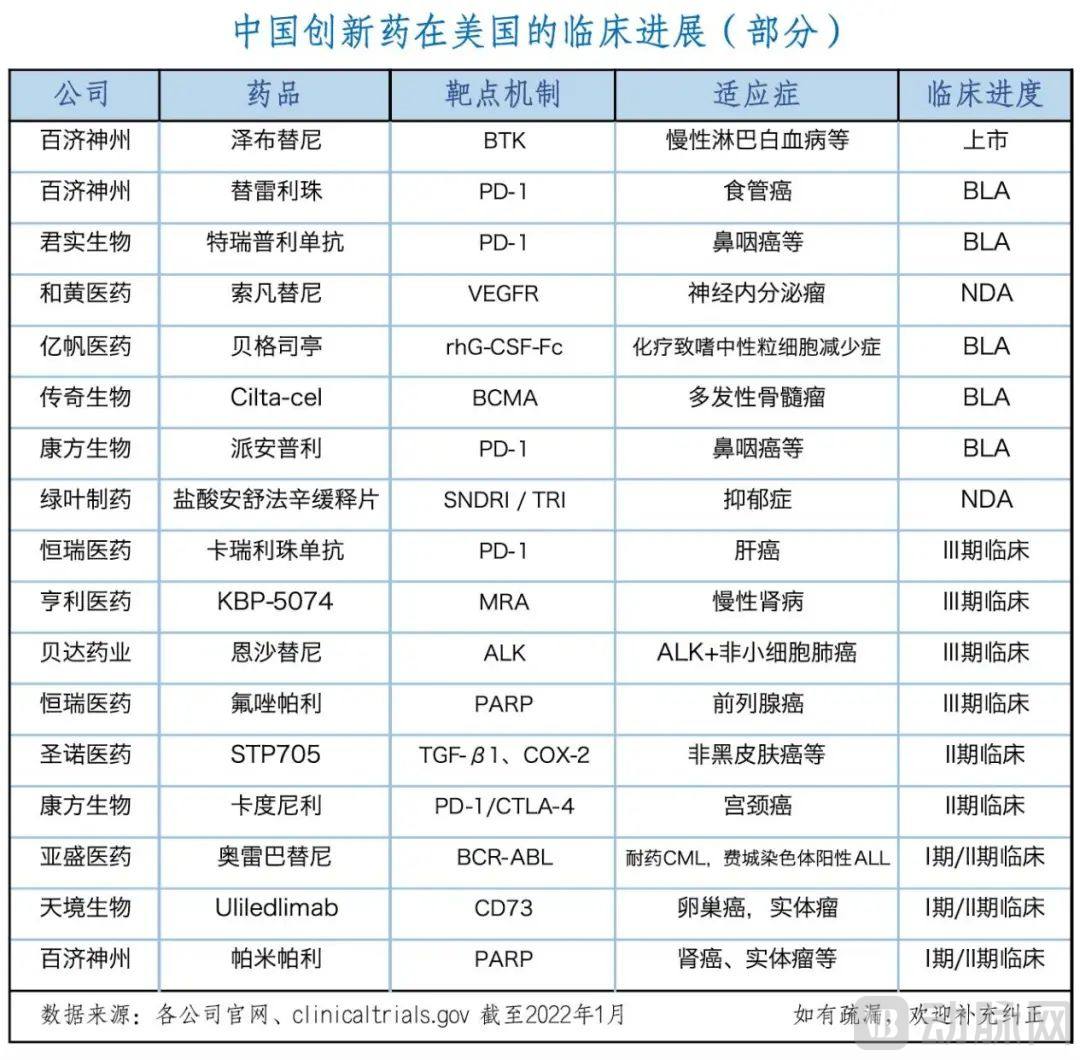
▲Table 1 Clinical Progress of Select Chinese Innovative Drugs in the United States
Overseas markets can generate substantial revenue for enterprises and inject new momentum into their long-term development.China’s first innovative drug to enter the U.S. market is zanubrutinib capsules (a BTK inhibitor, marketed as BRUKINSA®), an anticancer agent approved in 2019. The drug was developed by BeiGene. According to reports, sales of zanubrutinib capsules in the United States reached $33.7 million in the third quarter of 2021, nearly six times the amount from the same period in 2020, and have already surpassed its sales in China.
In terms of enterprise types, it is evident that Chinese pharmaceutical companies with diverse developmental backgrounds are all attempting to enter the U.S. market.In addition to the 18A-listed companies that have attracted significant capital attention in recent years, such as BeiGene and Junshi Biosciences, there are also large pharmaceutical companies transitioning from generic drugs to innovative drug R&D, such as Hengrui Medicine; established pharmaceutical companies focusing on improved innovation R&D, such as Luye Pharma; and small pharmaceutical companies dedicated to innovative drug R&D, such as Henlius. Among them,Henry Pharma(KBP Biosciences)is currently the only company that has not yet gone public.
In terms of drug portfolios, new drugs entering the U.S. market outside the oncology sector are exceedingly rare.Oncology is a major therapeutic area in developed countries, but competition in the oncology sector, particularly for PD-1 inhibitors, has become extremely intense. Only two non-oncology new drugs are listed in the table, namelyLuye Pharma’s Antidepressant and Henry Pharma’s Renal Disease Drug. It is understood that Henry Pharma’s KBP-5074 currently has no competitors globally for its first indication, and the drug is expected to provide a new treatment option for patients with chronic kidney disease, addressing a significant unmet clinical need.
Currently, several innovative drugs from China are in Phase III clinical trials in the United States (Table 1): Hengrui’s camrelizumab and fluzoparib capsules, Betta’s ensartinib, and Hengli Pharmaceutical’s KBP-5074.
In April 2021, the U.S. Food and Drug Administration (FDA) granted orphan drug designation to Hengrui’s camrelizumab for injection for the indication of hepatocellular carcinoma, based on an international multicenter Phase III clinical trial conducted in the United States. In August of the same year, the FDA approved the initiation of a Phase III clinical trial of camrelizumab for injection in combination with famitinib malate capsules for advanced non-small cell lung cancer. Camrelizumab has been approved for eight indications in China, making it the domestically produced PD-1 monoclonal antibody with the largest number of approved indications and the broadest coverage of tumor types.
Fluzoparib has been included in the 2021 edition of China’s National Reimbursement Drug List (NRDL) and has received approval for two indications: the treatment of platinum-sensitive recurrent ovarian cancer and fallopian tube cancer. In October 2021, the Phase III clinical trial evaluating fluzoparib capsules in combination with abiraterone acetate tablets and prednisone tablets (AA-P) for the treatment of metastatic castration-resistant prostate cancer (mCRPC) completed the enrollment of its first overseas participant in the United States.
Based on Hengrui’s overseas pipeline, nearly 10 innovative drug projects are undergoing clinical trials in the United States, primarily focusing on oncology and immunology therapeutics. Currently, Hengrui has halted R&D for most generic drugs, redirecting its primary resources toward the development of innovative medicines. The extensive experience and financial foundation accumulated during the generic drug phase have propelled Hengrui to become a leading enterprise in China’s innovative pharmaceutical sector.
KBP-5074 isNew-Generation Non-Steroidal Selective Mineralocorticoid Receptor AntagonistsMineralocorticoid Receptor Antagonist (MRA) selectively and competitively binds to human mineralocorticoid receptors, exerting antihypertensive, renoprotective, and cardioprotective effects. The first indication for KBP-5074 is uncontrolled hypertension in patients with moderate-to-severe chronic kidney disease. Henry Pharma is concurrently advancing global Phase III clinical trials for this drug, with the largest number of trials and the most rapid progress occurring in the United States. Two additional indications for KBP-5074 are heart failure/chronic kidney disease and dialysis.
Henry Pharma is a clinical-stage international biotechnology company with no commercialized products to date. All of its pipeline candidates are first-in-class novel drugs, with clinical development initiated in the United States. By leveraging FDA standards to guide global market expansion, the company significantly accelerates the overseas approval and launch of its investigational new drugs, establishing a distinctive position among Chinese enterprises pursuing internationalization.
Henry Pharma has currently developed six candidate innovative drugs, covering three major therapeutic areas: organ protection, anti-infection, and respiratory diseases. It is a rare pharmaceutical company expanding into overseas markets that primarily focuses on the research and development of non-oncology drugs.
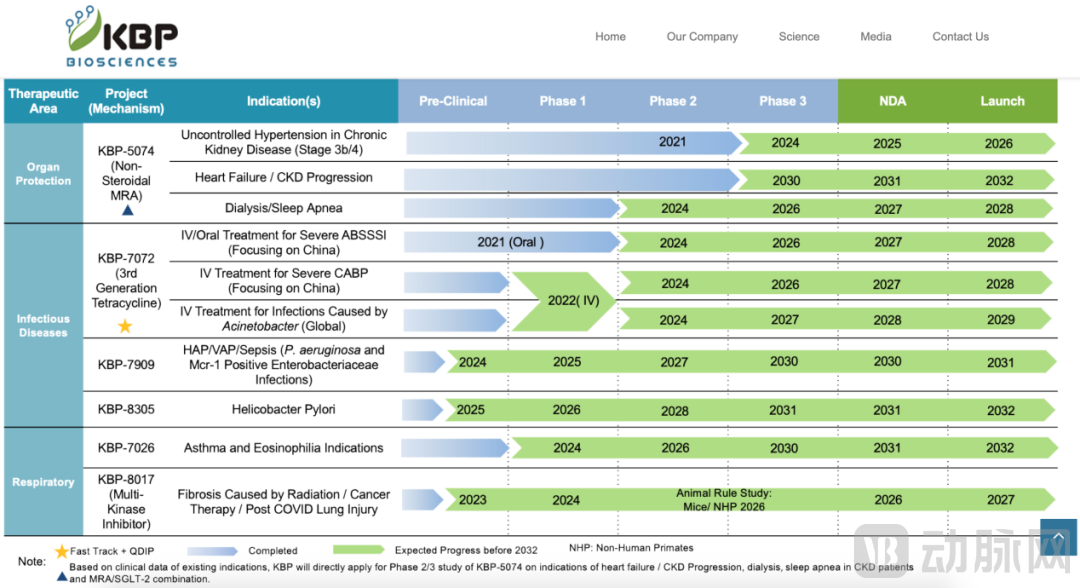
▲ Table 2 Henry Pharmaceutical R&D Pipeline
Ensartinib (Beimena) is a novel, potent, and highly selective next-generation ALK inhibitor. It was launched in China in November 2020 as the first Class 1 new drug approved for the treatment of advanced non-small cell lung cancer (NSCLC) with ALK mutations. In December 2021, the drug was included in the National Reimbursement Drug List. Ensartinib is the second innovative drug developed by Betta Pharmaceuticals, following Icotinib.
Currently, the Phase III clinical trial of this drug in the United States has enrolled 290 participants. The trial aims to evaluate the efficacy and safety of ensartinib versus crizotinib in patients with ALK-positive non-small cell lung cancer (NSCLC) and is expected to be completed by the end of 2022. Ensartinib is poised to become the first innovative targeted therapy for lung cancer led by a Chinese company to achieve global market approval.
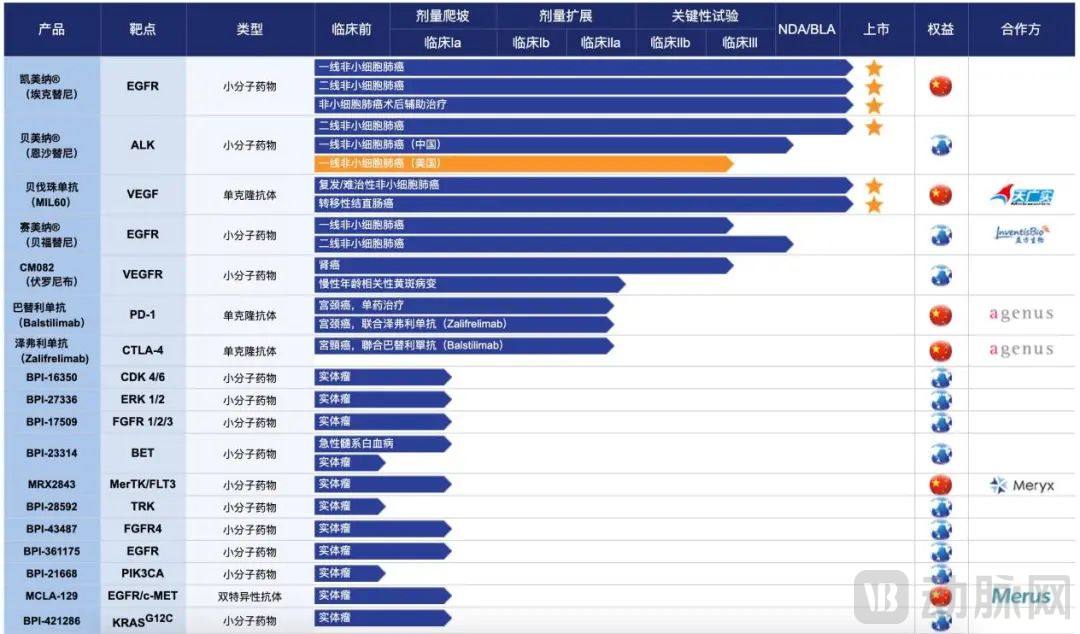
▲ Table 3: BeiGene's Overseas R&D Pipeline
In summary, Chinese pharmaceutical companies with diverse development paths have already set sail in the wave of internationalization. The key to successfully penetrating the U.S. market lies in ensuring the smooth conduct of international multi-center Phase III clinical trials and accumulating robust and reliable international clinical evidence. This is the foundation for building global development capabilities and an essential requirement for Chinese pharmaceutical companies to evolve into truly global enterprises.
*References:
1. Chinese Innovative Drugs Accelerate Global Expansion: Eight Blockbuster New Drugs to Seek FDA Approval in 2022. Times New Drug Watch.
2. China’s Pharmaceutical Innovation Enters a New Era. Zhang Yaohua, Shanghai Pharmaceuticals
3. Blue Book on the Internationalization of China’s Pharmaceutical Industry (2021)
4. From Generics to Innovative Drugs: A Decade of Honing the Sword—Discussing Hengrui Medicine’s Ten-Year Journey in Innovative Drug Development. PharmCube