

Nurix Therapeutics: A Leader in Targeted Protein Degradation with Over $500M Raised and Strategic Collaborations with Gilead and Sanofi
Nurix Therapeutics
Small Molecule Drug Developer
Targeted Protein Degradation (TPD) is an emerging small-molecule drug development technology designed to combat diseases by targeting pathogenic proteins for degradation.
Most traditional small-molecule drugs or monoclonal antibodies need to bind to active sites on enzymes or receptors to exert their effects. It is estimated that 80% of proteins in human cells lack such sites, and thus have long been considered undruggable.
Targeted protein degradation therapies do not require tight binding to sites that affect protein activity to exert their effects, enabling many "undruggable" proteins, which are inaccessible to traditional drug development technologies, to become new drug targets. Meanwhile, targeted protein degradation therapies can continuously induce rapid and efficient degradation of disease-causing proteins, significantly suppressing the development of resistance to target proteins.
These advantages have made targeted protein degradation therapy increasingly popular in the field of new drug development in recent years.. Global pharmaceutical giants such as GlaxoSmithKline (GSK), Roche, Merck & Co. (MSD), Bayer, and Pfizer are actively positioning themselves in this therapeutic area, forging numerous partnerships and acquisitions; many companies developing targeted protein degradation therapies have attracted significant investor interest; and biopharmaceutical firms in this field, including Arvinas, Nurix, Kymera, and Monte Rosa, have sequentially gone public on secondary markets.
Nurix Therapeutics (hereinafter referred to as “Nurix”) was founded in 2009 and is headquartered in San Francisco, California, USA. The company focuses on the discovery, development, and commercialization of small-molecule therapies that modulate cellular protein levels. Nurix went public on the NASDAQ in July 2020, raising approximately $200 million. Since its inception, the company has raised over $500 million in total financing, garnering strong favor from the investment community.
Why has Nurix Therapeutics stood out among numerous biopharmaceutical companies to secure capital support? And by virtue of what technologies and R&D pipeline has it become a leading enterprise in the field of targeted protein degradation? This article will provide an introduction to these questions.
Led by Renowned Experts, with a Solid Professional Team Background
Nurix was founded in 2009 by renowned E3 ubiquitin ligase researchers John Kuriyan, Michael Rapé, and Arthur Weiss.The three founders remain core members of Nurix’s Scientific Advisory Board. Dr. John Kuriyan is an expert in the structural dynamics of ubiquitin ligases and other signaling complexes; Dr. Michael Rapé is a leading figure in the biology of ubiquitin-dependent cell cycle progression and oncogenesis; and Dr. Arthur Weiss is a pioneer in the fields of cell biology and signal transduction.
In addition to these three leading scientific experts in the fields of E3 ubiquitin ligase regulation and structure, Nurix has built an experienced leadership team since its inception, with members possessing extensive backgrounds in small-molecule drug development and adoptive cell therapy.
An outstanding team inevitably requires an outstanding leader.Dr. Arthur T. Sands serves as President, Chief Executive Officer, and Director of Nurix.Dr. Sands holds a Bachelor’s degree in Economics and Political Science from Yale University and a Ph.D. in Cell Biology from Baylor College of Medicine. He served as an American Cancer Society Postdoctoral Fellow in the Department of Human and Molecular Genetics at Baylor College of Medicine, and later founded Lexicon Pharmaceuticals, a biopharmaceutical company focused on target validation and drug development, where he served as President, Chief Executive Officer, and a member of the Board of Directors. Arthur T. Sands’ expertise in cell biology, combined with his operational management experience in biopharmaceutical companies, has facilitated the rapid growth of Nurix Therapeutics.
Targeting BTK: Two PROTAC Targeted Protein Degraders Are Both in Phase I Clinical Trials
Nurix leverages its expertise in E3 ubiquitin ligases and its proprietary DNA-encoded library (DEL) to build an integrated discovery platform—DELigase—for identifying and advancing novel drug candidates targeting E3 ubiquitin ligases. The highly differentiated DELigase platform is capable of identifying small molecules that can either decrease or increase protein levels, thereby enabling the modulation of target proteins.
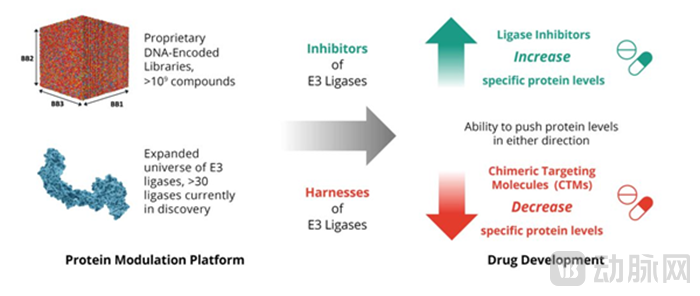
DELigase Platform Mechanism of Action (Source: Nurix Therapeutics Official Website)
Based on the DELigase platform, Nurix Therapeutics has developed two targeted protein degraders: NX-2127 and NX-5948. Both of these targeted protein degraders utilize PROTAC technology.
PROTAC (Proteolysis Targeting Chimera) is a bifunctional small molecule primarily composed of three parts: an E3 ubiquitin ligase ligand, a target protein ligand, and a linker. The E3 ubiquitin ligase ligand is responsible for specifically recruiting the E3 ubiquitin ligase, while the target protein ligand is used to target and capture the protein of interest; the linker connects these two ligands to form a stable ternary complex.
PROTAC molecules can recruit E3 ubiquitin ligases to the vicinity of target proteins, tagging them with ubiquitin. These ubiquitin-tagged proteins are then delivered to the cell’s “waste disposal center” (the proteasome) for degradation. In this way, PROTAC molecules can specifically promote the degradation of disease-causing proteins.
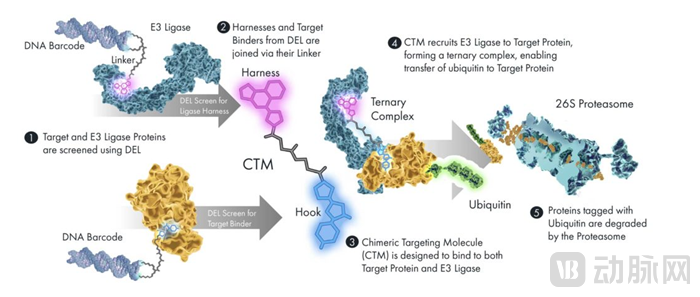
Chimeric Targeting Molecule (CTM) Structure (Image source: Nurix official website)
Furthermore,Both of these targeted protein degraders target BTK (Bruton's tyrosine kinase).。
BTK is a validated clinical target for the treatment of hematologic malignancies and autoimmune diseases. As a key regulator of B-cell activity, inhibition of BTK can improve outcomes in various B-cell-mediated cancers, such as non-Hodgkin lymphoma (NHL) and chronic lymphocytic leukemia (CLL), as well as B-cell-mediated autoimmune diseases. Regulatory agencies worldwide have approved several BTK inhibitors. BTK inhibitors are now standard-of-care treatments for multiple tumors, including small lymphocytic lymphoma and mantle cell lymphoma.
The following sections provide an introduction to these two targeted protein degraders, respectively.
NX-2127
NX-2127 is an orally administered, dual-acting BTK degrader that combines the activity of targeted BTK degradation with the therapeutic effects of immunomodulatory imide drugs (IMiDs) for the treatment of various B-cell malignancies.
NX-2127 is the first BTK PROTAC degrader developed by Nurix to enter clinical development, currently in Phase I clinical trials. Data released by Nurix in October 2021 showed that BTK levels in the peripheral blood of the first six enrolled patients decreased significantly from Day 1 and remained suppressed throughout the dosing period. BTK degradation levels exceeded 80% and 90% in the 100 mg and 200 mg dose groups, respectively.
Nurix plans to initiate the Phase 1b expansion cohort of its ongoing Phase 1a/1b clinical trial of NX-2127 in adult patients with relapsed or refractory B-cell malignancies in mid-2022, and expects to present additional data from the Phase 1a portion in the second half of 2022.
NX-5948
NX-5948 is an oral BTK degrader designed to lack IMiD activity, for the treatment of certain B-cell malignancies and autoimmune diseases.
NX-5948 has been demonstrated to cross the blood-brain barrier in animal models and exhibit activity in animal models of autoimmune diseases. According to preclinical data for NX-5948 presented by Nurix at the 2021 American Society of Hematology (ASH) Annual Meeting, NX-5948 significantly reduced BTK protein levels in TMD8 tumor cells in the brain and in microglia.
Nurix is conducting a Phase I clinical trial in adults with relapsed or refractory B-cell malignancies, with dosing expected to commence at multiple clinical centers in the United Kingdom in the first half of 2022.
Two Protein-Modulating Drugs
In addition to targeted protein degraders, Nurix has two CBL-B ligase inhibitors that mobilize T cells and the entire immune system to combat cancer by inhibiting CBL-B, an E3 ubiquitin ligase.
NX-1607 is an oral E3 ligase inhibitor for the treatment of various solid tumors and hematologic malignancies. Nurix is conducting an ongoing Phase 1 dose-escalation and expansion trial of NX-1607 in adults with multiple tumor indications at several clinical centers in the UK, and expects to obtain initial pharmacokinetic (PK)/pharmacodynamic (PD) data, including biomarker and safety data, from Stage 1a of the study.
DeTIL-0255 is a drug-enhanced adoptive cell therapy that combines a small-molecule E3 ligase inhibitor with tumor-infiltrating lymphocytes (TILs), aiming to generate high-quality T-cell products with enhanced efficacy. Nurix Therapeutics is conducting a Phase I trial to evaluate DeTIL-0255 in adults with gynecologic malignancies, including ovarian cancer, cervical cancer, and endometrial cancer. Nurix Therapeutics expects to dose the first patient in the first half of 2022 and to provide clinical updates on the study in the second half of 2022.
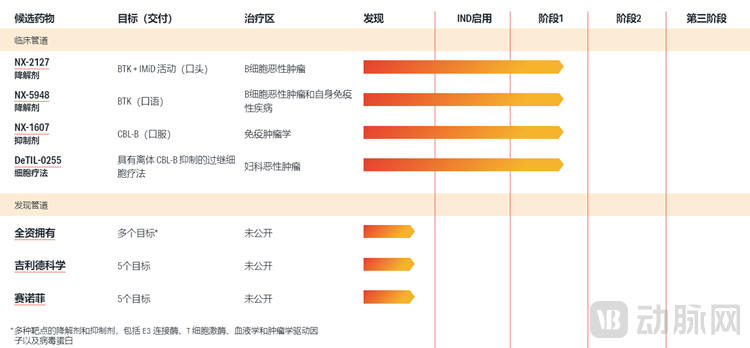
Nurix’s R&D Pipeline (Image source: Nurix official website)
Strategic Partnerships with Gilead and Sanofi to Accelerate New Drug R&D
Nurix Therapeutics has established strategic partnerships with Gilead and Sanofi to further accelerate its development process.
In June 2019, Nurix Therapeutics entered into a global strategic collaboration with Gilead Sciences valued at $2.345 billion, leveraging Nurix’s ubiquitin/E3 ubiquitin ligase technology platform to develop novel anticancer drugs capable of degrading disease-causing proteins. Under the agreement, Gilead will pay Nurix an upfront payment of $45 million. Additionally, Nurix is eligible to receive up to $2.3 billion in milestone payments as well as future sales royalties.
In January 2020, Nurix Therapeutics entered into a $2.5 billion strategic collaboration with Sanofi to discover, develop, and commercialize a pipeline of innovative targeted protein degraders for patients with challenging diseases, and in January 2021, expanded the number of research targets from the initial three to five.
Meanwhile, Nurix has significantly increased its R&D investment to support its preclinical development activities and drug discovery research, as well as to fully prepare for the upcoming clinical programs of its lead candidate drugs. As of November 30, 2021, Nurix’s R&D expenditure for 2021 amounted to $116.4 million, an increase of $44.9 million from the previous year, representing a year-on-year growth of 75%.
Raised Over $500 Million in Funding, Highly Favored by Capital Markets
Nurix underwent six rounds of financing from its inception to its initial public offering (IPO), raising approximately $200 million in its 2020 IPO. Following the IPO, Nurix conducted a public offering of common stock in March 2021, raising approximately $160 million. Since its establishment, Nurix has raised a total of over $500 million.
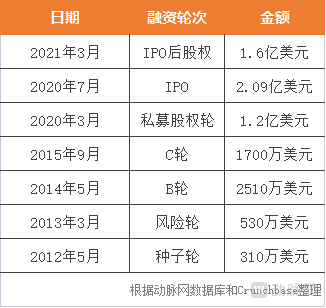
According to Nurix Therapeutics’ 2021 annual report, as of November 30, 2021, the full-year collaboration revenue was $29.8 million, representing a year-over-year growth rate of 67.4%.
Based on the closing price at the time of its IPO, Nurix had a market capitalization of $662 million. On February 8, 2022, Nurix closed at $18.96 per share on the Nasdaq, with its market capitalization rising to $859 million.
Chinese Pharmaceutical Companies Are Flocking to Enter the Field of Targeted Protein Degradation Therapy, with Strong Momentum
Currently, global research on targeted protein degraders is primarily focused on two major areas: molecular glue degraders and PROTACs. Among these, PROTACs demonstrate more significant efficacy, have attracted broader global investment and development efforts, and hold greater potential for future growth.
Currently, no PROTAC drugs have been approved for market launch worldwide. Against the backdrop of vigorous global R&D efforts in PROTAC therapeutics, numerous Chinese companies have successively entered this field. Among domestic companies deploying targeted protein degradation technologies, Kintor Pharmaceutical, BeiGene, and Haisco Pharmaceutical are at the forefront of product development, with all three having advanced their candidates into Phase I clinical trials.
Kintor Pharmaceutical
Kintor Pharmaceutical’s GT20029 is the first PROTAC approved for clinical trials in China and the world’s first topical AR-PROTAC. GT20029 is an androgen receptor (AR) degrader administered via local cutaneous application, indicated for the treatment of androgenetic alopecia and acne. Overactivation of the androgen receptor pathway plays a critical role in the pathogenesis of both conditions. By degrading the androgen receptor protein, GT20029 effectively blocks AR signaling pathways and their physiological functions. Preclinical studies have demonstrated that GT20029 exhibits superior efficacy compared to other small-molecule AR antagonists, delivering localized therapeutic effects while significantly reducing systemic drug exposure. In April 2021, GT20029 received approval from the National Medical Products Administration (NMPA) to initiate Phase I clinical trials, followed by FDA authorization for clinical investigation on July 13, 2021. On July 28, 2021, the first subjects were dosed in the Phase I clinical trial of GT20029.
BeiGene
BeiGene’s BGB-16673 is a BTK-targeted protein degrader and the second BTK-PROTAC to file for clinical trials in China. Preclinical models have demonstrated that BGB-16673 can overcome C481S mutation-mediated resistance to BTK, holding promise for addressing patient resistance to zanubrutinib and other BTK inhibitors. Furthermore, this candidate exhibits favorable pharmacological properties, including good bioavailability, high selectivity, potent efficacy, and a long half-life. In August 2021, BeiGene registered its U.S. Phase I study of BGB-16673 for the treatment of B-cell malignancies on ClinicalTrials.gov. In October 2021, the Center for Drug Evaluation (CDE) accepted the investigational new drug application for BGB-16673.
Haisco
HSK29116 is a Class 1 innovative chemical drug developed by Haisco, representing an oral PROTAC small-molecule antitumor agent. It selectively inhibits BTK kinase activity and modulates signaling pathways to interfere with B-cell development, thereby controlling the progression of various B-cell malignancies. On one hand, HSK29116 directly suppresses BTK activity through specific binding; on the other hand, it induces ubiquitination of BTK, leading to its degradation via the proteasome pathway. This dual mechanism blocks BCR signal transduction and inhibits the growth and proliferation of B-cell lymphoma cells. On April 6, 2021, HSK29116 received clinical trial approval for the indication of B-cell lymphoma.