

BoQuan Bio Advances Global First-in-Class Immune Checkpoint Inhibitor Targeting PD-L1-Negative Tumors
As is well known, cancer therapy has long been a prominent area of research in the medical community. Anti-tumor strategies leveraging the body’s own immune system represent a cutting-edge and effective approach to combating cancer. Whether “educating” immune cells to target and attack cancer cells or “stripping away” the camouflage that enables cancer cells to evade immune detection (i.e., immune checkpoints), these efforts all hinge on identifying targets present on tumors. However, tumor targets with clearly defined mechanisms of action have become highly contested areas of focus, leading to significant homogenization in drug development for popular targets. For instance, there are already more than 70 inhibitor drugs targeting the tumor immune checkpoint PD-1 registered in clinical trials.
Homogenized research is underpinned by unequal resource allocation,Xu Jie, Founder of Baiquan Biology“He remarked, ‘At present, there remains a substantial unmet clinical need in oncology treatment. More resources should be directed toward researching tumor targets that lack effective interventions, rather than crowding into well-established, clinically validated targets in a rush to develop more me-too drugs.’”
Dr. Xu Jie previously served as a surgeon at a Grade 3A hospital, where he cared for numerous cancer patients and was deeply moved by their experiences. He told VCBeat that the vast majority of cancers still lack effective treatments; therefore, developing new drugs that can effectively benefit a larger proportion of these patients would be highly meaningful and valuable for clinical practice. This realization became one of the primary motivations for Dr. Xu’s transition from clinical medicine to research and development (R&D). Meanwhile, Dr. Xu has dedicated many years to investigating the mechanisms underlying tumor microenvironment regulation and immune evasion. He has published numerous papers in prestigious journals, including Nature Chemical Biology, Nature Biomedical Engineering, JNCI, Gut, Cancer Research, Nature Communications, Cell Chemical Biology, Cell Reports, and Oncogene. Additionally, he was invited to serve as the editor-in-chief of the English-language book Regulation of Cancer Immune Checkpoints, published by Springer and distributed worldwide.
Inspired by PD-1, Novel Immune Checkpoints Discovered Based on Reproductive Immune Privilege
Based on currently marketed PD-1/PD-L1 inhibitors, although the clinical response rate is low, they demonstrate significant efficacy in a small subset of patients, thereby increasingly positioning them as first-line therapies. This has provided Dr. Xu Jie with considerable insights.
“The PD-1/PD-L1 pathway, which contributes to placental immune privilege, is hijacked by tumors to mask neoantigens; this constitutes the biological basis for the efficacy of PD-1 antibody therapy in treating cancer,” reflected Dr. Xu Jie. “If there exist targets comparable to or even more potent than PD-1, they are likely to originate from organs with stronger immune privilege.”
After in-depth research, Dr. Xu Jie’s team discoveredThe Important Role of Testicular Immune Privilege Mechanisms in Tumor Immune EvasionThe primary functions of the testes are spermatogenesis and androgen synthesis, with spermatogenesis occurring after the establishment of the body’s immune system. During spermatogenesis, germ cells synthesize numerous immunogenic proteins. However, these germ cell antigens do not induce an immune response within the testes, primarily due to the unique immune-privileged environment of the testes.
Immune privilege refers to the weak immune response of certain body sites to foreign and self-antigens, thereby preventing tissue damage and functional disorders caused by immune reactions. In addition to the male testes, immune-privileged sites in the body include the brain, eyes, and the uterus during pregnancy.
Armed with these research findings, Dr. Xu Jie conceived the idea of translating his scientific achievements into practical applications. Original scientific discoveries are akin to seeds, yet their germination requires fertile soil—namely, supportive policies, funding, and collaborative team efforts. “In fact, China’s policy framework supporting the translation of scientific research outcomes is already quite comprehensive,” remarked Dr. Xu Jie. “As a hotspot for pharmaceutical innovation, R&D, and commercialization, Shanghai is at the forefront in implementing the national strategy of innovation-driven development. Not only do universities possess mature mechanisms for research translation, but municipal industrial funds also provide robust support for project implementation.”

A Diagram at BioTroy: The Meaning Behind the Name “BioTroy”
Driving the R&D of Anti-Cancer Drugs Through Profound Biological Insights
Currently, Baiquan Bio has established a distinctive “First-in-Class” (FIC) R&D team model: the scientific founders focus on pioneering scientific discoveries, while the company’s operations and R&D are led by experts with extensive experience in the biopharmaceutical industry. This structure ensures that research and development complement each other, and that academic insights are effectively integrated with practical applications, forming a highly efficient team through close collaboration. The core management team, represented by the Chief Research and Operations Officer, boasts over 20 years of experience in the biopharmaceutical industry in areas such as antibody discovery, quality control, and preclinical research. They have previously led Chemistry, Manufacturing, and Controls (CMC) programs for multiple biologics, including monoclonal antibodies and fusion proteins, at leading international pharmaceutical companies.
A first-in-class global immune checkpoint antibody drug targeting IT1, with indications complementary to those of PD-1
Discovered by Dr. Xu Jie's TeamThe Novel Immune Checkpoint Is IT1This transmembrane protein ligand is widely overexpressed in tumors, whereas under normal physiological conditions, IT1 is primarily expressed in the testis, an immune-privileged organ. Through in-depth research on IT1 conducted by Boquan Bio, it was discovered that the extracellular domain of IT1 inhibits the initial activation of T cells by inducing CD3 allosteric modulation, thereby playing a critical role as a T cell “brake” in both testicular immune privilege and tumor immune evasion. As IT1 is the first identified natural ligand for CD3, Dr. Jie Xu’s team proposed that the name “CD3L1 (CD3 ligand 1)” may more accurately reflect its function.
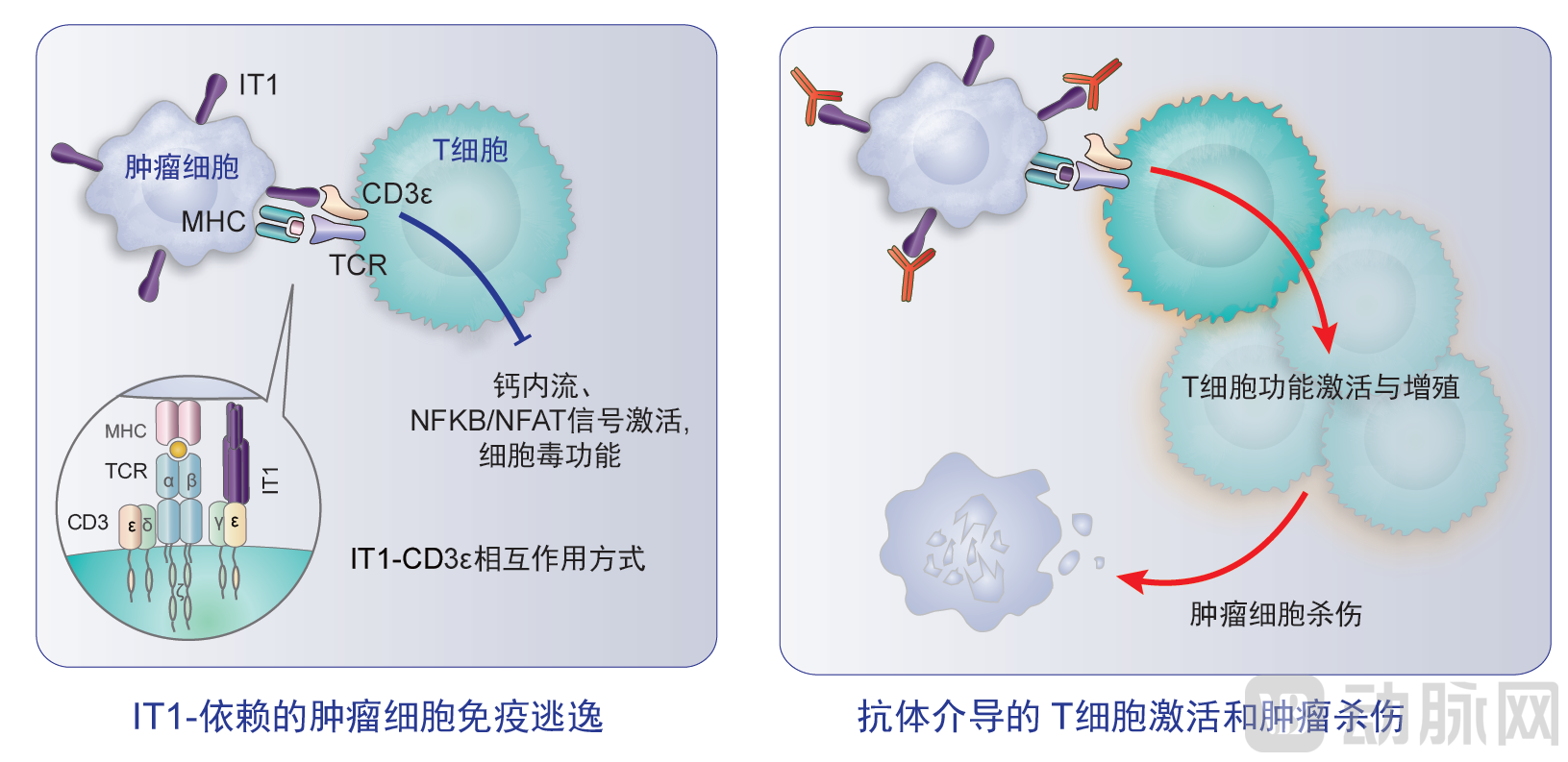
Exhibiting a high degree of mutual exclusivity with PD-L1 expression, which implies thatIT1-Targeted Antagonists Can Treat Tumors That Potentially Escape via the IT1 Pathway and Are Not Covered by PD-1/PD-L1 Inhibitor Indications, including solid tumors such as certain breast cancers, lung cancers, thyroid cancers, and rectal cancers, as well as hematologic malignancies such as leukemia and lymphoma, with a broad range of indications.
Another key aspect in the development of IT1-targeting antagonists is how to avoid side effects on human testes. Dr. Xu Jie responded that Boquan Biologics employs large-molecule monoclonal antibodies, which reduce drug permeability and ensure that the antagonist does not directly interact with targets within the testes. Dr. Xu added that comprehensive preclinical efficacy and toxicology studies will be conducted to establish safe and effective dosing regimens.
Based on preclinical data from Boquan Bio, the IT1 monoclonal antibody effectively inhibits tumor growth in animal models, and target safety has been validated through IT1 knockout models and preliminary toxicology studies in dosed animals.
Meanwhile, leveraging the research paradigm of immune privilege, Baiquan Biologics has strategically developed a clinical pipeline targeting SEMG2, as well as the BT103-105 pipeline directed against novel targets. Dr. Xu Jie stated that the common characteristics of the oncology targets favored by the company lie inIts Potent Role in Immune Privilege and Tumor Immune Evasion, and limited expression in normal tissuesThese characteristics suggest that such targets may become “next-generation” tumor immune checkpoint targets with better safety and efficacy. Baiquan Bio achieves the substantial medical value derived from source innovation by constructing robust patent barriers at the target and epitope levels. In the overseas PD-1 market, Merck & Co. and Bristol Myers Squibb continue to hold exclusive commercialization rights under the protection of the WO2006121168A1 patent family (with the former paying substantial settlement fees). This global, target-level exclusivity in development will undoubtedly become the ultimate goal pursued by innovative drug R&D enterprises in China that possess solid scientific foundations and exceptionally high patent barriers.
Baiquan Biotech completed a tens-of-millions-of-yuan angel financing round in September 2021, led by the Shanghai Bio-Medicine Fund and followed by Feibiao Accelerator. The company has recently officially launched a new round of financing, with the proceeds primarily intended to advance the clinical trial applications for its core pipeline candidates: BT102 (targeting IT1) and BT101 (targeting SEMG2).