

Yilianzhong Launches SanCore Personal Health Profiling Platform: Empowering AI as the Guardian of Public Health
The “Outline of the ‘Healthy China 2030’ Planning” proposes leveraging the leading and supportive role of technological innovation and informatization, adhering to the principle of prioritizing prevention while integrating prevention with treatment, and developing internet-based health services. In this context, strengthening the development of big data and artificial intelligence (AI) services in healthcare has become a crucial means to fully unlock the value of data and empower public health. Currently, issues such as imperfect mechanisms for data sharing and openness, limited product functionality, data silos, unclear standards for usage security and compliance, and unresolved technical barriers have hindered progress, causing AI applications in the healthcare sector to face significant headwinds. Therefore, how to leverage digital innovative technologies to legally and compliantly extract data value and deliver tangible benefits for personal health management has become a critical issue that the new generation of technology professionals must deeply contemplate.
As a pioneer in digital solutions for public welfare, YLZ Information Technology Co., Ltd. has adhered to a data-chain foundation and diligently developed SanCore, a personal health profiling system. By deeply integrating blockchain+ and AI+ technologies, the company fully responds to national policy initiatives, delivering digital technology and service solutions to the personal health industry.

Building an Integrated Data Processing Engine Centered on Personal Health
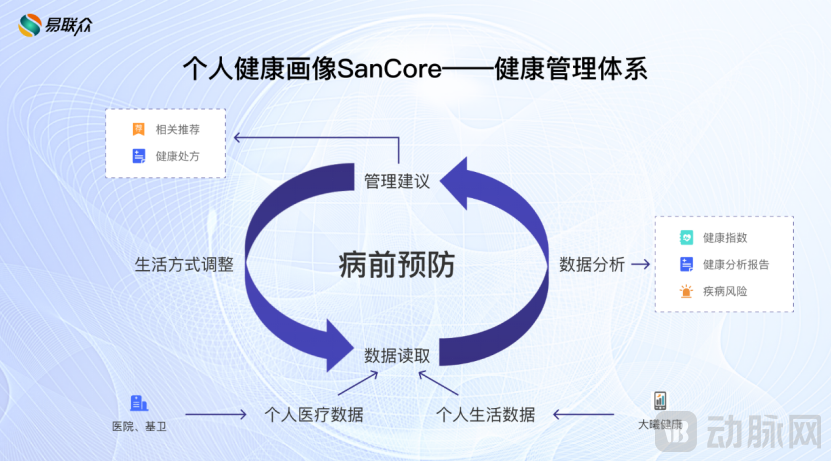
YLZ Personal Health Portrait SanCore is a data integration processing engine centered on individual health, built upon healthcare business scenarios. It integrates personal medical data with lifestyle data, leveraging a holistic approach encompassing the entire lifespan, all aspects of daily life, and comprehensive data sources. By combining data capabilities with advanced algorithms, it establishes three core functionalities: health assessment and analysis, disease risk prediction, and personalized health education.
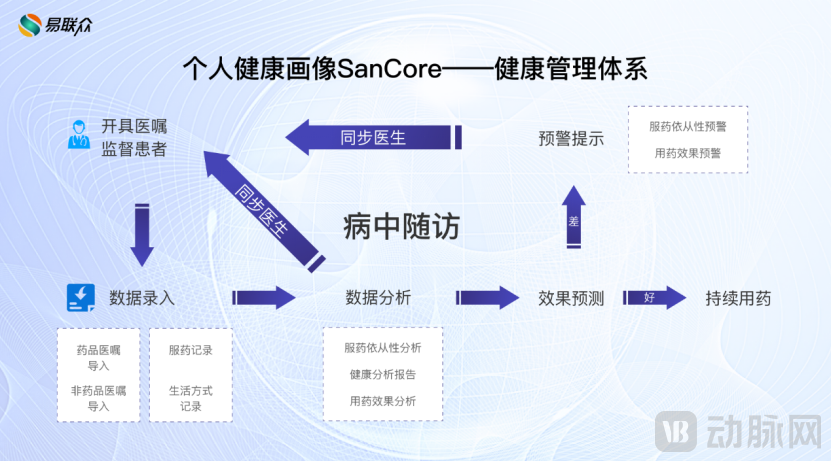
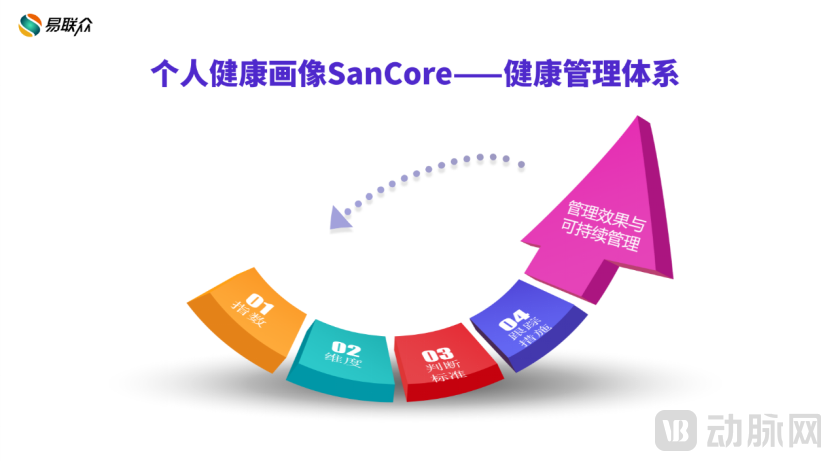
Based on this, the system will assess health risk factors for individuals or groups and trigger interventions based on the assessment results. It will issue health management alerts to individuals or regulatory authorities, complemented by regular follow-up tracking, to enable rapid response and adjustment of lifestyle factors such as medication, diet, exercise, and psychological well-being. This achieves a spiral, closed-loop management of individual health, helping individuals gain a comprehensive understanding of their own condition, master their health data, and prevent disease before it occurs.
Reversing the AI-in-Healthcare Paradigm: Enabling Healthcare + AI to Break Through Limitations
Jürgen Schmidhuber, the inventor of LSTM and a pioneer in deep learning, once summarized: “In the 2010s, artificial intelligence excelled in virtual worlds such as gaming, the internet, and marketing; in the 2020s, AI will increasingly integrate into the real world, impacting all human production activities and thus becoming a primary driver of economic development.” This perspective has been validated on many levels, propelling society toward a critical watershed moment characterized by the shift from “AI industrialization” to “industry-wide AI adoption.”
In the past, the AI industry typically centered on AI itself, advocating for its omnipotence. In the future, AI will serve as a foundational technology applied across various sectors. In this new era, leveraging big data and AI technologies as enabling tools for products will facilitate more efficient deployment of digital applications, delivering higher-quality products and services to users. “The convenience brought by artificial intelligence will ultimately become a norm for individuals and society. The transformation and development of AI are ultimately intended to serve people, rather than to surpass or replace them.” Guided by this philosophy, Dr. Hong Jingjin, head of the YLZ Health Brain team, has leveraged cutting-edge digital technologies as core pillars to lead her team in developing SanCore, the YLZ Personal Health Profile.
(1) ELT Risk Control Model
As is well known, the first major hurdle medical artificial intelligence has encountered is data—the “hard nut to crack” in healthcare. Professor Shen Xiangyang of Tsinghua University stated, “The core challenge that artificial intelligence must address is the data issue.” YLZ’s SanCore Personal Health Profile can clean and standardize non-standard, unstructured medical data, ensuring dynamic feedback and real-time computation during data utilization.
For example, patient medical records in hospitals may describe height in various formats, such as “height 158,” “158CM,” or “158 centimeters.” Therefore, to enable artificial intelligence-driven data computation, it is necessary to structure and properly label the data. However, even if machines learn how to label data, current data processing technologies still struggle to ensure both accuracy and efficiency when dealing with millions of medical records and overly complex medical terminology.
In response, Dr. Hong Jingjin led the YLZ Health Brain team to implement targeted optimizations by integrating custom risk control models and intelligent assessments. Leveraging Hadoop as the underlying infrastructure for both offline and real-time computing, the system meets the demands for storing, cleaning, processing, and calculating large volumes of data. The YLZ Personal Health Profile SanCore enhances system scalability by keeping all data within the database, thereby eliminating the need for data loading and export. Furthermore, as business departments continuously propose new requirements, the ELT risk control model effectively supports data warehouse operations and maintenance. Additionally, during human-computer interactions, SanCore enables seamless, non-intrusive data entry, reducing user burden and achieving the goal of effortless health tracking.
Meanwhile, the real-time data collection capability of the ELT risk control model accelerates data integration for the engine, enhances connectivity speed, enables more granular resource segmentation, and allows SanCore, the personal health profiling service, to be managed with greater flexibility and used with enhanced convenience.
(2) NLP Self-Learning Platform
Natural language processing provides enterprises and developers with core tools for text classification, entity extraction, text generation, and data mining. However, due to the complexity of the Chinese language system, achieving true human-computer dialogue remains highly challenging.
For example, there is significant arbitrariness in Traditional Chinese Medicine (TCM) diagnostic and treatment terminology. Different hospitals and departments may describe the same condition differently. Similar discrepancies exist in other medical practices, such as the distinction between “Hypertension Grade I” and “Hypertension Level 1.” While humans can easily understand and categorize these variations, machines require specific data processing to handle them.
To address this challenge, the YLZ Health Brain team leveraged natural language processing (NLP) technology to summarize the characteristics of massive datasets in specific scenarios. They independently developed a data generation tool with configurable settings tailored to specific needs. By training machines to understand “complex language” through neural network learning algorithms, the tool enables functionalities such as multimodal data entry, structured language input, scenario-based entity extraction, and text classification.
To facilitate better customer adoption of this technology, the team has developed a comprehensive, one-stop self-learning Natural Language Processing (NLP) platform. Characterized by high autonomy, ease of use, and customizability, the platform enables users with minimal technical expertise to rapidly generate models through a simple seven-step process, significantly enhancing the generalizability of NLP algorithms. Building on these capabilities, the platform systematically integrates neural network training to achieve self-learning functionality. By employing methods such as automatic annotation and label upgrading, it enriches data dimensions, continuously improves conversational data capabilities, and enables dynamic upgrades of the NLP system.
(3) Adaptive Learning System
The medical field has extremely high professional barriers. For artificial intelligence, even with capabilities in data governance and data dialogue, lacking the corresponding medical background makes it difficult to correctly process medical data, achieve accurate diagnoses, and empower healthcare.
In response, the YLZ Health Brain team has systematically integrated and learned from international and national standard datasets, extensive industry standard libraries, and medical terminology databases to construct a professional knowledge graph in the healthcare domain. Leveraging the data processing and analytical capabilities of its engine, along with the self-learning features of its Natural Language Processing (NLP) platform, the team has developed an adaptive learning system. This system enables artificial intelligence to optimize the definition of the knowledge graph based on business needs, automatically discover new knowledge, and establish foundational capabilities for various applications and services, such as disease prediction, medication standardization, and health education across different scenarios.
Real-Time Health Tracking: Safeguarding Your Personal Well-Being
In the disease management sector, SanCore’s personal health profile breaks away from the traditional model of scheduled follow-ups and periodic prescriptions, enabling real-time health tracking and providing patients and physicians with more intuitive and timely support for clinical visits and health management.
For the chronic disease management sector, which is characterized by a large patient population, high costs, limited management scope, heavy reliance on manual labor, low levels of informatization, and poor intelligence capabilities, the system employs adaptive learning algorithms. Using post-diagnosis patient data as an auxiliary source, it provides real-time dynamic feedback on individual health status, issues timely risk alerts, and adjusts health plans accordingly. This helps competent authorities strengthen the dynamic management of chronic disease patients and addresses the issue where some patients sign up for family doctor services but do not receive the contracted care. For patients with chronic diseases, this approach also helps them better understand their health status, improve medication adherence, avoid the risks of inappropriate drug use, and reduce disease-related expenses.
In addition, within the disease prediction module, YLZ’s SanCore Personal Health Profile has established multiple disease prediction systems for healthy individuals who are not yet affected by diseases. Among these, the diabetes prediction model and the hypertension prediction model have already been put into use. Both models select feature indicators and calculate labels based on clinical expertise and official literature, and achieve risk prediction through validation using five major indicators. The F1 score for diabetes prediction accuracy reaches 90.2%, representing a high industry standard. Currently, the SanCore Personal Health Profile has been launched on the YLZ Personal Health Cloud platform.
“In the future, the YLZ Health Brain team will continue to explore the practical applications of big data and artificial intelligence in the healthcare sector. Building upon the SanCore personal health profiling system, we will integrate ‘Shennong Search · AI Health Assistant,’ an intelligent conversational product centered on a knowledge graph of diseases, medications, and medical logic. This integration will enable seamless health tracking, intelligent health reminders, and personalized health customization. Regarding personal data privacy and security, the team will leverage technologies such as secure multi-party computation, federated learning, and privacy-preserving computation to provide comprehensive, end-to-end support for secure data circulation,” said Dr. Hong Jingjin.