

Charité – Universitätsmedizin Berlin Files IPO Prospectus Amid Surge in Innovation and Global Recognition
Since the outbreak of the pandemic, Charité Hospital has become a center for the detection and treatment of COVID-19 patients in Germany and even across Europe.The World's First COVID-19 Diagnostic TestIt happened right here. Imagine, without sufficient hard power, how could Charité Hospital have “stepped up to the plate” in times of emergency?
In fact, asEurope's largest healthcare institution,Charité Hospital boasts considerable strength. First, in terms of its industry standing, Charité has long been ranked among the top ten healthcare institutions globally and has been consecutively rated for many years by Focus, Germany’s most authoritative magazine, asGermany's First Hospital.
Secondly, in terms of scale, Charité – Universitätsmedizin Berlin, an institution with a history spanning nearly 300 years, has developed four campuses to date, covering a total area of nearly610,000 square meters,Moreover, with a workforce of over 15,000 physicians and caregivers from 89 countries, its substantial capacity further attests to Charité’s robust clinical capabilities.
Finally, in terms of scientific research, Charité Hospital is undoubtedly a leader in the industry.More than half of the German Nobel laureates in Physiology or Medicine hail from here.In addition, since its establishment, infectious diseases have been one of the key research focuses at Charité Hospital. Researchers have been continuously studying and treating viruses such as Zika, SARS, and MERS, as well as the infectious diseases they cause. It is reported thatAt Charité Hospital, nearly 5,000 scientists and physicians participate in over a thousand innovative projects each day.
Such a massive scale of scientific research and intense workload is truly astonishing. So, as a “milestone” in the European healthcare system, what exactly is Charité Hospital focusing on in terms of innovation and translation? And how effective have their efforts been? To uncover the answers to these questions,VCBeat Orange BureauA thorough analysis was conducted.
Three Major Centers Build a “Hotbed” for Innovation and Translation
1710, the Legendary German EmperorFrederick ICharité Hospital was established; as it initially served as a quarantine site for plague patients and later operated as a field hospital providing free treatment to citizens and soldiers, it was named “Charité,” meaning “charity” in French.
Since its inception, Charité Hospital has established“Research, Teaching, Clinical Care, and Patient Benefit”Core Philosophy: Although it has spanned nearly 300 years and faced multiple risks of destruction, Charité Hospital has never forgotten its original mission, consistently striving for advancements in cutting-edge medical innovation.
It is precisely for this reason that Charité – Universitätsmedizin Berlin is currently the largest teaching hospital in Europe and has established three world-class medical centers, a source of great pride.
1. Clinical Medical Center.As the "synonym" for European medical institutions, Charité Hospital’s clinical capabilities are widely recognized. Statistics show that the hospital admits approximately 130,000 inpatients and treats around 500,000 outpatients annually. Patients from all over the world seek medical care here, which has enabled Charité’s physicians to accumulate extensive experience in the clinical treatment of rare diseases and other complex and refractory conditions.
Second, the Scientific Research Center.Currently, approximately 5,000 researchers are employed at Charité Hospital, where they have formed multiple research groups dedicated to over a thousand basic and clinical medical research projects. According to statistical data,Approximately one-third of all inventions and patents within the German healthcare system originate from Charité Hospital.
Third, the Education and Teaching Center.In 1999, Charité Hospital becameGermany's First Pilot Program for Medical Education Reform,This has enabled the coexistence of modern and traditional medicine here. Just as Charité Hospital holds a prominent position within the healthcare system, Charité Medical School is equally prestigious and influential. It is one of the most competitive medical schools in Europe, currently enrolling nearly 9,000 registered students, the vast majority of whom will become the future backbone of Charité Hospital.
Undeniably,"Clinical Practice-Education-Research"The innovative healthcare system has been successfully validated by numerous medical institutions worldwide, including Charité Hospital.
In this triangular framework, clinical care serves as the cornerstone. On one hand, it enables patient treatment; on the other, it continuously identifies critical clinical challenges. When integrated with education, it cultivates more outstanding clinicians, thereby further enhancing the hospital’s clinical capabilities. When combined with scientific research, it fosters more specialized researchers, thus strengthening the hospital’s innovation and translational capacity.
Let the "Market" Deeply Engage in Innovation Commercialization
It is understood that Charité – Universitätsmedizin Berlin, located in Berlin, Germany, has become the largest talent hub in the city, currently employing nearly 16,000 staff members. If subsidiaries are included, the total number of employees reaches 20,000.
Such a vast talent pool has also generated substantial revenue for the hospital in innovation and translation. According to the latest data, Charité Hospital has achieved nearly€2.2 billion(revenue equivalent to approximately RMB 15.8 billion), which includes external funding and investment donations.
“Data doesn’t lie; such substantial returns underscore the success of Charité Hospital in medical innovation and translation.”
So, how exactly did Charité Hospital successfully commercialize innovative technologies? In addition to making significant efforts in the three areas of clinical practice, education, and scientific research, Charité Hospital also specially establishedBerlin Institute of Health (BIH)to facilitate its translational research.
The Berlin Institute of Health was established in 2013 as a joint initiative by the German Federal Ministry of Education and Research and the State of Berlin, with the former providing 90% of the funding and the latter contributing 10%. Notably, a comprehensiveEcological Transformation System——An ecosystem that emphasizes a holistic understanding of health and disease and promotes cultural transformation in biomedical research.
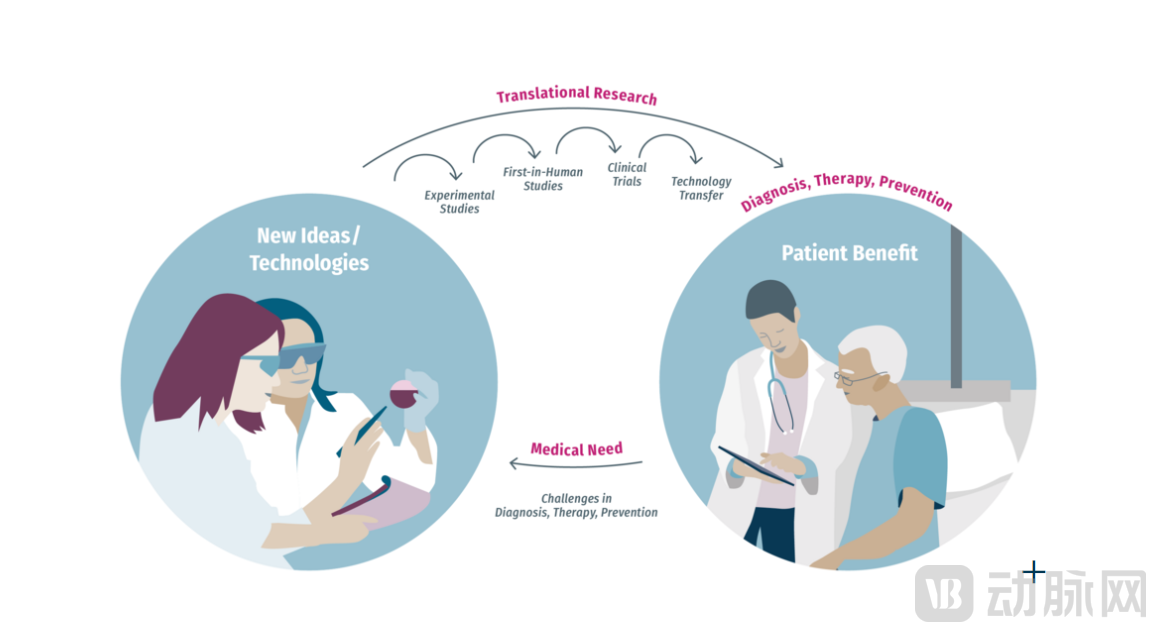
Specifically,This process originates from a novel biomedical concept proposed by scientists, progressing from pilot projects to first-in-human trials, clinical trials, and technology transfer, ultimately translating into new methods for personalized prediction, prevention, diagnosis, and treatment. In turn, clinical observations are leveraged to develop new research avenues.
In this process, the Berlin Institute of Health combines the overall approaches of translational research and systems medicine to form“From Bench to Bedside, from Bedside to Bench”circular knowledge transfer architecture.
According to the United States’ “"Bastille"The company's survey shows that,The failure rate of entrepreneurship among professors at U.S. universities is as high as 97%,This indicates that in translational research, scientists often place excessive emphasis on academic pursuits while neglecting market-oriented considerations, thereby frequently lacking the capacity to effectively commercialize their findings despite their intentions.
Therefore, to address this pain point and facilitate the more effective and concrete commercialization of innovative research outcomes, the Berlin Institute of Health provides a range of services to these scientists.
First isInvention Disclosure,ensure that scientists’ achievements receive a certain level of attention; secondly,Provide advice on intellectual property-related matters,help scientists better safeguard their rights and interests; thenProvide advisory services on grant applications,Continue to promote scientific research; furthermore,Guiding scientists in the process of establishing spin-off companies,To help them make fewer mistakes, or even no mistakes at all; finally,Support the development of scientists in the field of contract management,Help the company achieve healthy growth in the future.
Such thoughtful services have not only attracted numerous scientists to join, but also led many funding agencies, foundations, and industry partners to follow suit. It is reported thatCharité Hospital conducts more than 800 clinical trials annually,These “investigator-initiated trials” (IITs) rely primarily on third-party funding from public funding agencies (BMBF, DFG, European Union), foundations, and industry partners.
In addition, the Berlin Institute of Health has itself developed two funding instruments, namelyCollaborative Research Grant (CRG)andPaired Research Grant (TRG), with the aim of alleviating scientists’ financial burdens during the early stages of innovation incubation.
Although the objectives are identical, the two funding approaches exhibit distinctly different focal points.Collaborative Research Grant (CRG)Primarily targeting large-scale, long-term collaborative projects, each grant supports up to eight sub-projects, with a funding period extendable to four years;Paired Research Grant (TRG)It is primarily aimed at small-scale projects with short-term collaborations, with a funding period of two to three years, and is exclusively targeted at young scientists and physicians who have completed their specialty training.
Currently, major medical institutions worldwide are exploring innovation and translation. However, establishing effective translational mechanisms and ensuring their smooth operation remain critical challenges for these institutions at this stage. The successful model of Charité Hospital may offer valuable insights to these “young medical forces” navigating innovation and translation.
First, in terms of composition, the Berlin Institute of Health is fully equipped, with scientists, consulting firms, and investment institutions exerting their influence at the early, middle, and late stages, respectively; second, in terms of reserve strength,"Clinical-Research-Education"The incubation model has cultivated outstanding talents for hospitals who possess both practical skills and academic expertise, continuously injecting fresh blood into scientific research and innovation. Finally, from the perspective of the research itself, emphasis is placed on basic research and clinical trials, progressing from shallow to deep levels to achieve the translation of scientific findings.