

Pathways Forward for Hospital-Exclusive 'Star Drugs': From Internal Formulations to Market Potential
Peking Union Medical College Hospital’s Silicone Cream, Peking University Third Hospital’s Rhinitis No. 3, Guang’anmen Hospital’s Yuhong Ointment, PLA General Hospital’s Musu Pills, Shanghai Xinhua Hospital’s Blue-and-White Ointment… These medications, available exclusively at their respective hospitals, have become “star” preparations in the pharmaceutical landscape. Their reputation for high quality and affordability attracts “fans” from across China who travel to purchase them, even sparking a trend of proxy buying.
These pharmaceutical products are known as “in-house hospital preparations.” Most are derived from ancient formulas or empirical prescriptions developed by experienced clinicians. They are fixed-formulation preparations compounded and approved for internal use by medical institutions to meet the clinical needs of their own patients, and are not available through mass production in the commercial market. In 2021, atropine, touted as a “miracle drug for myopia,” was successfully approved as an in-house hospital preparation, bringing such preparations into the spotlight and providing an opportunity to re-examine this product shaped by its times.
In the early years of the People’s Republic of China, the development of hospital-prepared formulations was strongly encouraged by policy. However, with the growth of China’s pharmaceutical industry, the continuous enhancement of pharmaceutical companies’ capabilities in new drug research and development and production, and the accelerated marketization of drug supply, a large number of drugs with proven efficacy and broad indications have flooded into clinical practice. Coupled with the uneven quality of hospital-prepared formulations, these products have experienced a turbulent trajectory, shifting from lenient encouragement to strict regulatory oversight.
Amid the macro backdrop of strong national policy support for the development of Traditional Chinese Medicine (TCM), what opportunities and challenges are hospital preparations facing? To address this question, VCBeat spoke with Professor Yao Zhongqing, Deputy General Manager of the Zhenbaodao Research Center, and Luo Yun, Head of the Academic R&D System at Guyitang.
In the early days of the founding of the People's Republic of China, there was much to be accomplished. Against the backdrop of a backward pharmaceutical industry, the state encouraged hospitals to independently develop and formulate in-house medications based on clinical needs, so as to meet those needs and fill gaps in clinical practice.
This not only cultivates pharmaceutical talent and meets the clinical research needs of hospitals, but hospital preparations also serve as an important source of innovative drugs. Encouragement from national policies on traditional Chinese medicine has greatly promoted the development of hospital preparations, with many TCM hospitals beginning to establish their own preparation rooms and actively developing and producing hospital preparations. The development history of hospital preparations can be roughly divided into three stages: initial development, natural development, and standardized development.
The 1980s marked a watershed moment between the first two stages. Prior to this period, the market offered few pharmaceutical products, and the barriers to entry for hospital preparations were low, characterizing an era of unrestricted development. Since the 1980s, China’s pharmaceutical industry has experienced rapid growth, with hospital preparations becoming numerous, comprehensive in specifications, and high in quality, ushering in their golden age.
Wang Lixia, Director of the Pharmacy Department at Guang’anmen Hospital, stated in a media interview: “In the 1980s, to obtain an approval number for an in-house pharmaceutical preparation, a physician with extensive clinical experience was required to submit an application for its compounding. The application was then filed with the hospital’s Medical Affairs Office. The applicant needed to disclose the source of the formulation and demonstrate that the testing procedures and process quality standards were correct. Submission to the Beijing health authorities for record-filing was sufficient.”[1]
Hospital preparations have earned a strong reputation through long-term clinical application, with some even becoming popular as “souvenir gifts.” However, behind this rapid growth, issues such as chaotic dosage forms, unclear therapeutic efficacy, and poor quality control have begun to emerge. Consequently, the state has introduced a series of policies to regulate the development of hospital preparations.
In 2000 and 2005, the government successively promulgated the Good Manufacturing Practice for Preparation of Medical Institution Preparations (Trial) and the Administrative Measures for Registration of Medical Institution Preparations (Trial). The management of in-house preparations has become increasingly stringent, with continuous upgrades to the standards for application and compounding production, ushering in a comprehensive rectification and standardization of in-house preparations.
For instance, stricter requirements have been imposed on the area and facilities of in-house pharmaceutical preparation rooms in hospitals. Hospitals are even required to construct or renovate their preparation rooms in accordance with the Good Manufacturing Practice (GMP) standards for pharmaceutical manufacturers, ultimately achieving compliance with Good Preparation Practice (GPP) standards;[2]Non-pharmaceutical-grade raw materials and excipients shall not be used; preparations compounded by medical institutions are intended for in-house use, and stricter regulations apply to their transfer and use between different medical institutions.
According to statistical data from the healthcare sector, following regulatory consolidation, both the number of medical institution preparations and preparation rooms across provinces and cities in China have decreased. The number of approved preparation licenses for medical institutions in Beijing dropped from 4,503 in 2007 to 3,419 in 2010; in Shanghai, the figure fell from 9,712 in 2000 to 1,655 in 2008; and in Jiangsu Province, it declined from 5,862 in 2008 to 4,274 in 2012. Comparing 2005 with 2010, the number of medical institution preparation rooms in Beijing decreased from 67 to 49, while in Shanghai, it dropped from 39 to 18.[3]
The “setbacks” faced by in-house hospital preparations are not solely attributable to the improvement of relevant policies and regulations and the strengthening of regulatory oversight; significant issues also exist in the research, development, and production processes of these preparations. Examples include non-compliant hospital preparation rooms and testing equipment, a weak pool of pharmaceutical technical talent, difficulties in mass-producing hospital preparation varieties, and unstable product quality. The rapid development of large, modern pharmaceutical enterprises has diminished the role of in-house hospital preparations in compensating for shortages in the market supply of medicines.
The Law of the People’s Republic of China on Traditional Chinese Medicine, which officially came into effect on July 1, 2017, serves as a beneficial remedy for in-house hospital preparations by changing the regulatory approach for traditional Chinese medicine (TCM) preparations manufactured using traditional techniques from an approval-based system to a filing-based system.
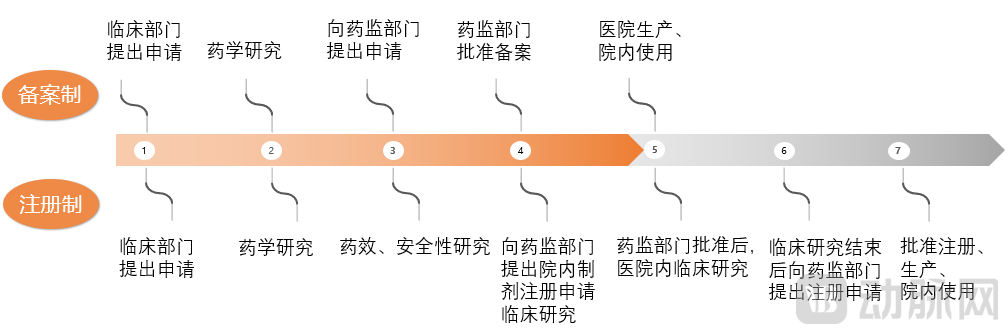
Following the implementation of the filing system, the entire process for traditional Chinese medicine (TCM) preparations—from pharmaceutical and quality research to regulatory submission—is expected to be completed within one year. The streamlined and more convenient procedures have, to a certain extent, reduced the upfront R&D costs and risks associated with TCM preparations compounded by medical institutions. This has heightened the enthusiasm of medical institutions and healthcare professionals for developing TCM preparations, thereby encouraging hospitals to collect classical formulas and empirically validated prescriptions from daily clinical practice and utilize them in the development of institutional preparations.
It should be noted that not all hospital-prepared formulations are eligible for the filing-based regulatory pathway. Only traditional Chinese medicine (TCM) preparations manufactured using traditional techniques are subject to the filing system, whereas TCM preparations produced using modern manufacturing processes still require registration and approval.
Traditional Chinese medicine preparations mainly include three categories:
First, traditional dosage forms including solids (pills, powders, elixirs, lozenges, etc.), semi-solids (electuaries, plasters, etc.), and liquids (decoctions, etc.) prepared from Chinese herbal slices through pulverization or extraction solely with water or oil;
Second, granules prepared by aqueous extraction of TCM decoction pieces, and capsules prepared by pulverizing TCM decoction pieces;
Third, medicinal liquors, tinctures, and the like prepared from traditional Chinese medicine decoction pieces using traditional extraction methods.
The streamlined approval process has facilitated the development of traditional Chinese medicine (TCM) preparations, while the inclusion of eligible TCM preparations in the medical insurance reimbursement scope has stimulated the endogenous motivation of medical institutions to invest in R&D for TCM preparations.[4]In-Hospital Preparations Find a New Path Forward.
In terms of production and R&D, the collaborative establishment of regional pharmaceutical preparation centers by hospitals and pharmaceutical companies is considered one of the future pathways for hospital preparations.The costs associated with the construction and maintenance of hospital preparation facilities, coupled with the high expenses driven by challenges in scaling up production for varieties characterized by diverse dosage forms and small batch sizes, have left many hospitals struggling to sustain their in-house preparation operations. In contrast, pharmaceutical companies, equipped with substantial financial resources and a comprehensive talent pool, are well-positioned to provide hospitals with R&D and manufacturing capabilities.
Regional preparation centers are centralized facilities established in hospital clusters that comply with Good Pharmacy Practice (GPP) standards. These centers integrate resources from various medical institutions within the region, thereby avoiding redundant construction by individual hospitals and improving both the utilization rate of preparation equipment and production efficiency.
Furthermore, with the advancement of modern technologies such as the Internet of Things (IoT), regional preparation centers can achieve digitalized operations, including closed-loop management of the entire production process for traditional Chinese medicine (TCM) preparations, thereby ensuring the safety and consistent quality of in-house hospital preparations.
In July 2019, the National Administration of Traditional Chinese Medicine and the National Health Commission jointly issued the “Notice on Effectively Strengthening Traditional Chinese Medicine Work in the Construction of Medical Consortia,” encouraging qualified TCM hospitals to establish regional TCM preparation centers to promote the research and development, regulatory submission, contracted manufacturing, and promotion and application of TCM preparations by medical institutions within the region. Subsequently, a large number of regional preparation centers emerged.
On December 17, 2019, the Guangdong-Macao Traditional Chinese Medicine (TCM) Preparation Center for Medical Institutions, jointly established by the Guangdong-Macao Cooperation Traditional Chinese Medicine Science and Technology Industrial Park and Zhuhai Hospital of Integrated Traditional Chinese and Western Medicine, was unveiled at the Guangdong-Macao Cooperation Traditional Chinese Medicine Science and Technology Industrial Park.
On December 26, 2019, the groundbreaking ceremony was held for the Wudong Campus Pharmaceutical Preparation Center, a joint venture invested and operated by China Resources Sanjiu and Hubei Provincial Hospital of Traditional Chinese Medicine.
On December 30, 2019, Guangyuan City Hospital of Traditional Chinese Medicine and Sichuan Good Doctor Pharmaceutical Group officially signed an agreement to jointly establish a pharmaceutical preparation center;
In December 2019, Beijing Shijitan Hospital entered into a strategic cooperation agreement with China Resources Double-Crane Pharmaceutical Co., Ltd., relocating the production site of its hospital pharmaceutical preparation facility to the China Resources Double-Crane Industrial Park;
On August 18, 2020, Guanghua Hospital Affiliated to Shanghai University of Traditional Chinese Medicine and Shanghai Lei Yun Shang Pharmaceutical Co., Ltd., a subsidiary of Shanghai Pharmaceuticals, jointly announced the official establishment of the “Guanghua–Lei Yun Shang R&D and Translation Center for Traditional Chinese Medicine Preparations.”
In terms of distribution scope, it can be allocated and used within the province through medical consortiums, thereby expanding its reach.In 2017, the “Guiding Opinions on Promoting the Construction and Development of Medical Consortia” explicitly stated the goal of achieving regional resource sharing and establishing mechanisms for prescription circulation, drug sharing, and distribution within medical consortia. In response, provinces and municipalities across China rapidly initiated action.
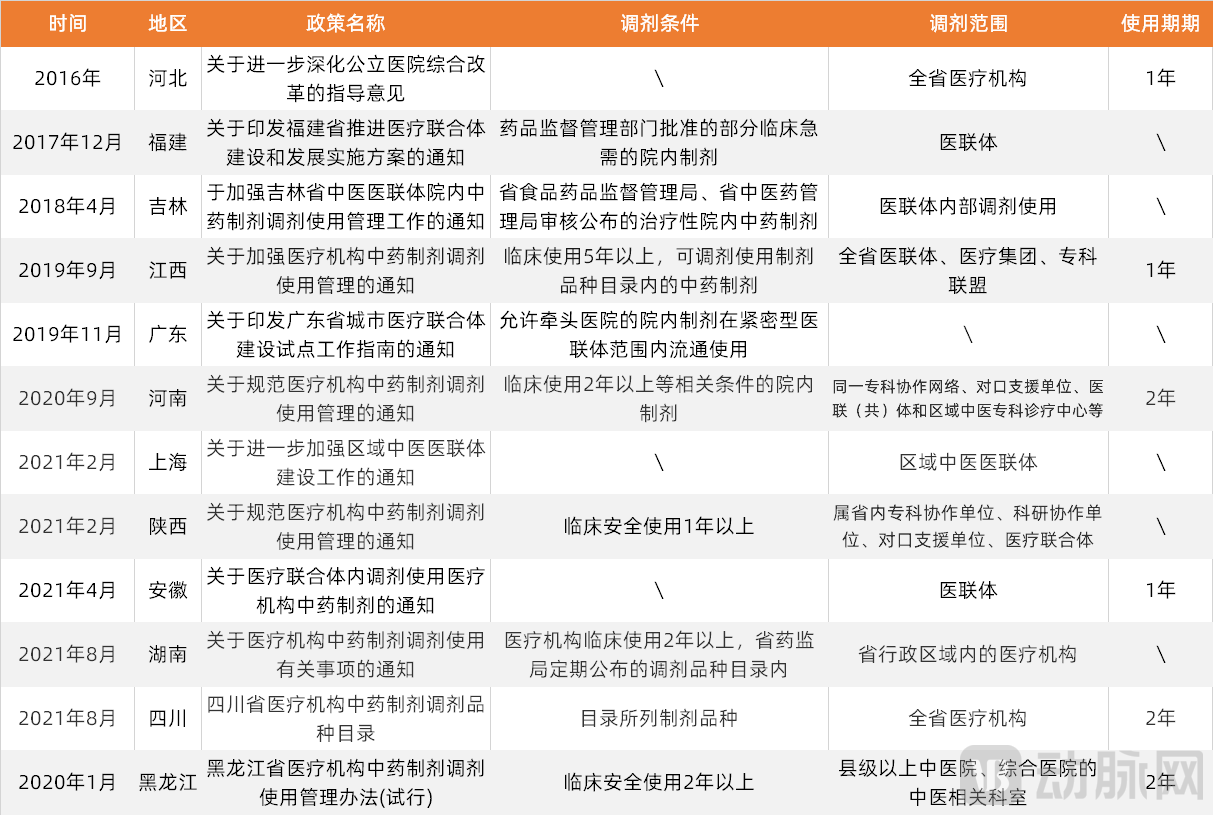
For instance, among the 49 in-house preparations completed by Zhenbaodao Pharmaceutical, 39 varieties have been approved for inter-hospital dispensing use across all Grade II and above hospitals in Heilongjiang Province; Guyitang has entered into a strategic partnership with the Hunan Academy of Traditional Chinese Medicine to develop multiple patented in-house preparations and products that are both medicinal and edible, among which 10 approved in-house preparations are already in use at Guyitang’s TCM clinics.
Expand the distribution scope of in-house hospital preparations beyond hospital walls, facilitate their transformation into new traditional Chinese medicine (TCM) drugs, and promote their industrialization.According to the data presented in the Center for Drug Evaluation (CDE) of the National Medical Products Administration’s report, “Analysis of Review and Approval of Traditional Chinese Medicine (TCM) New Drugs Applying for Clinical Trials from 2005 to 2020,” an analysis of formulation sources for TCM new drug Investigational New Drug (IND) applications between 2005 and 2020 reveals that clinical experience-based formulas, hospital preparations, and modified classical prescriptions are predominant, accounting for 74.08% of the total. Furthermore, TCM new drugs derived from formulations with prior human use experience—including clinical experience-based formulas, hospital preparations, modified classical prescriptions, and family-inherited formulas—demonstrate higher approval rates, all exceeding 60%.
On December 30, 2021, eight ministries and commissions, including the National Medical Products Administration and the National Administration of Traditional Chinese Medicine, jointly issued the “14th Five-Year Plan for National Drug Safety and High-Quality Development,” which proposed measures such as “encouraging the transformation of traditional Chinese medicine (TCM) preparations from medical institutions into new TCM drugs.” The conversion of in-house hospital preparations can enhance and diversify enterprises’ product portfolios, thereby meeting substantial market demand and urgent clinical needs.
Hospital-Prepared Formulations Entering the Market Must Also Follow the New Drug Development Process,The process encompasses formulation research, process development, quality standard establishment, stability studies, pharmacological, efficacy, and toxicological evaluations, clinical trials, commercial-scale production studies, and new drug registration.
Hospital preparations have generally undergone years of repeated clinical use and validation, proving to be safe and effective for clinical application. Pharmaceutical companies can select varieties with high safety profiles and reliable efficacy as a foundation for new drug development. This approach can shorten the research cycle, reduce R&D costs, and increase the success rate of developing new traditional Chinese medicine (TCM) drugs.
Tasly’s Compound Danshen Dripping Pills and China Resources Sanjiu’s Sanjiu Weitai Granules are outstanding examples of in-house hospital preparations that have successfully entered the commercial market. The former originated from Tianjin 254 Hospital, while the latter was developed at Nanfang Hospital, Southern Medical University. Qirui Weishu Capsules, a Class 1.1 new traditional Chinese medicine approved for marketing by the National Medical Products Administration in 2021, is formulated based on an in-house preparation from Guang’anmen Hospital, China Academy of Chinese Medical Sciences.
Guangdong Province is at the forefront of commercializing in-hospital pharmaceutical preparations. As early as 2015, Guangdong launched the “2015 Special Fund for Building a Strong Traditional Chinese Medicine (TCM) Province—Hospital TCM Preparation Development Project,” with provincial fiscal authorities allocating RMB 30 million to support the development of in-hospital preparations. This initiative aimed to further research and develop TCM preparations with significant scientific value by conducting in-depth R&D and improvements in areas such as formulation and manufacturing processes, quality standards, and pharmacological and toxicological profiles. The goal was to transform these preparations into safe, stable, quality-controllable, and user-friendly TCM products, thereby fostering the creation of new TCM drugs with independent intellectual property rights.
In July 2020, the Traditional Chinese Medicine (TCM) Innovation Service Platform for the Guangdong-Hong Kong-Macao Greater Bay Area was officially launched in Yuexiu District, Guangdong Province. It will serve as a foundation for bringing 2,000 hospital-prepared TCM formulations from Guangdong to market. In addition, the Yuexiu District Government plans to establish a “Real-World Data and Technology Expansion Center” (comprising a data center and a talent hub) as well as pilot and production bases for hospital-prepared formulations, providing facilities for scaled-up manufacturing. An industrial fund will also be set up to support the accelerated development of hospital-prepared TCM formulations.
Overall, hospital preparations embody the dedicated efforts of countless generations of traditional Chinese medicine (TCM) practitioners and serve as a significant reflection of the clinical distinctiveness of TCM. Evolving from “unregulated growth” to standardized development, hospital preparations have established their unique characteristics. As China’s healthcare system reform continues to deepen, hospital preparations will continue to play a vital role in the strategic development of the pharmaceutical and healthcare sectors.
This article received strong support from Professor Yao Zhongqing, Deputy General Manager of Zhenbaodao Research Center, and Luo Yun, Head of the Academic R&D System at Guyitang. We hereby express our sincere gratitude.
Reference Article:
[1] Outlook Weekly, 2016, Issue 2, by Wang Huihui https://mp.weixin.qq.com/s/69mSoQlc9hl6OoHx_SWs6Q
[2] Research on the Current Status of Intellectual Property Protection for In-House Preparations of Traditional Chinese Medicine and the Feasibility of New Drug Development, WFCMS IP Committee Research Working Group https://www.lima35.com/news/show-25114.html
[3] Health界 "Sales Exceeding 100 Million Yet Concealing Risks! Is This Hospital Diagnostic and Treatment Revenue a Model Innovation or Skirting the Edge?" https://mp.weixin.qq.com/s/9_ax8FzwR7n5TR3-4E3L-Q
[4] In 2021, the State Council issued the Notice on Several Policy Measures to Accelerate the Characteristic Development of Traditional Chinese Medicine, which explicitly highlighted that medical institutions may independently set prices for the processing and use of traditional Chinese medicine (TCM) decoction pieces and TCM preparations, and those meeting specified criteria may be included in the scope of medical insurance reimbursement in accordance with relevant regulations.