

Billions-USD Market's Dark Horse: Vascular Interventional Robotics Emerges as the Next Hot Spot
“From the vast reaches of outer space to the depths of the deep sea, from factory workshops to rural fields, and from major national infrastructure to everyday life, we are entering a vibrant new world characterized by harmonious coexistence and shared prosperity with robots,” said Xin Guobin, Vice Minister of the Ministry of Industry and Information Technology, at the opening ceremony of the 2021 World Robot Conference.
Humans have never lacked imagination and creativity. From homes and factories to hospitals, robots are ubiquitous. In 2020, China’s robotics industry surpassed the RMB 100 billion mark for the first time. As the crown jewel of the robotics sector, medical surgical robots have long represented a technological pinnacle that humanity strives to conquer.
In 2020, the global market for surgical robots reached $8.32 billion, while the market for vascular interventional surgical robots remained in its early stages of development, with no approved products currently available in China. Amidst this product void, however, the seeds of technology are beginning to sprout.
Recently, the Flash Robot vascular interventional surgery robot launched by Rainmed Medical successfully conducted its first animal experiment.The Flash Robot developed by Rainmed Medical adopts a globally pioneering design, covering the entire process of vascular intervention and achieving automatedVisual Localization for Puncture, Angiography-Guided Advancement, Rapid Functional Diagnosis, Interventional Access Establishment, Surgical Navigation Guidance, Postoperative Assessment and Managementand other stages.
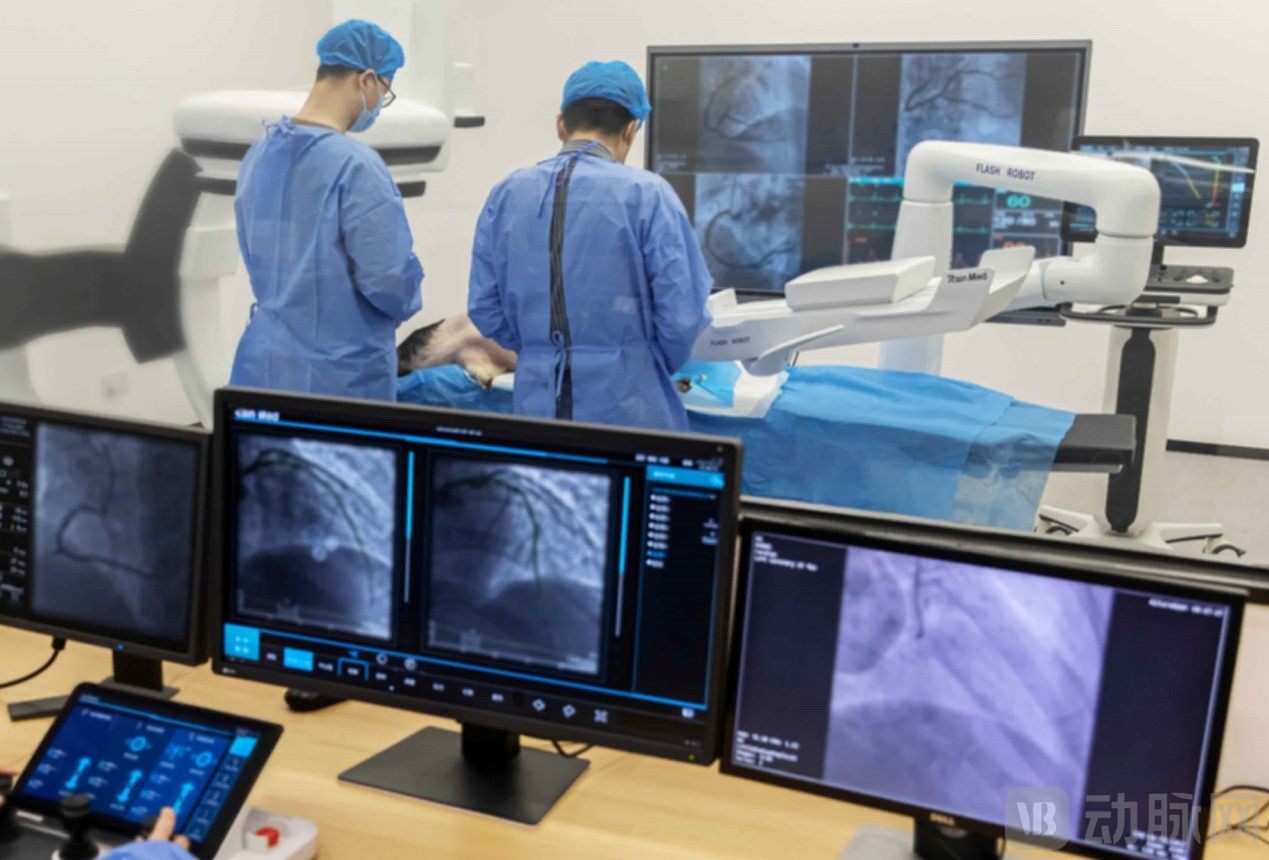
Scenario of the First Animal Experiment Operation
The animal experiment successfully performed coronary intervention surgery with the assistance of a vascular interventional surgical robot.No surgical complications, such as vascular spasm, occurred throughout the experiment. The study validated the clinical operability, safety, and efficacy of the vascular interventional surgical robot system. This animal study also garnered attention and recognition from renowned domestic experts. Subsequently, Rainmed Medical will sign clinical trial agreements for its vascular interventional surgical robot with prestigious Grade A tertiary hospitals in China.
The success of this animal experiment marks another significant step forward for RainMed Medical in its pursuit of becoming a globally leading company in vascular interventional surgical robotics.The company has accumulated extensive expertise in automatic control, imaging algorithms, fluid dynamics, hardware development, consumables development, and evidence-based medicine.
In the field of cardiovascular intervention, Rainmed Medical is one of the few companies with the capability to research, develop, and manufacture both intelligent interventional software and hardware.
The surgical robotics sector is no stranger to industry giants, and competition in the field of vascular interventional surgical robots is equally fierce. Overseas leaders such as Siemens and Johnson & Johnson are prominent players, while domestic companies like MicroPort Medical, Rainmed Medical, and Allvas Medical are also actively positioning themselves in this space. How will Rainmed Medical carve out its path in this high-growth segment, and how will the Chinese market for vascular interventional surgical robots evolve?
Surgical robots are undoubtedly one of the hottest keywords in the medical field in recent years.
In the booming surgical robotics market, the laparoscopic and orthopedic surgical robotics segments have taken the lead, producing industry leaders such as Intuitive Surgical, MicroPort MedBot, and Tinavi. Multinational giants including Stryker, Medtronic, and Johnson & Johnson are also actively establishing their presence in these fields.
According to Frost & Sullivan data, the global surgical robot market reached $8.32 billion in 2020, with the laparoscopic surgical robot market at $5.25 billion and the orthopedic surgical robot market at $1.39 billion, together accounting for the majority of the market.
In contrast,The landscape of the vascular interventional surgery robotics sector remains unsettled, with a global market exceeding $4 billion awaiting exploration by domestic and international enterprises.The market size of vascular interventional surgical robots in China is projected to reach RMB 34 million in 2022 and further grow to RMB 5.824 billion by 2030, representing a compound annual growth rate (CAGR) of 90.3% from 2022 to 2030. The domestic market is experiencing near-doubling growth, creating an urgent demand for innovative products to drive expansion.
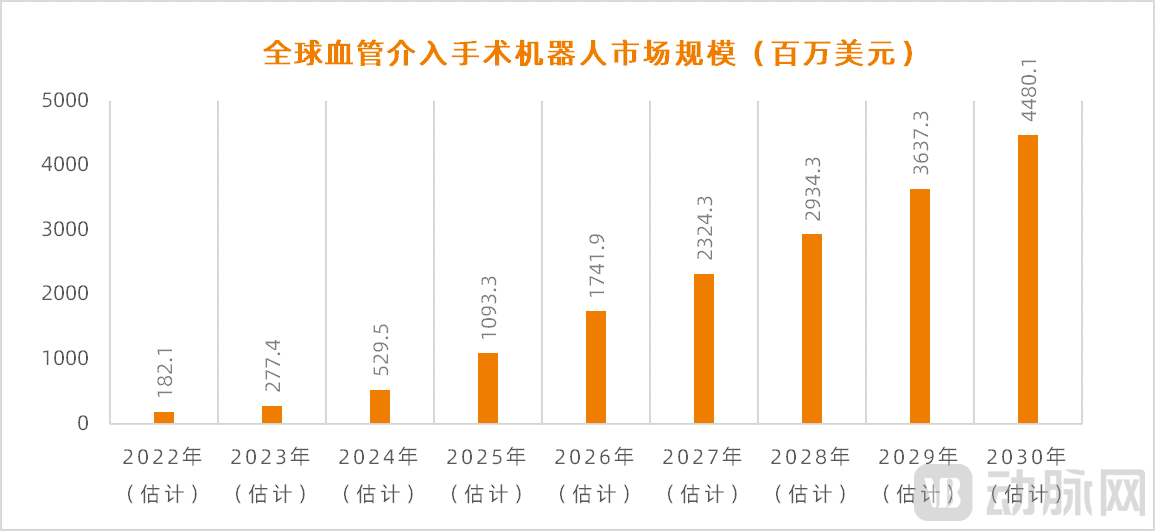
Global Market Size of Vascular Interventional Surgical Robots (2022–2030)
Vascular interventional surgical robots are primarily used to drive intravascular instruments and provide surgical navigation during procedures. The surgical robot constructs a three-dimensional model of the patient’s vasculature based on preoperative and intraoperative imaging data, and analyzes features such as vascular bifurcations, curves, elasticity, and plaques, thereby enabling tracking and positioning of surgical instruments during the procedure.
Unlike orthopedic and laparoscopic surgical robots, vascular interventional surgical robots operate on more fragile human blood vessels and require the manipulation of interventional devices such as catheters, guidewires, and balloons, thereby demanding higher performance and stability from the product. Therefore,Vascular interventional surgical robots have always been a scarce asset in the surgical robot market.。
Currently, vascular interventional surgical robots are primarily used in percutaneous coronary intervention (PCI) procedures. They are expected to be widely adopted in vascular interventions in the future, assisting physicians in performing neurointerventional and peripheral vascular interventional procedures.
Cardiovascular disease has long been the leading cause of death and loss of healthy life expectancy, topping the global burden of disease. Over the past three decades, the number of people affected by cardiovascular disease worldwide has doubled. Focusing on China, the country has a large population of patients with coronary heart disease.
According to a Frost & Sullivan report, the number of patients with coronary heart disease (CHD) in China reached 17 million in 2020 and is projected to reach 28.8 million by 2030. With the deepening aging of the population, the number of CHD patients in China continues to rise, driving sustained growth in the volume of percutaneous coronary intervention (PCI) procedures.In 2020, the number of PCI procedures performed in China approached 1 million.。
PCI procedures are technically demanding and highly dependent on the physician’s individual experience and interventional skills. According to the 2020 registry data for percutaneous coronary intervention (PCI) in mainland China, Shandong Province, Henan Province, and Guangdong Province ranked as the top three provinces/autonomous regions/municipalities in terms of the number of patients with coronary heart disease.
However, the distribution of medical resources in China is uneven, with percutaneous coronary intervention (PCI) procedures predominantly concentrated in first- and second-tier cities, resulting in low treatment rates for patients with coronary heart disease in grassroots areas. Moreover, even among tertiary Grade A hospitals in first-tier cities, there is variability in physicians’ interventional proficiency, and excessive clinical workloads may compromise the precision of their procedural performance.
Furthermore, during coronary intervention procedures, physicians are often required to wear heavy lead aprons and stand by the operating table for several consecutive hours while exposed to radiation, which can adversely affect their long-term health.
Vascular interventional surgical robots can transform physicians’ tasks into mechanized operations, achieving millimeter-level precision, enhancing the accuracy and efficiency of percutaneous coronary intervention (PCI), and reducing reliance on individual operator skill. Furthermore, these systems enable remote operation, allowing physicians to avoid radiation exposure.Studies have indicated that vascular interventional robot-assisted PCI procedures can also reduce stent usage.
Globally, CorPath GRX by Tuling (a subsidiary of Siemens Healthineers) is the only vascular interventional surgical robot to have obtained both CE certification and FDA approval, and it can be used for vascular interventional procedures such as coronary and peripheral interventions; Robocath’s R-One (a collaborative project with MicroPort MedBot) has received CE certification; Johnson & Johnson’s Sensei X2 and Stereotaxis’s Genesis RMN have obtained FDA approval.
Currently,No Vascular Interventional Surgical Robots Have Been Approved in China, but the seeds of technology have already begun to sprout. Siemens Healthineers’ CorPath GRX coronary intervention system has entered the NMPA’s special approval channel for innovative medical devices; the R-One vascular intervention robot, introduced through a collaboration with MicroPort Scientific Corporation, has completed the first NMPA-registered clinical trial; and the domestically produced Luban surgical robot has taken the lead in completing its clinical trials.
Surgical robots are an essential pathway toward precision in vascular intervention.
Facing the technological peaks, surgical robotics companies press forward undaunted, choosing to scale and conquer them. In turn, the market responds with equal enthusiasm.In 2021, the vascular interventional surgical robot market witnessed multiple financing rounds with amounts approaching or exceeding RMB 100 million, among which Rainmed Medical completed two major financing deals within a single year.
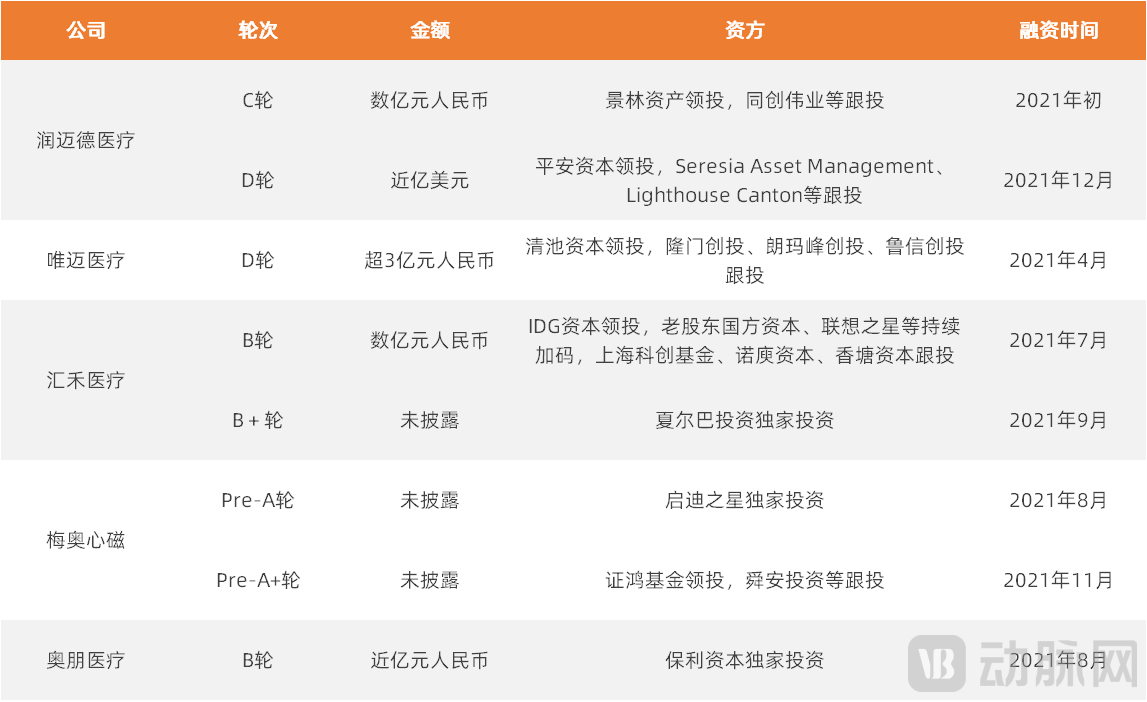
2021 Financing Landscape of Vascular Interventional Surgical Robotics Companies Source: Public Information
ButThe current market for vascular interventional surgical robots suffers from severe homogenization and a lack of differentiated innovation.Intravascular procedures constitute the core component of percutaneous coronary intervention (PCI); consequently, most companies have focused their attention on this area while overlooking the importance of angiography and diagnosis.
Existing surgical robot products are mostly used for surgical navigation and intravascular procedures., its intraoperative utility may last only a few minutes, while preliminary procedures such as puncture, angiography, and diagnosis still rely on the physician’s individual experience and technical expertise. In fact,In interventional procedures, angiography and diagnostic processes account for 70%–80% of the total procedure time.. These tasks are trivial and difficult to standardize, but they can impact subsequent disease diagnosis and treatment.
Only through precise and standardized coronary angiography procedures can physicians obtain high-quality coronary angiographic images, thereby enabling the assessment of coronary artery disease (CAD) and determining whether stent implantation is required and which procedural approach should be adopted. Moreover, only a minority of patients undergoing coronary angiography subsequently require percutaneous coronary intervention (PCI).
Coronary Angiography Volume Far Exceeds PCI VolumeAccording to a report by Frost & Sullivan, the total number of coronary angiography procedures in China reached nearly 4 million in 2020, compared with fewer than 1 million percutaneous coronary intervention (PCI) procedures. The data indicate that approximately three-quarters of patients did not undergo interventional therapy following coronary angiography.
Regardless of the target market size or the standardization and automation of the entire percutaneous coronary intervention (PCI) process, the vascular intervention market requires surgical robots that cover the full PCI workflow.Among the numerous surgical robotics companies worldwide, Rainmed Medical has taken a pioneering step by launching China’s first vascular interventional surgical robot covering the entire PCI workflow, to meet the diagnostic and therapeutic needs of the majority of patients with coronary heart disease.
The Flash Robot vascular intervention surgical robot organically integrates software systems such as functional diagnostics, image-guided surgical navigation, and ECG monitoring, along with hardware components including multi-functional interventional catheters and high-pressure injectors. This integration creates a multi-system functional synergy and a closed-loop data ecosystem, achieving full automation of angiography, diagnosis, navigation, and postoperative assessment.
The Flash Robot vascular intervention robot is composed of three major functional units: a surgical image navigation system, a console system, and a bedside robotic arm with instrument control devices.They coordinate and cooperate with each other to form a closed-loop signal transmission system, serving as the robot’s “eyes,” “brain,” and “hands,” thereby assisting surgeons in completing the entire process of surgical diagnosis and treatment.
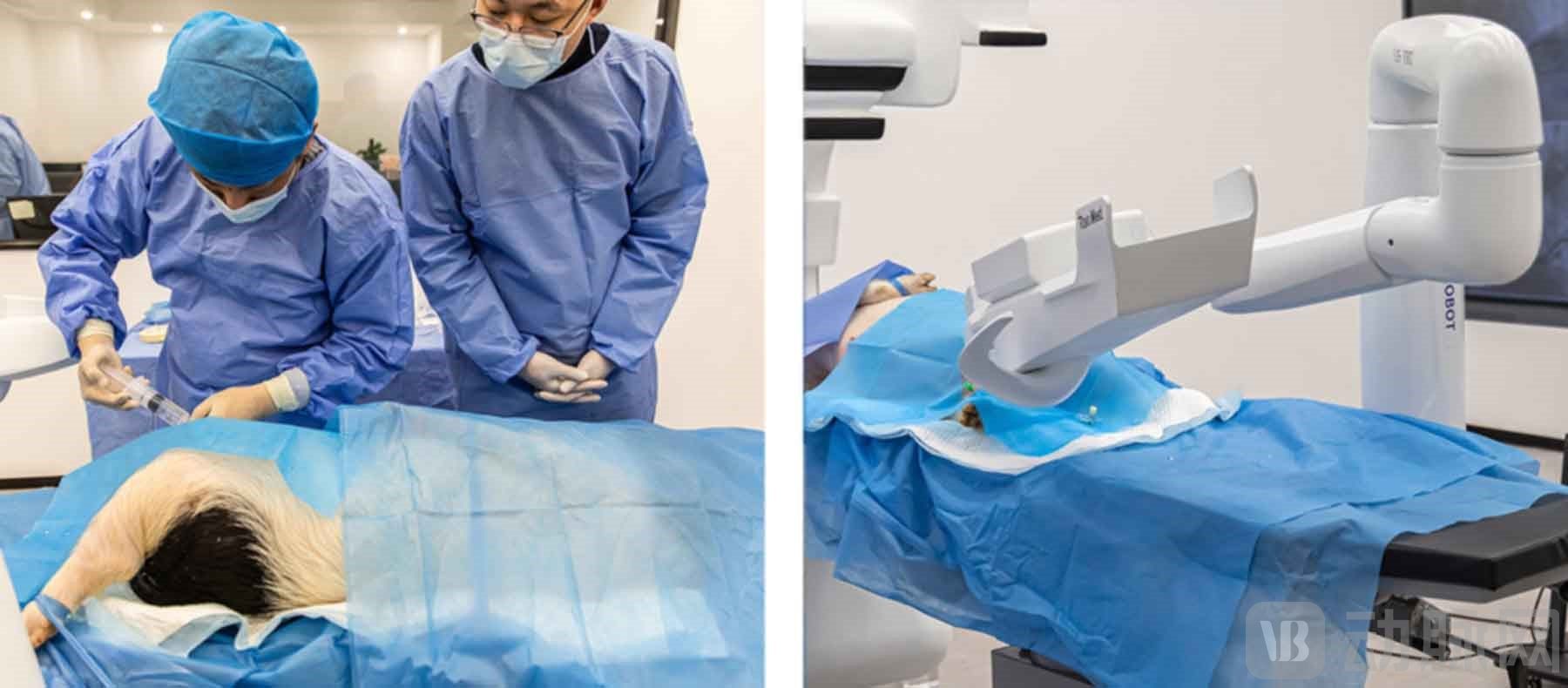
First Animal Experiment Operation Scenario
In the design of the “brain,”Flash Robot Vascular Interventional Surgical Robot Integrates Multimodal Medical Imaging for Precise Navigation。
The surgical image navigation system serves as both the brain of the vascular interventional robot and the eyes of the operator. It reconstructs three-dimensional vascular models from various types of medical images, enabling precise and detailed visualization of the patient’s lesion sites. By aligning raw medical imaging data with real-time instrument motion information, the system provides accurate navigation to assist operators in preoperative decision-making, intraoperative guidance, and postoperative evaluation.
As the bridge connecting the operator to the vascular interventional surgery robot, the console system enables precise manipulation of instrument control devices, catheters, and guidewires, while supporting remote transmission of the operator’s surgical commands. Through continuous and accurate information transfer, it achieves effective human-machine interaction.
As an extension of the operator’s “hands,” the bedside robotic arm and instrument control device can mimic bimanual push-and-twist maneuvers, manipulating medical instruments to perform actions such as advancement, rotation, and retraction. Seamless overlapping, transitioning, and combination of these movements are achievable, meeting the generalized requirements of various endovascular procedures and accommodating surgical needs across different anatomical sites and procedural techniques.
Through the precise coordination of its “eyes,” “brain,” and “hands,” this vascular interventional surgical robot achieves millimeter-level control and measurement, thereby preventing errors caused by hand tremors or other operational issues. Meanwhile, the Flash Robot vascular interventional surgical robot is equipped with touchscreens on both the surgical image navigation system and the console system, allowing physicians to capture screenshots or add marker lines with a single click, thus enhancing the clinical experience and improving surgical efficiency.
Furthermore,Runmaide Medical has integrated its previously independently launched coronary functional diagnostics module into its surgical robot system, enabling rapid, standardized, and automated functional diagnostics through robotic assistance.; meanwhile, the functional diagnostic module serves as the “commander,” providing professional diagnostic guidance to the operator and integrating the two major interventional procedures: angiography and therapy.
Subsequently,The company will also integrate multiple therapeutic modules, such as interventional and ablation procedures, into its surgical robot products to achieve fully automated diagnosis and treatment.。
Developing such a product is by no means an easy task, requiring the underlying company to possess comprehensive strengths in integrating hardware and software. Rainmed Medical’s caFFR product boasts the highest accuracy among FFR products in China. Furthermore, the company’s coronary microcirculation diagnostic product, caIMR, is a global first as a non-invasive solution for coronary microcirculation diagnosis. Meanwhile, Rainmed Medical demonstrates robust hardware development capabilities, meeting the R&D requirements for integrated surgical robots.
Furthermore, the Company will collaborate with nationally renowned key opinion leaders (KOLs), principal investigators (PIs), and hospitals to jointly advance the clinical trials of its vascular interventional surgical robot products.
The Flash Robot vascular interventional surgery robot is expected to obtain certification from China's NMPA in 2024 and initiate CE registration in the European Union, thereby driving large-scale commercial deployment of the product both domestically and internationally.In the future, the Flash Robot vascular interventional surgical robot will also be fully compatible with a variety of diagnostic and therapeutic modalities, covering the entire process of diagnosis and treatment for cardiovascular, cerebrovascular, pulmonary, and renal vasculature.
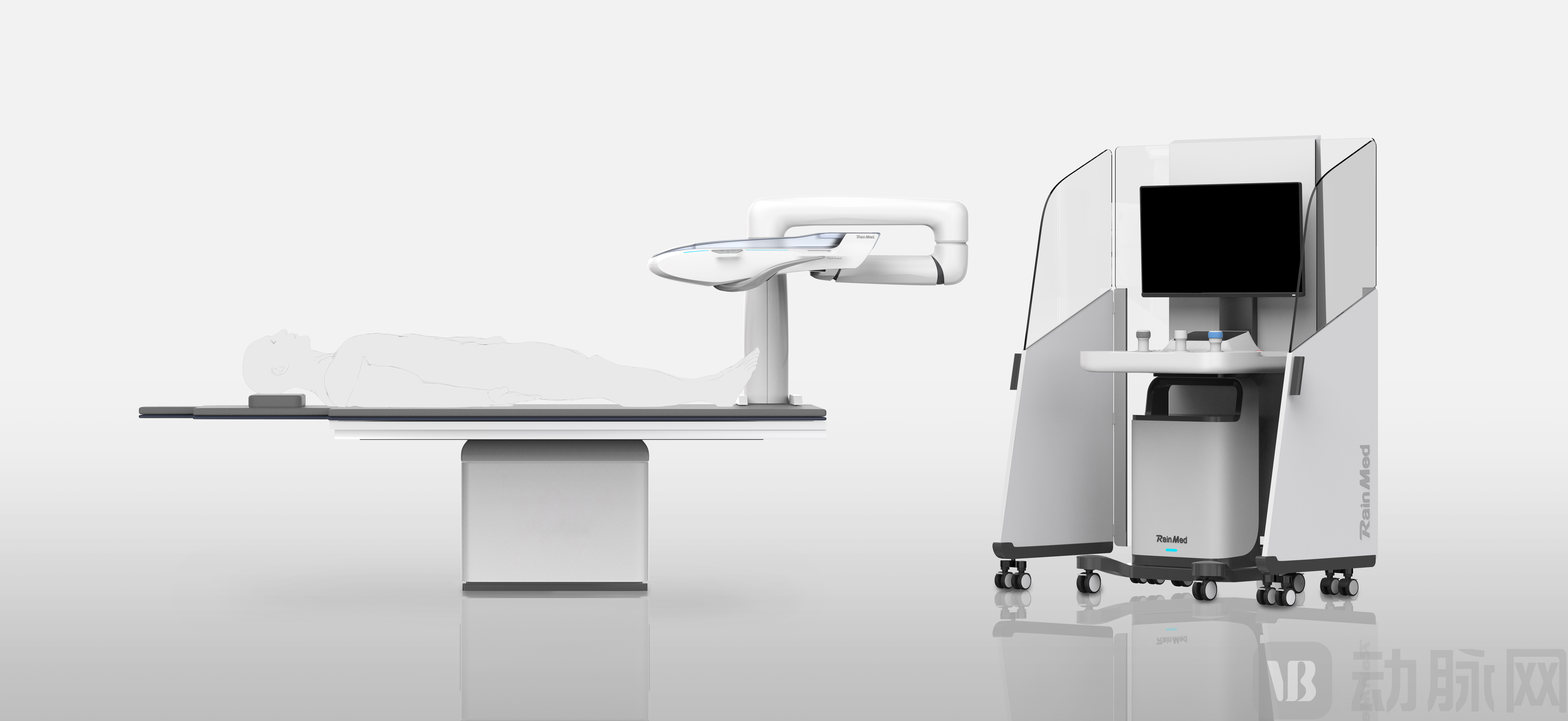
RainMed Medical Vascular Interventional Surgical Robot
A diverse product portfolio and the seamless integration of multiple modules are underpinned by Rainmed Medical’s robust R&D team. Company founder Huo Yunfei brings extensive experience in computer system research and development as well as project management. Chief Technology Officer Liu Guangzhi has over eight years of experience in medical device development and more than 15 years of expertise in software and algorithm development.
The company has established a 114-member R&D team led by PhD and Master’s degree holders, creating significant technical barriers to entry. It currently holds or has filed for nearly 200 patents.
If product development and regulatory approval serve as the cornerstone of a company’s early-stage growth, then commercialization and profitability are the driving forces that propel its long-term, stable advancement.
RainMed Medical has established a comprehensive commercialization network. Leveraging his 20 years of experience in the healthcare industry, Lu Yonghui, Executive Director and Co-CEO of the company, has built a marketing team of over 100 members and set up two major marketing centers in China and overseas, significantly accelerating product sales and hospital adoption.Currently, Rainmed Medical’s commercialization network covers 29 provinces, municipalities, and autonomous regions across China, with nearly 100 distributors, and has established distribution networks in Europe, Africa, Southeast Asia, and other regions.
To date, vascular interventional surgical robots remain in the early stages of development. In particular, the competitive landscape in the Chinese market is not yet settled, and no dominant industry leader has emerged. Moreover, existing products are relatively homogeneous, capable of replacing only certain procedural steps such as device advancement and stent implantation. Under the current landscape,The Development Pace of Vascular Interventional Surgical Robot Companies Is Gradually Leveling Off Between China and Overseas Markets, it was an opportune time for innovative enterprises to catch up and surpass their competitors.
Differentiated advantages are the key for companies and products to stand out in the vascular interventional surgical robot market. As previously mentioned, most current surgical robot products focus on intravascular operations. For a product to "stand out" from the crowd, it must be at least an order of magnitude higher than other products in terms of precision and stability.
Leveraging its robust capabilities in both hardware and software, Rainmed Medical has carved out a distinct niche in the vascular interventional surgical robot market by developing a robotic system that covers the entire workflow of vascular interventions. This animal study marks only the beginning, as the company progressively builds toward its vision of the “unmanned catheterization lab” of the future.
Reference Article:
“CCIF 2021 | Major Release of Registry Data on Percutaneous Coronary Intervention in Mainland China, 2020” — Cardiovascular Health Alliance Information Platform
“[2021 World Robot Conference] The Era of Essential Demand for Robots Is Arriving—A Sidebar from the 2021 World Robot Conference” — Guangming Daily
“Rainmed Medical Prospectus”
"Research Report on the Surgical Robotics Industry: A High-Barrier $50 Billion Track Sees Domestic Leaders Poised for Takeoff" — Southwest Securities