

IVF Reimbursement Takes Off as Assisted Reproduction Enters National Health Insurance
On February 21, 2022, a major announcement sent shockwaves through the assisted reproductive technology (ART) community: Beijing included 16 ART procedures in its medical insurance reimbursement scheme. The news sparked frenzied sharing and discussion among industry professionals, with comments such as, “I didn’t expect it to be implemented so quickly,” “This is a groundbreaking policy,” and “This will be a significant boon for the industry.”
Affected by this public sentiment, assisted reproduction-related concept stocks surged on the day. Jinxin Fertility rose more than 8%, and Beikang Medical increased by nearly 8%. Six stocks with business layouts or collaborations in assisted reproduction centers—Medic Technology, Kangzhi Pharmaceutical, Dajia Weikang, Hanshang Group, Yuexin Health, and Changjiang Health—all hit their daily price limits.
In accordance with the "Notice on Standardizing and Adjusting Prices for Certain Medical Service Items" (Jing Yibao Fa [2022] No. 7) jointly issued by the Beijing Municipal Healthcare Security Administration, the Municipal Health Commission, and the Municipal Human Resources and Social Security Bureau, price standards for 63 medical service items have been standardized and adjusted, and the reimbursement policies under the Basic Medical Insurance have been clarified. Under these reimbursement policies,Incorporate 16 assisted reproductive technology procedures, including intrauterine insemination, embryo transfer, and sperm selection processing commonly performed in outpatient settings, into the Category A reimbursement scope of medical insurance.。
This new policy will take effect on March 26, 2022, and applies to 15 public medical institutions in Beijing that are designated for basic medical insurance and qualified to provide assisted reproductive services. Other non-public medical institutions designated for medical insurance shall implement the policy by reference.
Prior to this, there were no medical insurance programs in China covering assisted reproductive technologies.This pioneering initiative in Beijing will mark a milestone in the field of assisted reproductive technology (ART), ushering ART services from an era of “no insurance coverage” into one of “insurance reimbursement,” thereby alleviating the financial burden on families struggling with infertility and stimulating growth in the ART market.
16 Assisted Reproductive Technology Services Included in Beijing’s Class A Medical Insurance Coverage, Encompassing First-, Second-, and Third-Generation IVF Techniques
Beijing’s “Notice on Standardizing and Adjusting the Prices of Certain Medical Service Items” standardized and adjusted the pricing for 63 medical service items, including 53 related to assisted reproductive technology (ART). These items were individually priced, ranging from the least expensive testicular volume measurement (CNY 15) to the more costly microsurgical testicular sperm aspiration (MTSA) (CNY 5,178). Additionally, 13 existing medical service price items also related to ART were abolished. This “metabolic” update promotes the standardized development of the downstream ART sector.
To implement proactive fertility support measures, Beijing has selected 16 assisted reproductive technology (ART) procedures—characterized by broad population coverage, clinical necessity, technical maturity, and safety—from a list of 53 standardized-priced ART items for inclusion in the Category A reimbursement scope of the basic medical insurance. This decision was made following expert deliberations and based on the principles of cost controllability and ensuring the sustainability of the medical insurance fund. Prior to this initiative, no ART procedures were eligible for medical insurance reimbursement; only gynecological examinations related to female infertility had precedent for such coverage.
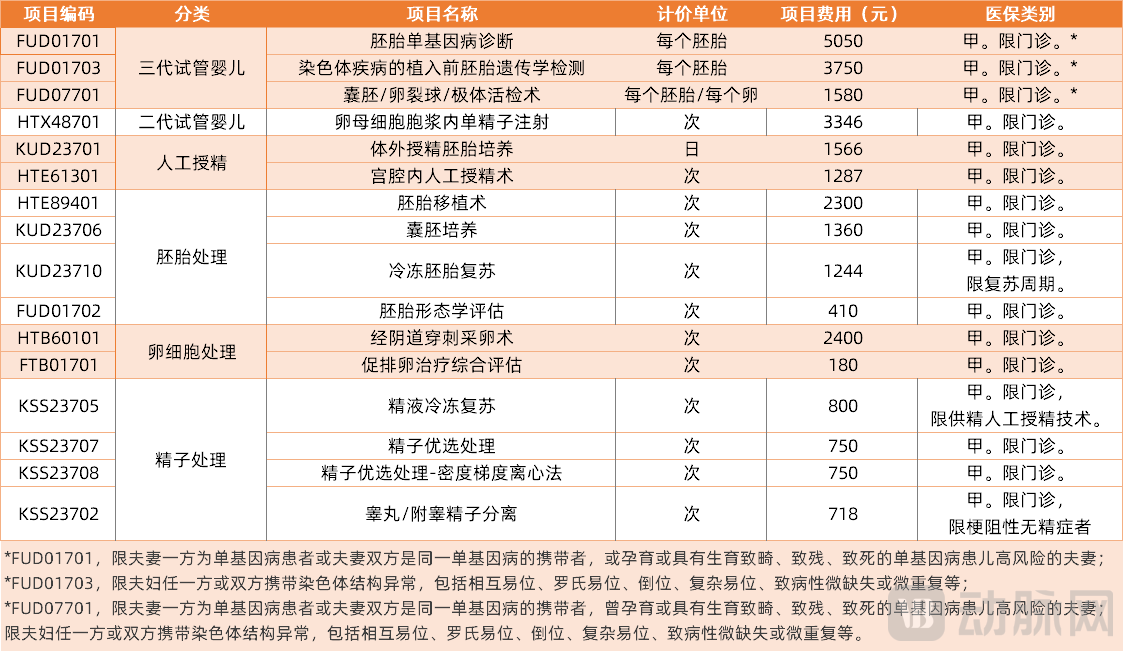
Beijing: 16 Assisted Reproductive Technology Services Covered by Medical Insurance Reimbursement
Medical insurance “Category A List” covers diagnostic and therapeutic procedures that are clinically necessary, safe, effective, and cost-appropriate; patients receiving Category A services can have the full costs included in the reimbursement scope. Among the 16 assisted reproductive technology (ART) procedures recently added to Beijing’s medical insurance “Category A List,” two are artificial insemination techniques.Intrauterine Insemination (IUI)”“In Vitro Fertilization Embryo Culture", one technology belongs to second-generation IVF"Intracytoplasmic Sperm Injection”, three technologies belong to third-generation IVF“Preimplantation Genetic Diagnosis for Monogenic Disorders”“Preimplantation Genetic Testing for Chromosomal Disorders”“Blastocyst/Cleavage Stage Embryo/Polar Body Biopsy”。
In terms of pricing, Beijing’s latest routine regulatory adjustments have resulted in minimal changes compared to previous periods, with prices largely aligning with the industry average. Notably, third-generation IVF technology is more expensive than first- and second-generation techniques, as it is billed per embryo or per oocyte. A single preimplantation genetic testing (PGT) procedure costs approximately RMB 4,000. In clinical practice, patients typically undergo retrieval of multiple oocytes and culture of multiple embryos for future use. Based on a per-test-per-cycle billing model, the total cost of PGT for patients undergoing third-generation IVF can exceed RMB 10,000.
Therefore, with the support of existing medical insurance programs for assisted reproductive technology (ART), insurance can cover RMB 10,000–20,000 per ART cycle for patients, and the total amount covered across the entire course of ART treatment is even higher.
It is worth noting that preimplantation genetic testing for aneuploidy (PGT-A) is not included in the third-generation IVF technologies covered by Beijing’s medical insurance reimbursement. Third-generation in vitro fertilization (IVF), also known as preimplantation genetic testing (PGT), is primarily categorized into three types: preimplantation genetic testing for monogenic disorders (PGT-M), preimplantation genetic testing for aneuploidy (PGT-A), and preimplantation genetic testing for structural rearrangements (PGT-SR).
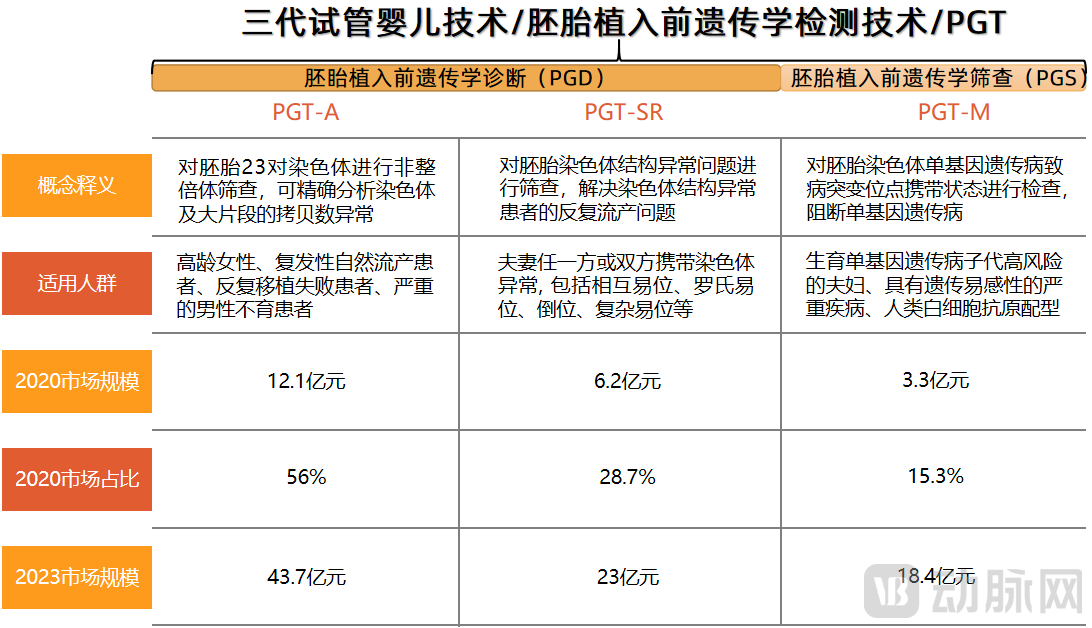
From the three third-generation assisted reproductive technologies included in Beijing’s medical insurance reimbursement this time, among them “Blastocyst/Blastomere/Polar Body Biopsy“Embryo biopsy is an indispensable part of the third-generation in vitro fertilization (IVF) process, serving as the primary step to obtain cells from developing embryos for subsequent genetic testing. The genetic testing for ‘monogenic disorders’ and ‘chromosomal abnormalities,’ which has also been included in Beijing’s medical insurance reimbursement coverage, corresponds precisely to PGT-M and PGT-SR in third-generation IVF technology.”
Why PGT-M and PGT-SR Were the First Third-Generation IVF Technologies Covered by National Health Insurance: A Reflection of the State’s Emphasis on Eugenics and Healthy Childbearing. By examining the differences in target populations for various PGT technologies, we can see that PGT-M and PGT-SR are typically indicated for couples at risk of having children with genetic disorders, thereby preventing the occurrence of monogenic diseases and chromosomal abnormalities, respectively.
PGT-A testing is primarily indicated for women of advanced maternal age, those with recurrent miscarriages, and patients experiencing repeated implantation failure. This implies that specific clinical criteria must be met before undergoing third-generation PGT-A testing. Compared to PGT-M and PGT-SR, the physiological indications for PGT-A are relatively broader. However, variations in the stringency of pre-test physiological assessments across different assisted reproductive technology (ART) centers may lead some patients to seek out facilities with more lenient eligibility criteria, thereby creating a negative feedback loop.
On another level, PGT-A has a broader scope of application, a larger market potential, and higher clinical adoption, with relevant test kits already available in China. In contrast, PGT-M and PGT-SR have more limited indications and a smaller market size; however, their development is more challenging, and no related test kits are currently marketed in China. Nevertheless, given their significant value to every family affected by genetic diseases in clinical practice, PGT-M and PGT-SR were among the first to be included in the Beijing Medical Insurance Catalogue.
Prior to the groundbreaking inclusion of assisted reproductive technology (ART) in the national medical insurance catalog, China had already achieved full-cycle medical insurance coverage for ART-related medications.
According to the "Response of the National Healthcare Security Administration to Suggestion No. 5581 at the Fourth Session of the 13th National People's Congress" issued in 2021, China has included ovulation-inducing drugs such as bromocriptine, triptorelin, and clomifene within the scope of medical insurance coverage. Ovulation-inducing drugs often account for 60–70% of the total cost of assisted reproductive technology medications.
Previously, China had already included assisted reproductive medications such as the down-regulation drug “Triptorelin,” the ovulation-inducing drug “Human Chorionic Gonadotropin (hCG),” and the luteal phase support drug “Progesterone” in its medical insurance reimbursement coverage. With this development, China’s medical insurance system now basically covers medications used throughout the entire cycle of assisted reproduction.
Where Does It Originate? The Incremental Market Released by the Continuous Decline in Birth Rates
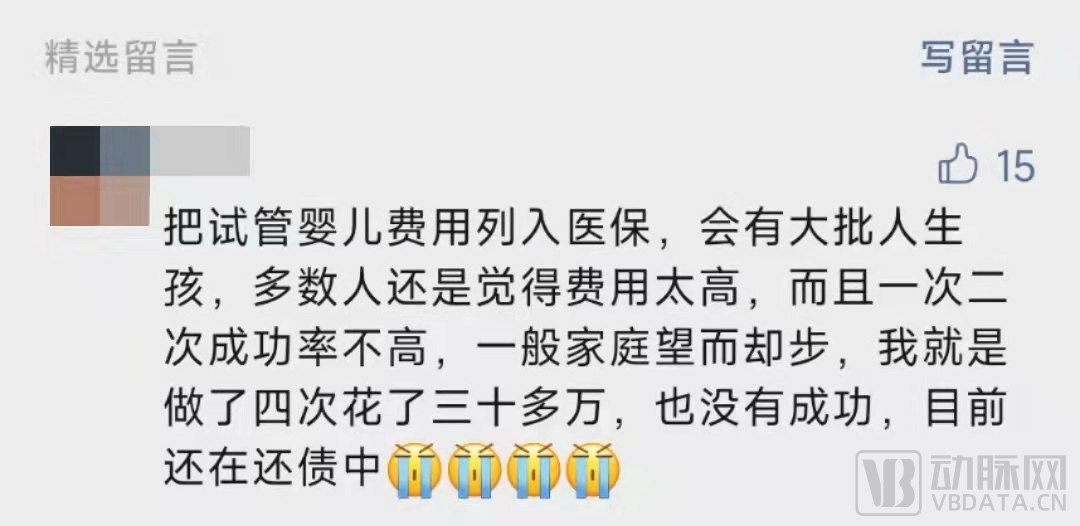
“Including the cost of IVF in medical insurance would lead to a surge in births; however, most people still consider the expenses prohibitively high, and the success rates after one or two attempts are not promising, deterring average families. I underwent four cycles, spending over 300,000 yuan without success, and I am still repaying my debts.” This statement appeared in a previous report released by VCBeat.“Birth Rate Falls Below 1%: Can Assisted Reproductive Technology Alleviate China’s Demographic Challenges?”In the article, a reader left a comment at the end, critically pointing out that the root cause limiting the ability of assisted reproductive technology to alleviate China’s demographic challenges lies in the payment difficulties faced by patients.
Coincidentally, many suggestions have also been posted on the “Leaders’ Message Board” of People’s Daily Online, calling for the inclusion of in vitro fertilization (IVF) and other assisted reproductive technology (ART) services in medical insurance coverage. Netizens have shared their personal experiences to denounce the substantial financial burden imposed by the high costs of undergoing IVF treatment.
What Are the Costs of Assisted Reproductive Technology? How Expensive Is It? According to exclusive interviews with industry experts conducted by VCBeat,The cost per cycle for first- and second-generation IVF ranges from 30,000 to 50,000 yuan, while the cost per cycle for third-generation IVF ranges from 40,000 to 60,000 yuan., a cycle takes 2–3 months.
However, the actual out-of-pocket expenses for couples undergoing assisted reproductive technology (ART) are significantly higher. Currently, the success rate of human ART ranges from approximately 30% to 50%, with some patients requiring two to three embryo transfer cycles to achieve clinical pregnancy. This means that the total cost of ART for certain infertile couples can exceed RMB 100,000.
According to the 2021 Chinese economic data released by the National Bureau of Statistics, the national per capita disposable income was approximately RMB 35,000. For a couple, this amounts to RMB 70,000 per year. When the time costs associated with in vitro fertilization (IVF) are taken into account, the total expense far exceeds the financial capacity of the majority of households.
According to industry insiders in the field of assisted reproductive technology (ART), approximately 1 million patients undergo ART procedures annually in China. However, the actual number of individuals affected by infertility in the country exceeds 40 million. This indicates that the penetration rate of ART among the infertile population is less than 3%. For the remaining 97% of infertile patients who do not pursue ART domestically, the primary reasons fall into three main categories:1. The patient’s physical condition is not suitable for assisted reproductive technology; 2. Financial constraints due to price sensitivity make it unaffordable to bear the costs of assisted reproduction; 3. Opting to undergo in vitro fertilization (IVF) at an overseas assisted reproduction center.
Furthermore, even among those who have chosen to undergo assisted reproductive technology (ART) within China, nearly 90% are price-sensitive. According to a midstream ART service platform, the primary factors considered by the vast majority of users when selecting an ART center are cost and success rate; only the 10% who are not price-sensitive prioritize service quality and the medical experience.
This confirms that price is a major factor hindering the release of growth potential in the assisted reproductive technology (ART) market. Against the backdrop of China’s continuously declining birth rate and increasingly severe aging population, ART has become one of the means to alleviate certain demographic pressures. First, the government needs to unlock the fertility potential of those who wish to have children but are unable to do so, by vigorously supporting the development of ART. Second, for infertility patients deterred by financial burdens, reimbursement through medical insurance can help ease payment pressures, thereby stimulating incremental demand in the fertility market.
To address the long-standing issue of high costs in assisted reproductive technology (ART), mid- and downstream ART platforms and institutions have actively collaborated with commercial insurers to launch commercial insurance products for ART, which became the primary means for patients to alleviate financial burden prior to the inclusion of ART in public medical insurance.
Commercial insurance for assisted reproductive technology (ART) primarily covers the following areas: success guarantees, complication coverage, travel coverage (for overseas treatments), and accident coverage. Among these, success guarantee policies are the most numerous and popular. As the name suggests, they cover unlimited embryo transfer attempts until the patient achieves a successful pregnancy and gives birth. For instance, some newly established ART centers have launched all-inclusive success-guaranteed packages priced at 88,000 RMB to attract patients.
However, commercial insurance for assisted reproductive technology (ART) has not proven as impactful in practice as initially anticipated. According to industry insiders, ART commercial insurers often impose various underwriting restrictions for risk control purposes, such as excluding women aged 35 and older from coverage. This limitation significantly reduces the likelihood of enrollment for the majority of patients who require ART due to advanced maternal age—a demographic that constitutes the primary consumer base for third-generation in vitro fertilization (IVF) technology.
Inclusion in the National Reimbursement Drug List Unlocks a Multi-Billion-Yuan Market: Will Centralized Procurement for Assisted Reproductive Technologies Be Accelerated?
Based on information released by the official website of the National Medical Products Administration (NMPA) at the end of 2020, it is projected that China’s infertility rate will rise to 18.2% by 2023. Extrapolating from this figure, the number of individuals affected by infertility in China has exceeded 50 million. However, among these 50 million patients, the actual penetration rate of assisted reproductive technology (ART) remains below 3%, with only slightly over 1 million infertility patients opting for ART to conceive each year.
Focusing on infertile patients with subjective fertility intentions, the previous section analyzed three reasons why this population has not pursued assisted reproductive technology (ART), with cost emerging as a significant barrier. The inclusion of ART services in Beijing’s medical insurance scheme marks only the beginning. Should ART procedures be comprehensively covered by medical insurance across all provinces in China, using Beijing’s reimbursement items as an example, approximately 20%-40% of the costs per cycle would be covered, substantially alleviating the financial burden on patients. We reasonably speculate that this will significantly boost the clinical penetration rate of assisted reproductive technology in China.
The current penetration rate of clinical assisted reproductive technology (ART) is less than 3%. If nationwide policies similar to medical insurance coverage are implemented to alleviate payment burdens, we estimate that a 1% increase in penetration would bring an additional 500,000 potential users to clinical ART centers. Based on an average customer transaction value of RMB 100,000, the market is conservatively expected to see an incremental growth space of RMB 50 billion. Upstream medical device manufacturers for ART have jokingly remarked that, regardless of the exact size of this new market space, it is undeniable that the inclusion of ART in medical insurance will stimulate the expansion of the existing market. This represents a significant benefit for the development of upstream ART devices and consumables, driving higher product sales.
However, the manufacturer also expressed its concerns: if assisted reproductive technology (ART) devices are widely included in China’s national medical insurance coverage, the era of centralized volume-based procurement for ART will arrive sooner than expected. “Centralized procurement eliminates the price margins of intermediaries and distributors by enabling direct pricing negotiations with the National Healthcare Security Administration. This also brings another benefit to domestic ART brands,” the manufacturer explained. “The distribution costs of overseas ART brands in China are inevitably higher than those of domestic brands. Therefore, if the ART industry indeed faces comprehensive centralized procurement, this could present an opportunity for domestic brands to overtake their competitors.”
The centralized procurement of assisted reproductive technologies is driving changes in manufacturers’ distribution models, reducing price differentials by at least 30%–50% for patients. In this context, cost control and mastery of core technologies will become key factors in future competition among manufacturers.
As China’s capital, Beijing has taken the lead in including assisted reproductive technology (ART) services in its medical insurance reimbursement scheme. Meanwhile, public attention has turned to the next steps for ART coverage—specifically, when it will be fully incorporated into medical insurance and implemented nationwide. Based on proposals submitted to the National People’s Congress over the past one to two years and the responses from various provinces, first-tier cities such as Guangdong and Shanghai are likely to be among the next regions to include ART services in their medical insurance coverage.
As early as March 2021, during the Fourth Session of the 13th National People's Congress, Gao Li, a deputy to the National People's Congress and Secretary of the Party Leadership Group and Chairman of the Anhui Provincial Disabled Persons' Federation, submitted aProposal on Including Adjuvant Therapies for Infertility in the National Health Insurance to Boost Population Growth, at which time the National Healthcare Security Administration responded that "with regard to diagnosis and treatment items, we will guide local authorities, based on the positioning of 'ensuring basic coverage,' and on the basis of scientific actuarial calculations and thorough demonstrations, to gradually include in the medical insurance coverage those technologies that are mature, safe, reliable, and cost-controllable."Therapeutic Assisted Reproductive Technologies Are Systematically Included in the Scope of Medical Insurance Coverage。”
Similarly, on the “Leaders’ Message Board” of People’s Daily Online, regarding suggestions from netizens to include assisted reproductive technology (ART) services in the scope of medical insurance reimbursement, we can glean some insights from the responses already provided. One netizen commented, “I support the three-child policy and suggest that Guangdong Province take the lead in including assisted reproduction (in vitro fertilization) in medical insurance coverage.” The Information Integration Office of the General Office of the Guangdong Provincial Committee of the Communist Party of China replied, “Thank you for your suggestion to include assisted reproduction (in vitro fertilization) in medical insurance coverage. We will forward it to the relevant departments for further study.”
However, not all provinces have plans to include assisted reproductive technology (ART) services in their medical insurance coverage. This decision is linked to factors such as the balance of local medical insurance funds. For instance, the Henan Provincial Healthcare Security Administration responded on the People’s Daily Online “Message Board for Leaders” that Henan currently lacks the capacity to expand medical insurance reimbursement to cover ART, as it remains focused on meeting basic healthcare needs. The province’s medical insurance fund has only a “slight surplus.”
It is evident that the inclusion of assisted reproductive technology (ART) services in medical insurance will not be implemented on a large scale across China in the near term. First-tier cities such as Beijing, Shanghai, Guangzhou, and Shenzhen, where medical insurance funds have sufficient capacity to support such coverage, are likely to become the first wave of cities to include ART services in their medical insurance programs.