

Dr. Song Leming of Nanfang Hospital Ganzhou Branch: Breaking the 'Chicken-or-Egg' Dilemma in Clinical Innovation and Translation to Empower Physicians
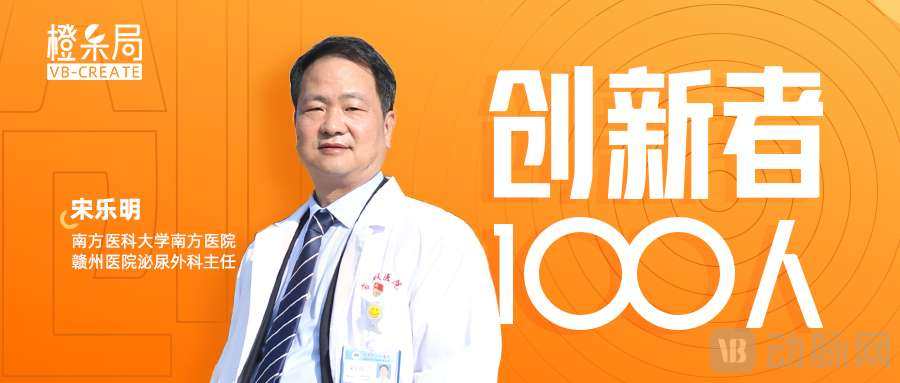
Personal Profile:Chief Physician, Director of the Department of Urology at Nanfang Hospital Ganzhou Hospital of Southern Medical University, Director of the Ganzhou Sub-center of the East China Base for Prevention and Treatment of Urinary Calculi, Chairman of the Andrology Professional Committee of the Chinese Medical Association in Ganzhou, Standing Committee Member of the Professional Committee on Prevention and Treatment of Urinary Calculi under the China Health Science and Technology Promotion Association, Standing Committee Member of the Translational Medicine Branch of the Chinese Society of Gerontology and Geriatrics, and Member of the Chinese Urolithiasis Alliance. He has been engaged in clinical urology for nearly 40 years.
Research Areas:For over a decade, focused on the research of minimally invasive treatment devices and clinical technologies for urinary calculi.
Research Findings:Led multiple major research projects funded by provincial and municipal science and technology departments and health commissions, with total research funding exceeding RMB 4 million. Published over 50 papers as first or corresponding author, including 22 SCI-indexed articles. Presented independently developed innovative techniques at the American Urological Association (AUA) Annual Meeting four times, and obtained six national patents, including a national invention patent for the “Medical Irrigation and Suction Platform.” In 2014, the clinical study titled “Clinical Research on the Application of Micro-access Percutaneous Nephrolithotomy with Suction Stone Clearance System in the Treatment of Staghorn Kidney Stones” received the Second Prize for Scientific and Technological Progress from the Jiangxi Provincial People’s Government and the First Prize from the Ganzhou Municipal People’s Government. Completed the projects “Medical Irrigation and Suction Platform” and “Research and Development of Intelligent Pressure-Controlled Flexible Ureteroscopic Suction Lithotripsy Technology and Related Instruments,” which were recognized as “Scientific and Technological Achievements” by the Jiangxi Provincial Department of Science and Technology (as the primary contributor). Pioneered three techniques internationally: “Micro-access Percutaneous Nephrolithotomy with Suction Lithotripsy,” “Intelligent Pressure-Controlled Natural Orifice Ureteroscopic Lithotripsy,” and “Intelligent Pressure-Controlled Percutaneous Nephrolithotomy.”
“Over the next decade, the main theme of China’s medical device development will remain import substitution.” Import substitution requires focused efforts to address “chokepoint” technologies, while comprehensively enhancing innovation capabilities and industrialization levels in the medical device sector.
In recent years, the national and local governments have successively issued a series of policy documents to vigorously support the research and development innovation and industrial upgrading of medical devices. Taking approval as an example, on March 1, 2014, the China Food and Drug Administration began piloting the "Special Approval Procedure for Innovative Medical Devices"; on December 1, 2018, the "Special Review Procedure for Innovative Medical Devices" was officially implemented. According to statistics from VCBeat, by the end of 2020, more than 300 innovative medical devices had entered the approval process. As China’s first approval channel specifically designed for innovative devices, this procedure has not only alleviated the pressure of waiting associated with scientific and technological innovation but also brought greater convenience to clinical practice.
On November 6, 2021, Nanfang Hospital Ganzhou Hospital (Ganzhou People’s Hospital) performed the world’s first intelligent pressure-controlled transnatural orifice ureteroscopic lithotripsy for an 8.3-cm staghorn renal calculus.During the procedure, an "Intelligent Pressure-Controlled Stone Clearance System" overcame challenges associated with minimally invasive surgery for urinary system stones, including imprecise irrigation flow, high intrapelvic pressure, low efficiency in lithotripsy and stone extraction, and laser-induced thermal injury, thereby ensuring surgical safety and significantly improving operational efficiency.
This system is the first product from Jiangxi Province to enter the National Innovative Medical Device Special Approval Program, and its development was led by Professor Song Leming, Director of the Department of Urology at Nanfang Hospital Ganzhou Hospital of Southern Medical University.Its full name is the “Intelligent Pressure-Controlled Endourological Lithotripsy, Irrigation, and Suction Stone Clearance System” (Intelligent Pressure-Controlled Stone Clearance System). This system represents another innovation achievement by Professor Song Leming, following his development of the “Minimally Invasive Percutaneous Nephrolithotomy Suction Stone Clearance System,” which was commercialized through the establishment of a company in 2016. The system entered the regulatory approval process in September 2017 and received its registration certificate in late 2019, after which it was introduced into clinical practice.
As the first entity in Jiangxi Province to enter the National Special Approval Procedure for Innovative Medical Devices, what opportunity facilitated this translation? What are the core factors driving Professor Song Leming’s secondary innovation and its commercialization? How does he balance his dual roles as a physician and an entrepreneur? To uncover the answers to these questions, VCBeat Orange Bureau conducted an exclusive interview with Professor Song Leming.
The following is a transcript of the dialogue between VCBeat Orange Bureau and Professor Song Leming. For the sake of readability, VCBeat Orange Bureau has made editorial adjustments to the text without altering its original meaning.
VCBeat: What was the development journey of the “Intelligent Pressure-Controlled Lithotripsy, Irrigation, and Suction System for Endourological Stone Clearance”? What are its clinical innovations?
Professor Le-Ming Song:The development of the “Intelligent Pressure-Controlled Lithotripsy, Irrigation, and Suction System for Endourological Stone Clearance” spanned 11 years and was divided into two phases. In 2008, I granted an exclusive license for my device patent, the “Minimally Invasive Percutaneous Nephrolithotomy Attraction Lithotripsy and Stone Clearance Sheath,” to a domestic company for commercialization. However, during its promotion, due to the lack of rigorous training among grassroots clinicians, operator-dependent practices led to significant variability in treatment outcomes, with complications such as renal injury, hemorrhage, and sepsis still occurring.
In early 2013, I envisioned transforming my accumulated experience in pressure control into medical instrumentation by employing hydraulic sensors to dynamically monitor the pressure of fluid infused into the kidney. Through pressure feedback control technology, a computer would smoothly regulate the operation of the aspiration pump, thereby maintaining intrarenal circulating fluid pressure within a preset safe range and displaying it digitally.
Furthermore, the concurrent development of innovative stone extraction techniques enables the removal of most upper urinary tract stones via natural orifices, thereby avoiding some serious complications associated with percutaneous nephrolithotomy (PCNL), while also being easy for primary-care physicians to master quickly.
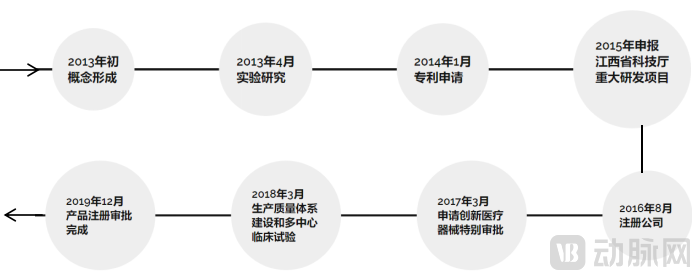
During this period, the China Food and Drug Administration (CFDA) introduced the “Trial Scheme for Special Approval of Innovative Medical Devices” in 2014. With the support of relevant policies, and to ensure that the product’s technical processes fully complied with clinical requirements and could promptly meet the needs of clinical research projects, in 2016, weEstablish a registered company with a dedicated R&D team to simultaneously advance product commercialization and clinical trials, enabling mutual feedback and timely corrective actions.. In March 2017, the application materials were formally submitted to the National Medical Products Administration (NMPA) for special approval of innovative medical devices, and the review and approval were granted in September.
VCBeat: What were the key driving factors in your decision to translate this achievement into a product?
Professor Le-Ming Song:I have been engaged in clinical surgical practice for nearly 40 years since graduation. In the early stage of my career, I worked for eight years each in the surgical departments of a mining enterprise staff hospital and a county-level hospital. Subsequently, I specialized in clinical urology at a tertiary Grade A hospital.
My sixteen years of experience working at the grassroots level have been invaluable to me. In particular, during the first eight years of clinical practice, in addition to surgery, my daily work covered various specialties including internal medicine, obstetrics and gynecology, and pediatrics. This experience was equivalent to undergoing eight years of general practitioner training followed by eight years of specialist training, which has enabled meDeveloped a strong awareness of patient safety and self-problem-solving.
Long-established reverse thinking patterns and accumulated clinical experience enable one to readily identify technical issues and developmental directions in clinical practice. I have witnessed the evolution of stone disease treatment from open surgery to minimally invasive procedures, observing serious problems in clinical techniques and certain functional deficiencies in medical devices and instruments.Aiming to make an impact in this field。
The Southern Jiangxi Soviet Area is another region in China with a very high incidence of kidney stones, where patients hospitalized for urolithiasis account for more than 60% of all urology admissions across hospitals at various levels. Serious perioperative complications associated with minimally invasive endoscopic stone removal techniques—such as urosepsis, renal injury with hemorrhage, and ureteral stricture—must be addressed, and physicians must be actively involved to ensure precise and effective management.
On the other hand, medical device manufacturers generally focus only on the functional advantages of their own equipment and instruments, lacking a comprehensive understanding of clinical technical requirements and surgery-specific environmental conditions., unsure where the problem lies.For instance, holmium laser equipment, endoscopes, and ureteral access sheaths used in lithotripsy all have specific technical requirements for fluid irrigation. Although various methods of intraoperative fluid irrigation are employed, current devices are unable to monitor the intrarenal flow rate required by clinical technical standards or the safe intrarenal fluid pressure. Yet these two indicators are critical parameters in endoscopic lithotripsy, directly impacting surgical safety and efficiency.
VBInsight: How is the current progress of this translational achievement? What are enterprises doing?
Professor Le-Ming Song:The product and technology are currently being widely piloted across China and have received high acclaim from experts.In 2021, Professor Zeng Guohua, Vice President of the First Affiliated Hospital of Guangzhou Medical University and Director of the Minimally Invasive Center at the same hospital, led a prospective comparative multicenter study on the intelligent pressure-controlled ureteroscopic lithotripsy technique of this innovative product, selecting 12 hospitals across China.As new medical device products and emerging clinical technologies, they require broader promotion and outreach.
Currently, companies are engaged in integrated R&D and innovation of medical devices to address similar device defects found in endoscopic techniques across various clinical specialties.Integrate the Clinical Technology System with the Medical Device and Equipment SystemThis is also part of the project content for the “Jiangxi Provincial Engineering Research Center for Intelligent Medical Devices,” which was approved by the Jiangxi Provincial Department of Science and Technology in 2019 for construction by the company. The engineering research center is an open, nationwide shared platform for clinical physicians and other disciplines across China. Colleagues throughout the country are welcome to participate in research and share in the future.
VCBeat: What do you believe are the reasons for your successful translation of innovative achievements?
Professor Le-Ming Song:At the time ofDomestic Policies for Technological Innovation and Entrepreneurship, and the Prime Opportunity to Encourage Innovation in Chinese-Made Medical Devices, the introduction of the National Medical Products Administration’s “Trial Scheme for Special Approval Procedures for Innovative Medical Devices” has enabledThe transformation of innovative achievements has broken free from“The Chicken-or-the-Egg” DilemmaThis policy has enabled me to translate into practical applications the clinical expertise I have accumulated over the past decade in the treatment of calculi, despite lacking a production system. Consequently, I organized a multidisciplinary team comprising medical professionals, academic researchers, and enterprise partners to engage in innovation and entrepreneurship.
Specifically, there are several aspects:First,Many renowned hospitals in China have provided our team with support and an excellent platform environment for clinical research and translation. For instance, Zhejiang Provincial People’s Hospital, Tongji Hospital of Huazhong University of Science and Technology, and Jiangsu Province People’s Hospital—three institutions conducting pre-registration multicenter clinical trials—have seen leading urology experts proactively offer to participate actively in the clinical studies required for product registration.
Many experts in China have also provided me with substantial assistance. In particular, Professor Ye Zhangqun, former Chairman of the Urology Branch of the Chinese Medical Association and former Head of the National Stone Disease Group, has consistently encouraged and spurred on my research, placing great hope in its success.
Secondly,For the past decade, the Jiangxi Provincial Department of Science and Technology has consistently monitored and supported our team’s system R&D projects, while local governments, relevant departments, and my institution have provided substantial policy and financial support. These combined factors have facilitated the rapid translation of research outcomes into practical applications, representing a natural outcome of this process.
VBInsight Orange Bureau: What are the key steps in the journey from 0 to 1, and from clinical practice to product development? How do you balance your dual roles as a physician and a corporate executive?
Professor Le-Ming Song:The process from clinical research to product development involves multifaceted, cross-disciplinary key issues, including the selection and formation of talent teams, research and technological translation of products, construction of technical systems and quality supervision in the production process, communication on product registration issues, and clinical application of product technologies.The critical step is to ensure that the product’s functional and technical parameters fully meet clinical needs. Achieving this goal is a systematic engineering endeavor that requires unified command; it is difficult to accomplish through the unilateral efforts of either clinical institutions or enterprises alone.
Clinical technology is the core, meaning that patient safety and improved patient experience are the top priorities. I have always maintained my role as a physician while bridging clinical practice and industry, with all central efforts focused on achieving clinical technological goals through flexible management between clinical departments and enterprises.
After setting objectives and targets, leave professional tasks to professionals.The core business professionals of the team are under my supervision and are also stakeholders in the enterprise, ensuring seamless coordination between the clinical and corporate teams.
VCBeat Orange Fruit Bureau: What difficulties and obstacles have you encountered on the path to commercializing your achievements?
Professor Le-Ming Song:It can be said that the overall progress of this project—in terms of talent selection, team building, initial experiments, project initiation and R&D, as well as achievement transformation—has been very smooth. In particular, the product was included in the Special Examination and Approval Procedure for Innovative Medical Devices, and obtained both the Product Registration Certificate and the Production License by the end of 2019, which represents a remarkably fast pace.
However, shortly after the product received market approval, the COVID-19 pandemic erupted in 2020. For a startup, the ensuing challenges were immense. Nearly eight years of R&D investment had brought the product from infancy to toddlerhood; just as it was learning to walk and run, its legs were injured and placed in casts, severely restricting its mobility.
Moreover, current national policies have not yet introduced relatively clear supportive measures for new products that have passed the National Medical Products Administration’s Special Review and Approval Program for Innovative Medical Devices, particularly regarding the procurement of innovative equipment (first-of-its-kind sets) for clinical application and the inclusion of consumables in the national medical insurance catalog.In other words, along the path of incentivizing innovative R&D, there is a missing link in supporting the clinical application of innovative products undergoing clinical development.
Innovative enterprises and established companies, including foreign ones, face the same starting line when their products enter medical institutions and are selected for inclusion in the national medical insurance consumables catalog. This places innovative products under the severe test of prolonged waiting periods during their promotion and application across various provinces. It is hoped that policies will be introduced as soon as possible to support the priority and rapid clinical adoption of domestically produced innovative medical devices. I believe this would effectively protect technology-driven startups and encourage more clinicians to participate in the research and development of innovative medical devices.
VCBeat: Scientific research itself has a certain threshold, and the translation of research achievements into practical applications is bound to face more difficulties. In this process, what kind of attitude do you think should be maintained?
Professor Song Leming:The entire process will not proceed smoothly, particularly regarding the clinical promotion and application of products after their translation from research outcomes.
The ultimate goal of translating scientific research into practical applications is to benefit patients with calculi and help the nation conserve medical resources. However, prolonged clinical practice often leads physicians to develop conventional clinical mindsets, resulting in varying levels of understanding regarding the working principles, mechanisms of action, and clinical technical systems of innovative products. This necessitates repeated technical promotion and systematic clinical training, requiring substantial efforts to advance post-translation clinical technical training and dissemination.
However, I believeAs long as the direction is correct, what is meant to come will surely arrive.. Maintain a scientific, positive, and stable mindset as you continue to move forward.
VCBeat Orange Bureau: The current efficiency of translating scientific research achievements into practical applications is relatively low. Where do you think the problems lie in this translation chain?
Professor Le-Ming Song:First, how many current clinical research achievements can be translated into medical device products?Most research projects supported by national funds focus on basic research and large-scale medical equipment, targeting doctoral teams engaged in basic research or major medical equipment manufacturers. Projects led by healthcare institutions are predominantly centered on clinical technology research, and any projects involving the research and development of medical devices are required to be undertaken by enterprises.
The more pressing issue lies at the source: “contentment with the status quo and an unwillingness to assume risks.”Senior physicians with extensive clinical experience possess a deeper understanding of medical devices, clinical techniques, and technological trends. However, due to their heavy daily workload in clinical practice, they rarely engage in innovative R&D of medical devices, instead adopting a passive, “wait-and-see” approach or relying on existing solutions.
Because the research and development of medical devices involves too many disciplines, it takes a lot of time, energy, and financial resources to organize talent, develop plans, and conduct experiments. The lack of specific policy support and guidance for research outcomes and benefits hinders interdisciplinary research, leaving doctors with no motivation and their ideas unimplemented.
For enterprises,Moreover, companies cannot fully anticipate the clinical directions that will disrupt existing technologies. It is also difficult to align perspectives with physicians during collaborative R&D, making corporate innovation a challenging endeavor.
To encourage physicians with extensive clinical experience to actively participate in the innovative research and development of medical devices, it is necessary for the state to introduce policies and project-based guidance to incentivize large medical institutions to transform from clinically oriented hospitals into clinically research-oriented hospitals.Project Initiation and Research Oriented by Clinical Questions;Strengthening Engineering Research in Interdisciplinary Fields Between Hospitals and University-Enterprise Partnerships, the operating room serves as the most direct laboratory for surgical clinical research, significantly shortening the R&D cycle.
Certainly, the state should provide more specific and detailed management policy support to fully reflect and reasonably allocate the benefits derived from the commercialization of physicians’ professional achievements.
VCBeat: How do you view the current landscape of translating scientific research outcomes and the innovation ecosystem? What are your expectations for the future of medical innovation?
Professor Song Leming:Amidst evolving international dynamics and the deepening of domestic healthcare and health insurance reforms, Chinese-made innovative medical devices are poised to seize significant new opportunities. Guided by policies that incentivize the internal circulation of domestically produced innovative medical devices, it is anticipated that more physicians in China will engage in research and development. This will foster the emergence of more internationally leading innovative products, inevitably breaking the current reliance on imports for most high-end medical equipment and high-value consumables.