

The Vast Ocean of Brain Science and the Labyrinth of Investment
Capital has yet to offer significant recognition for the development of the brain science industry.
2016 marked the starting point for large-scale investment in brain science. During the five-year period of China’s 13th Five-Year Plan, which included “Brain Science and Brain-Inspired Research” as a key initiative, over RMB 10 billion flowed into brain science-related enterprises, with nearly 200 such companies securing financing.
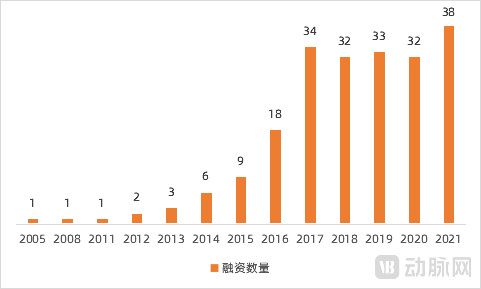
Distribution of Financing Events
However, after excluding companies not primarily focused on brain science research—such as United Imaging Healthcare, Shukun Technology, Infervision, and Keya Medical—the industry’s total funding across more than 200 financing rounds amounted to less than RMB 5 billion.On average, annual funding flowing into the field of brain science amounts to only one billion., a figure far below the tens of billions of neurons in the human brain.
The fragmented understanding of brain science translates to immense, hard-to-quantify premium potential in the eyes of venture capitalists.Since 2019, there has been a growing number of institutions seeking to connect with neuroscience companies through VCBeat; for Nuonuo Technology alone, nearly ten institutions have sought such partnerships.
Furthermore, Shanda Network founder Chen Tianqiao has invested $1 billion to establish the Tianqiao and Chrissy Chen Institute for Neuroscience; Sequoia China has launched a Brain Science Incubation Center in China; and Zhang Yiming, who stepped down as CEO of ByteDance, has also promptly ventured into the vast frontier of brain science.
The Last Frontier of Human Physiology Research: A Blue Ocean for Industry or a Misguided Path for Investment?
The ultimate goal of cognitive neuroscience is to elucidate the structure and function of the human brain, and to explore the material basis of human behavior and mental activities based on valid data. From the current state of development in brain science,Capital favors two niche sectors: EEG-related hardware and software, and AI-powered analysis of brain radiological imaging, with limited investment in invasive devices such as surgical robots and digital therapeutics.
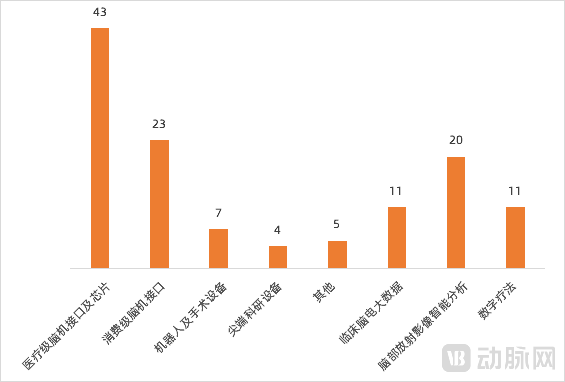
Investment Preferences in Brain Science
Such investment preferences are related to the capital requirements of specific niche sectors.
ImagingThe medical equipment sector is capital-intensive, characterized by significant competitive pressure, high R&D costs, and substantial technical challenges. R&D efforts are typically undertaken by well-capitalized enterprises, such as United Imaging Healthcare and Neusoft Medical, in collaboration with national institutions. Such endeavors require long-term accumulation; irrespective of sales-stage risks, it takes several years and investments on the scale of hundreds of millions to overcome R&D hurdles. Meanwhile, established companies with existing resources are not particularly sensitive to venture capital, making collaboration between the two parties difficult.
In contrast, AI-driven intelligent imaging for cerebral radiology based on device data is relatively lightweight and incurs lower R&D costs; the primary challenges lie in acquiring relevant data and developing innovative algorithms. Since radiological imaging primarily captures morphological features of the human brain, it is difficult to assess functional aspects. Consequently, related applications tend to focus on the detection of brain tumors, whereas research into neurological disorders requires the support of electroencephalography (EEG).
At the Eye of the StormElectroencephalogram (EEG)Not a new concept. In theory, electroencephalography (EEG) can detect abnormalities in over 90% of brain disorders, making it widely applicable. However, reality falls short of expectations.EEG examinations are time-consuming, there is a shortage of specialized physicians, and services are limited to neurology-related departments. As a result, consumer-end users have limited access to EEG testing, and even when demand exists, they often fail to obtain timely services due to insufficient medical resource supply.
Demand Breeds Opportunity. Over the past five years, among the 128 projects compiled in brain science statistics, a total of 66 projects were related to electroencephalography (EEG), including brain-computer interfaces, EEG devices, and disposable EEG sensors, accounting for over 50% and representing the absolute mainstream in the field of brain science.
Further categorize the aforementioned items,Capital Prefers to Invest in Medical-Grade Brain-Computer Interfaces with Higher Technical Barriers. This preference is reflected not only in the number of projects but also in the amount of individual financing rounds. Medical-grade brain-computer interface companies such as UBrain Galaxy, Neuracle, NeuraMatrix, Jingyu Medical, and Huichuang Medical have each secured single-round funding exceeding RMB 100 million, while among consumer-grade brain-computer interface firms, only BrainCo and NeuroXess have reached this scale.
The primary cause of this phenomenon is the immaturity of the technology. In terms of R&D difficulty, invasive brain-computer interfaces (BCIs) > non-invasive BCIs > EEG wearable devices. While value is proportional to R&D difficulty, the practical R&D challenges associated with invasive BCIs are excessively high.
“For many years, the development of brain-computer interfaces has been constrained. While the principles underlying signal acquisition and application have long been mature, signal acquisition remains one of the critical bottlenecks.”Jia Kan, Co-founder of NuoNuo Technology, told VCBeat.
“Brain-computer interfaces (BCIs) fall into two technical camps: invasive and non-invasive. Invasive approaches, which involve intracranial implantation, yield clear signals but pose safety limitations and a heightened risk of infection; these constraints are primarily related to implant materials and minimally invasive surgical techniques. Non-invasive approaches, operating extracranially, offer convenient signal acquisition, but the signals are susceptible to various types of noise due to physical and environmental interference. However, the highest-resolution camera does not necessarily make the best camera. NuoNo’s approach leverages large-scale EEG databases to train highly robust BCI systems, thereby compensating for source-signal limitations and circumventing challenges associated with signal acquisition.”
Some companies are also pursuing alternative breakthroughs; for instance, Neuracle is developing a semi-invasive brain-computer interface (BCI) system. Positioned adjacent to the dura mater, this approach avoids signal attenuation caused by the skull, thereby ensuring superior signal quality. Furthermore, it preserves the integrity of the dura mater and prevents damage to neural cells, addressing key challenges associated with long-term implantation complications.
In any case,Capital’s Choice of Non-Invasive Medical-Grade Brain-Computer Interfaces Is Actually a CompromiseOn the one hand, materials science and brain science are two independent disciplines; brain science relies on advancements in materials science for support, making it premature to invest in invasive technologies at this stage. On the other hand, medical-grade brain-computer interfaces (BCIs) have stricter requirements for technology and safety. If companies focusing on consumer-grade BCIs fail to achieve market coverage in the early stages, medical-grade BCI developers, once their technology matures, can rapidly extend downward compatibility to the consumer segment and capture market share.
Beyond Hardware, many EEG hardware manufacturers are also focusing onSupporting SoftwareThe R&D in this area follows a layout logic similar to that of brain imaging, namely leveraging technologies such as artificial intelligence and big data to improve examination efficiency and lower the threshold for access.
Jia Kan told VCBeat, “There are only a few hundred physicians across China who are proficient in EEG interpretation, and nearly all of them practice at top-tier tertiary hospitals. Such specialists are a scarce resource; district- and county-level hospitals are unable to provide standardized EEG interpretation services and subsequent clinical guidance, forcing patients in primary and secondary care settings to seek appointments at tertiary hospitals. At a certain tertiary hospital in Zhejiang Province, scheduling a 24-hour EEG examination often requires a waiting period of three to six months. In this context, the remote model combining expert oversight, AI-powered EEG analysis, and an intelligent EEG cloud platform can empower these district and county hospitals. It can reduce image review time to just a few minutes, detect subtle details frequently overlooked by the naked eye, and effectively improve diagnostic accuracy, thereby yielding significant gains in operational efficiency.”
However, intelligent medical data analysis software typically requires enterprises to obtain a Class III medical device certificate issued by the Center for Medical Device Evaluation. To date, Ande Yizhi’s MRI-based auxiliary diagnostic software for intracranial tumors has obtained NMPA Class III certification, while its EEG-based auxiliary analysis remains in the exploratory stage, requiring further organization of datasets and design of clinical trials.
Overall, the brain science sector remains in its early stages of development, characterized by a multitude of projects that are predominantly at early stages.At this stage, the incremental market driven by breakthroughs in both hardware and software within the EEG sector is highly attractive. Companies capable of acquiring more precise and large-scale signals are positioning themselves closer to the multi-billion-dollar market underlying applications such as motor rehabilitation, mental disorder screening, and the diagnosis of conditions like depression and Alzheimer’s disease.
Given the vast opportunities it holds, brain science should have long been a staple for capital investment. So, is this so-called “golden track” really as alluring as it appears?
With the aid of imaging modalities such as CT and MRI, we can visualize the brain’s anatomical structures by detecting signal attenuation, thereby assessing whether the morphology of various brain regions is intact. However, when it comes to function, the brain remains a “black box”—no one can fully elucidate its underlying mechanisms through electroencephalography (EEG) alone.
To conduct functional analysis of the brain, after identifying the target region, it is necessary to proceed with signal acquisition and signal decoding. If commands are to be transmitted via a brain-computer interface (BCI) to other parts of the body, two additional steps—recoding and feedback—are required.
The Biggest Problem in Precise Analysis Lies in the Signal Acquisition Method. At the current stage, EEG acquisition faces a dilemma between “accuracy” and “safety.”
Invasive electrodes can penetrate deep into the cranium to detect the most timely and clear electroencephalogram (EEG) signals. However, invasiveness implies trauma, and long-term implantation carries the risk of immune system attacks. Currently, electrodes implanted for treating conditions such as epilepsy and spinal cord injury are typically composed of silk-based substrates, ultra-thin plastic layers, and slender metal electrodes. The entire implantation process involves challenges such as electrode calibration, immune responses, and electrode bending, which significantly shorten the lifespan of the implants. For long-term use, patients are forced to undergo frequent craniotomies to replace the electrodes.
The second issue arises from signal interpretation under limited data.
The prerequisite for precise analysis is the acquisition of a sufficient number of accurate signals. Given the current level of scientific development, we are able to analyze electroencephalogram (EEG) signals, but not with precision.
“Neuralink, under Elon Musk, released a video in 2020 that stunned the world. Although thousands of electrodes were implanted into the skull, only a small fraction of motor nerve functions could be decoded,” Li Jiabin, Assistant General Manager at NeuroXess, told VCBeat.“The human brain contains approximately 86 billion neurons, and deciphering them one by one remains a formidable challenge.”
Fortunately, global interpretation and local interpretation of neurons are two distinct concepts, and local analysis can also meet diagnostic needs to a certain extent.In other words, with sufficient quantity and quality of data, enterprises can leverage algorithms to develop clinical decision support tools, thereby making step-by-step progress in addressing conditions such as depression, insomnia, and epilepsy.
A third problem lurks beneath seemingly reasonable applications.
“Physicians can currently use AI-based imaging to identify various diseases in areas such as the lungs and bones, but its application for complex brain disorders is not yet mature,” said Li Jiabin. “Within our own research framework, we first focus on specific diseases. For instance, in studying mental illnesses, we are exploring whether there is a more objective method than rating scales. Depression is the area we have prioritized in our initial investigations.”
“Secondly, the medical field is serious and rigorous; in practice, we have found that it mayThere is no universal paradigm applicable to patients of all age groups; some paradigms can accurately diagnose adolescents but are not suitable for middle-aged and elderly individuals., it is essential to make precise distinctions for patients in different age groups.”
In other words, the application of brain science is currently limited to single-point detection, akin to AI-based pulmonary nodule detection, where corresponding tools are employed only when physicians suspect a patient may be suffering from a specific brain disorder. Fortunately, this limitation does not involve core technologies; over time, companies will be able to address this issue progressively by leveraging continuously improving datasets.
Therefore, to address the current limitations in application, the prevailing approach remains the continuous collection of high-quality electroencephalogram (EEG) data and its interpretation with maximal accuracy, thereby incrementally enhancing the generalizability of algorithms for diagnosing mental disorders.
In the past five years of brain science development, we have not witnessed any breakthrough achievements. This timeframe appears to be too short for brain science; therefore, the outcomes of the previous five years—Capital is keen on investing in upstream data acquisition devices for brain science and midstream big data and artificial intelligence-based data analysis tools.—This overall investment trend will continue, albeit with some differences in the details.
As the exclusive financial advisor to Neuracle, China Renaissance has exchanged views with numerous neuroscience-focused venture capital investors in recent years. When discussing specific investment opportunities, Dr. Zhang Xiao, Partner at China Renaissance, stated, “Brain-computer interfaces are a current investment hotspot, but EEG measurement has long been a routine clinical examination. The real challenge lies in bridging the gap from data extraction and processing to feedback, and ultimately applying it to living organisms. Completing this entire process may take decades. At present,”Significant investment opportunities remain in both serious medical care and consumer-grade applications.”
“Serious medical applications impose stringent technical requirements on signal acquisition and interpretation, but from an investment perspective,”The ultimate goal is to identify a suitable scenario in which the product meets genuine clinical needs."Consumer-grade applications differ from serious medical applications in their approach, with product forms mainly consisting of wearable devices such as head-mounted sleep aids and safety helmets. For these types of startups, investors tend to focus more on their sales capabilities."
VCBeat further segments serious medical and consumer-grade applications into four scenarios: EEG big data, brain imaging big data, consumer-grade health applications, and consumer-grade rehabilitation applications, each with its own investment potential.
Within the realm of serious healthcare, big data platforms for electroencephalography (EEG) and brain imaging are still under construction, and the corresponding auxiliary analysis and diagnostic applications remain immature. Yet these two technologies address China’s severe shortage of resources for neurological examinations and the growing number of patients with mental disorders, such as insomnia and depression.Therefore, both the market for high-end EEG data acquisition devices and that for subsequent brain science applications remain blue oceans, with strong potential to thrive in tertiary hospitals, health checkup institutions, and even primary care settings.
In contrast, consumer-grade health applications are constrained by technological limitations, resulting in significant homogenization. Fortunately, given the current low penetration rate among end-users, companies with superior sales strategies still have the opportunity to catch up and surpass their competitors.
Rehabilitation-focused consumer-grade applications represent one of the few current scenarios capable of achieving a complete closed loop of “signal acquisition–signal decoding–re-encoding–feedback.” Under existing scientific research, subjects can utilize brain-computer interfaces to control the movement of simple robotic arms.
Currently, Chinese companies such as Nuono Technology and BrainCo are exploring the use of this technology for rehabilitation training in users with residual limbs. Taking BrainCo’s intelligent bionic hand as an example, the product can recognize the user’s motor intent when attempting to control phantom limb movements, translating these phantom limb actions into movements of the prosthetic fingers, thereby achieving true brain-computer interaction.
Convolutional Neural Networks (CNNs), the foundation of artificial intelligence, were first developed in the 1980s. However, it was not until the 21st century, with the gradual increase and widespread accessibility of computational power, that CNNs were revisited by researchers and achieved large-scale application after 2010. Looking back, a century has passed since German psychiatrist Hans Berger discovered alpha and beta brainwaves. Is there, then, a breakthrough point akin to the development of AI that could transform the entire field of neuroscience?
The answer may be yes, but I’m afraid it won’t come from a single-point breakthrough.
“Disease mechanisms, materials science, chips, anti-interference capabilities of brain-computer interface systems, transmission rates, neural network encoding and decoding... Every aspect involved in brain science needs to be broken through one by one; it is not as simple as breaking through a single point.” This is how Li Jiabin responded to the breakthrough development of brain science.
“Our role may not be to explore the mechanisms of brain diseases, which is more the work of scientists and doctors. As a company, our current goal is to develop a product that can truly help patients and maximize the value of scientific research. In the vast system of brain science research, we are just one part.”
In other words, the advancement of brain science cannot be driven by funding from a single institution, nor can it be achieved through the breakthroughs of a single enterprise—It requires deep integration among industry, academia, research, and capital.。
Therefore, the current brain science industry typically exists in clusters. Research institutions such as the Shenzhen Institute of Advanced Technology, the School of Brain Science and Brain Medicine at Zhejiang University, and the Tsinghua Laboratory for Brain and Intelligence are serving as scientific research centers focused on exploration. Enterprises collaborate with these institutes to continuously advance the translation of scientific achievements, while attentive capital provides critical financial and ecosystem support throughout this process.
“The brain and the universe are the two final frontiers for humanity to conquer, requiring collaborative efforts from all stakeholders. Therefore, our investment in this field is driven by the hope of growing alongside enterprises and scientists,” said a prominent investor with a strong interest in brain science.
“As for achieving a breakthrough, we are uncertain about what outcomes may emerge. The long road of brain science requires support; helping scientists and entrepreneurs explore this uncharted path without worry may well be the very purpose of capital at this moment.”