

Dialectic Therapeutics Files IPO Prospectus Highlighting DT2216, a First-in-Class BCL-XL Degrader for Solid and Hematologic Malignancies

Dialectic Therapeutics
Cancer Drug Developer
Founded in Texas, USA, in 2018, Dialectic Therapeutics is a biotechnology company dedicated to developing innovative therapies to eradicate cancer. To date, the company has raised a total of $19.9 million, primarily from the Cancer Prevention and Research Institute of Texas (CPRIT). CPRIT initially provided $3 million in seed funding to Dialectic in February 2020, followed by a $14.4 million Texas Product Development Award in August 2021.

What Is It About Dialectic Therapeutics That Keeps a State-Level Agency Funding Its R&D? Let’s Find Out.
The founding team of Dialectic Therapeutics consists of five members, including two co-founders who both attended prestigious universities in China before pursuing further studies abroad. Dr. Daohong Zhou studied at Tongji University, while Guangrong Zheng completed his undergraduate studies at Fudan University. Over the past five years, Dr. Zhou has published more than 110 scientific articles and book chapters, and co-invented over eight patents that have been granted or are pending application.
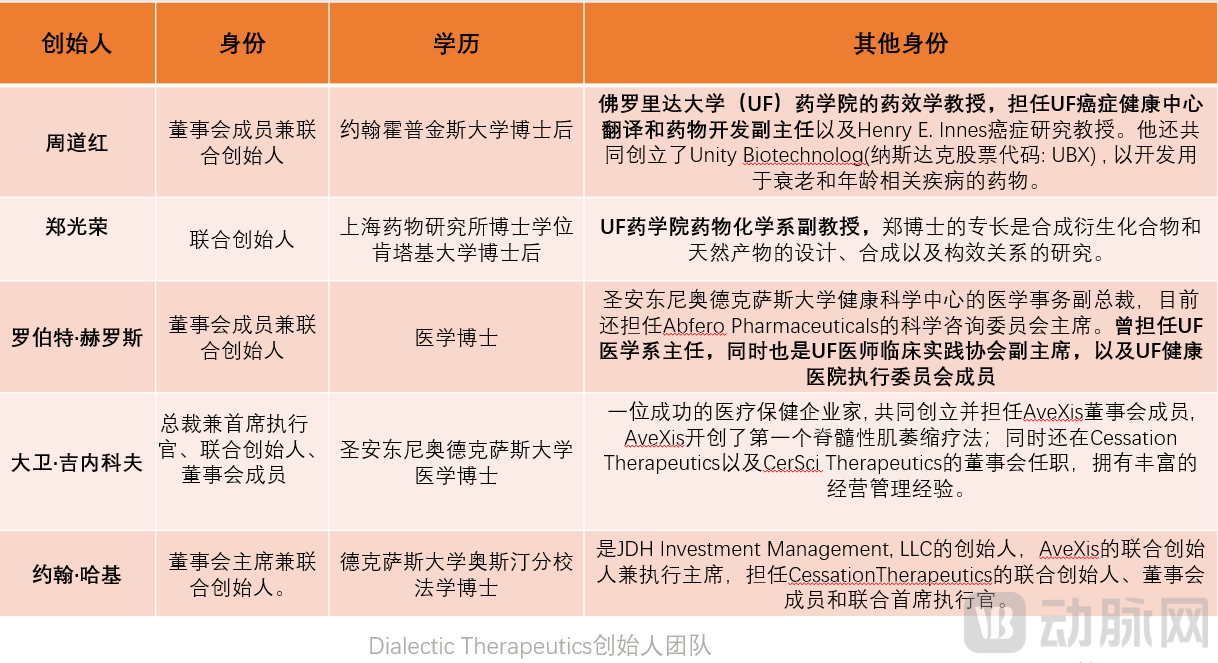
Dialectic was founded by three respected cancer scientists and two successful biotechnology investors. The company has research partners and facilities at both the Mays Cancer Center in San Antonio and the University of Florida Health Cancer Center. The company’s team maintains close ties with the University of Florida, with several members having previously held or currently holding key positions at the university.
Development of DT2216, a Lower-Toxicity Agent, Starting from BCL-XL Inhibitors
Since its inception, Dialectic Therapeutics has been dedicated to developing innovative and effective anticancer drugs. The company aims to alleviate the suffering of cancer patients and offer them hope for extended survival through targeted therapies with limited toxicity and complications. To achieve this goal, the company has continuously innovated and forged ahead in its R&D journey, focusing on BCL-XL.
BCL-XL is an anti-apoptotic BCL-2 family protein and a well-validated cancer target that plays a critical role in cancer cell survival. Simply put,The presence of BCL-XL can inhibit apoptosis; conversely, its inactivation or inhibition of its activity can promote apoptosis. Leveraging this principle can induce apoptosis in cancer cells. Therefore, Dialectic Therapeutics uses BCL-XL inhibitors to reduce its activity, thereby achieving the goal of inducing apoptosis in cancer cells.
However, because platelets rely on BCL-XL to maintain their viability, the use of BCL-XL inhibitors to reduce BCL-XL activity indirectly exerts certain toxicity on platelets, leading to thrombocytopenia. Therefore, thrombocytopenia induced by targeted inhibition of BCL-XL limits the use of BCL-XL inhibitors (such as ABT263) as safe and effective anticancer drugs.
To reduce the toxicity of ABT263, Dialectic Therapeutics developed DT2216, a BCL-XL proteolysis-targeting chimera (PROTAC) that recruits an E3 ubiquitin ligase to mediate the degradation of BCL-XL.
Degradation of oncogenesis-associated proteins using PROTACs has emerged as a novel therapeutic approach for cancer treatment.PROTACs are heterobifunctional molecules composed of two ligands: one binds to the protein of interest (POI), and the other binds to an E3 ligase, with the two ligands connected by a linker. PROTACs recruit the E3 ligase to the POI, inducing degradation of the POI via the ubiquitin-proteasome system (UPS). PROTACs have been developed to degrade various cancer targets, demonstrating unprecedented efficacy and specificity in degrading diverse oncoproteins, and have advanced to various stages of preclinical and clinical development for the treatment of cancer and hematologic malignancies.
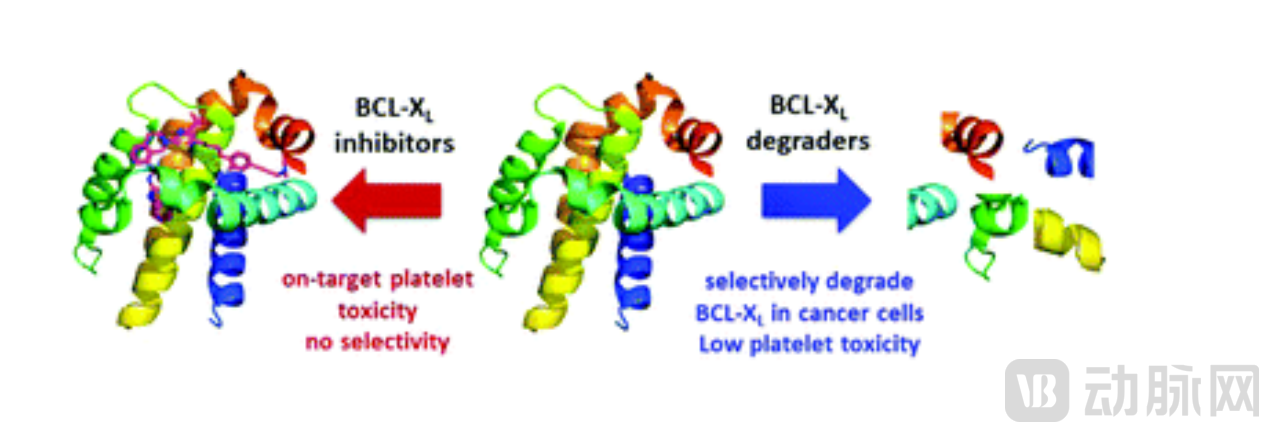
Dialectic Therapeutics’ earlier studies also found that DT2216 is effective against various BCL-XL-dependent leukemia and cancer cells, with significantly lower toxicity to platelets in vitro than ABT263. In vivo, DT2216, either as a monotherapy or in combination with other chemotherapeutic agents, effectively inhibited the growth of several xenograft tumors without causing significant thrombocytopenia.
These findings indicate that,The use of PROTAC technology can reduce the toxicity of targeted drugs and rescue patients with diseases that were previously untreatable by medication. Furthermore, DT2216 can be developed as a safe anti-cancer agent targeting BCL-XL, which may benefit a large number of cancer patients, including those who do not respond to other immunotherapies.
DT2216 is a unique compound developed using Dialectic Therapeutics’ proprietary novel Anti-Apoptotic Protein Targeted Degradation (APTaD™) technology. In preclinical studies, DT2216 selectively induces the degradation of BCL-XL in cancer cells, triggering apoptosis or sensitizing them to chemotherapy.
Preclinical studies have demonstrated that DT2216, both as a monotherapy and in combination with chemotherapy, is highly effective against various hematologic and solid tumors. Furthermore, these studies indicate that cancer cells are less likely to develop resistance to DT2216 compared to other chemotherapeutic agents.
In March 2021, DT2216, a candidate drug targeting the degradation of anti-apoptotic proteins, received Investigational New Drug (IND) approval from the U.S. Food and Drug Administration (FDA). On October 8, 2021, the first patient was dosed in the Phase I clinical trial of DT2216. This multicenter, dose-escalation Phase I clinical trial is designed for patients with advanced or metastatic solid tumors and hematologic malignancies.DT2216 is currently still in the clinical stage, with studies on monotherapy and combination therapy being conducted in hematologic malignancies and solid tumors3.
Although gemcitabine is the standard therapeutic agent for most patients with pancreatic cancer, its efficacy is limited by drug resistance. This resistance can be attributed to the overexpression of anti-apoptotic proteins in the BCL-2 family. Specifically, BCL-XL, as a key anti-apoptotic protein in pancreatic cancer, restricts the therapeutic effectiveness of gemcitabine.
Dialectic Therapeutics investigated the role of BCL-XL in gemcitabine resistance to identify a more effective combination therapy for pancreatic cancer. The company’s research revealed that BCL-XL is a key mediator of gemcitabine resistance. The combination of gemcitabine and DT2216 synergistically induced cell death in multiple pancreatic cancer cell lines in vitro. In vivo, this combination significantly inhibited tumor growth and extended survival in mice. The findings indicate that DT2216-mediated degradation of BCL-XL enhances the antitumor activity of gemcitabine, suggesting that their combination may offer greater therapeutic efficacy for pancreatic cancer.
Despite current medical capabilities, many other cancer-related proteins remain untreatable by existing therapies. Dialectic’s APTaD™ platform offers a novel approach that can be applied to a broader range of BCL family members and other protein targets. Dialectic has focused its efforts on developing oncology drug candidates to address significant unmet market needs; if successful, the company will be able to provide improved treatment options for patients with cancers that currently have poor prognoses.