

WeRock Medicine Files for IPO: A Rising Star Overcoming Key Challenges in the mNGS Diagnostics Market
WILLINGMED
Provider of Precision Medicine Products and Services for Infections
Infectious diseases have always been a leading cause of death worldwide. The late Harvard Medical School professor Hans Zinsser once said, “Swords, arrows, machine guns, and even high explosives have had far less impact on the fate of a nation than lice that transmit typhus, fleas that transmit plague, and mosquitoes that transmit yellow fever.”
According to data released by the World Health Organization (WHO), deaths from infectious diseases account for 28% of total global deaths. In China, patients with infectious diseases constitute 49% of all medical visits. Each year, there are approximately 20 million cases of difficult-to-diagnose and critical infectious diseases, resulting in around 50 million microbiological specimens submitted for testing. It is projected that by 2025, pathogen metagenomic next-generation sequencing (mNGS)The target testing volume is at least 5 million tests annually, with a market size exceeding RMB 10 billion.
Three Major Hurdles Forge Industry Barriers
The number of companies in the sector remains in single digits.
mNGS identifies pathogen gene sequences by sequencing samples and analyzing the data, thereby diagnosing the etiologic agents of infectious diseases. This technology offers advantages such as being unbiased, comprehensive, and highly efficient; it does not require culture and can simultaneously detect a wide range of pathogens, including bacteria, fungi, viruses, and parasites.It is the only precise diagnostic and personalized medicine technology in the field of infectious disease diagnosis.
Particularly after scientists successfully identified the novel coronavirus using mNGS technology, this technique has become a hotly contested focus for entrepreneurs and investors. However, this niche represents the most challenging segment within the next-generation sequencing (NGS) platform landscape. At least “three major hurdles” must be overcome, which has also resulted in the number of domestic companies in this field remaining in the single digits to date.
The First Major Hurdle: Accuracy of Testing.In clinical specimens, the ratio of human host nucleic acids to microbial nucleic acids is approximately 100 million to one. Since metagenomic next-generation sequencing (mNGS) targets pathogen genetic information, achieving accurate results amidst overwhelming interference from human host nucleic acids is akin to finding a needle in a haystack, making accuracy paramount. False negatives and false positives remain persistent challenges in mNGS laboratories, reflecting significant technical difficulties. Furthermore, sample collection techniques, transport conditions, and laboratory environments can all impact the accuracy of testing.
The Second Major Hurdle: Timeliness of Testing.Many patients with infectious diseases experience rapid disease progression; obtaining test results just one hour earlier could potentially save their lives from the brink of death. Due to current technological limitations, fewer than ten hospitals are capable of performing metagenomic next-generation sequencing (mNGS) tests, while most other testing is conducted in third-party medical laboratories. Consequently, when samples are sent to third-party clinical laboratories, they must undergo long-distance transportation, often taking several to over ten hours to reach the facility. Tragically, some patients have already been declared dead before their specimens even arrive at the laboratory.
The Third Major Hurdle: Economic Viability of Testing.Many people perceive infectious diseases as less lethal than tumors. While individuals are willing to spend tens of thousands of yuan on tumor-related testing, they often hesitate to invest even a few thousand yuan in infectious disease diagnostics. Currently, high costs of testing consumables, heavy reliance on manual processes, and elevated transportation expenses have kept overall testing costs prohibitively high, thereby hindering the widespread adoption of mNGS testing to some extent.
Leveraging Technology to Break Through
“Yi Ma San Qiang” Redefines Domain-Specific Playbooks
To engage in mNGS, overcoming the aforementioned “three major hurdles” merely grants you a ticket to enter the arena. Only those with robust core competencies can ultimately break through the intense competition and emerge as true winners.
In the mNGS arena, WILLINGMED has emerged as a dark horse, achieving remarkable success despite entering the market later than its competitors.
In September 2019, WILLINGMED officially entered the mNGS field. Not only did it overcome the “three major challenges” in a short period, but upon its debut in the second half of 2020, it also launched its “triple-pronged strategy,” redefining the operational landscape of the mNGS sector.
First Strategy: Launch Two Featured LDT Products Simultaneously.WILLINGMED was the first to propose and exclusively adopt “host DNA depletion” technology, developing PathoXtract®The kit is capable of removing 99.96% of human host material, effectively enriching pathogen concentration by at least 2,500-fold and enabling precise pathogen detection amidst abundant human background. To date, this technology remains “imitated but never surpassed,” having consistently outperformed competitors in all head-to-head comparisons.
Leveraging the aforementioned technologies, WILLINGMED has simultaneously launched two distinctive products. The first is the Plseq ultra-sensitive blood testing product, which can detect pathogens in both blood cell pellets and plasma concurrently, generating two separate test reports. Its positive detection rate reaches approximately 85%, representing a 73%–75% improvement over blood culture methods. Compared to similar products that only test plasma, its positive detection rate is nearly doubled. The second is the Plseq lower respiratory tract testing product, which enables simultaneous DNA and RNA sequencing on the same platform through a single library preparation and a single test. It is reported that comparable products can only detect DNA or RNA separately; thus, the cost advantage of WILLINGMED’s combined DNA & RNA detection product is self-evident.
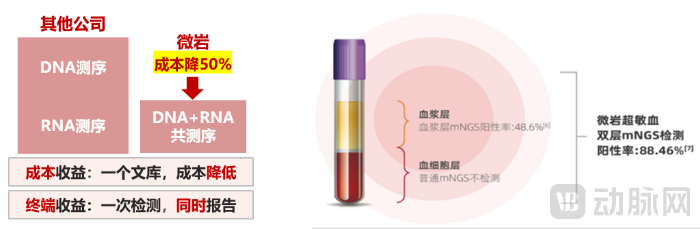
WILLINGMED’s Two Signature Products
The second move: Launching a "one-stop high-throughput localization solution."Even if mNGS technology were “all-powerful and omnipotent,” it could not achieve a true breakthrough in timeliness and cost-effectiveness or become a disruptive diagnostic technology for infectious diseases unless it moved beyond the laboratory. In response, WILLINGMED has proposed a new solution that miniaturizes, automates, productizes, and centralizes mNGS technology, enabling its localization at hospital sites.
WILLINGMED has developed an automated desktop all-in-one system that streamlines the entire wet-lab workflow, integrating it with sequencers, proprietary reagent kits, and an intelligent reporting system, thereby enablingmNGS no longer requires hundreds of square meters of space or more than ten laboratory technicians; it can be implemented with just “2 personnel, 3 instruments, and 40 square meters.”, it can be deployed in clinical hospitals, eliminating the time and costs associated with long-distance transportation and significantly reducing labor and facility expenses. This solution has been implemented in co-built laboratories at Peking Union Medical College Hospital, Guangzhou Institute of Respiratory Health, Beijing Youan Hospital, Peking University People's Hospital, and the Fourth Affiliated Hospital of Harbin Medical University.
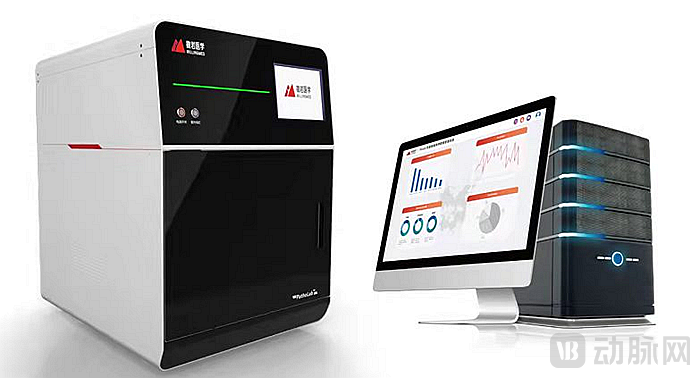
WILLINGMED mNGS End-to-End Automated Solution
The third strategy is to realize the intelligence and softwareization of the report analysis system.WILLINGMED’s bioinformatics operations, from the underlying PathoDB®Large-capacity Tier-3 Pathogen Database to the Exclusive Tool-Based PathoDESC®Dual-Engine High-Precision Species Identification Algorithm to RPM-rC as the Determination Standard®The dual-threshold interpretation system based on dynamic windows has received strong support from renowned domestic experts in microbial genomics. It is underpinned by a bioinformatics academic paper with an impact factor of 7, one granted invention patent, and two pending invention patents, and is compatible with both second- and third-generation sequencers. The related achievements have been highly recommended in the first expert consensus in the field of mNGS bioinformatics, titled "Expert Consensus on Standardized Management of Bioinformatics Analysis for Pathogenic Microorganism Detection via Metagenomic Next-Generation Sequencing."
WILLINGMED’s standout performance goes far beyond this. The company has demonstrated remarkable momentum in its strategic layout within the medical device industry, securing Class I and Class II medical device registration certificates for ten products—including test kits, equipment, and software—within a single year. Among them, PathoLab®PathoReport: The high-throughput pathogen laboratory system can process 1–24 samples at a time, filling the gap in registered 24-channel systems for high-throughput detection of pathogenic microorganisms.TMThe automated intelligent reporting system has obtained a Class II medical device registration certificate, while the Class III test kit for lower respiratory tract pathogen detection is currently undergoing clinical trials at China-Japan Friendship Hospital and other institutions.

WILLINGMED Has Obtained Medical Device Registration Certificates for 10 Products
Researcher Hu Songnian of the Chinese Academy of Sciences commented:
"Outstanding strengths, no weaknesses."
As a latecomer, how has WILLINGMED managed to seize the momentum and emerge as a dark horse in the race?
This story begins with the company's founder.Dr. Gai Wei, founder of WILLINGMED, is the only scientist-entrepreneur in China’s mNGS field, a pioneer in microbial precision diagnostics, and the sole expert in China’s mNGS sector proficient in chemistry, microbiology, genomics, and bioinformatics.
Dr. Gai Wei has long been dedicated to the research and development of clinical diagnostic technologies for infectious pathogens and diagnostic reagents. He has developed numerous new technologies and products based on PCR, microarray, microfluidics, and high-throughput sequencing platforms. As a core member, he has participated in the research of multiple national major projects. He is recognized as a Beijing Science and Technology New Star, an Outstanding Young Backbone Talent of Beijing, and an Outstanding Young Engineer.
Owing to the solid expertise of its technical team, WILLINGMED has attracted a large pool of top-tier talent. Its senior marketing executives and core sales personnel hail from industry giants such as Pfizer, Merck & Co., and Jiangsu Hengrui Medicine; its technical team comes from prestigious research institutions including Peking University, the Chinese Academy of Sciences, and Peking Union Medical College; and its management team is drawn from renowned enterprises such as Sinopharm, COFCO Group, and China Resources Group. Currently, WILLINGMED’s team comprises over 300 members, spanning disciplines such as biology, chemistry, microbiology, medical laboratory science, bioinformatics, agronomy, pharmacy, computer science, and automation, thereby forming an interdisciplinary and complementary professional structure.
Notably, in December 2021, Beijing held a promotional meeting on leveraging postdoctoral work to support the development of a high-level talent hub. WILLINGMED was approved to establish a postdoctoral workstation.Becoming the first postdoctoral workstation in the domestic mNGS field.
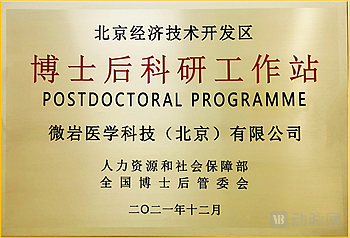
The First Postdoctoral Workstation in the mNGS Field Was Awarded
Hu Songnian, a renowned genomics expert and researcher at the Institute of Microbiology, Chinese Academy of Sciences, commented: “WILLINGMED demonstrates outstanding technical capabilities. Its one-stop, high-throughput, localized solution is poised to facilitate the widespread adoption of mNGS technology in hospitals, establishing it as a disruptive diagnostic technology for infectious diseases. Moreover, the company’s comprehensive capabilities...”have developed in a relatively balanced manner.” Perhaps this is the secret behind WILLINGMED’s emergence as a dark horse.
Comprehensive Strategic Cooperation
Building a Comprehensive, Multi-Dimensional Ecosystem Across In-Hospital and Out-of-Hospital Settings
The rapid development of WILLINGMED is inseparable from the favor of top-tier investment institutions in the industry. In just two years, the company has successively received multiple rounds of support from powerful investment firms specializing in biomedicine, including Mifang Capital, Rongyu Capital, Data Capital, Beilin Capital, Gongshu State-owned Investment, Runda Medical, and Lianhe Capital. Having completed four rounds of financing totaling hundreds of millions of yuan, WILLINGMED has accumulated strength for a more robust breakout.
With its technological expertise, team resources, and capital support, WILLINGMED naturally attracts the attention of outstanding partners.
In 2021, WILLINGMED partnered with Runda Medical, a leading enterprise in the clinical laboratory sector.(Stock Code: 603108), by establishing the “Pathogen Detection SkyNet Laboratory” network, which comprises six central laboratories and over 300 Grade A tertiary hospitals, to enhance the diagnostic capabilities for infectious diseases, reduce mortality rates and treatment costs, support the nation’s rapid detection and identification of emerging and sudden infectious diseases, and improve the rapid biosafety emergency response mechanism. Meanwhile,WILLINGMED Signs Strategic Cooperation Agreement with Pfizer China, jointly building an “infection prevention and control ecosystem,” conducting in-depth drug resistance gene testing, and advocating for the rational use of antibiotics.
It is evident that WILLINGMED has a clear development strategy: Step one involves establishing the Beijing Medical Laboratory to define its business model and operational standards, while supplying talent to various central laboratories and jointly established partner laboratories. Step two focuses on achieving the production of medical devices and test kits, providing equipment and materials to these central and partner laboratories. Step three entails building the “SkyNet Laboratory” network to promote the widespread adoption of medical devices and test kits through demonstration and benchmarking.
It is reported that WILLINGMED currently occupies over 5,000 square meters of space for offices, R&D, and production. The company has established three medical device manufacturing bases and multiple delivery centers in Beijing, Hangzhou, Hunan, and Shenzhen, as well as co-built laboratories in Guangzhou, Wenzhou, Harbin, Yantai, and Hohhot. Its services cover more than 20 provinces, municipalities, and autonomous regions across China, serving over 1,000 hospitals. Currently, WILLINGMED has collaborated with experts from more than ten hospitals, including China-Japan Friendship Hospital, Peking University People’s Hospital, Peking Union Medical College Hospital, and Guangzhou Institute of Respiratory Health, on 33 joint research projects.
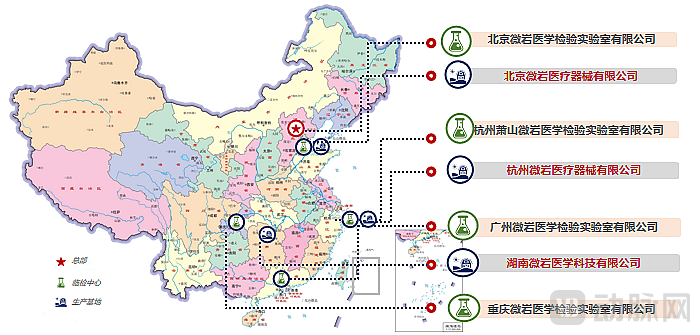
WILLINGMED's Industrial Layout
“Over the next five years, WILLINGMED will achieve domestic regulatory approval and registration for its infection pathogen sequencing equipment and reagents, fully addressing critical bottlenecks in related applications. Meanwhile, through collaborations with more than 300 Grade A tertiary hospitals nationwide, WILLINGMED is comprehensively promoting a nationwide network of pathogen detection laboratories,” said Dr. Gai Wei in an interview with VCBeat.
As WILLINGMED’s medical device product portfolio completes market access, more industry giants will become its partners, jointly promoting mNGS technology to tertiary and even secondary hospitals, thereby expanding the mNGS ecosystem.
Final Notes:
The Microbial World Needs “Whistleblowers” to Forge Ahead
Microorganisms have inhabited the Earth for over 3.5 billion years; in the long course of biological evolution, humans are merely latecomers. The Earth is a world dominated by microbes, with an estimated one trillion species. In the face of the impact of the COVID-19 pandemic, we must hold microbes in awe, establish and promote awareness regarding the prevention, diagnosis, and treatment of infectious diseases, and remain prepared to leverage cutting-edge technologies to address the public health challenges facing humanity.
The 21st century is the century of biology. Fortunately, there are numerous pioneers like WILLINGMED, serving as “whistleblowers” to alert us against microbial threats.
As a pioneer in the field of mNGS, WILLINGMED maintains a steady development model characterized by incremental yet rapid progress, gradually establishing a comprehensive presence across the entire spectrum of infectious diseases. Looking ahead, we anticipate that this “dark horse,” WILLINGMED, will achieve overtaking on the curve, emerging as a rising star in the field of precision medicine for infectious diseases and contributing to China’s—and indeed the world’s—victory in the war against epidemic infectious diseases.