

Fuliyeh NeuroTech Files IPO Prospectus: Pioneering Chinese Brain-Computer Interface Research Since the 1990s with Qian Xuesen's Endorsement
In 1995, Liu Jiying, a scholar returning from the United States, observed that most hospitals in China were using imported electroencephalogram (EEG) machines in their EEG laboratories. These facilities still relied on the traditional “paper-recording and pen-tracing” method, as well as the “compass-and-ruler” technique for measuring and diagnosing brain-related conditions. He recognized that there was significant room for improvement and development in the recording, measurement, and analysis of EEGs in China. Determined to promote the application of automated EEG-computer analysis and artificial intelligence, he proposed the idea of “establishing mathematical models for EEGs using computers to achieve fully automated computation and analysis.”
As early as 1988, prior to his overseas visit, Liu Jiying participated in a research project on “EEG-Computer Analysis.” The project achieved success after three years of clinical application from 1989 to 1992 at the PLA General Hospital (301 Hospital) and the China-Japan Friendship Hospital.
As a result, Liu Jiying’s proposal quickly gained the support of Professor Wang Xianju, the project leader, and the “Beijing Fuliye Information Science Technology Research Institute” was established in 1995 to focus on “brain information science research.”
Founded in 1995, it has independently developed several products, including an intelligent brain function analysis system.
Over the 26 years since its establishment, the Institute has consistently adhered to its mission of “safeguarding national health and pioneering innovation for national development,” while striving toward the goal of “achieving independent innovation to build a renowned Chinese brand and leveraging master craftsmanship to surpass international standards.” Inspired and supported by this philosophy, the Institute has continuously driven technological innovation, earning recognition from both the state and society.
Since its establishment in 1995, the Institute has persisted in independent research and development despite the absence of domestic or foreign funding support, overcoming numerous technical and financial challenges. It has successfully completed multiple scientific research tasks for the military and the state, making significant contributions particularly to the selection, training, and scientific research related to Chinese astronauts.
Over the past 26 years, in addition to fulfilling military and national projects, we have developed and launched 13 high-tech products, providing new technologies for clinical practice and medical research at hospitals and advancing the field of brain information technology. To address brain diseases, the institute has developed a series of related products.
The Intelligent Brain Function Analysis System (NS-1) is the first product from the institute to receive certification and be launched on the market.
This product adopts the latest international theories and technologies to perform digital filtering on raw electroencephalogram (EEG) signals, establish autoregressive (AR) models, and calculate power spectra (using AR instead of FFT), followed by a series of in-depth analyses. For instance, it employs surface fitting methods rather than two-dimensional interpolation for EEG isopotential analysis (“EEG topography”). Furthermore, the system establishes a three-tier diagnostic standard for isopotential maps (as verified by a novelty search conducted by the Academy of Military Medical Sciences) and applies probabilistic-statistical methods to build big-data templates, thereby enabling automatic diagnosis.
This product is primarily used for the diagnosis of organic brain diseases, such as epilepsy, encephalitis, tumors, and trauma. It has been experimentally proven to be superior to CT and MRI, particularly in the diagnosis of early-stage and isodense tumors.
This scientific achievement has been unanimously affirmed by renowned domestic experts. Professor Tan Yuling from Tiantan Hospital and Professor Yang Fusheng from Tsinghua University, among others, evaluated the instrument as a genuine scientific research outcome, representing a leading level within China. A novelty search conducted by the Academy of Military Medical Sciences of the People's Liberation Army, an authoritative domestic medical institution, confirmed that the new technology employed in this instrument is a first both domestically and internationally. In recognition of this, five ministries and commissions, including the State Science and Technology Commission, the State Bureau of Technical Supervision, and the Ministry of Labor, jointly issued a New Product Certificate.

Pan Yingfu (Beijing Friendship Hospital) Yang Fusheng (Tsinghua University) Cao Qilong (Chinese PLA General Hospital)
Li Zhixun (Beijing Medical Research Institute) Tan Yuling (Tiantan Hospital) Zhang Shuxiang (China-Japan Friendship Hospital)
Tang Xiaofu (Peking Union Medical College Hospital) Tang Junying (Xuanwu Hospital) Wei Zhenji (Quality Inspection Center of the National Medical Products Administration)
Currently, this product has been utilized in the selection, training, and scientific research of Chinese astronauts. It has also been employed for clinical and research purposes in large and medium-sized hospitals across China. After years of clinical application, physicians have reported a high diagnostic concordance rate, earning recognition from both the academic community and clinical practitioners.
It is primarily used for evaluating clinical treatment efficacy and conducting scientific experiments. Is pharmacological or non-pharmacological therapy effective? In which brain regions and frequency bands do therapeutic effects occur? This product provides a scientific basis for patients’ subjective reports and physicians’ clinical observations, thereby supporting the development of individualized treatment plans.
Primarily used for the analysis and processing of large datasets. It provides analytical results for different groups, making the scientific research process simpler, more convenient, efficient, and time-saving, while minimizing errors.
Single- and dual-video EEG analysis systems, characterized by excellent synchronization between images and signals. Image acquisition at 30 frames per second, higher than the 24 frames per second used in films.
The primary application involves heart rate and heart rate variability (HRV) analysis to assess sympathetic and parasympathetic responses, as well as the balance between them. A Markov chain model of heart rate is established to evaluate cardiac functional recovery capacity and psychological stress levels.
It primarily employs mathematical models to automatically provide sleep staging and classification of respiratory disorders, serving as an aid in the diagnosis of sleep and respiratory system diseases.
Used to detect cerebral ischemia and hypoxia in neonates, enabling timely intervention for affected newborns to prevent the subsequent development of cerebral palsy.
By administering various stimuli and observing the subjects' responses, brain functional status as well as the condition of the auditory and visual systems can be assessed to aid in clinical diagnosis. Event-related potentials simultaneously provide metrics such as reaction time, error rate, false positive rate, false negative rate, and mismatch negativity (MMN).
The above is only a part of the work done by Beijing Fuliye, some products have obtained national certificates.
From “Static” to “Dynamic”: A Leap in Research Methodologies
The development path of the research institute has been arduous and protracted.
The research team led by Wang Xianju, Chief Expert of the InstituteOver the past three decades, we have transitioned from the internationally conventional “probability theory–power spectral density” method for EEG analysis to a comprehensive “memory–association” model based on an integrated framework of “systems theory, information theory, cybernetics, and probability theory,” achieving a qualitative leap in EEG analysis technology from “static” to “dynamic.”This is a milestone for Fuliye in EEG analysis technology.
As early as 1986, Wang Xianju presented the progress and research findings in brain function studies from both domestic and international sources at a specialized academic conference.This report attracted the attention of Mr. Qian Xuesen, who subsequently wrote a letter specifically to affirm and support this research direction.

Letter from Qian Xuesen to Wang Xianju
It was under the guidance and inspiration of Mr. Qian Xuesen that Wang Xianju accomplished this academic-technological innovation.
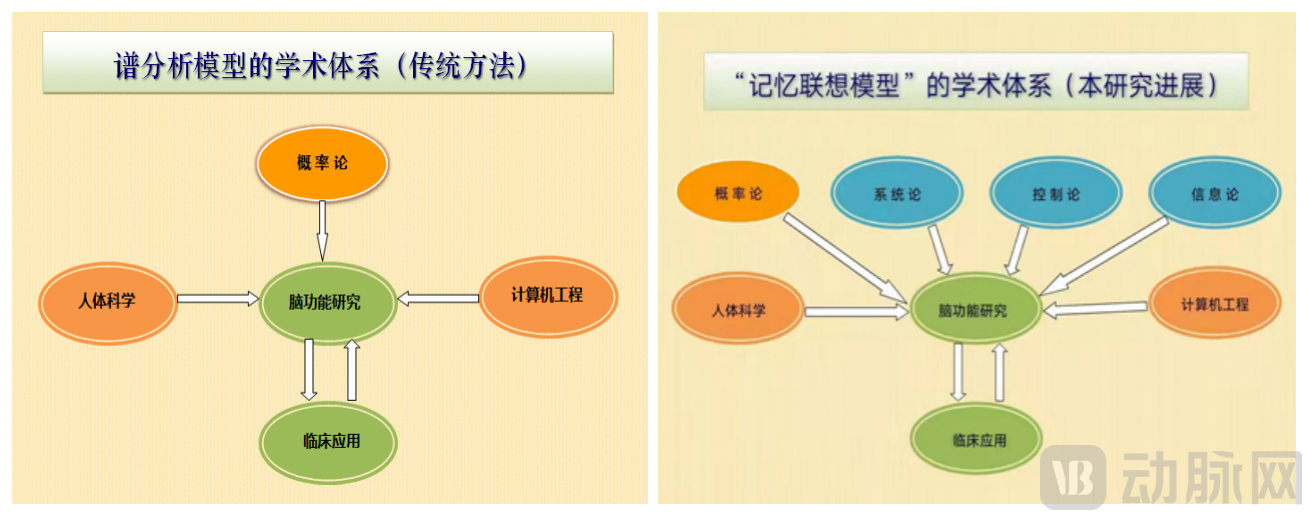
Academic System Innovation
Scientific research should be guided by actual societal needs. The Institute is dedicated to application-oriented, practice-focused research aimed at addressing practical needs in clinical medicine and medical research. In recent years, it has focused on brain function research related to chronic diseases in the elderly and brain development in children, achieving multiple research outcomes and obtaining registration certificates from the National Medical Products Administration. Currently, its products have entered the stage of practical application.
With the rapid economic development in China over the past few decades, national health standards have steadily improved and life expectancy has gradually increased, heralding the arrival of an aging society. Concurrently, a corresponding social challenge—the issue of geriatric diseases—has emerged.
Among geriatric conditions, the most prominent and prevalent is “dementia” (commonly referred to as “senile dementia”). Preliminary estimates indicate that China currently has at least 5 million patients with this condition alone, and its incidence continues to rise year by year. This disease is poised to become one of the greatest threats to the health of older adults in the 21st century. Therefore, early detection and early intervention are critical.
Beijing Fuliye’s Years of Research: The Brain’s “Memory and Association” Model—A Promising and Practical Approach for Early Detection and Prediction of Alzheimer’s Disease. This Analytical Diagnostic Technique Has Been Applied in Clinical Practice and Scientific Research. Professor Wang Xianju Shared Real-World Application Cases with VCBeat.
Case Study on Brain Function Testing: Early Prediction of Alzheimer’s Disease
In 2014, an academician of both the Chinese Academy of Sciences and the Chinese Academy of Engineering reported subjective feelings of delayed speech and reduced mental flexibility compared to his previous state. Multiple hospital examinations failed to detect any abnormalities. However, analysis of brain functional status using the "Memory-Association Model" revealed early features suggestive of Alzheimer’s disease. The patient subsequently disclosed a family history of the condition. He was then referred to relevant specialists for treatment. After more than three months of therapy, re-evaluation using the "Memory-Association Model" showed improved brain function indicators, with statistically significant differences confirmed by statistical testing. The patient self-reported enhanced cognitive function, increased work efficiency, and marked improvement in symptoms.
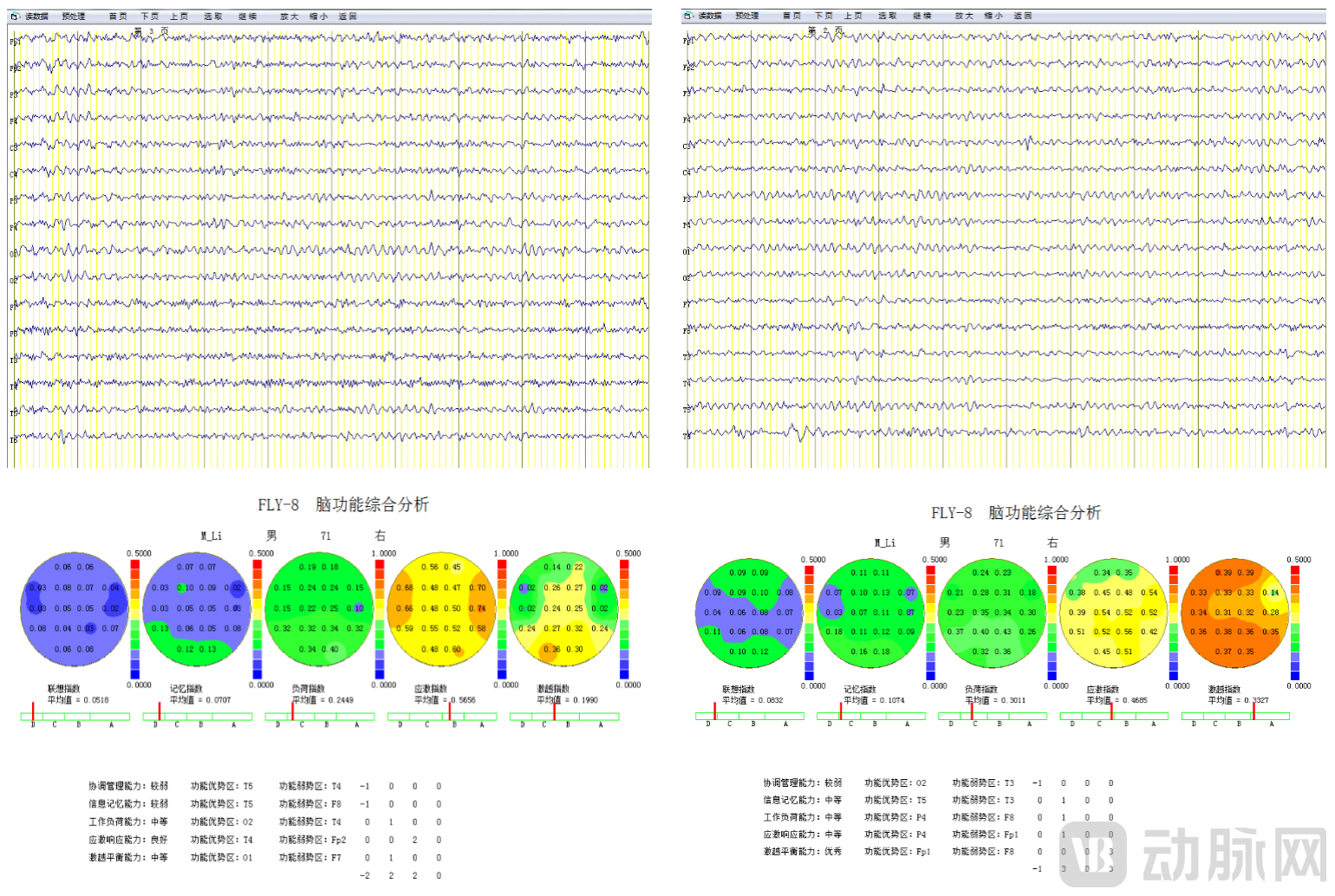
Case: L. W., male, 71 years old (case from a certain university)
(Left) First examination: 2014-01; (Right) Second examination: 2014-04; 108 days later.
The results indicated significant differences when using the "memory association" analysis method. Both memory function and associative function indices showed marked improvement, with statistically significant differences observed.
Nutritional disorders, metabolic encephalopathies, encephalitis, epilepsy, traumatic brain injury, autism spectrum disorder, attention-deficit/hyperactivity disorder (ADHD), and excessive academic pressure coupled with intense competition during childhood and adolescence severely compromise their health. These factors lead to declined physical stamina, deteriorated constitutional health, and a myriad of other health-related issues. Regular assessment of brain function in children is therefore essential for early detection and timely intervention.
The “Memory and Association” model of the brain can also be applied to monitor suboptimal health status, serve as an indicator for selecting special talents such as astronauts and pilots based on their brain function, and act as a monitoring metric for brain functional states in specialized experiments.
Pioneers in Brain Science: Opening Up a New Industry for “EEG Topographic Mapping”
The complexity of brain structures, limitations in current technological development, and the fact that fundamental research on brain cognition, brain-inspired computing, and major brain diseases in China remains largely a “black box” seem to dictate that the advancement of neuroscience is a long-term endeavor requiring considerable patience.
Looking back on the founding journey of domestic enterprises engaged in brain science research and development, several decades have passed, and the sector has now entered a new phase. According to incomplete statistics in China, more than 18 brain science startups have been established, marking a peak in the formation of such companies. Over the years, more than RMB 10 billion has flowed into this field in China, with nearly 210 financing agreements completed involving over 100 enterprises. The “dawn of the brain science sector” is emerging.
Beijing Fuliye, established in 1980, has a core team of experts led by Wang Xianju, who previously contributed to technical reserves for aerospace preliminary research. In 1982, he published “Mathematical Model of Electroencephalogram” (specifically, the AR model of EEG), which was presented at the National Annual Conference on Probability Theory and Mathematical Statistics.
From 1988 to 1992, completed a three-year clinical trial at the Department of Neurology, Chinese PLA General Hospital (301 Hospital), and the Department of Neurology, China-Japan Friendship Hospital.
In 1989, selected and recommended by the Ministry of Public Health, he participated in the 6th International Congress on Medical Informatics. At the conference, Wang Xianju presented the academic paper “Analysis of EEG Information Flow” and showcased the research achievement “Intelligent Brain Function Analysis System.” In 1992, the research achievement passed the appraisal organized by the Beijing Municipal Drug Administration; a product registration certificate was issued, and its use for clinical examinations was approved. This opened up a new industry in China—EEG topography.
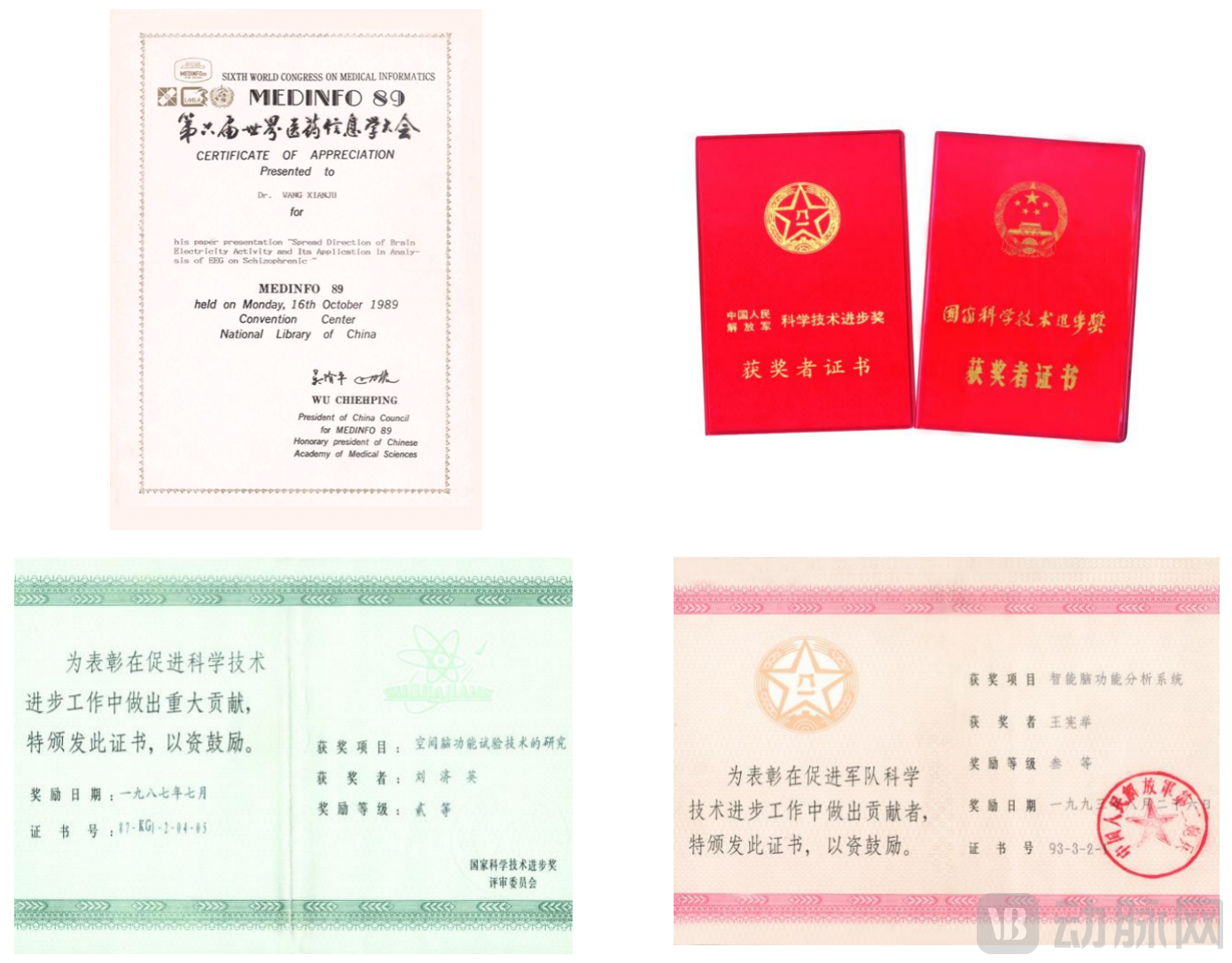
Historical Background of Scientific Research
As the earliest-established enterprise in China’s brain science sector, Fuliye has demonstrated enduring value—both historically and at present—through its accumulated experience, methodological breakthroughs, and product innovations.