

Capitalizing on National医保 Support: Strategic Opportunities in China's $40B Assisted Reproductive Technology Industry
The Favorable Policy Winds Are Blowing: Assisted Reproductive Technology Emerges as a New Growth Frontier.
On February 21, 2022, the Beijing Municipal Healthcare Security Administration, the Municipal Health Commission, and the Municipal Human Resources and Social Security Bureau jointly issued the Notice on Regulating and Adjusting the Prices of Certain Medical Service Items (hereinafter referred to as the “Notice”), which included 16 assisted reproductive technology services in the medical insurance reimbursement scope. The new policy took effect on March 26, 2022, applying to 15 public assisted reproductive medical institutions designated for basic medical insurance in Beijing, with non-public medical institutions implementing it by reference.
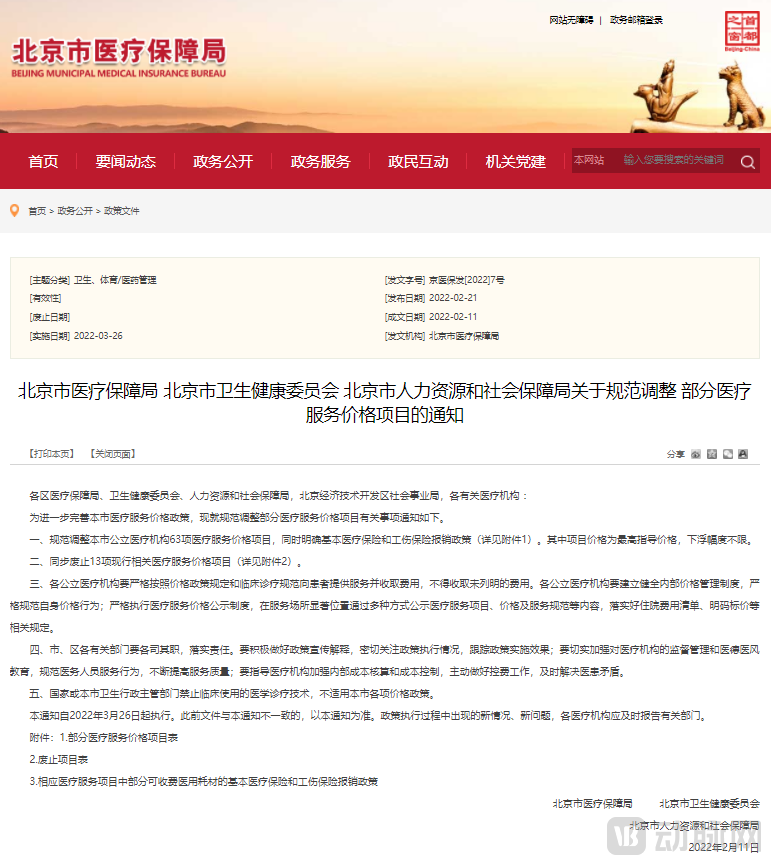
Beijing has fired the first shot, marking the transition of assisted reproductive technology (ART) services from an era of “no insurance coverage” to one of “insurance reimbursement.” Driven by these favorable policies, ART-related concept stocks such as Beikang Medical and Jinxin Fertility have surged, making the ART sector a highly sought-after investment opportunity. VCBeat promptly analyzed the impact of this policy on the ART field in its article, “IVF Reimbursement! Is Assisted Reproductive Technology Poised for Takeoff with Insurance Coverage?”
Since the implementation of the three-child policy in 2021, the assisted reproductive technology (ART) industry has repeatedly found itself at the center of public attention. Behind this media spotlight lies a new market opportunity valued at RMB 400 billion. The industry has fully entered a period of strategic opportunity, with ART centers across various provinces accelerating their expansion and more cities including ART services in medical insurance reimbursement schemes, signaling an acceleration in the industry’s development.
In Beijing’s “Notice,” 16 assisted reproductive technology (ART) procedures have been included in the Category A medical insurance reimbursement list, meaning that patients undergoing these procedures at ART centers designated by Beijing’s medical insurance system will incur no out-of-pocket costs, as they are fully reimbursed. These 16 fully reimbursed items basically cover the key first-, second-, and third-generation in vitro fertilization (IVF) techniques, as well as embryo handling, oocyte processing, and sperm processing.
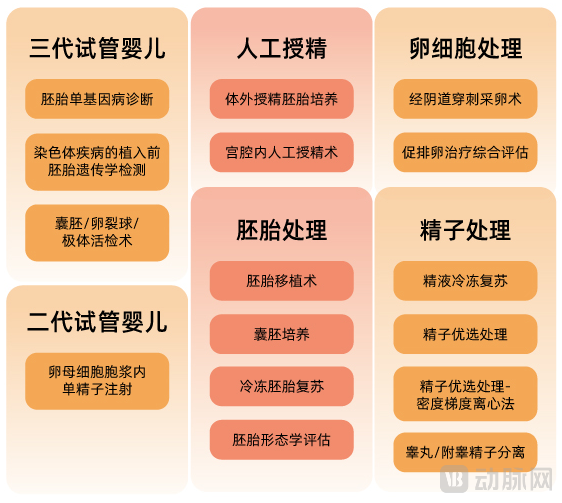
16 Assisted Reproductive Technologies Included in Beijing’s Class A Medical Insurance Reimbursement Catalog
Third-Generation IVF TechnologyThird-generation in vitro fertilization (IVF) technology represents the most advanced frontier in assisted reproductive technology today. It is indicated for special populations at high risk, such as individuals with chromosomal abnormalities who are prone to bearing children with genetic defects. This technology involves performing preimplantation genetic testing on embryos obtained through intracytoplasmic sperm injection (ICSI, or second-generation IVF). By identifying and excluding embryos with genetic defects, it prevents the transmission of hereditary diseases. Only genetically normal embryos are selected for transfer into the uterus, thereby enabling the birth of healthy offspring and achieving the goal of eugenics and optimal childbearing.
Currently, third-generation IVF products available on the Chinese market are extremely scarce, with only two upstream assisted reproductive technology device manufacturers having taken the lead. Among them, Beikang Medical (Stock Code: 02170.HK), a listed company, has obtained the first Class III medical device registration certification from the National Medical Products Administration (NMPA) for its third-generation IVF product, the “Preimplantation Chromosomal Aneuploidy Testing Kit (Semiconductor Sequencing Method).” Prior to the approval of this product, the application of third-generation IVF in China remained in an unregulated void, lacking both standards and oversight.
“Preimplantation Genetic Testing for Aneuploidy” (PGT-A) is currently the most widely used and largest market segment among third-generation in vitro fertilization (IVF) assisted reproductive technologies. It primarily targets women aged 38 and older undergoing IVF, couples where one or both partners have chromosomal abnormalities, individuals with more than three failed IVF implantations, patients with more than three spontaneous miscarriages, and couples who have previously given birth to children with chromosomal abnormalities. By assessing numerical abnormalities across all 23 pairs of chromosomes in embryos, PGT-A helps these patients select healthier embryos for transplantation.
Although the current penetration rate of PGT in China is still low, at only about 3.5%, there is significant room for growth compared to the 35.2% penetration rate in the United States. The penetration rate in China is projected to reach 18.4% by 2024, with the market size further expanding to RMB 12 billion. As a leading enterprise in upstream medical devices for assisted reproduction, Beikang Medical has seized this strategic window of opportunity. Starting with third-generation IVF technologies, the company has comprehensively laid out its portfolio of assisted reproductive consumables and equipment. Its reagent share is poised for rapid growth, positioning Beikang Medical to become a global, high-quality, integrated provider of comprehensive assisted reproductive solutions.
Based on Beijing’s current medical insurance policy, the maturity, safety, and necessity of third-generation in vitro fertilization (IVF) technology, specifically preimplantation genetic testing (PGT), have been fully recognized. The Notice includes “preimplantation genetic diagnosis for monogenic disorders,” “preimplantation genetic testing for chromosomal abnormalities,” and “biopsy of blastocysts/cleavage-stage embryos/polar bodies” within the scope of reimbursement. Among these, “preimplantation genetic diagnosis for monogenic disorders” and “preimplantation genetic testing for chromosomal abnormalities” correspond respectively to PGT-M and PGT-SR in third-generation IVF technology.
However, there are currently no approved PGT-M or PGT-SR genetic testing products on the market in China. It is widely recognized within the industry that the development of PGT-M and PGT-SR products involves a high degree of technical complexity, and Beikang Medical is actively advancing the registration and approval process for its PGT-M and PGT-SR kits. Notably, when performing PGT-M and PGT-SR, embryonic aneuploidy screening (PGT-A) is typically conducted simultaneously.
On the other hand, the Notice also indicates that embryo processing, oocyte processing, and sperm processing have been included in the coverage of Beijing’s medical insurance. Among these, “frozen embryo thawing” and “semen cryopreservation and thawing” are also business areas covered by Beikang Medical. The company has developed China’s first fully automated embryo storage and management system, the “Intelligent Ultra-Low Temperature Storage Device,” and a new generation of domestically produced “Intelligent Non-Destructive Sperm Quality Analyzer,” filling the industry gap in intelligent sperm detection and analysis.
It is undeniable that the inclusion of assisted reproductive technology (ART) services in Beijing’s medical insurance scheme will mark the beginning of nationwide coverage for ART. It is reported that Shanghai and Guangdong are also intensively planning similar initiatives, and their subsequent progress warrants close attention.
In 2020, China’s birth rate fell below 1% for the first time, signaling that the country may have entered an era of negative population growth. Against this backdrop, assisted reproductive technology (ART) has emerged as a powerful tool to boost the birth rate. As China’s capital, Beijing’s pioneering inclusion of ART services in its medical insurance scheme at this critical juncture sends a clear signal: the state attaches great importance to the assisted reproduction industry and is providing strong support for its technological advancement.
China currently has approximately 50 million patients suffering from infertility. Based on publicly available data, 13,000 assisted reproductive technology (ART) service cycles incurred a total cost of approximately RMB 580 million, implying an average cost of around RMB 45,000 per cycle. Assuming that 20% of infertile couples potentially opt for ART treatment, there would be 10 million ART cases in China, indicating a market potential of at least RMB 450 billion for the assisted reproduction sector.
In this trillion-yuan market, favorable policy incentives are bound to unlock even greater incremental growth potential. This is undoubtedly a significant boon for the upstream segment of the assisted reproductive technology (ART) industry. Since the introduction of the three-child policy in 2021, nearly ten domestic upstream ART device and technology suppliers have completed financing rounds, including Ruibo Biotech, Weituobiology, Dongyun Medical, and Nuwa Life. The recent policy stimulus from Beijing will undoubtedly further accelerate the rapid development of the upstream ART sector.
Although foreign brands currently monopolize 95% of high-value consumables and 80% of pharmaceuticals in the assisted reproductive technology (ART) industry, it is believed that China’s domestically produced ART devices will gradually expand their market share by leveraging cost advantages and reliable quality. This growth will be driven by the introduction of favorable policies, relaxed regulations, accumulated technological expertise, and rising demand from downstream ART centers. Furthermore, the inclusion of ART services in medical insurance coverage will enhance downstream purchasing power, thereby stimulating upstream R&D capabilities and fostering the development of more innovative domestic ART products.
It is foreseeable that manufacturers with stronger R&D capabilities and more innovative products will be better positioned for sustainable development within the industry. While the Hong Kong-listed healthcare sector experienced an overall decline last year, it currently presents a strategic opportunity for investment institutions. Companies in the biopharmaceutical sector that maintain high R&D investment and possess sustained cash flow—exemplified by Beikang Medical—are the scarcest high-quality investment targets in the healthcare sector under the current policy landscape.
According to the latest statistical data from the Department of Maternal and Child Health, as of December 31, 2020, there were a total of 536 medical institutions in China approved to provide human assisted reproductive technology (ART) services. The Beijing medical insurance scheme now covers 15 of the 18 ART-qualified medical institutions in Beijing (the three excluded institutions are: the National Research Institute for Family Planning of the National Health Commission, Beijing Jiayun De Yun Hospital, and Beijing Amcare Women’s and Children’s Hospital Beisanhuan Branch). In the future, as the geographic scope of medical insurance reimbursement for ART expands to cover more ART centers, it will benefit the public and significantly boost the rapid growth of the assisted reproduction industry.