

Empowering Safe and Effective Digital Therapeutics: Microsoft's Digital Technologies Embrace the DTx Ecosystem
In 2022, the digital therapeutics industry remained highly vibrant. The development of digital therapeutics products not only involves a wide range of foundational digital technologies—such as wireless devices, hardware and software sensors, microprocessors and integrated circuits, mobile/cellular networks, and body area networks—but also relies on key enabling technologies, including artificial intelligence, cloud computing, big data, and extended reality (XR). As digital technologies continue to advance, the potential and scope for innovation in digital therapeutics are expanding significantly.
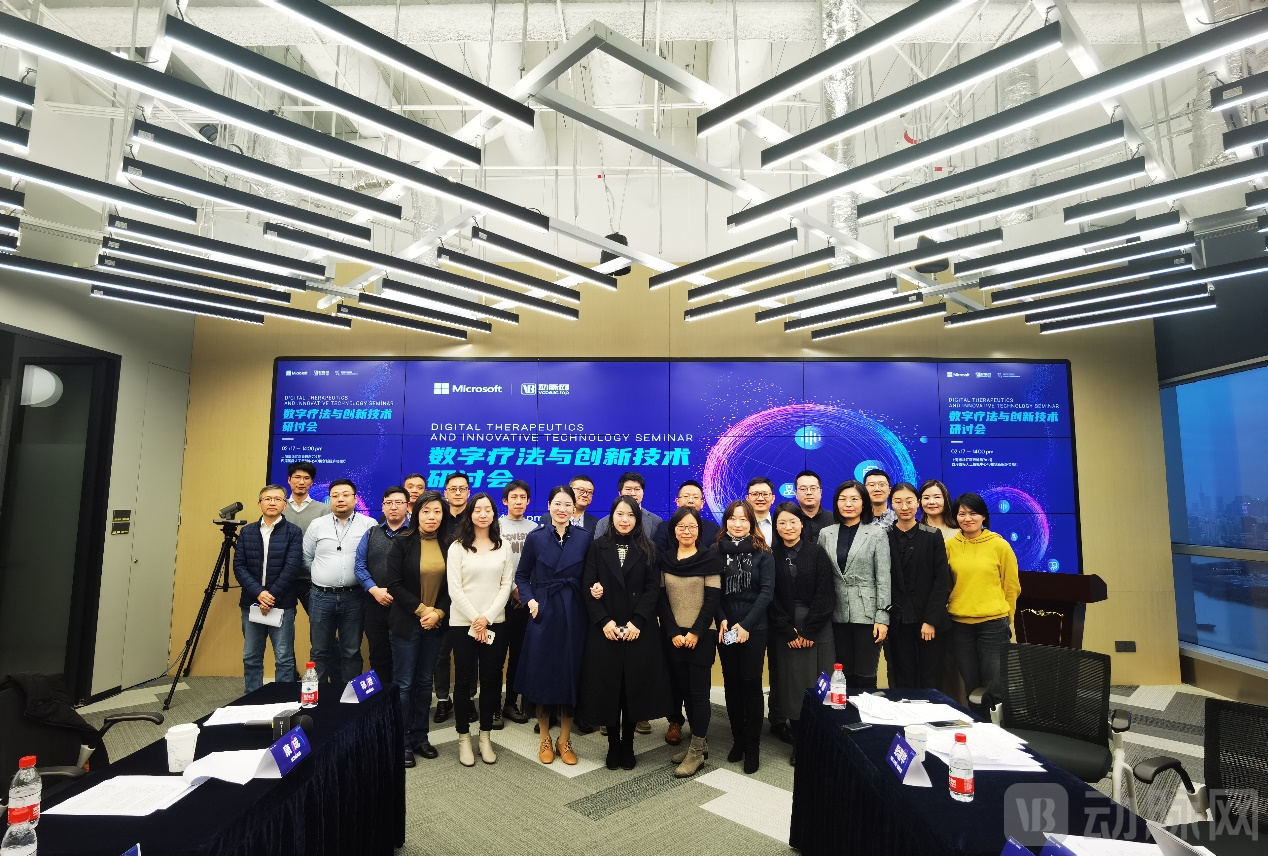
New-generation therapeutic technologies always present both opportunities and challenges. In the face of a rapidly evolving market and growing demand, collaboration will help accelerate the delivery of safe and effective digital therapeutics to patients. Therefore,Recently, VCBeat and Microsoft China jointly hosted the “Digital Therapeutics Innovation Technology Symposium,” aiming to provide impetus and food for thought for the industry.

The panelists attending this special session include:Kang Cheng, CEO of Xuzhishi Technology; Fang Qiuxue, CMO of Zhilan Health; Qiu Yan, Partner at Bosteng Technology; Cao Qun, Chairman of Xinjing Technology; Liu Wenzhe, CEO of Qianglian Zhichuang; Zhu Lianbihe, Head of the Academic Committee under the Academic R&D System of Guyitang; Liu Xue, Senior Director of Digital Business at Liangyihui; Zhu Yuhan, CEO of Smart Healthcare at Fangxin Technology; Zhang Qiang, Head of Microsoft’s National AI Initiative for Greater China; Peng Shuhua, Senior Director of Partner Recruitment in Microsoft’s Omnichannel Division; along with numerous industry professionals and technical researchers.
The following is an excerpt from the roundtable discussion at the "Digital Therapeutics Innovation Technology Seminar":
Although digital therapeutics (DTx) is still in its early stages, it has been developing rapidly, with numerous novel forms and technologies being continuously integrated. According to statistics, the FDA has approved seven De Novo digital therapeutics in recent years, all of which demonstrate significant innovativeness. For China’s digital therapeutics industry to secure a place in the global market, the importance of innovation cannot be overstated. In this process, how to creatively leverage digital technologies remains a topic worthy of exploration.
Qiu Yan, Partner at Bositeng TechnologyHe stated, “Bositen focuses on cognitive function assessment and training because we believe that interventions in the physical world and for individuals are centered around measurement and change. In the context of digital therapeutics, measurement involves leveraging digital technologies such as speech recognition and gesture recognition to capture data on users’ digital biomarkers, thereby influencing their cognition, emotions, and behaviors through digital means to improve their cognitive health.”
Kang Cheng, CEO of Xuzhishi TechnologyHe stated, “Our choice of technology is critical, as it may determine the form and function of our products. For instance, VR technology can recreate therapeutic scenarios and training functionalities, even enabling approaches that are impossible to construct in traditional settings. Moreover, VR-based training can significantly enhance rehabilitation efficiency. Whereas previously a caregiver could only provide one-on-one rehabilitation, now one-to-many sessions are possible—this is the change brought about by technological empowerment. Therefore, we aim to further explore leverage points through which technology can drive transformation in traditional medicine. Such disruptive technological innovations typically take improvements in efficiency and outcomes as mandatory performance indicators.”
Zhilan Health CMO Fang Qiuxue“He stated, ‘Digital therapeutics are the product of integrating digital technologies into medicine. Although the technologies we currently employ encompass virtual reality (VR), artificial intelligence (AI), core algorithms, and more, the essence of technology-enabled digital therapeutics lies in returning to the fundamentals of medicine. We need to consider what clinical value can ultimately be derived from data obtained through technological analysis of user adherence and behavior, identify which medical scenarios can incorporate digital technologies, and determine the resulting business models.’”
Cao Qun, Chairman of Xinjing TechnologyHe stated, “The foundation of digital therapeutics remains medicine. All technologies have a dual nature. For instance, VR products demonstrate strong interventional efficacy in the treatment of psychological conditions such as phobias, anxiety, and insomnia. However, the primary population for cognitive rehabilitation consists of elderly patients, and the high level of human–computer interaction required by VR devices may lead to issues during intervention, necessitating accompaniment by healthcare professionals. If one-on-one supervision is already challenging, one-to-many models would instead increase the workload of medical staff. The AR and MR technological advantages demonstrated by Microsoft on this occasion may offer solutions to such challenges. Nevertheless, regardless of the approach, we must integrate technology with healthcare under the premise of ensuring safety and efficacy, thereby better serving both patients and physicians.”
Liu Xue, Senior Director of Digital Business at Good Doctor HuiHe stated, “Digital technology will fundamentally transform the model of patient management. This is particularly evident in oncology, where out-of-hospital management—such as rehabilitation and psychological interventions—is significantly lacking. Even when such services are available, patient adherence remains suboptimal. By leveraging digital technologies for remote patient assessment and monitoring, and by analyzing data to develop personalized management plans, we can fundamentally change this status quo. When implementing digital technologies, two key considerations must be addressed: first, patient privacy must be fully respected; second, while technological aids may provide preliminary assessments during patient management, these judgments often require confirmation by physicians. Therefore, clearly defining medical liability is a critical consideration.”
Gu Yitang Academic R&D System—Zhu Lianbihe, Head of the Academic CommitteeHe stated, “I originally worked as a clinician. From my perspective, technology serves merely as a vehicle and tool to optimize our diagnostic and treatment protocols. When introducing digital technologies, we must ensure their safety and efficacy while respecting patient privacy. Gu Yitang is currently exploring the integration of digital therapeutics with conditions such as developmental delay and autism spectrum disorder. These disorders impose substantial caregiving demands on families and require extensive professional knowledge. Through digital therapeutics, we can help families acquire rehabilitation skills more rapidly and, combined with data from precision medicine, achieve better therapeutic outcomes.”
Zhu Yuhan, CEO of Fangxin Technology Smart HealthcareHe stated, “Digital technology will transform the way patients are managed. For example, for patients with chronic insomnia, traditional treatment requires weekly hospital visits, with each session lasting 30 minutes to an hour. However, many patients fail to complete the full course of treatment, resulting in suboptimal clinical outcomes. The key advantage of digital technology lies in its ability to monitor and intervene throughout the entire disease journey. Secondly, it facilitates the accumulation of technical expertise. Big data algorithms and training can help young physicians rapidly accumulate clinical experience, enabling them to iterate solutions with lower barriers and costs. Regarding principles for adoption, from my perspective, there is only one principle: evidence-based practice. In the development from healthcare informatization to internet hospitals in 2014, or telemedicine, digital technology has played a very important role. However, essentially, these serve more as platforms and tools; they do not create value in themselves. The greatest distinction of digital therapeutics is their evidence-based nature. It is first and foremost a medical product, so the primary focus must be on clinical efficacy and evidence-based support.”
Liu Wenzhe, CEO of Qianglian ZhichuangHe stated, “I believe there are two key words: one is ‘drive,’ and the other is ‘innovation.’ In essence, digital therapeutics represent a new force for innovation driven by digital technology. Digital therapeutics have been a hot topic for quite some time, yet many challenges remain in their commercial implementation. The most critical issue is whether new value can be created. It is essential to first create new value before discussing who will pay or bear the cost; this is my understanding of our role. Furthermore, based on our practical experience, it is not about acquiring a digital technology first and then seeking its application scenarios. Instead, we must start from real-world scenarios, identify problems, and employ the most appropriate technologies—including leveraging advanced upstream technical pathways—to empower our offline settings, thereby ultimately solving the problems.”
From an application perspective, how can digital therapeutics better and more rapidly leverage digital technologies? What innovations in application scenarios can the introduction of these technologies achieve in the near future, or how can they better empower existing application scenarios?
Liu WenzheIndicates“Our mission at Qianglian Zhichuang is to empower healthcare with AI and safeguard lives through technology. Ultimately, we must return to the context of offline medical care; if targeting consumers directly (B2C), this may involve integrating into patients’ daily lives. Therefore, we are not creating a new scenario but rather leveraging technology to address the pain points and hardships within existing scenarios.”
Zhu YuhanIndicates: Traditional digital products can be developed quickly because they do not need to consider evidence-based medicine; they are merely tools or platforms, lacking even clinical endpoints. Currently, we emphasize evidence-based practice and therapeutic efficacy, respect for patients, as well as data value and safety. Therefore, it is difficult to accelerate the development of digital therapeutics, and I do not recommend pursuing speed. However, if you wish to see relevant market effects in the short term, you may consider advancing certain Digital Care initiatives based on digital therapeutics.
Zhu Lianbihe stated“Digital therapeutics itself is an innovation, and everyone is still in the exploratory phase within this emerging field. We can only continuously adjust our development direction through practice, strive to achieve phased results, and ultimately attain the goal of genuinely helping to improve health outcomes.”
Liu Xue stated: “Over the past year, we have engaged in in-depth discussions with numerous experts on the concept of digital therapeutics and explored specific application scenarios. We ultimately identified many practical challenges that we could not resolve independently, often casting significant doubt on the technical support aspect. If we can collaborate with experts and advanced technology companies like Microsoft to co-develop solutions, it will certainly greatly enhance the efficiency of implementing digital therapeutics.”
Cao Qun stated“Rapid advancement of digital therapeutics requires support and assistance from multiple stakeholders, including policymakers, technologists, experts, and collaborative partners. This is also why the digital therapeutics industry in the United States has developed rapidly. There is still a long way to go for China’s digital therapeutics industry; moving from individual efforts to collective action, collaboration is key.”
Fang Qiuxue stated“: In fact, many intelligent hardware devices such as biosensors, along with algorithms, represent areas where digital therapeutic technologies can be applied and integrated. In terms of application scenarios, we aim to extend diagnosis and treatment from within hospitals to outside settings, which will give rise to a vast array of digital health products across the entire care continuum. Additionally, it is worth exploring how appropriate technologies can be leveraged to further reinforce or transform patients’ physiological manifestations from subjective assessments toward more objective measures.”
Qiu Yan stated“Digital interventions for cognitive impairment in Alzheimer’s disease represent a highly promising application scenario. There are three reasons for this. First, the aging population is large, and the incidence rate is rising steadily. Second, this field sits at the intersection of consumer markets and healthcare, carrying significant social value. Third, it offers an excellent direction for collaboration with gaming companies. We look forward to welcoming more partners to jointly advance the development of this industry.”
Peng Shuhua, Senior Director of Partner Recruitment, Microsoft Omnichannel Business UnitHe stated, “Microsoft is a technology platform company that adopts an end-to-end empowerment approach for its partners. First, technological empowerment: Microsoft’s technologies in speech recognition, emotion AI, cloud computing, IoT, and mixed reality (MR) are highly mature and can be integrated into existing digital therapeutic solutions, enabling partners to leverage established technical capabilities without having to build them from scratch. Second, marketing empowerment: Microsoft can collaborate with partners to amplify their market presence and messaging. Third, joint sales empowerment: Leveraging its strong B2B heritage, Microsoft can help connect partners with stakeholders in the insurance, pharmaceutical, and medical device industries. Fourth, industry chain empowerment: Microsoft assists partners in mobilizing resources to address end-customer needs.”
Zhang Qiang, Head of Microsoft’s National AI Program for Greater ChinaHe concluded, “Microsoft is a global company, and I also believe that healthcare and technology know no borders. We all hope to leverage this borderless platform to jointly advance the development of the digital therapeutics industry.”
“Digital therapeutics is a cross-disciplinary industry that requires the accumulation of momentum from multiple perspectives. Microsoft possesses the world’s most advanced IoT and MR technologies. How these technologies can be integrated into the scenarios of digital therapeutics startups to truly empower our users is a process that demands continuous refinement and discussion. Microsoft will continue to invest in this field, and we welcome everyone to join the Microsoft ecosystem,” said Zhang Qiang.
Finally, Microsoft will launchMicrosoft Global Social Entrepreneurship Program,GSEPRecruitment Plan, this project aims to leverage the synergy between Microsoft’s own digital technologies, partners, and industry resources to support startups dedicated to social welfare and human sustainable development, thereby addressing major global, social, and environmental challenges.
We welcome interested startups to stay tuned and look forward to the upcoming registration and recruitment, working together to promote the sustainable development of the industry.